Showing posts with label California. Show all posts

Sunday, December 29, 2019

One More One-Hitter: End of Year Barrel Bomb

I guess I wasn't completely accurate -- there is one more Naked Vine left in me for 2019.

The Sweet Partner in Crime and I recently returned from a whirlwind holiday trip to visit various family and friends. We started with my fam in Eastern Kentucky, then made our way back to our until-recent home Newport to spend some time with friends, and concluded our jaunt in Dayton to see the SPinC's family.
Thanks to a new Yeti cooler, we were able to pack along holiday meals for both families, including some truly decadent ice cream from the Berkey Creamery and a holiday ham from the Meats Lab at Penn State.

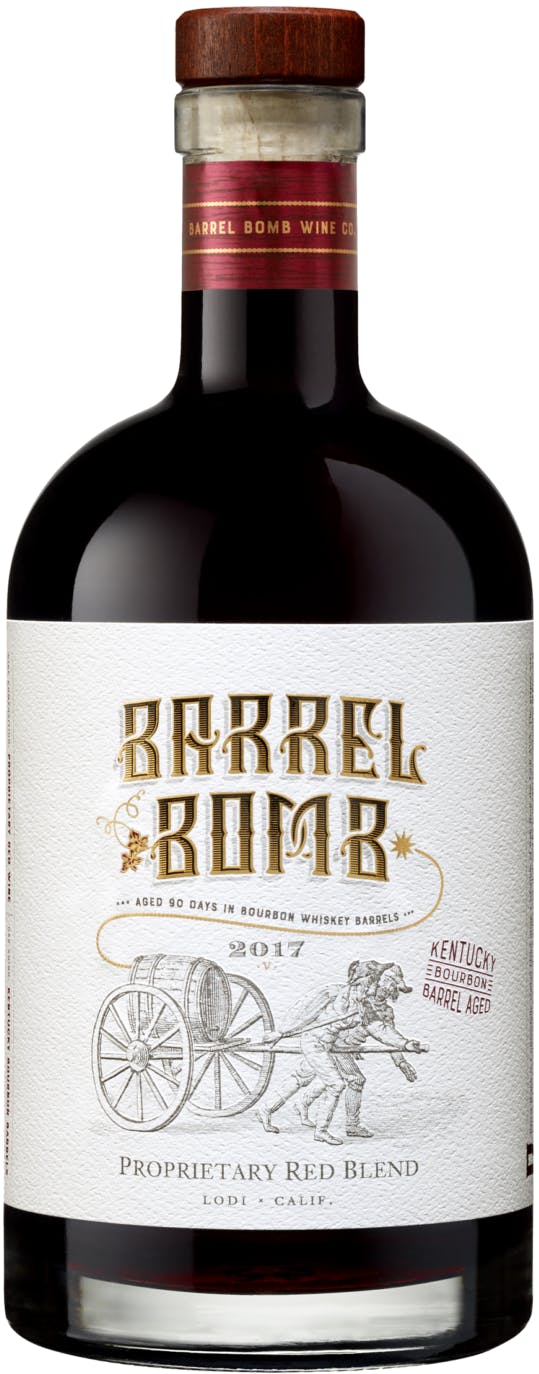
We arrived in Dayton on Christmas Day, only to discover that Pam's brother-in-law, Dapper Donnie, had been hit hard by the flu and spent Christmas Eve in the hospital. Alas, he wasn't able to join us in our holiday feed -- so we sent him a hammy care package. Donnie did send us a gift, though -- a bottle of wine that goes right along with the bourbon-barrel theme we've had running through the site's electrons this year: Barrel Bomb 2017 Red Blend.

Barrel Bomb has a similar origin to some of the 1000 Stories wines I've covered recently. The wine's made from a blend of red grapes sourced from Lodi, California. I'm not sure what the exact blend is, but figure that Zinfandel and Cabernet Sauvignon figure heavily. The wine comes in a stubby bottle with a replaceable cork -- which might make it easy to lose among the bourbons in your liquor cabinet.

Let's start with the truth-in-advertising bit. "Bomb" is an accurate descriptor for this wine. Any wine backboned with Zinfandel has the potential to wind up as higher potency, but the trend over the last decade has been towards more restraint in alcohol content. By contrast, the folks at Barrel Bomb decided to party like it's 2010 all over again. This wine clocks in at a muscular 16.5% ABV.

The winemakers, however, throttled back on the fruit-foward nature of these grapes. The flavor is actually somewhat restrained, if you can believe it. Perhaps the 12 months that the wine spends in oak, with the last 90 days in bourbon casks, mellows it out. The nose is big and fruity, with vanilla riding the back of blueberry and cherry. The body's not subtle -- big fruit, licorice, and smoke over a pretty considerable tannic base that hold on through a powerful but balanced finish.

In my mind, I think this might end up a better end-of-night sipper than a real dinner pairing. There's a little "portishness"  here, so I tried it with some really nice brie that we got as a gift from Lady Vertu, and it worked well -- although I'd probably go with even a bigger cheese, like a Stilton. Chocolate is also an obvious accompaniment.

All in all, if you're looking for something to sip on during these colder months -- you might give this a try. Also, if you're giving any more gifts, the aesthetic of the bottle itself is interesting.

Barrel Bomb retails for $16-18. They also make a straight Cabernet Sauvignon, which I haven't tried yet.

Happy New Year, everyone!


Tuesday, December 03, 2019

Naked Vine One-Hitter -- One More Story from 1000 Stories


The Sweet Partner in Crime was traveling right before Thanksgiving. She was scheduled to fly back to our house in the woods late afternoon of the holiday, so we weren’t going to be whipping up our usual nontraditional Turkey Day feed.

Instead, to celebrate the SPinC’s return, I tried my hand at dry-aging steaks at home. As her flight headed for home, into the sous vide bath went these ribeyes. They turned out wonderfully – full of incredibly rich flavors – but I was glad that we had a spare fridge to “age” the steaks in. The process is not without a distinct odor. Had these steaks alongside some roasted brussel sprouts and mushrooms, which just makes for a good meal.

Anyway, the day before, I got a visit from the wine fairy, courtesy of the good folks at Colangelo after the publication of my 1000 Stories wine piece – 1000 Stories 2016 “Batch Blue” Carignan.

As you remember, 1000 Stories does some of the barrel aging of their wines in old bourbon barrels, which imparts some smoke and vanilla to the wine profile. They’re known for your typical California varietals like Zinfandel and Cabernet, as well as blends.

But Carignan? That I didn’t see coming.

Carignan is an interesting choice for a single varietal wine, largely because it’s rarely used for such a purpose outside of the Languedoc region of France and particular regions of Spain. The most common use for Carignan is as a blending grape. Here in the U.S., Carignan is grown largely in the Central Coast regions of California. The most prevalent use for the varietal domestically is – no kidding – jug wine. As such, I was curious to see what this wine, designed by 1000 Stories’ winemaker Bob Blue and his son, had to share.

So, let’s get the immediate out of the way first – this bottle is most assuredly not plonky jug juice. The grapes are sourced from a couple of plots in Mendocino County, which boasts a cooler climate than the Central Coast, so my expectation was for less in-your-face fruit and a little more subtlety and balance. My expectations were correct.

While pretty straightforward, I thought it was a much “rounder” experience than the other 1000 Stories wines I’d tried. The nose struck a decent balance of vanilla and cherry, with a little bit of a smoky note – all of which were echoed on the body, along with some blackberries and dark chocolate. There’s a toasty undertone to it all, but the smoky flavors were much more subdued than in their other wines. The finish was softly fruity, smoky, and altogether pleasant. Even though the SPinC is still shying away from bigger wines, she was able to enjoy this one.

Since the timing of this bottle was so fortuitous, we cracked it with our dry-aged dinner. To be honest, it worked well. I thought this wine was nicely balanced alongside the deep flavors of the steak. There was enough tannin in the mix to keep it interesting, and the fruit held up against the range of flavors.

I certainly enjoyed this wine as much as the other 1000 Stories offerings – and in certain contexts, would probably be my top choice amidst their selections. Like the other wines in this particular portfolio, you’ll find it from $18-20.


P.S. Happy Birthday, Sis!

Sunday, November 24, 2019

1000 (More) Stories – More adventures in Bourbon Barrelling


Last year, I wrote about 1000 Stories Wines – California reds which derive a particular character from being aged in used bourbon barrels.

If you’re interested in more of the backstory about these wines, I welcome you to bounce over here for a refresher about these fairly interesting bottles.

Short version: Many wines are aged in barrels of one type or another. You’ll see wines aged in French, American, or Hungarian oak most commonly. The interior of these casks are usually “toasted” to some degree. The more toasting, the stronger the oaky flavor. Bourbon barrels, taller and thinner than most wine casks, as well as more heavily toasted, could potentially add a boatload of flavor. Even after being used, a barrel can still impart distinct flavors to whatever’s stored inside it.

Finding old bourbon barrels sounds like a difficult step, but, according to the legal rules governing distillation in the U.S., Bourbon can only be aged in a new cask. After that, the barrels have long been sold to distillers making whiskeys and other spirits – and sometimes beer makers. The recent “Bourbon Boom” has, naturally, added a great number of additional barrels to the market, and some winemakers have jumped at the opportunity to ride that particular wave of popularity.

1000 Stories produced the first California Zinfandel aged in bourbon barrels, which I tried when I wrote the initial article, alongside their proprietary “Gold Rush Red” blend. Fast forward a year and a month, and the Wine Fairy delivered another pair of 1000 Stories wines to my doorstep. No Zinfandel this year, but I got to try this year’s model: 1000 Stories 2017 Gold Rush Red, as well as the 1000 Stories 2017 “Prospectors’ Proof” Cabernet Sauvignon.

(Bonus points to their marketing department for proper use of the trailing apostrophe!)

One change I can report between last year’s vintage and this – Bob Blue, the winemaker at 1000 Stories, has dialed back the alcohol content somewhat. The Gold Rush Red now clocks in at lower than last year’s 15% alcohol, while the Cabernet sits at 14.5%. Don’t think this means that these wines are trending towards delicate. Nosiree. This pair of reds pack a considerable punch. Both should be opened for at least 30-45 minutes before you get down to drinking.

The Gold Rush, although slightly toned down, resonates with my comment from last year: “It’s a big ol’ bomb of intense dark fruits, especially plums and dark cherries.” My notes from now give it some plums and vanilla on the nose, with a body of ripe dark fruit, loads of tannin and graphite. The finish is very smoky and tannic. Will need an accompaniment of strong cheeses or grilled meats to really reach its best.

The Prospectors’ Proof gives me leather, vanilla, and a bit of an herbal note on the nose. The body was somewhat lighter than I expected after last year’s Zin. Some more restraint to be found here. Body’s got that classic cherry and currant flavor of Cabernet, along with a fair amount of smoke. The finish is charcoalish, with a note of green pepper that I wouldn’t have expected outside of Bordeaux. The wine’s a bit shy – the flavors fade in and out as it gets air over time until it finds its footing. Once it does, it’d be nice next to steak, mushrooms, or other grilled goodnesses.

1000 Stories has also added a bourbon barrel-aged Chardonnay and Carignan to their portfolio. I'll be curious to see how those would end up. 

These wines retail for $17-20. If you’re interested in a bourbon-tinged vanilla and smoke flavor with your wine this winter, it’d be worth giving these a go.

Monday, October 01, 2018

Bourbon Barrel-Aged Wine -- Does the Wood Make it Good?


Fall, finally! Cooler nights, bigger foods, darker drinks.

Once the weather starts to turn away from heat, I tend to turn my sights back towards both bigger red wines and brown liquors. Outside of Derby, bourbon’s largely a winter drink for me. Red wine’s year round, of course, but my red rack’s generally filled with lighter stuff during the summertime.

What happens, though, when a winemaker decides to put wine and bourbon together?


Over the last four or five years, I’ve seen a few wines marketed as “bourbon barrel aged” popping up. Many red wines are barrel-aged. What’s the difference with aging wine in a bourbon barrel?

Barrel aging is an important stage in the life cycle of many wines, both red and white. When a wine spends time in a barrel, the juice seeps into the wood, extracting chemical compounds that mix with and change the flavor of the wine within. For white wines like Chardonnay, the “oaky” flavor often comes from contact with wood in barrels. For reds, barrel aging adds a depth of flavor and boosts the tannin level.

Reading the description of many wines – you’ll see wines aged in French, American, or Hungarian oak most commonly. The interior of these casks are usually “toasted” to some degree. The more toasting, the stronger the oaky flavor. Bourbon barrels, taller and thinner than most wine casks, as well as more heavily toasted, could potentially add a boatload of flavor. Even after being used, a barrel can still impart distinct flavors to whatever’s stored inside it.

Finding old bourbon barrels sounds like a difficult step, but, according to the legal rules governing distillation in the U.S., Bourbon can only be aged in a new cask. After that, the barrels have long been sold to distillers making whiskeys and other spirits – and sometimes beer makers. The recent “Bourbon Boom” has, naturally, added a great number of additional barrels to the market, and some winemakers have jumped at the opportunity to ride that particular wave of popularity.

I recently had the chance to try two bourbon barrel aged wines: 1000 Stories 2016 California Bourbon Barrel Aged Zinfandel and 1000 Stories 2016 Gold Rush Red (both $16-20). The former is a blend of Zinfandel from Lodi and Paso Robles, with a touch of Petit Sirah juice sourced from Lake County. The latter is a field blend largely of Cabernet Sauvignon, Syrah, and Zinfandel.

The winemaker, Bob Blue, states that it was rare to see wine aged in French Oak when he started learning his craft, and most American oak barrels were used for whiskey. Over the years, using these barrels has become more commonplace – and now Blue uses used bourbon barrels as a flavoring method.

In any case, both wines start out in standard American and French Oak barrels before being racked into used white oak Bourbon barrels. After a period of months, the wine is finished in older (some apparently 13 years old) Bourbon barrels.

Both these wines can use a little taming. The Zinfandel clocks in at 15.7% ABV, while the Gold Rush comes in at around 15%. If you pop and pour, you’re going to get a snootful of alcohol before you really get to any of the flavors. I’d suggest, at the very least, you either decant thoroughly or let it have at least half-an-hour’s worth of air after you crack it.

In both cases, the toasted vanilla and crème brulee flavors that are common in bourbon do find their way into the wine. The nose of the Zin has a bit of that smokiness in the background, on top of dark fruit and some fairly interesting notes of spice like nutmeg. On the palate, this is a big, honking glass of vanilla, spice, smoke, and considerable alcohol. Once it opens up, plum and sage flavors pop their heads out of the mix and the alcohol recedes a bit. The finish is long, dry, and smoky – the various oak instillings lending pepper and a tooth-staining level of tannin.

The Gold Rush red is more straightforward. It’s a big ol’ bomb of intense dark fruits, especially plums and dark cherries. There’s a spicy, leathery backbone to this wine – along with a long, tannic finish. I found it to be much more straightforward than the Zin. Either wine would be workable with some sort of barbecued meat, big cheeses, or dark chocolate.

To be honest, though – I don’t see how much of a difference, other than a slightly sharper oak flavor, that the bourbon barrels actually make with this wine over standard barrel aging. It’s an interesting marketing idea, especially if you’re interested in conversation with whiskey aficionados or Kentucky fans. But keep an eye on the price. These wines both seem a little more pricey than they should be, considering the competition. See what you think.


Friday, March 23, 2018

Naked Vine One-Hitter: UK, Bourbon, Zinfandel, and 1000 Stories

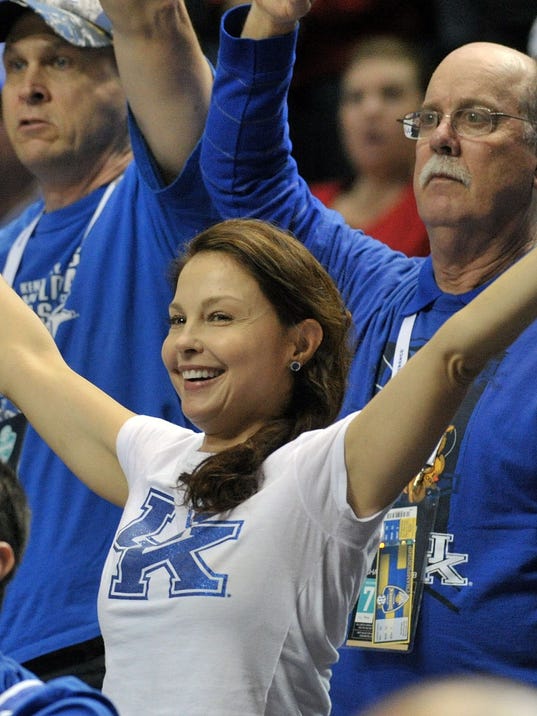
Ashley is unhappy today.

With Kentucky bounced unceremoniously by Kansas State from the NCAA Tournament last night, many UK fans are likely looking for some liquid salve to soothe some disappointment. A bottle happened across my tasting table that might fit the bill.

I recently had the chance to try 1000 Stories 2016 California Bourbon Barrel Aged Zinfandel ($16-20) -- a blend of Zinfandel from Lodi and Paso Robles, with a touch of Petit Sirah juice sourced from Lake County. The winemaker, Bob Blue, states that it was rare to see wine aged in French Oak when he started learning his craft, and most American oak barrels were used for whiskey. Over the years, using these barrels has become more commonplace – and now Blue uses used bourbon barrels as a flavoring method.

Barrel aging is an important stage in the life cycle of many wines, both red and white. When a wine spends time in a barrel, the liquid seeps into the wood, extracting chemical compounds that mix with and change the flavor of the wine within. For white wines like Chardonnay, the “oaky” flavor often comes from contact with wood in barrels. For reds, barrel aging adds a depth of flavor and boosts the tannin level.

In any case, this particular wine starts out in standard American and French Oak barrels before being racked into used white oak Bourbon barrels. After a period of months, the wine is finished in older (some apparently 13 years old) Bourbon barrels. Finding old bourbon barrels sounds like a difficult step, but, according to the legal rules governing distillation in the U.S., Bourbon barrels can only be used once to make whiskey. After that, the barrels have long been sold to distillers making whiskeys and other spirits, winemakers, and others. That doesn’t mean this isn’t an important step. Even after being used once, the barrel can still impart some distinct flavors to whatever’s stored inside it.

In this case, the toasted vanilla and crème brulee flavors that are common in bourbon do find their way into this glass of Zinfandel. Those toasty flavors are needed to balance the alcohol. At 15.7% ABV, this is a wine that needs a little taming. I’d suggest, at the very least, you either decant thoroughly or let it have at least half-an-hour’s worth of air after you crack it.

The nose of this wine has a bit of that smokiness in the background, on top of dark fruit and some fairly interesting notes of spice like nutmeg. On the palate, this is a big, honking glass of vanilla, spice, smoke, and considerable alcohol. Once it opens up, plum and sage flavors pop their heads out of the mix and the alcohol recedes a bit. The finish is long, dry, and smoky – the various oak instillings lending pepper and a tooth-staining level of tannin. Honestly, though – I don’t see how much of a difference, other than a sharper oak flavor, that the bourbon barrels actually make with this wine over standard barrel aging. It’s an interesting marketing idea, especially if you’re interested in conversation with whiskey aficionados or unhappy Kentucky fans.

If you like your Zinfandel smoky with big fruits, this would probably be a good choice for you. I’d recommend it next to a plate of meat, preferably grilled. Ribs or rich stews would be solid pairings here, as would really dark chocolate.

Tuesday, August 29, 2017

Canned Rosé – A Naked Vine Examination

The contenders...
A couple of our neighbors recently invited The Sweet Partner in Crime and I out on their boat for some fun in the sun out on the Mighty Ohio. I brought along some beer for myself, but the SPinC prefers rosé for her day drinking.

Bottles of wine pose their own unique portability issues, so on my load-up trip to Big Wine Store, I ambled by the “bulk” section to see if there were suitable containers. That’s when I discovered that the powers-that-be have gifted us with rosé…in easy-to-boat-with aluminum cans.

I’ve covered the idea of wine-in-a-can in this space before. My initial experience with Underwood Pinot Noir led me to purchase a couple of cans of their rosé for our trip. But I noticed that there were several other companies joining the canned wine – and specifically canned rosé – movement. And judging from the state of the shelves, it seems like these are becoming more popular options.

As a note, there’s nothing inherently wrong with a can as a storage system for wine…at least for wine that’s designed to be drunk in a casual manner. Wine cans are lined, like beer cans are, to avoid direct contact with aluminum and juice. That said, I’d suggest pouring the wine into a cup or glass. Drinking wine (or beer, for that matter) straight from a can eliminates much of the flavor, because there’s no olfactory component other than “can lid.” While this “no smell” effect might be useful for your summertime case of PBR or Beast Light, it defeats the purpose for wine or craft beers. Pour, dammit!

A few thoughts on these metal-clad pinks, starting with good ol’ Underwood:

Underwood 2016 Rosé Wine – When I first wrote about Union Wine Company’s Underwood wine in a can, they were still rolling out their pinot grigio to go alongside their pinot noir. But we’re here to talk about the rosé. Their can clocks in at 12% ABV and is produced from a proprietary blend of Pinot Gris, Pinot Noir, Riesling, Muscat, Chardonnay, and Syrah. The tasting notes printed on the can read “Strawberry. Watermelon. Peach.” – which is pretty much exactly what you’ll get. There’s a fair amount of body to this wine, which is straightforwardly fruity all the way through. It’s easy enough to drink without thinking and made for a perfectly suitable quaff while we were out on the water.

Underwood now produces five different canned wines – the three I’ve previously mentioned, along with two carbonated wines: “Bubbles” and “Rosé Bubbles.” They’ve also rolled out a “Riesling Radler” – a carbonated wine cooler made from of Riesling and grapefruit juice that sits at around 6% ABV, the same range as an IPA.

Essentially Geared Wine Company (NV) Rosé Wine – “Seek the Everyday Uncommon” is Essentially Geared’s slogan. The website clearly caters to folks who are outdoorsy, on the go folks, and the can design was the most interesting, in my opinion, of the wines we tried here. It’s made from 100% Pinot Noir from Napa and suggests pairing with “Pizza by the slice, barbecue brisket, and falafel” – which sounds like an interesting evening’s menu.

Unfortunately, the wine itself wasn’t as interesting. In the words of the Sweet Partner in Crime, the experience of this wine was “Pink. Wet. Gone.” Honestly, it didn’t feel all that much like drinking wine. There was an initial burst of watermelon and strawberry to let you know “Hey! You’re drinking rosé,” then a little alcohol and “wine-ish” taste, and not much of a finish. The note on the can said, “Think: Pink Starburst and 80’s Punk Rock,” but I didn’t get a lot of Clash, Misfits, or Buzzcocks here.

Essentially Geared also produces a California Chardonnay and a California Red made from Merlot, Zinfandel, and Cabernet Sauvignon.

Alloy Wine Works 2016 Central Coast “Everyday Rosé” – Another California entry, but in a larger format. Most canned wine that I’ve seen comes in a 375ml can – so the equivalent of a half-bottle. Alloy’s rosé (a product of Field Recordings winery) comes in a 500ml can, so think of a tallboy next to a standard beer can.

There’s a French rosé called La Vielle Ferme which I’ve reviewed here many times. It’s basically my “house” rosé – a simple, relatively light, minerally-but-fruity pink bottle of goodness. I expected more of a California thump from a wine in a big can, but I was pleasantly surprised to find a lighter-styled, very French, pinkness therein. Their tasting note is “Tastes like: strawberry, grapefruit, mint and guava, Sour Patch Kids, and rose petals.” I don’t think it’s quite that complex, but it does have strawberry and citrus with a refreshing minerality on the finish that I liked quite a bit. It was quite reminiscent of good ol’ LVF, and I certainly recommend it among the three here – for value and for flavor.

Alloy also produces a Pinot Noir, Chardonnay, a red blend they call “Fiction,” and a dry-hopped sparkling chardonnay made from ale yeast called “Weissland.”

All of the above wines run around $5-7 per can. Costing that out for bottle price comparisons, that equates about $10-15 a bottle, depending on the can size.

While these are marketed as “everyday” wines – I likely wouldn’t stock my fridge with them on a regular basis. However, a bottle of wine runs about 2-3 lbs, while two cans are about a pound and a half, and are much less likely to shatter if you happen to drop your backpack. As long as you’re not looking for high-end juice, these will be just fine for you in the wild.