Showing posts with label Port. Show all posts

Sunday, December 29, 2019

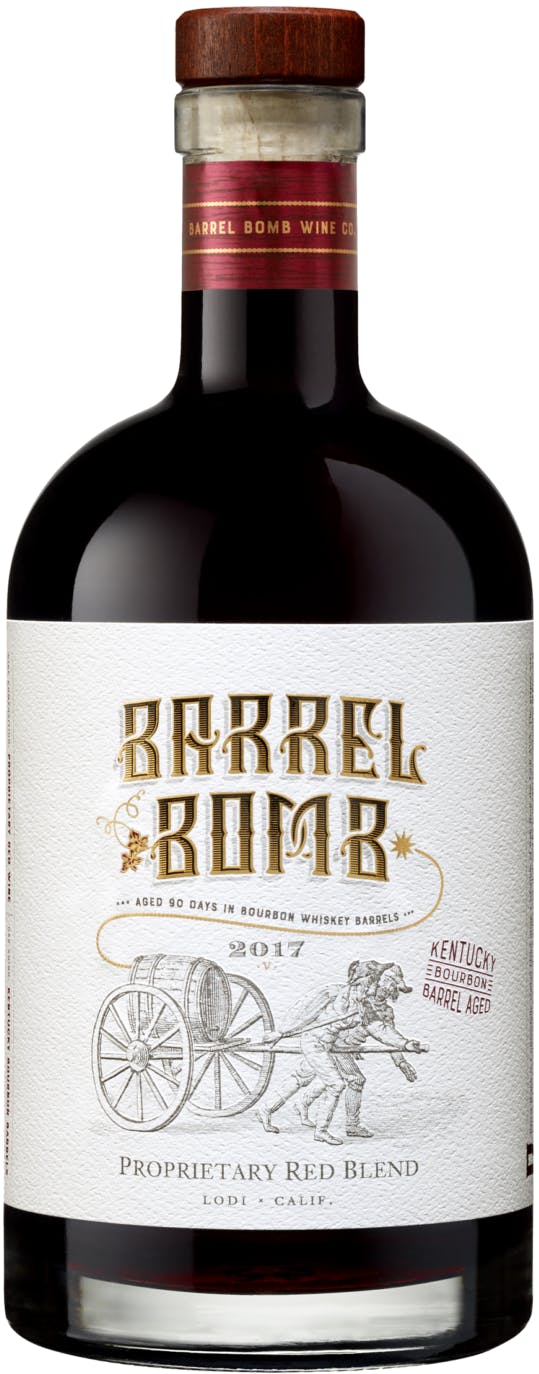
One More One-Hitter: End of Year Barrel Bomb

I guess I wasn't completely accurate -- there is one more Naked Vine left in me for 2019.

The Sweet Partner in Crime and I recently returned from a whirlwind holiday trip to visit various family and friends. We started with my fam in Eastern Kentucky, then made our way back to our until-recent home Newport to spend some time with friends, and concluded our jaunt in Dayton to see the SPinC's family.

Thanks to a new Yeti cooler, we were able to pack along holiday meals for both families, including some truly decadent ice cream from the Berkey Creamery and a holiday ham from the Meats Lab at Penn State.

We arrived in Dayton on Christmas Day, only to discover that Pam's brother-in-law, Dapper Donnie, had been hit hard by the flu and spent Christmas Eve in the hospital. Alas, he wasn't able to join us in our holiday feed -- so we sent him a hammy care package. Donnie did send us a gift, though -- a bottle of wine that goes right along with the bourbon-barrel theme we've had running through the site's electrons this year: Barrel Bomb 2017 Red Blend.

Barrel Bomb has a similar origin to some of the 1000 Stories wines I've covered recently. The wine's made from a blend of red grapes sourced from Lodi, California. I'm not sure what the exact blend is, but figure that Zinfandel and Cabernet Sauvignon figure heavily. The wine comes in a stubby bottle with a replaceable cork -- which might make it easy to lose among the bourbons in your liquor cabinet.

Let's start with the truth-in-advertising bit. "Bomb" is an accurate descriptor for this wine. Any wine backboned with Zinfandel has the potential to wind up as higher potency, but the trend over the last decade has been towards more restraint in alcohol content. By contrast, the folks at Barrel Bomb decided to party like it's 2010 all over again. This wine clocks in at a muscular 16.5% ABV.

The winemakers, however, throttled back on the fruit-foward nature of these grapes. The flavor is actually somewhat restrained, if you can believe it. Perhaps the 12 months that the wine spends in oak, with the last 90 days in bourbon casks, mellows it out. The nose is big and fruity, with vanilla riding the back of blueberry and cherry. The body's not subtle -- big fruit, licorice, and smoke over a pretty considerable tannic base that hold on through a powerful but balanced finish.

In my mind, I think this might end up a better end-of-night sipper than a real dinner pairing. There's a little "portishness"  here, so I tried it with some really nice brie that we got as a gift from Lady Vertu, and it worked well -- although I'd probably go with even a bigger cheese, like a Stilton. Chocolate is also an obvious accompaniment.

All in all, if you're looking for something to sip on during these colder months -- you might give this a try. Also, if you're giving any more gifts, the aesthetic of the bottle itself is interesting.

Barrel Bomb retails for $16-18. They also make a straight Cabernet Sauvignon, which I haven't tried yet.

Happy New Year, everyone!


Tuesday, December 07, 2010

TNV’s Guide to Wine and Cheese – Part III (stinky cheese)

After our forays into hard and soft cheeses, the time has arrived to have a peek of the most polarizing province of the cheese kingdom, stinky cheeses. They’re sometimes known as “pungent,” “blooming,” or “blue” cheeses. So, what are they, and where the heck does that smell come from?

As we discussed in the other entries, cheese is created by allowing milk to curdle, separating the curd from the whey, pressing the curd into a certain shape – then, usually, aging the cheese for a certain period of time. The older the cheese, the stronger or sharper the taste and smell usually become. Stinky cheeses are all aged. What makes them different from, say, cheddar?

With most hard, longer aged cheeses, the chemical and bacterial makeup of the cheeses prevent the formation of various kinds of mold and bacteria. With stinky cheeses, the growth of that mold is not only desirable – it’s encouraged! There are two major processes a cheesemaker uses to “stink up” a cheese: from the outside in and from the inside out.

The “outside in” cheese is usually referred to as a washed rind cheese. Once the cheese’s rind forms, the entire block of cheese is cured for a period of time in brine and/or other substances which can bear mold – usually some type of alcohol. Beer, wine, and brandy are common additions to the wash, along with certain spices. Curing the rind in this solution allows the formation of a certain type of bacteria that imparts the stronger flavors and scents to the cheese. A washed rind cheese can be soft or hard. While the rind usually has a very strong scent, the cheese itself is often somewhat mild. Examples are Limburger, Munster (not Muenster!), and Taleggio.

The “inside out” cheeses are known as inoculated cheeses. An inoculated cheese begins its change from normal to noxious early in its lifetime. While the cheese curds are still loose, they’re injected with a specific type of mold – one from the Penicillum genus. This mold has been used to stinkify cheeses for over 2000 years. As the mold propagates, it forms veins through the cheese, altering the texture, flavor, and odor. “Blue” cheeses are in this category, although the mold can also be brown or green, depending on the specific type of mold involved. Common examples of this type of cheese are Roquefort, Stilton, and Gorgonzola. (As a side note -- this is the same type of mold from which Penicillin was first synthesized when it was discovered that certain bacteria don’t grow in the presence of the mold)

We chose three cheeses for our tasting, along with some “classic” wine pairings:

  • Taleggio (pairing: Alsace Riesling)
  • Stilton (pairing: Australian tawny port)
  • Roquefort (pairing: Sauternes)

You may be looking at those pairings and thinking, “One of these things is not like the other.” You’d be right. For those of you who are unfamiliar with Sauternes, it’s a sweet, expensive French wine that was simply unbelievable, flavorwise. Sauternes is a “botyrized” wine, meaning that the grapes have also molded with “noble rot.” There are other, less expensive, wines made in a similar fashion. Ask your neighborhood wine person. As an alternative, an Auslese Riesling or a ruby (rather than tawny) port will work. Still, follow the link above if you want to read how that wine made our eyes roll back. Otherwise, onward:

Taleggio – A cow’s milk cheese named for Val Taleggio, the valley in Lombardy, Italy, from where this cheese hails. It’s a washed rind cheese, traditionally sponged with seawater once a week during the 6-10 week aging process. The finished product has a whitish rind like brie, but the two smell nothing alike.

I was introduced to Taleggio via one of my coworkers who simply told me, “It’s good stuff.” When I unwrapped it, I have to admit to a moment of dubiousness. There’s no better way to put it – the stuff smelled like feet. However, once I got some of it on a cracker, my opinion rapidly changed. The cheese does have an earthy funk to it, but it’s light. It’s creamy and the flavor is nicely balanced. Very tasty on its own.

Matched with the wines, the Riesling was the best pairing by far. The wine amplifies the funk and brings out some more complex flavors in the cheese itself. However, I would suggest a slightly sweeter Riesling rather than a dry one. The cheese turned the wine somewhat too sharp and metallic. Even just an off-dry Riesling would be enough to keep out the potential unpleasantness. As for the other two – well, I have in my notes, “Poor Taleggio.” Both the Sauternes and Port absolutely overwhelmed this cheese. In my opinion, this would be a great cheese to melt into risotto or some kind of pasta sauce, but on its own, you may get a bad match if you put it on your holiday cheese plate.

Stilton – Another cow’s milk cheese that you’ll find colored either white or yellow. For a cheese to be legally Stilton, it must be made in County Derbyshire, Leicestershire or Nottinghamshire, England. Interestingly, the village of Stilton is not in any of those counties, but instead in the nearby County Cambridgeshire, thus rendering it illegal to produce Stilton in Stilton, for reasons known only to British royalty. Also, Stilton must be made from pasteurized milk rather than raw. (I assume this is to prevent unwanted bacteria from growing.) Stilton is made by piercing the cheese blocks with needles, allowing air bearing the mold into the core of the cheese. Aging of the cheese takes about nine weeks.

On its own, it’s a very full-flavored cheese with a strong salty flavor. The traditional food pairing with Stilton is pears. Sure enough, the two of them meshed very well. The pear-sweetness was an excellent balance for the funky, salty cheese. The traditional wine pairing is port. It was very good. The flavors meshed nicely, and, again, the sweetness of the wine balanced the cheese. The Riesling was pleasant enough. Both experiences, though, paled next to the Stilton with the Sauternes. A little of the cheese, a pear, and the Sauternes was eye-crossingly good. However, I wasn’t trying it with $70 port, so it might not have been the fairest comparison.

Roquefort – This cheese is produced from sheep’s milk and comes from a specific region in the south of France. The particular mold that gives this cheese its particular flavor is found in the soil of nearby caves. The traditional method of making this cheeses involves leaving loaves of bread in the caves until they’re consumed by mold. The moldy bread is then ground into powder and mixed with the curd. The cheese is then aged for about five months. It’s a white cheese, crumbly, and shot through with the mold, which is usually a bright green.

The initial smell of this cheese can set you back a step, but the flavor is one of super creamy goodness. It’s very earthy and salty with a rich consistency and a buttery finish that just goes on and on. “Buttery, yummy mold in your mouth” was a comment from one of us. The Riesling and Port were only average companions for the Roquefort. Neither was particularly outstanding – but few things prepared us for the Sauternes. All of the flavors are very powerful, but they all work together. They practically rotated on our tongues, trading back and forth between the earth and the sweet. After a couple of bites, they settled down, meshing into a combination that simply demanded savoring over a long period of time. Which is exactly what we did, happily.
Tuesday, April 20, 2010

Tarrica Wine Cellars

Some of you who read my less-than-enthusiastic writeup of the last Cincinnati Wine Festival may remember that I still managed to run across a couple of wines I really enjoyed. One of the real finds at this little event was Tarrica. I did a double take when I tasted their merlot, and had a really nice conversation with their rep, Michael Gwin, about the wines, the winery, and sundry other things. Michael was good enough to set me up with a raft of their wines to sample.

Tarrica Wine Cellars is the 1999 creation of winemaker Sam Balakian, who named the winery after his two daughters, Taryn & Erica. Tarrica is located in Paso Robles -- a region gaining more and more national recognition outside of corkhead circles. Tarrica wines are made to be, in Balakian's words, "both affordable and immediately enjoyable." I could certainly speak for the first. All of the wines were listed between $9-15 (except for the petit sirah, which I've seen as high as $30).

So, how were they? As you might be able to ascertain, these are built to be solid wines you don't need to think about a great deal. Tarrica's selections aren't made to compete with the high-end stuuf from Paso, but they're certainly as good, if not better, than many California wines you'll find at similar price points.

I thought Tarrica stood out by...well...not having anything really stand out. For relatively inexpensive wines, I certainly noticed that they were crafted with balance in mind. Many of these bottlings succeeded on that front. Some were certainly better than others, in my opinion, but I'm certainly comfortable inviting you to see for yourself. Here's what we tasted, more or less in the order we tried them:

Tarrica 2007 Merlot -- Yep. I led off with this to make sure that I wasn't off base at the festival. I was instantly pleased, since it was almost exactly as I remembered. It tasted like a mainline Bordeaux, which I think is out of the ordinary. There's usually not a lot of earthy flavor in California wine, and this certainly has a bit of the "tasty funk." Now, I'm not talking Chateau Latour here or anything -- but for the price, I'd taste it blind against some $20-25 French bottles and probably fool a lot of folks. Good berry and floral nose with a solid tannic structure and excellent balance. Definitely recommended.

Tarrica 2009 Pinot Gris -- Fairly substantial body for a pinot gris. You can tell there's a little residual sugar, but it comes across as more of a honey flavor than simply sugary. It's got a lighter taste than the weight implies. Decent flavor with crisp acidity. When I first tried it, there was a little astringent nip at the finish, but that faded after the wine had been open for a few minutes. A decent enough pinot gris, just not out of the ordinary.

Tarrica 2008 White Zinfandel -- "I just can't do it." The Sweet Partner in crime looked askance at her glass. We don't usually allow this type wines into the nest unless I'm making sangria. In the name of science, though, I tried it. Like most white zins, it's quite sweet -- strawberries are the main fruit flavor initially. It does subdue itself a bit before finishing sugary. If you're into this sort of thing -- it's a good glass of white zin. I will admit, though -- I did end up making a spritzer out of the bulk of it.

Tarrica 2008 Chardonnay -- Very serviceable Chardonnay. Definitely made in a California style with the oak and butter, but neither get overwhelming. The nose is oaky, and the flavor is a good steady balance of fruit, butter, and oak. Nice smooth pear flavors on the palate. Good weight with a gently creamy, smoky finish. I'd certainly get it again.

Tarrica 2008 Riesling -- Not one of our favorites. A little heavy on the sweetness, but I'll readily admit to preferring drier style Riesling (unless I'm eating something really fiery, that is). I got apples on the nose and tongue. Sweet-ish finish. We had it with supermarket sushi, and it was decent, but I could have found a better one without too much difficulty.

Tarrica 2008 Pinot Noir -- Another very pleasant surprise! A very light-styled pinot that drinks best with just a hint of a chill. (A few minutes in the fridge after you open it will do the trick.) The nose is floral and delicate. Pinot noirs at this price tend to be either very fruity and almost thick or so light that there's barely any flavor. The Tarrica, however, is a very straightforward, well-constructed pinot. I got smoke and cherries all over the place, with a well-balanced flavor and a gentle finish. I really liked this wine, especially for the value.

Tarrica 2007 Petit Sirah -- If you think, "What would a petit sirah taste like if it were toned down a bit?" -- you'll understand where this wine is coming from. Bolder petits are more my speed, but it was a solid enough quaffer to have with evening chocolate. There was plenty of fruit, but that was more or less it -- not a lot of complexity and the tannins were light. I got blueberry flavors in a medium bodied wine, and the finish just sort of fades away. When I saw the price, however, I was surprised. There's a decent blueprint for a wine here, but I think it's probably better to wait a year or so until their yield gets better to try it again.

Tarrica 2008 Zinfandel -- The Tarrica "subtlety" motif certainly holds here. Definitely a smokier, more restrained wine than a lot of inexpensive California zins, which I don't see as a drawback. Not a fruit bomb by any measure. The nose has a strong vanilla tone. It remains a pretty muscular wine with plenty of fruit, but it's got smoky complexity and solid tannins, especially on the finish. Very drinkable and a very solid value. Grilled up a couple of steaks with this one and they went very well.

Tarrica 2007 Cabernet Sauvignon -- Nicely complex and another solid value. Plenty of blackberry on the nose with good black cherry and blackberry flavors. Not overly full-bodied, but very pleasant as a good "drinkin' cab" with its solid set of flavors. Good length on the finish with some lasting mild tannins. A perfect choice for a "third bottle" on an evening where you might be sharing some red wine and chocolate with good company.

Tarrica 2009 Sauvignon Blanc -- Peaches on the nose. Some mineral on the palate with a little more residual sugar than I usually like. Fruity rather than acidic on the finish. I'd certainly recommend it If you like softer, non-grapefruity sauvignon blancs. Otherwise, it's a  decent enough early evening/late afternoon quaffer.

Old Shandon Port Works Paso Robles Syrah Port -- One of two dessert wines that Tarrica offers up. I enjoyed this wine more a couple of days after I opened it. Right after opening, the sweetness was a little overpowering, but that backed off after a day and the wine grew more interesting. Some raspberry and chocolate flavors start showing up, the latter especially on the finish. The bottle reminded me, flavor-wise, of an Australian port. For a cold evening, it'll warm you up right enjoyably.

Tarrica "Koda" Dessert Wine -- Anyone who's followed this blog for any length of time knows that one of my tests of a red wine is trying it with something chocolate flavors. I was curious to see what would result when Tarrica took the above port and infused it with chocolate essence. The result? Well, I'll call it "interesting." The sweetness of the port runs a little roughshod over the chocolate flavors, which are pretty subtle. Long, chewy flavors and a warming glow at the end. I thought it was interesting and worth a try, and I think a lot of folks would probably like it if they're into dessert wines. I'd probably stick to getting the "component parts," however -- having the port and chocolate individually.


Tuesday, December 02, 2008

Relax.

Welcome to the most exhausting time of the year.

Thanksgiving travel gives way to familial dinner table stress. Black Friday comes, with its yearly dose of lines, crowds, stampedes and shootings. Blood pressures rise. Tension mounts. TV, radio, email, Twitter, Christmas music on all stations, bad weather, road rage. The long stretch of holiday parties, shopping, budgetary woes, seasonal affective disorder, all screeching towards the end-of-month holidays and...finally...New Year's, after which everyone is too hung over to be stressed.

Repeat.

I'm tired just thinking about it all.

In our rare moments of downtime, calm is not something that we as Americans either value or savor. There's always something in the inbox, waiting on the DVR, or around any corner. Here at the Naked Vine, I'm proposing the Minute of Calm. At least once a day, every day, between now and the end of the year, I'm going to try to stop for sixty seconds and quietly reflect on...nothing.

Sounds easy, doesn't it? Try it. See if you can be still for one minute. Start...right...now.

Don't worry about me. I'll wait.

[tick...tick...tick...15 seconds...20...30...]

Couldn't do it, could you? Don't worry. Neither could I...at least not at first. I need at least something to distract that nervous little voice in my head. I needed an assist.

Of course, I went for the easy way out...a glass of wine. Something I could pour, sit back, and savor while I let my mind go dark. This site being an egalitarian place, I wanted to give you some options. For me, it's all about the time of day:

The Just-Home-From-Work Glass: Stepping over the threshold after my evening commute, drop the lunch bag on the counter, play with the pups, change into some sweats, reach for a glass and pour myself a dollop to pause and refresh. I generally want something a little crisp if this is going to be the Minute. Ecker 2007 Grüner Veltliner is a recent find that fits the bill. "Grapefruit and rocks" was my first thought after tasting this high-acid, cool white. It's fragrant for a Veltliner, and the flavors cut right through whatever stress might manifest on your tongue, both giving you a little jolt of energy and allowing you to sit back and unwind. Best of all, it comes in a 1 liter bottle, so you get a little extra for your $10.

The Relaxing Evening Glass: Sitting in a comfy chair or laid out on the sofa, a glass to exhale fully and then breathe in the bouquet. Something lovely and supple, like...say...a pinot noir. In this case, Bearboat 2006 Pinot Noir. One of the prettier wines I've had the opportunity to sniff in quite some time, the cherry/vanilla/smoke triumvirate of a good California pinot is in full effect here. First on the nose, and strongly on the tongue, the full fruitiness of this wine quickly slides into a smoky, sinuous middle and a long, lasting finish. Absolutely a delicious wine over which to sit and ponder the meaning of life. (And you could even invite a friend along if you felt social) Now, I'll be honest -- you may have a hard time finding this one for $15. I found it on sale, and after all -- you deserve it. Splurge if you gotta.

The Nightcap: Perhaps you're not going to get to spool down until just before you head for bed. One of the evening rituals around here is a piece of chocolate or a two-bite brownie with a glass of wine. That combination sends anyone into a deliciously contemplative mood, in my opinion. So, as winter's grip starts to tighten, get those port glasses out and pour yourself a dram or three of port to go with some chocolate. For this, I chose Graham's "Six Grapes" Reserve Port. A big, robust port, full of plums and cherries -- and a bouquet of fruit and pipe tobacco. (I kid you not.) A 375ml can be had for around $15. Well worth the price.

Don't let the holiday season overwhelm you. Focus on the peace and the calm wherever you may find it. Who knows? The Minute of Calm may last beyond New Year's. That may well be my New Year's resolution.

Wednesday, June 04, 2008

Wine for Makin' Whoopee...

"When are you going to write about wine and sex?"

I got this question from my friend R.D. a couple of months ago, and I've been at a bit of a loss. However, considering spring has finally sprung and this is the Vine's 69th entry, it seems fitting.

Disclaimer: The information following should, in no way, be considered a guarantee of sexual satisfaction. However, if any readers, male or female, get lucky as a result of the advice contained herein, I expect thanks. Only readers healthy enough for sexual activity should continue reading from this point. The following is not an endorsement of random, drunken hookups -- you're better off with bourbon or tequila in that event, anyway. Do not operate a motor vehicle immediately after reading this column, drinking a bottle of any of these wines, or after having sex. Your partner will think you're rude.

Where to begin? Wine and sex have a long, long history. My patron deity, Bacchus, was devoted to wine and pleasure. Omar Khayyam wrote the Rubaiyat as an ode to love, life, wine, and his beloved. More than any other libation, wine is historically associated with romance, with sensuality, and good ol' gettin' it on. Wine is a delicious tone-setter and completer of ambience. If you're trying to create a conducive atmosphere, adding wine can only help.

Sex and wine are very personal. Every person has a different experience each time and everyone likes certain flavors better than others. And when you share with someone who has similar passions and tastes...well...the possibilities are practically limitless. For the sake of time, space, and the desire to actually try these out...I'll just forward a couple of potentials for potential coupling...

The Picnic -- A park, a secluded shade tree, a blanket, some food, and -- of course -- a bottle of wine. This setting calls for a selection that both brings happiness and goes well with whatever you've stashed in the basket for the prelude. You're going to want to go with something relatively simple to set up and easy to eat. Perhaps a Mediterranean board of some kind -- olives, pita chips, hummus, feta...you get the idea. Alongside, I might recommend a sparkling wine. Bubbles are always arousing. I recently tried the Zardetto Prosecco Brut ($12-15) with some similar selections. This Prosecco is fairly dry and has a pleasant, slightly yeasty character. The finish was a little fruity, quite crisp, and complimented the foods very well. You'll have to supply the witty conversation thereafter on your own.

The Dinner -- Whether you're dining out or putting something together in the kitchen, you're going to want a wine sultry enough to amplify the mood, yet flexible enough to go with whatever you're ordering or plating up. One wine quickly steps to the fore. Pinot noir. You can't go wrong with decent pinot, whether it's a traditional Burgundy or an offering from California or the Pacific Northwest. The Concannon 2005 Limited Release Pinot Noir ($13-15) from California's central coast was a delicious wine. Cherries and berries on the nose, followed by a fruity, smoky body and a finish of vanilla and smoke. It would be a very flexible food wine -- especially if you were thinking something roasted -- whether it's duck, pork, or vegetables.

The Dessert -- Dinner's over and you're lingering. The meal and conversation have gone well, signs are pointing to "yes," and you've got something in front of you that's some version of chocolate. If there's no chocolate, stop. Back up. You've chosen incorrectly. You MUST have chocolate at this stage. Its powers as an aphrodisiac are unmatched. Port pairs particularly well with chocolate, especially dark chocolate. Sandeman's Founder's Reserve Porto ($9-11 for a 375 ml bottle) slides in easily next to such a dessert. Don't waste your time with little port glasses. Be decadent. Pour it into larger wine glasses so you can swirl and enjoy the lush fruity aromas. The nose is strong with deep dark berry and grape scents. The body is rich and full, and the sweetness balances the delicious bitterness of dark chocolate for a sensually intertwined finish.

Now, if you'll excuse me, I need to go find the Sweet Partner in Crime...and some dark chocolate...


Monday, April 28, 2008

The Quasi-Outdoorsy

Overlooking the simple pleasure of a getaway is far too easy.

The Sweet Partner in Crime treated me to a weekend vacation at Natural Bridge State Park to celebrate my birthday. We had a rough agenda. Sleep in on Friday, get up at our leisure, and head down to Lexington to catch the last day of Keeneland. (I ended up breaking even on the day, thanks to a strong ride by a 10-1 longshot from Devil Eleven Stables bred by an old classmate of mine.)

After good times at the track, we headed down the Mountain Parkway to Slade. We stopped at Miguel's, one of the best little pizza joints you'll ever stumble across and unofficial community center to the "climber's commune" behind the place. We picked up a pizza and a salad there and headed for our cabin in the park.

We had a little mix-up at check-in. We opened up our cabin -- only to find someone else's bags already in the bedroom, newspaper in the kitchen. We called the front desk. I explained to the high-schoolish sounding attendant the situation and (after she asked "Are you serious?" and "Are you sure? Did you just check in?") said that she could get us another cabin. We went back to the lodge and received an apology and new keys from the manager. We ended up, by chance, in the same cabin where we did the Riesling tasting last year.

We settled in, finally able to enjoy the yumminess from Miguel's. Our need for bubbly with pizza is well documented, so we'd brought along a bottle of Royal St. Vincent Brut for the occasion (Usually around $15, found on sale for $10). The bubbly was crisp, dry, and had a little yeasty character. It tasted wonderful after a day in the sun and was simply delicious with the pizza.

The SPinC and I are what you might deem "quasi-outdoorsy." We love being outside, enjoy taking hikes, and think of ourselves as relatively adventurous -- but at the end of the day, rather than pitch a flimsy tent and sleep on roots and rocks, we'd much rather return to our cabin, shower, and cook a good meal in a fully-equipped kitchen. Some of you might consider that cheating, but hey...it's our vacation!

So, what did we bring along on this little jaunt of ours? Well, for general consumption after hikes and the like -- our old standard Redcliffe 2006 Sauvignon Blanc found its way into the fridge. For our evening chocolate consumption, we had a bottle of Benjamin Tawny Port from Australia ($10-13). An inexpensive port, it's got a strong but not overpowering sweetness, lots of flavors of vanilla and fruit, and a delicious finish. At the price, you probably won't find anything that can touch it.

The port also played itself into the meal we cooked on Saturday. We fired up the grill to cook some cardamom-and-balsamic marinated ostrich steaks. The ostrich was free-range raised by a colleague of mine at work (who, sadly, is getting out of the business). I'm a huge fan of the stuff, and if you haven't tried it -- it tastes like steak with the fat content of chicken. We did foil packets of vegetables and some boiled new potatoes. As a side, we diced a big apple and cooked it down with beef broth, the port, some honey, and more balsamic. Unearthly good as a chutneyish topping. Dessert was a couple of grilled pineapple rings, topped with more of the apple and port sauce.

To drink, I rolled the dice and tried a California meritage called Beauzeaux from BV ($9-12). 2005 was the first year of this blend, which has a Zinfandel base and includes juice from seven other grapes. It was nothing fancy -- just a straightforward, somewhat juicy red wine. Honestly, I wouldn't have wanted anything overly complicated with this dinner. There were so many fantastic flavors in the food that I was happy for the wine to stand at attention in a friendly fashion. For that purpose, it worked well enough as a complement. (Although I wouldn't recommend it with the pineapple.)

The rest of the weekend when we weren't eating? Other than a couple of wonderful walks in the woods (and with the slow spring we've had, we were right in the "wildflower wheelhouse" -- just beautiful colors) -- we didn't do much. We sat on the porch and watched the wind blow. We napped. We channel-surfed mindlessly (although the SPinC was fascinated by "Flip this House.") We talked and laughed. We relaxed. We slept like babies.

No email. No Internet. No cell phone service. We noticed that this was the first time in a long time that we weren't doing something. Both of us are really busy in our regular lives, and even when we have time at home -- we're usually doing something social, or catching up on watching shows, or we're checking email, or doing things for work, or running errands, or writing, or something that requires one or the other of us to be focused on something.

This weekend stood in stark contrast. Doing nothing, not plugged in for a couple of days -- not feeling the urge to be connected to people outside the room and the moment -- that peace was a luxury and a gift. No, we weren't completely "off the grid," but it was enough. The weekend gave us both nice recharge and a powerful reminder of just how easy it is to get caught up in the flow of what we find important in the "real world."

When did solitude become hedonistic?


Monday, December 24, 2007

Avoiding the White Death -- Snowed-In Wines

One of our great winter amusements is watching the inevitable freak-out at the first sign of anything resembling snowy weather. Every local news scrambles "full team coverage," which amounts to second-string reporters bundled up at interstate rest areas and weathermen standing by snowbanks with rulers, all speaking in earnest, serious tones.

Lines at grocery stores run out the door as everyone stocks up on necessary supplies -- bread, milk, eggs -- in case the weather gets so nasty that we're stranded for nine or ten hours. As one friend of mine put it, "What is it about snow forecasts that gives people a craving for French toast?"

Nine times out of ten, the "storm" ends up being a whimper rather than a bang -- slush and a couple of inches of powder you can hardly make an honest snowball with. Even so, be prepared. Here are a couple of suggestions for getting yourself through those interminable minutes of imprisoning by Mother Nature.

Hardy's "Whiskers Blake" Classic Tawny Port -- In many winter tales, a narrator sits down with a glass of port to warm up on a long, cold night. Port is fortified wine. Fortified wines are fermented normally. A neutral brandy is then added to boost the alcohol content. Ports tend to be sweet, heavy wines -- often over 18% alcohol. There are two major port types. Ruby port is the most common. This is the least expensive, sweetest, and youngest type. Tawny port is aged at least seven years in barrels, is much more mellow and complex, and is usually golden brown in color instead of…well…ruby. Port originated in Portugal (big surprise!), but this one is Australian. While sweet, it's not as tooth-achingly sugary as many ports of similar price. Whiskers has a nice fruitiness along with a tasty caramel flavor. The finish has just a hint of sweetness and cozy warmth. With dark chocolate truffles, this is an absolutely divine winter drink. Curl up with a thick blanket, a huggable dog, and a fire and watch the snow fall. Around $12.

Santa Ema 2004 Maipo Valley Cabernet Sauvignon Reserve-- If you're looking for a "standard" wine to warm you up, I find cabernet sauvignon to be the most satisfying. This Chilean cabernet is wonderful for keeping the winter chill at bay. The nose has thick plum and cherry scents, bordering on zinfandel-strong. The flavor is much more balanced than most zinfandels. The Santa Ema medium bodied with more plums and a little bit of licorice on the finish to go with the pleasant dryness. Also, since it's summertime in Chile while we're suffering through winter, simply imagine you're chasing the sun. $8-10.

Some traditional beverages at this time of year are wine-based. In the name of research and emergency preparedness, I managed to come up with a couple of these recipes that turned out pretty well:

Mike's Wassail

  • One fifth dry sherry
  • One cup brandy
  • 4-5 cups apple cider
  • Couple of cinnamon sticks
  • Nutmeg, ginger, coriander, allspice -- 1-2 tsp. each
  • One orange, cut in half and studded with a dozen cloves
  • 1 c. brown sugar

If you were reading the Vine last New Year's, you'll know that we didn't have a great sherry experience. Here's one tasty use. Put all the ingredients into slow cooker, reserving half the orange. Put slow cooker on high for 2-3 hours. Leave on low or warm. (If you don't have a slow cooker, put in a big pot on the stove, put on low, and stir occasionally for a couple of hours.) Serve hot with orange slices and firmly baked apples. If you don't drink it all (ha!), it keeps well.

Mike's Mulled Wine

  • One bottle really cheap dry red wine
  • 1 c. brown sugar
  • 1 tsp. Ground ginger
  • 1 tsp. Crystallized ginger
  • ½ tsp. Nutmeg, allspice, & cinnamon (or to taste)
  • 1 bay leaf
  • Orange, cut, half studded with cloves, other half peeled and sectioned
  • 1 lemon, juiced and rind cut into thin strips
  • ½ c. brandy

To "mull" something is to grind or mix thoroughly. Mulled wine is wine well-mixed with spices and such to create a scrumptious delivery system for winter warmth. To make mulled wine (called Glögg in Swedish or Glühwein in German), combine all ingredients except brandy in a slow cooker. Cook on low for 3 hours. Stir in brandy. Strain and serve hot.

So, let it snow! As long as you've got a few bottles stashed away, that is…

Happy Festivus! See you in 2008!