Showing posts with label dinner club. Show all posts

Saturday, December 23, 2017

Getting the Crew Back Together for the Holidays

Pictured: Us.
A couple of nights ago, the Sweet Partner in Crime and I hosted a lovely little shindig for a reunion of the Tennessee Alley Drinking Club. Two of the charter members, Christine the Pie Queen and her husband Jeff, of Jeff’s Dinner Club fame, have unfortunately departed the ‘hood – heading to Washington State where they now boast a big ol’ mountain in what amounts to their backyard.

The holidays are a time for reunions, and we were blessed with the opportunity to spend some quality time with our little gaggle of friends, reminisce and share about what’s happening in our various worlds, and to do what we do best – polish off large quantities of vino while we work our way through a good meal.

The SPinC and I fired up the sous vide machine and did a couple of London Broils at various levels of doneness – cooked to perfection and seared off on the grill, a potato and mushroom soup, an arugula salad with candied walnuts and poached pears, a bunch of roasted root vegetables, and a rich spice cake with cinnamon ice cream from Graeter’s.

Fortuitously, our friends at Colangelo had also sent along a couple of quality, meat-friendly reds to sample. In the spirit of many of our other tasting adventures through the years, we took the opportunity to do a side-by-side of these two wines. The quickly quaffed competitors with our delicious repast:
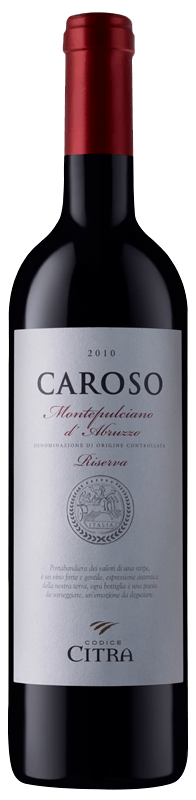


Caroso 2010 Montepulciano d’Abruzzo Riserva ($22)
Charles Krug 2014 Napa Valley Merlot ($25)

I took a look at the Caroso a few months ago in this space. As I noted then, I usually think of Montepulciano d’Abruzzo as a tasty and flavorful but light table wine. Inexpensive versions of it are standards here in Vine land. The Riserva, aged for two years in barrique and six months in bottle before release, is a different animal altogether.

This wine’s a bigger, more fruit-forward entry. Black currant and blackberry flavors come strongly at first sip. The nose has a fair amount of spice and vanilla and the finish is fruity with a considerable roughness of tannin.

Neither Napa wines nor domestic Merlot get a lot of run around here in general, for one reason or another. I’ve tried so many one-note Merlot over the years that I tend to skip it in favor of Merlot-dominant Bordeaux if I’m in that kind of mood. This Merlot from Krug might cause me to do a little reconsideration of that corner of the wine store.

The Krug Merlot is actually a blend – but any domestic wine with more than 75% of one varietal can be labeled as that varietal. The Krug is 82% Merlot, with the rest made up of Bordeaux elements Cabernet Sauvignon, Petit Verdot, and Malbec. Plums and raspberries were the order of the day flavorwise, and the tannins – holding in the background – are nicely balanced. The finish is lasting, with a nice back-and-forth between cherry and graphite.

We opened these up for the assembled at the table to try with the various courses. Alas, there wasn’t a lot of opportunity to take copious notes. The general consensus, however, held that the Krug was the superior wine in balance and general flavor. While I liked both of them well enough, I found myself drifting back to the Krug, which paired better with most everything we had on the table, although I thought the Montepulciano was a good match with the soup, which did have a bit of an Italian flair. The SPinC thought the Caroso was too jammy for her tastes. At the end of the day, the Krug won by unanimous consent.

But the real star of the evening was the conversation and the reconnection with our friends, who spoiled us from across the alley for many years. The spirit of the season found itself in full effect around our table, and we have many happy memories (as well as a number of other empty bottles!) to sustain us in the new year! Many thanks to Jeff, Christine, Marlane, Phoenix, Ken, and – always – the Sweet Partner in Crime for the lovely evening.


Friday, July 01, 2016

The Zonin Dress Code and a Farewell to Friends

Bubbles and bittersweet don’t go together often around these parts.

The mood’s a little downbeat around Vine HQ, even after receiving samples of a new slate of Prosecco offerings from Zonin – dubbed their “Dress Code” collection. There were three bottles – the “Black,” “White,” and “Grey” – as you can see here:


Three bottles of Prosecco are usually a bit much for the Sweet Partner in Crime and I to pop all at once, so we went with our usual strategy. We called our trustworthy alleymates, Christine the Pie Queen and Dinner Club Jeff, to help us polish off sample this bit of Italian effervescence.

Only problem – this is likely the last Naked Vine tasting with our nearest and dearest for quite some time. Jeff has a fabulous opportunity with a new job in Seattle. Being the nature nuts that the two of them are, the foot of Mount Rainier isn’t a bad place to call home. Alas, for us, that means that the decade-old Tennessee Alley Drinking Club is going on hiatus.

Since we all became acquainted through The Hanging Chad and Jeff and Christine ended up buying a house almost directly behind us – we’ve had lots of wonderful times and some on the other end of the spectrum (like the one that involved a two-hour hot tub session and a passed-around bottle of bourbon…).

In any case, the wines we had them over to try were a new twist on Prosecco. I knew of the winery Zonin largely through their production of inexpensive Montepulciano d’Abruzzo. I didn’t know that they were also producing bubbly, but they are, under the label “Zonin1821.”

The twist with these particular Prosecco is that they aren’t made entirely with Glera grapes. Most Prosecco are 100% Glera. The regulations for Prosecco DOC (and if you’ve forgotten about those classifications, you can look here) allow up to 15% of other grape varietals in a blend. I think you can see where this is going. All three versions retail for about $15-17.

With bottles in the fridge and antipasti on the table at Vine HQ, C&J crossed the alley to pop some corks with us one more time before departing for the Pacific time zone.

We started with The White – which is 91% Glera and 9% Pinot Bianco. Pinot Bianco is Pinot Grigio’s slightly paler cousin, known best for producing full-bodied whites in France’s Alsace region. In Italy, Pinot Bianco returns a fruitier, somewhat sweeter product, and the result came through in this blend. This was the sweetest of the three bottles, featuring flavors of apricot and tropical fruit. On its own, not the best – but it was the best of the three for brunchtime mimosas the next day.

Next came The Grey – a blend of 87% Glera and 13% of that Italian classic, Pinot Grigio. The result was a drier, more minerally wine, with some green apple and floral notes. There was an odd finish to this one – a slight astringency that cut the finish off very abruptly. Just to sip on, I thought it was a little better than the White, since I tend to prefer drier bubblies. One interesting note – this was an excellent pairing with some very difficult foods. We had olives and marinated artichoke hearts on our little appetizer board, and in both cases, the astringency of the finish faded when combined with the flavors of those foods, resulting in a quite pleasant pairing. Perhaps something to file away for future reference.

Finally, we made our way to The Black – a blend of 90% Glera and 10% Pinot Noir. No, this isn’t a rosé by any stretch of the imagination. Juice from all grapes, whether red grapes or white, is largely clear. The color comes from contact of the juice and the grape skins. Thus, this wine ends up looking like a regular white wine, despite the name. (By now, you likely noticed that “bianco,” “grigio” and “noir” translate from Italian as “white,” “grey,” and “black” respectively…)

The Black was, by unanimous acclimation, the best of the three. The pinot noir gave the wine some more structure and complexity – bringing out notes of roses, green apple, and lavender. This was the first of the three bottles to disappear completely. This would be a solid food wine for almost any kind of light entrée – especially a simple presentation of fish or sushi.

The tasting done, we merrily headed off into the night for dinner at the York Street Café, site of one of the first meals we’d shared. More laughter, food, and wine followed – typical for most times the four of us ended up in the same room. Through the years, Jeff and Christine been some of the best, most supportive “couple friends” that the SPinC and I could have dreamed of.

We wish them all the luck and love in the world in their new adventures.

We miss them already.

Sigh. 

Monday, February 15, 2016

Down the South American Aisle -- The Bloom of the Blending Grape

Neighbor Jeff and I make an annual trip to our local Big Wine Store to stock him up for his annual project. You may remember the adventures of Jeff’s Dinner Club – an undertaking in honor of his wonderful wife, Christine the Pie Queen. Jeff lovingly crafts one delightful meal per month for his lovely Lady of Confection. As a planner, he prefers to have all of his wines in place before the project begins.
Our recent shopping trip (artist's rendition)

Jeff also likes themes and loves his grill, so we found ourselves in the South American aisle this time around. South American wine is food-friendly enough as it is, but it lends itself so very nicely to food dragged across fire. We ended up selecting a number of wines from below the equator for his year’s project.

Since we were in the neighborhood, and since the Vine has been pretty heavily Eurocentric recently, I decided to snag a few bottles from South America myself. I wanted to try some varietals I wasn’t overly familiar with from that area of the globe. I pulled some “new for me” wine from Argentina and Chile. I also picked up my first-ever bottle from Uruguay. You know, for science – and for sharing, of course.

Among white wines, Argentina is best known for a grape called Torrontes, the second-most widely planted grape in that country. (The largest white varietal in Argentina by acreage is Pedro Ximenez, which is also one of the grapes grown in Portugal to make sherry.) Torrontes is considered Argentina’s “national white.” I was musing to Jeff, “I wonder why the Argentineans don’t make sparkling wine with all this Torrontes.” My eyes flicked over a few degrees and I happened to catch a glimpse of a sparkling wine cage, in which was – you guessed it – a sparkling Torrontes.

The bottle in question was Spirit of the Andes (NV) Sparkling Torrontes. From grapes grown in the Mendoza region, the largest winemaking region in Argentina, this sparkling wine is a refreshing enough sparkling quaff. Very pale in color, with a nose of apple blossoms, which move into a green apple-dominant flavor. It’s fairly acidic, and a little sharp on the carbonation. It was a decent enough sparkling wine, but it wouldn’t make me turn away from Cava as an inexpensive sparkling option anytime soon. $17 is a bit high for this one.

A bit further down the Argentina aisle, I saw a bottle of the Humberto Canale 2008 Cabernet Franc, and decided give it a run. I’m familiar with Malbec, Bonarda, and Cabernet Sauvignon as Argentine reds, but not Franc. Cabernet Franc is a hit or miss varietal often used for blending which, on its own, tends to produce a relatively lean, tannic wine. Most versions have a finish that tastes like graphite, which makes it a “love or hate” wine for many folks. But one region’s blending grape can be another region’s gold mine – as when the French first planted the Bordeaux blending grape Malbec in Argentina and it exploded into world prominence. Maybe there was something interesting to be found here.

The results were…mixed. I don’t know what kind of aging potential Argentine Cabernet Franc normally has, but this one might have been a bit on the downhill. The nose was of blueberries and violets with a barnyard-y funk in the background. I found it to be medium-bodied with a fair amount of dark fruit and a streak of earth. The finish is more blueberries, with a long line of pencil lead gradually trailing off. As it got some air, it developed more of the barnyard flavors, to the point where fruit largely faded. An inconclusive bottle, at best. Around $20.

Just across the aisle was the selection from Chile. Thanks to the nation’s skinny geography covering over 2,600 miles of latitude, Chile produces a little bit of everything. Among reds, they predominantly produce Cabernet Sauvignon, Merlot/Carmenere, and Pinot Noir. I only remember trying one Syrah from Chile, so I thought it a ripe time for a revisit.

I should have remembered the big Chilean wines require quite a bit of time to open up. The fruit on the Lapostolle 2010 Cuvee Alexandre Syrah was basically nonexistent for about an hour after I opened it, so crack it well in advance if you’re going to go down this road. Once it opens (and even the next day), it turns into a right interesting drink. If you feel that French Syrah is too earthy and Aussie Shiraz is too fruity, this bottle from Chile might be a nice sweet spot for you. I thought this was quite nice. The nose is big with blueberries and a little bit of oak. The flavor is full of big dark fruits which are balanced capably by some punchy tannins. The flavors are full, making a solid wintertime red. With chocolate or big meats, it’s a solid choice at around $18.

Right next to the wines from Chile was a narrow selection labeled “Other South American.” Among that group was the Bodegas Marichal 2013 Tannat from Uruguay. Uruguay? Pop quiz – can you find Uruguay on a map? No? Let me help you:


When the Sweet Partner in Crime and I were on a wine-tasting excursion in Italy several years ago, one of the other members of our group was going on and on about how wonderful Uruguay was. He said that the food and wine were basically the best in South America, and it was great – because almost no one knew about it. That was the last I’d heard of Uruguayan wine until I snagged this bottle.

Uruguay’s “national grape” is Tannat. Tannat originated in southwest France and is used as a high-tannin blending grape to round off the edges and add structure to the Cabernet-based wines in that area, which includes Cahors. In this respect, Tannat seems to have followed Malbec’s terroir-driven path in Argentina – bursting from seldom-used blending grape into high production.

We cracked this open next to an Indian-spiced version of a shepherd’s pie made with a base of lentils and a little bit of ground lamb. We made a heck of a good choice. The Marichal is an extremely easy to drink, low-alcohol entry – clocking in at 13%. This wine sees no oak, and the result is a lean, fruit-driven red with enough grape tannin to give it a very nice structure. I found scents and flavors of raspberries and cherries – it’s about halfway between a pinot noir and a light Cabernet Sauvignon. There’s a nice little undertone of smoke, too. I’d certainly give this high marks, and for $13, it’s a great value for the quality.

Jeff got his wine cellar restocked, and there’s a rumor that he might even start the Dinner Club adventure posts up again…so watch this space…

Tuesday, January 31, 2012

Jeff's Wine & Dinner of the Month Club: The Last Hurrah!

Editor's Note: It is with a heavy heart that I present the last entry of Jeff's Wine & Dinner of the Month Club. What started as a birthday present for his lovely wife, Christine the Pie Queen, turned into a two-year labor of love for the Vine. Many thanks from the bottom of my Vinous heart for his well-written, love-driven, good-eatin' entries. 

Jeff, if you didn't live across the alley, I'd sure miss you...

****************
This is the final entry for the Wine and Dinner of the Month Club.  I started this as a present for my wife – a paired wine dinner cooked by me each month.  It’s been very well received and I plan on continuing to prepare the meals each month for Christine, but I won’t be blogging about them.  Thanks to all my readers and enjoy this month’s entry.  With the exception of the Coq Au Vin, for which I provide a link, the recipes come from The America’s Test Kitchen Family Cookbook, Third Edition © 2010 by The Editors at America’s Test Kitchen.  January is also Christine’s birthday month, so I added an extra dessert wine as a special treat.

Menu
French Onion Soup
German Chocolate Cake

Wine
2008 Gerard Raphet Burgundy
2008 d’Arenberg The Nobel Wrinkled Riesling

I woke up early on the day I was preparing the dinner and started the Coq Au Vin.  This entailed browning the chicken and layering it over the chopped vegetables in the slow cooker.  I set the cooker on low and went about my day.  Don’t be surprised if the recipe seems oversized.  The chicken and vegetables cook down considerably and while I thought we were going to be eating leftovers for days, we actually had just enough for the two of us with a little for one serving left over.

Later in the day I started the French onion soup.  I cut the recipe to one quarter what was called for and it came out to be the perfect amount for two.  I simply cut up the onions and sautéed them in a sauce pan.  The recipe calls for using a Dutch oven, but we don’t have one so I improvised with the saucepan and it worked just fine.  Once the onions are dark and sticky (about 30 minutes) you add beef and chicken stock and some other ingredients and let it simmer.  In the meantime I baked a baguette and cut it into some slices to top the soup.  When the soup was ready, I dished it into our new soup bowls (given to us by Christine’s parents for Christmas) and floated the bread slices on top.  These I topped with some shredded Gouda cheese and put into the oven until the cheese melted.  The recipe called for Swiss cheese, but we had Gouda in the refrigerator so, again, I improvised.  The soup was hearty with a smoky flavor and was excellent with the Burgundy.

After the soup course, I dished up the Coq Au Vin.  This dish can be served over rice or couscous, but I didn’t think it needed anything added to it, particularly since we had already had the soup course.  However, I did serve it with the rest of the baguette.  After being in the slow cooker all day, the chicken literally fell apart, so it made sense to eat it more like a stew (thank goodness Christine’s parents gave us four soup bowls for Christmas).  Like the soup, the Coq Au Vin was hearty with deep rich flavors that went very well with the Burgundy.  Even novices like Christine and me can appreciate wine pairings.  A light white wine would have been swallowed up by the rich flavors of either the soup or the Coq Au Vin.


Finally, we had dessert.  Christine’s favorite cake is German chocolate, and it’s become a tradition for me to make it every year for her birthday in January.  I paired with the d’Arenberg Noble Wrinkled Riesling.  The wine was a very sweet dessert wine but not cloying.  The cake, while being sweet, is made with semi-sweet chocolate so it is not overly sweet.  I actually think this helped it pair well with the wine.  If the cake had been too sweet, I think it would have been a little overwhelming given the sweetness of the wine.


And now, a word from Christine the Pie Queen:  

I have thoroughly enjoyed my two years of wine-paired meals that have been amazing (ribs!), fun (WV debauchery and KY neighbor brunch!), at times strange (jell-o!), fattening (four cheese lasagna!) and just plain wonderful, cooked and served with love by my hubby. Thank you Jeff!

How does one motivate their partner to start cooking?  What is my secret, sly recipe?  Well, I did it with a little help from a friend of mine at The Naked Vine.  Mike had been the inspiration for Jeff to start brewing beer and making hard apple cider (both of which he does extremely well) and so, I said to Mike, “Now, how can we get Jeff more interested on the food side?”  I do the majority of the cooking around the house and just wanted to share that “joy” with Jeff.  Along comes my birthday and Jeff decides to buy me 12 bottles of wine for the next year.  He goes to Mike for wine suggestions and *BOOM* Mike sees his opportunity and suggests pairing each of those wines with a home-cooked meal…the rest now documented in pixels.  Quite a success story!  Thank you Mike!

And thank you, Jeff and Christine! Cheers!

Monday, December 12, 2011

Wine & Dinner of the Month Club -- December 2011


This month’s wine is a nice Italian white that goes well with seafood and creamy dishes.  I had to make some alterations to the recipe and the dessert wasn’t as big a hit as I thought it would be, but it all turned out well.  Enjoy.

Menu
Wine
  • 2008 Bisci Verdicchio Di Matelica
We didn’t have an appetizer this month so I started right on the main course.  When I was searching for a pairing for this wine, I kept coming up with seafood risotto so it seemed a simple enough decision.  The only problem is Christine isn’t a huge seafood fan, so I altered the recipe to only include shrimp, adding extra to replace the now missing scallops, and exchanged the clam juice with an extra cup of chicken broth.  The risotto was creamy with a slight briny taste from the shrimp and a subtle yellow color from the saffron.  Risotto can be a side dish, but is so rich that it also works as a nice main course.  The wine was a perfect pairing with nice acidity that helped cut through the creaminess of the risotto.  I steamed some asparagus as a side dish, but let the asparagus steam a little too long.  It tasted okay but was a little mushy and everyone knows you don’t want to have a limp spear.


After the main course, I served a green salad using the last of the lettuce that Christine grew this year in the local community garden.  I garnished that with grape tomatoes and sliced dates.  Then it was time for dessert.  I was looking for something simple and what could be simpler than Jello (our neighbor Marlane, a native Minnesotan, would be so proud!) Who doesn’t love Jello?  But instead of just Jello, I souped it up with some white chocolate and condensed milk.  I was able to make it ahead of time and just had to garnish the individual servings with strawberries before serving.  Okay, it was alright, but not great.  The texture was a little odd.  I think Christine likened it to strawberry Play-Doh.  We finished the dessert, but I don’t it will be repeated…ever.


Friday, November 18, 2011

Wine and Dinner of the Month Club – November 2011


This month’s meal was a simple affair, but no less tasty.  The wine was a Sonoma Valley Cabernet Sauvignon which said on the label it was good with grilled rib eye or braised lamb shanks.  We had braised lamb recently and I wasn’t really in the mood for a big rib eye, but some strip steak fit the bill.  I don’t really have any recipes this month except for the dessert, but I think it’s mostly self explanatory.

Menu
  • Mushroom Bruschetta with Parmesan Cheese
  • Grilled Strip Steak with Sautéed Mushrooms, Turnip Puree and Purple Broccoflower
  • Green Salad with Walnuts and Steamed Beets
  • Apple Fritter Rings

Wine
  • 2006 Kunde Family Estate Sonoma Valley Cabernet Sauvignon

I started out early in the day by marinating the steaks in olive oil, garlic and a little salt and pepper.  When I was ready to start dinner, I baked a small baguette and sautéed some chopped mushrooms.  I sliced the baked bread and brushed olive oil on both sides of each slice.  I rubbed some garlic on each side as well and then topped the bread with the mushrooms and a little parmesan cheese.  I put these in the oven and let them bake at 350 degrees until the cheese melted thoroughly.  I had already decanted the wine and Christine and I sat down for the appetizers.


After the appetizer, I started the main course.  First I started boiling the potatoes and turnips for the puree.  After these were cooked, I put them in a food processer with a little butter, buttermilk, salt and pepper.  You really just have to experiment to get the right consistency.  Mine was a little loose, but it worked out okay.  I threw the steaks on the grill since they did not need a lot of time to cook and started steaming the broccoflower.  Once I brought the steaks in and the broccoflower was ready, I sautéed some more mushrooms and plated it all up.  Now, you may ask yourself, what is broccoflower?  Well, it’s a cross between broccoli and cauliflower.  I was planning on having broccoli as the side, but when I was in the grocery store I saw the broccoflower in purple and orange and green and decided to have a little fun.  I think it added a nice and unusual splash of color to the entrée.


After the main course, we had a green salad with lettuce that Christine grew in our community garden, steamed beets from the local farmers market and walnuts from our local…grocery store.  Okay, so the walnuts probably weren’t that local.  In America the salad is usually before the main course, but Christine likes to have it the Italian way after the entrée as a little bit of a palate cleanser, particularly with a nice vinaigrette dressing.  I agree that it does make for a nice transition.  Give a try sometime to mix things up.

Finally, I prepared the dessert.  This recipe actually came from the December issue of Martha Stewart Everyday Food magazine.  We had some Northern Spy apples from Hidden Valley Fruit Farms near Lebanon, OH that are delicious cooking apples.  I first cored, peeled and sliced two apples to make little apple rings.  I dredged these in a batter and dropped into 350 degree vegetable oil in a cast iron skillet.  They cook really quickly with one turn half way through.  After they had a chance to dry a little on some paper towels, I tossed them in a little cinnamon/sugar mixture and served them warm.  The batter gives them a nice crispy texture and the cooked apples inside are like apple candy.  And the best part is that they actually came out looking like the picture in the magazine (well, enough of them did for this picture).


As far as the wine, it was an excellent pairing with the bruschetta, the steaks and salad.  The richness of the wine nicely balanced the earthiness of the meat, mushrooms and the root vegetables.  However, as you might expect, it did not go so well with the apple rings.  They were far too sweet to go with the dryness of the wine.

Monday, November 07, 2011

Wine and Dinner of the Month Club–October 2011


After being chastised by my editor for tardiness last month, I made sure to get this entry written in time. I did; however, my lovely assistant had a month of intense work and travel and in her not-so-usual way, submitted the article late. She also thought she deleted the photos, but happily found them included with the Hallowheeling “Pollination” photos.


In early October Christine and I were in Washington, DC and went to dinner with her parents at Taste of  Morocco in Arlington.  After enjoying all the great flavors, I decided that this month’s dinner would be a Moroccan feast.

Menu

Wine
  • 2007 Wild Horse Central Coast Chardonnay

Though it looks involved, the entire dinner was really pretty easy.  There was some prep time involved, but once you got past that it all went quickly and a lot of it could be done ahead of time.  I was home for the day so I was up early working on the meal.  The first thing I did was bake the cake to get that task out of the way.  Next I prepped the salad ingredients which involved slicing dates and pealing and cutting up the celery.
It was helpful that this step could be done ahead of time and the ingredients stored in the refrigerator until dinner time.  Next I started on the bastilla.  The ingredients for this dish can be prepared ahead of time as well and assembled later.  After preparing everything and putting it in the refrigerator I even had a little extra time to go outside and work on the deck.  Who says I can’t multitask?

About half hour before we planned to eat, I started cooking the bastilla, placing sheets of phyllo dough in an oven proof pan, adding the filling, and cooking it for about 15 minutes.  While it was cooking I stuffed the dates with goat cheese and almonds and started cooking the couscous.  You may remember the stuffed dates from an earlier dinner.  At that time I stuffed the dates with parmesan cheese and walnuts.  This time I switched to goat cheese and almonds for a more Mediterranean twist.


After we had the stuffed dates, I assembled the salad by mixing the celery in with coarse salt, shaving some parmesan cheese on top and sprinkling it with balsamic vinegar.


I served the warm bastilla with the couscous on the side.  The bastilla was filled with an egg and chicken mixture surrounded by an almond, cinnamon and sugar mix.  Additional sugar and cinnamon is sprinkled on top creating a delicious combination of savory and sweet.  I have to admit, when I researched bastilla, chardonnay did not come up as the best pairing, but we thought it actually went very well.  The chardonnay was crisp with a bright acidity that complimented every course.


We ended the night with a slice of orange cake before heading off to our local theater company to see Debbie Does Dallas the Musical.  But that’s another story.


Wednesday, October 12, 2011

Wine & Dinner of the Month Club – September 2011

[Ed. Note -- Jeff was a wee bit late this month, but we won’t hold it against him...]

For September, I took a different course in preparing the meal. I used the slow cooker. I always forget about the slow cooker, and when I use it I wonder why. It’s a simple matter to put the ingredients into the pot in the morning and when you are ready for dinner everything is cooked to tasty perfection. I highly recommend you give it a try.

Menu

  • Cheese Plate Appetizer
  • Braised Lamb Shoulder with Luscious Legumes
  • Pop-Tarts (The Homemade Kind)

Wine

2006 Marques de Caceres Rioja

For some reason, we had a lot going on in September so I was looking for a meal that could be prepared with a minimum of fuss. A slow cooker recipe was a natural fit. Generally Rioja goes well with roasted meats such as lamb or duck so I opted for a lamb dish. The recipe originally called for lamb shank, but when I went to the grocery store they were out of the shank so I opted to use some shoulder cuts. It worked out to be a perfect substitution. I figured the beans, mixed with some spices, onion, carrot and celery would make for a good savory accompaniment.

One thing to remember about dry beans, which I prefer to the canned variety, is that you will probably have to soak them overnight. If you remember that tip, it will save you from scaring your wife to death when you jump out of bed at night shouting, “I forgot to soak my beans!!!” With the beans appropriately soaked, the next morning was a breeze. I coated the lamb shoulders with a mixture of flour, salt and pepper and browned them lightly on all sides. They went into the cooker on top of the beans with a sprig of rosemary tucked underneath. I then cooked the vegetable mixture which included onions, carrots, celery, garlic, the zest and juice of an orange, some beef broth and a little red wine. After this mélange softened I poured it over the lamb and beans and set the cooker on low. Here’s a little tip I like for celery or some other vegetables: if you need just a little bit and don’t want to buy, for example, a whole stalk of celery, pick up just what you need at the salad bar if your grocery store has one. [Ed. Note -- For this tip alone, we forgive his tardiness...]

While the lamb was cooking I rolled out the dough for the pop-tarts, which I had prepared the night before and stored in the refrigerator. The tarts are simple to assemble by cutting out rectangles of dough and putting strawberry jam inside. Once assembled the pop-tarts went into the freezer until ready to bake.

At dinner time I put out a cheese plate of crackers and a couple cheeses, including a delicious goat’s milk Gouda.

App

After the appetizer, I dished out the lamb and beans and served them with the wine and some crusty bread. The lamb was fall off the bone tender and the juices from the lamb and the vegetable mixture had combined with the beans to create a deliciously savory and hearty meal that paired well with the fruity dryness of the Rioja.

Main

While we ate dinner, I had the pop-tarts baking. After taking them out of the oven and letting them cool, I sprinkled them with confectioner’s sugar and served with fresh strawberries. My only problem was that I forgot to cut slits in the pastries to let out steam and the filling overflowed out of the crust. They were still tasty and I heard no complaints.

Dessert

This was a delicious meal and very easy. I can certainly see doing more slow cooker recipes, particularly during the cold winter months ahead.

Wednesday, August 31, 2011

Wine and Dinner of the Month Club – August 2011

August brings us a very local based meal with fruits and veggies from our garden and a couple farmers markets. The wine is a nice sparkling wine with a twist – it’s a rose. The recipes this month, with the exception of the tapenade which I just made up on my own, are from The America’s Test Kitchen Family Cookbook Third Edition (© 2010 by The Editors at America’s Test Kitchen). Enjoy.

Menu

  • Sweet Pepper and Tomato Tapenade with Goat Cheese
  • Baked Ratatouille with Rice
  • Baked Bourbon Peaches with Raspberry Sauce and Ice Cream

Wine

  • Gruet Rose Brut

What I had planned for this month was a Mexican inspired meal using dried hibiscus flowers in all of the recipes. Do you know how hard it is to find dried hibiscus flowers in Cincinnati, particularly on short notice? Not that easy. I’ll have to plan for this meal a little better next time. Fortunately, Christine was in the mood for a less exotic meal made with some of the local goodies we had in our garden and from other local sources. I started the ratatouille by chopping the vegetables and mixing them with olive oil and some spices. The tomatoes and squash for this dish came from our garden and the eggplant and onion came from McGlasson’s Farm, a farm with a produce stand along the Ohio River about 13 miles from our house (http://www.mcglassonfarms.com/). Everything went into a baking pan and into the oven.

While that was baking I prepared the appetizer. We had a lot of little cherry tomatoes and some sweet peppers and I was wondering what I could do with those. In this situation my motto is “olive oil and garlic to the rescue.” I cut up some tomatoes and the peppers and blended them in the food processor with some olive oil, garlic, salt and pepper. It made for a yummy spread on crackers with a little goat cheese.

 Bubbles!

Since the ratatouille was still baking, I got started on the rice for the side dish. We recently acquired a rice cooker and if you follow the directions correctly it makes pretty good rice rather flawlessly. The key phrase here is “follow the directions correctly.” I thought I had done just that, but it turns out I did not add nearly enough water for the amount of rice I was cooking. Is rice supposed to be crunchy? I don’t think so. Christine, who is more adept with the rice cooker, pointed out the error of my ways and we made another batch that turned out perfect – firm but tender and nice and fluffy. I plated this up with the ratatouille and we sat down to dinner.

Main

The wine went well with both the appetizer and the main course, which you would expect from a very food friendly sparkling rose. There was not a lot of fat in either dish so the wine didn’t have to compete against that, and the sweetness helped offset some of the acidity from all the tomatoes.

Finally, we had dessert of baked peaches. The peaches for this dish came from McGlasson’s as well. I also made up a raspberry sauce to go over top of them, creating a type of Peach Melba. Pouring a splash of bourbon over the peaches gives them extra flavor and creates additional sauce in the pan to put on them. They were great with just a little vanilla ice cream. If I had it to do again, I would change two things. First, I would not make the raspberry sauce. The sauce from the baking pan is enough to
give the peaches some additional moisture and I thought the raspberry sauce rather overwhelmed the peach flavor. Second, even though the recipe did not call for it, I would peel the peaches. Even after baking the skins were a little tough and hard to cut through with a spoon, particularly since the peach
flesh was so tender.

Dessert


43 Things Tags: ,

Wednesday, July 27, 2011

Wine & Dinner of the Month Club – July 2011

It’s July and that means parades, flags, fireworks and RIBS! This year Christine and I were visiting her sister Vida and brother-in-law (and my doppelganger) Rob and their two boys Orion and Jonas. They live on Bainbridge Island near Seattle, Washington, so we got to spend time with them and experience some of the natural beauty of the Pacific Northwest. Since we were going out there, we decided to take the Wine and Dinner Club on the road. With luck and plenty of bubble wrap in the luggage, the wine made it in fine shape, supplemented by some Washington state wines that Rob picked up for the occasion. Enjoy.

Menu

Wine (We had a GOOD TIME!!)

  • 2008 Owen Roe Ex Umbris Columbia Valley Syrah
  • 2007 Dominio IV Columbia Gorge Syrah/Tempranillo
  • 2008 Sagelands Columbia Valley Red Wine
  • 2004 D’Arenberg The Love Grass McLaren Vale Shiraz (Naked Vine Recommendation)

We started with some cheeses and cured meats as an appetizer. The cheeses were a manchego and a herbed goat cheese, and the meats were a spicy cured Italian salami and some thin prosciutto. They were served with a sourdough baguette and the first of the Washington state wines, the Ex Umbris. We had asked Rob to pick up another bottle of The Love Grass for the meal, but his local wine shop did not have it in stock and would have had to order it in special. When asked about an Australian wine, the person at the shop said, “Well, that’s one way you could go.” AppsAccording to Rob, he then went on to espouse the superior quality of Washington state wines and pelted Rob with granola until Rob relented and bought the local fare. (That last part may have been a little exaggerated.) As I recall, and since there were four bottles of wine I don’t recall much, nobody was really bowled over by the Ex Umbris. It had a little spice to it, but not enough to stand up to the spicy salami. I thought it went well with the manchego and would probably be good with a simple piece of grilled meat. Thus, we decided it was a good M&M wine (Meat & Manchego).

After the appetizer we had the main meal which included the slaw, corn and ribs that had been cooking low and slow in the oven at 225 degrees Fahrenheit for about five hours. We did two racks. One I dry rubbed with Southside Market & Barbecue Premium Original BBQ Seasoning from the Southside Market in Houston, Texas and the other with Colonel’s Smoky Rub from Colonel De Gourmet Herbs and Spices at Findlay Market in Cincinnati, Ohio. To cook the ribs you just wrap them in aluminum foil, sealing it tightly, and put them on a baking sheet to catch leaking juices. You don’t even have to watch them and they come out supper moist and tasty. I always put a little barbecue sauce on them and put them under the broiler for a while to give them a nice glaze. Oh, and did I mention Rob is the source for my rib recipe? The other key is to wear an orange shirt!

GuyLove

The ribs were delicious and between the four of us we finished both racks. The slaw was tangy and a little sweet and was a cool contrast to the spiciness that the rubs imparted to the ribs. Of the two, the Southside rub was spicier with more pepper in the mix, while the Colonel’s Smoky Rub was just that, smoky. The coconut basted corn was sweet and was a great accompaniment to the meal as well. By this time we were well into the Dominio wine. It was good, but again, nothing really outstanding. We liked saying that the Syrah was tempered by the Tempranillo, but that was probably just MainMealthe second bottle of wine talking. Before we finished the meal, we broke open The Love Grass. We thought this one was a lot different than the others and much better with more flavor and good tannic structure (take that granola boy). Or so I recall. Hey, give me a break - this was the third bottle of the night!

After the ribs came out of the oven and while we were eating, I put the pie in to bake. We took a long break after the dinner waiting for the pie to finish cooking and then let it cool while we cleaned up the kitchen. The pie was delicious with the sweetness of the strawberries offsetting the tartness of the very rhubarb, and the filling could not have been more local with both the strawberries and the rhubarb from Vida and Rob’s garden behind their house.

Pie

We finished The Love Grass and opened the Sagelands, which was good, but not too complex. It was a nice sipping wine to finish up the evening. Thank you to Vida and Rob for a great July 4th getaway!

RobVid

Thursday, June 30, 2011

Wine and Dinner of the Month Club – June 2011

We decided to do the June wine dinner on the first night of Italianfest here in Newport, Kentucky, so of course we had…Thai beef salad! Okay, so there’s really no connection there. However, you may recall this meal from last year because Christine liked it so much that she requested a repeat.

Wine

  • 2009 Cote de Brouilly Beaujolais

Dinner

The spring rolls were easy to make and I whipped up a spicy peanut dipping sauce to go with them. For filling I used lettuce and a little mint and parsley from our garden along with some shredded carrots, peanuts and shrimp. The shrimp were frozen and only took about three minutes to cook in boiling water. The most challenging part was rolling them up in the spring roll wrappers, but after the first couple I got the hang of it.

appetizer

After I had the appetizer ready I made the mango puree for the dessert and put it in the freezer. It is supposed to be refrigerated for 3 to 4 hours before serving, but I got a late start so I put in the freezer to cool more quickly.

I cleaned up the kitchen a bit, as cleaning is really my specialty, and then prepared the sauce and all of the cold ingredients for the beef salad. You may be asking yourself, “Where is Christine all this time?” Christine had gone to see a movie with our friend Susanna, who was joining for dinner later. In addition to being the first night of Italianfest, it was also the night we had one of the worst and longest lasting rain and thunderstorms of the year. Christine and Susanna had walked to the theater and since it was too rainy to walk home, holed up in a bar to have a martini…and then another. Oh, the humanity!!! Finally they called me and I went to pick them up in the car and return them to the house for dinner.

Once we got home we had the appetizers and then I cooked the meat under the broiler in the oven (Rain, remember?) I mixed the cooked meat with the cold ingredients and the sauce and we had the main course. Everyone loved the salad and the mélange of flavors. [Ed. note – nice word choice there, Jeffrey...you’re getting the hang of this food blogging thing!]

Beefsalad

After the main course, I prepared the dessert, adding some watermelon balls to the pureed mango in stemmed glasses for a cool and refreshing treat.

As for the wine, we all liked it and thought it complemented the meal nicely. The label said that the wine was best served slightly chilled so I had put it in the refrigerator for a while. However, we all thought it was actually better when it warmed up and also when it had been sitting out for a while with a chance to breathe.

For a finale we had a little tasting. I opened up a bottle of my special homemade ice apple dessert wine along with some similar wine sent to us by our friends Sue and Mark, owners of Maple Leaf Orchard in Wisconsin (http://www.mapleleaforchard.com/). Both made for a sweet digestif to end the meal.

drinks

Monday, May 16, 2011

Wine & Dinner of the Month Club – May 2011

One thing you need to know about Christine is that she loves the bubbly. It doesn’t matter if it is champagne, prosecco or cava; if it sparkles, she’s a fan. I think it matches her sparkling personality. So when picking out the wines for her monthly dinners, I always include a couple of sparklers. Last year I picked up a bottle of Les Rocailles Brut and paired it with a brunch of quiche and cinnamon buns. She like it so much that I decided to repeat it this year. This time, however, we had as special guests - our friends and neighbors Marlane and Steve and Pam and Mike, the Naked Vinester himself. With the exception of the green salad and citrus salad, which I made up myself, all the recipes for this month came from The America’s Test Kitchen Family Cookbook Third Edition (© 2010 by The Editors at America’s Test Kitchen).

Wine

Les Rocailles Brut Sparkling Wine

Brunch

  • Farmer’s Market Green Salad with Cucumber and Asparagus
  • Fresh Citrus Fruit Salad
  • Breakfast Strata with Spinach and Havarti
  • Cinnamon Rolls

I have to say that I really love these recipes that you can assemble ahead of time and then pop in the oven. I did that with both the strata and the cinnamon rolls so that in the morning all I had to do was put them in the oven while I made the citrus fruit salad and green salad. For the strata prep I toasted the bread and then layered that in the pan with a sautéed spinach mixture and grated havarti cheese. I then poured over the layers a mixture of eggs, half and half and a little white wine. The strata went in to the refrigerator overnight. One tip from the cookbook is to put plastic over the strata and then place plastic bags of sugar on top as weight. This helps force the egg mixture down into the lower layer of bread.

I had a little trouble with the cinnamon rolls, as it was a particularly humid night and I accidentally added a little too much liquid to the dough. It was very wet and sticky and I was just about to throw it out and start over. Fortunately, Christine was there to talk me down. We added extra flour, got the dough into a nice ball, put it in a bowl and left it alone. A couple of hours later it had risen properly and I was able to assemble the rolls and get them into the refrigerator, ready to be baked the next day.

In the morning I made the citrus salad while Christine rode her bike to the Bellevue Farmer’s Market where she picked up some beautiful spinach, lettuce, cucumber and asparagus for the green salad. At the appointed time, the guests arrived and while we chatted and sipped mimosas (not made with the Les Rocailles, heaven forbid) the strata was baking. We served it up with the salads.

Strata

Meal

While we enjoyed the strata and salad course, I put the cinnamon rolls in to the oven to bake. After they came out golden brown, I drizzled them with a cream cheese and sugar icing. I served them with some great tasting Starbucks House Blend Coffee.

PanObuns

Everyone thoroughly enjoyed the cinnamon rolls that were (almost) as big as their heads. We even had enough left over to send a couple home with everyone.

BigAsYourHead

As Mike has told us many times, sparklers are very food friendly wines and can go with a wide array of cuisines. In this case, I think it was a great accompaniment to the variety of flavors from the egg-y, cheesy strata to the acidity of the citrus salad. On a personal note, this meal rated high on the fun-meter. Of course, with company like this, every meal is delightful.

[Editor’s Note: I couldn’t agree more. Thanks, Jeff!]