Showing posts with label merlot. Show all posts

Friday, December 20, 2019

Naked Vine One-Hitter: Ho! Ho! Ho! -- Go Fo' Merlot!


If you’re a wine drinker of a certain age (say basically anywhere in Gen X), odds are decent that one of your first experiences with “grownup” wine was with Merlot, which exploded in popularity in the early 90’s, briefly eclipsing Cabernet Sauvignon in domestic demand.

Why wouldn’t it? Merlot is a wonderful grape. The flavor is very approachable – and it responds well to whatever a winemaker wants to do. Merlot can be a plummy fruit bomb or a subtle, graphite-infused glass of sensuality. Merlot’s the backbone of probably 80% of the Bordeaux you’ve had in your life, and it plays very well with other grapes in blends. Among red grapes, it’s arguably the most flexible primary varietal.

But then came 2004 and “I’m not drinking any fucking merlot.” The Sideways Slump is real, and it’s the opposite of spectacular. The damage dear Miles did to this poor grape goes beyond the immediate drop in demand. When Merlot disappeared from many a wines-by-the-glass menu, not only did my g-g-g-generation stop drinking the stuff, but Millennials were left to their own devices for a starter wine – and they decided, “Nah. Not for me” before making poor choices underneath a handle of Fireball.

So now, practically no one knows Merlot. I don’t know when the last time was that I heard someone order a glass or bottle of the stuff. I think that’s due for a change.

If you’re with me on this little challenge, one place I might recommend starting is in the South American aisle of your wine store, specifically the Chilean section. Chile cranks out a great quantity of the stuff, and a lot of it is high quality. And until Commander Smallgloves decides to levy tariffs on everything worthwhile that comes over our borders, the stuff’s pretty reasonably priced. If you’re willing to stretch a little bit on price, there are some simply superb bottles out there to be had.

One recent example I had the chance to try is the Marques de Casa Concha 2015 Merlot from the Maule region in central Chile. This wine, sold under the Concha y Toro label, was a $25 container of real deliciousness.

I thought there was a lovely bouquet on this. To me, it smells of plums and cherry pie. There’s a really nice fullness on the body, along with flavors of more red fruit and blackberries alongside a solid smoky tannin. The finish has real staying power as some initial tartness drops down into chocolate and smoke at the end. There’s a real “roundness” to the whole experience and I thought it was a damned sexy wine.

The Sweet Partner in Crime and I had it with a West African stew we made which included chicken, sweet potatoes, and collard greens, all seasoned with peanuts and peanut butter. I know, it sounds like a weird pairing, but it absolutely worked, much to my surprise. Texture on texture. The stew had a smooth round flavor as well – and the wine’s fruit played off the peanutty richness. And needless to say (but I’ll say it anyway), it was divine with some chocolate at the end of the day.

This will be the last post of 2019, more than likely. Thanks to all of you for continuing to hang in with me through all the changes of the last few years. Looking forward to a wonderful 2020. Happy holidays, everyone!


Sunday, June 10, 2018

Naked Vine One-Hitter: Tom of Finland – a Wine for Pride


Touko Laaksonen was born in 1920. He studied advertising, served in the Finnish army during WWII, and began drawing strongly masculine figures during the 1950’s. In 1957, he submitted his work to an American magazine called Physique Pictorial under the pseudonym “Tom.” The editor of the magazine added the now famous place-based tagline.

Tom of Finland, now one of the best known homoerotic artists in history, was born.

Sixty years later, the foundation he helped establish in 1984 has released Tom of Finland 2016 OUTstanding Red in celebration of Pride Month.

Tom of Finland’s artwork created the visual template for several gay subcultures. The biker look, with its attendant leathers, featured as prominently as the models’ anatomy in many of his images. He had a particular fascination, especially early in his fame, with soldiers (particularly German ones) in and out of uniform. (Do a Google Image search for "Tom of Finland" for examples -- but remember the results will be NSFW.) A biopic about Tom of Finland’s life was released to positive reviews in 2017. 

The wine, which retails for $25/bottle in certain markets, yields a portion of the proceeds directly to the Tom of Finland Foundation, which “promotes human rights and sexual expression through art.”

The wine itself is a Petit Sirah-dominant blend. About half the remaining blend is Cabernet Sauvignon and Zinfandel, with a tad of Merlot to round out the cuvee. The fruit is sourced from the Lodi and Sierra Foothills regions of California.

For a wine with a robust combination of grapes like that, I found it to be remarkably well-balanced. The Petit Sirah gives it a strong blueberry and blackberry backbone alongside the pepperiness you’d expect from Zinfandel. The pepper doesn’t overwhelm, though, allowing the cassis of the Cabernet to carry through. The fruit-to-tannin balance of this wine can’t be understated. The finish is blueberry, cocoa, and a little bit of leather, the last of which would have undoubtedly pleased Mr. Laaksonen.

Overall, I thought this was a very easy-drinking wine which would work either on its own or with food. Tom himself would undoubtedly have expected a degree of hedonism with wine carrying his name, and one could certainly use this muscular tipple for pleasant purposes.

The wine can be purchased from http://tomoffinlandwines.com/


Saturday, December 23, 2017

Getting the Crew Back Together for the Holidays

Pictured: Us.
A couple of nights ago, the Sweet Partner in Crime and I hosted a lovely little shindig for a reunion of the Tennessee Alley Drinking Club. Two of the charter members, Christine the Pie Queen and her husband Jeff, of Jeff’s Dinner Club fame, have unfortunately departed the ‘hood – heading to Washington State where they now boast a big ol’ mountain in what amounts to their backyard.

The holidays are a time for reunions, and we were blessed with the opportunity to spend some quality time with our little gaggle of friends, reminisce and share about what’s happening in our various worlds, and to do what we do best – polish off large quantities of vino while we work our way through a good meal.

The SPinC and I fired up the sous vide machine and did a couple of London Broils at various levels of doneness – cooked to perfection and seared off on the grill, a potato and mushroom soup, an arugula salad with candied walnuts and poached pears, a bunch of roasted root vegetables, and a rich spice cake with cinnamon ice cream from Graeter’s.

Fortuitously, our friends at Colangelo had also sent along a couple of quality, meat-friendly reds to sample. In the spirit of many of our other tasting adventures through the years, we took the opportunity to do a side-by-side of these two wines. The quickly quaffed competitors with our delicious repast:


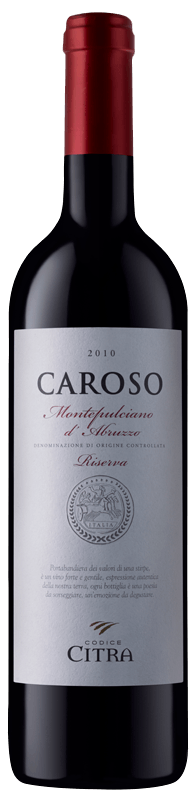
Caroso 2010 Montepulciano d’Abruzzo Riserva ($22)
Charles Krug 2014 Napa Valley Merlot ($25)

I took a look at the Caroso a few months ago in this space. As I noted then, I usually think of Montepulciano d’Abruzzo as a tasty and flavorful but light table wine. Inexpensive versions of it are standards here in Vine land. The Riserva, aged for two years in barrique and six months in bottle before release, is a different animal altogether.

This wine’s a bigger, more fruit-forward entry. Black currant and blackberry flavors come strongly at first sip. The nose has a fair amount of spice and vanilla and the finish is fruity with a considerable roughness of tannin.

Neither Napa wines nor domestic Merlot get a lot of run around here in general, for one reason or another. I’ve tried so many one-note Merlot over the years that I tend to skip it in favor of Merlot-dominant Bordeaux if I’m in that kind of mood. This Merlot from Krug might cause me to do a little reconsideration of that corner of the wine store.

The Krug Merlot is actually a blend – but any domestic wine with more than 75% of one varietal can be labeled as that varietal. The Krug is 82% Merlot, with the rest made up of Bordeaux elements Cabernet Sauvignon, Petit Verdot, and Malbec. Plums and raspberries were the order of the day flavorwise, and the tannins – holding in the background – are nicely balanced. The finish is lasting, with a nice back-and-forth between cherry and graphite.

We opened these up for the assembled at the table to try with the various courses. Alas, there wasn’t a lot of opportunity to take copious notes. The general consensus, however, held that the Krug was the superior wine in balance and general flavor. While I liked both of them well enough, I found myself drifting back to the Krug, which paired better with most everything we had on the table, although I thought the Montepulciano was a good match with the soup, which did have a bit of an Italian flair. The SPinC thought the Caroso was too jammy for her tastes. At the end of the day, the Krug won by unanimous consent.

But the real star of the evening was the conversation and the reconnection with our friends, who spoiled us from across the alley for many years. The spirit of the season found itself in full effect around our table, and we have many happy memories (as well as a number of other empty bottles!) to sustain us in the new year! Many thanks to Jeff, Christine, Marlane, Phoenix, Ken, and – always – the Sweet Partner in Crime for the lovely evening.


Monday, May 15, 2017

Checking in with Charles Smith

Over the Vine’s period of years, I’ve seen wine trends come and go. Wineries merge, brands change, labels change. Early on in my tasting time, I remember hearing about a Washington winemaker named Charles Smith.

Smith had a reputation as the “rock and roll winemaker.” With his big mop of curly hair and penchant for mosh pit-approved attire, Smith looked more Slayer than Sonoma. Using partnerships and interesting, approachable twists on a number of wines, Smith built up an intriguing portfolio and a great deal of brand loyalty when he discovered that simple, eye catching label designs crossed with quality, reasonably priced juice makes a successful market entry. His labels and their black and white iconography look back at you at most decent wine stores.

Smith has long been into sustainable agriculture. All of his winemaking operations follow up-to-date growing techniques and such. I also have some recollection of Smith being an early adopter of using Stelvin screw-top closures exclusively.

OK...Let's do this...
Recently, a slate of five of Smith’s wines showed up at the door. I was interested to get re-acquainted with many of these, since it’d been a couple of years since I’d actually done a full-on tasting of them.

Charles Smith 2015 “Eve” Washington State Chardonnay ($13) – Eve is appropriate moniker. Ripe sweet apple blossom is the first note that shows up in the bouquet, and that’s mirrored with those similar apple flavors on the palate, backed with some tropical fruit. Very lean style, but not overly acidic. No butter or cream. Tastes like there’s just a kiss of oak to round out an exceptionally well-balanced chard. Super pleasant to drink, and a great accompaniment to some slow-baked salmon alongside some sautéed mixed veggies, broiled with shredded parmesan.

Had the Charles Smith 2014 “Chateau Smith” Cabernet Sauvignon ($20) and the Charles Smith 2014 “Boom! Boom!” Syrah ($18) side by side. This pair of deep reds were cracked and poured next to a quality grill-job on some steaks. The Cabernet was rich and fruity, with dark cherry flavors and some blackberry notes against a medium weighted body. The finish was dry and not quite as long as I thought it might be, at least initially. It improved over the course of the evening.

The Syrah, on the other hand, was a juicy, savory experience. Lots of rich blueberry and blackberry flavors, a somewhat fruity and floral nose from the hint of Viognier blended in. The finish did something quite interesting – it starts off quite dry and earthy, then comes back with a little bit of candied sweetness that I found quite pleasant. Alongside the steaks, in a bit of a surprise to me, I found myself preferring the Syrah.

The Charles Smith 2014 “The Velvet Devil” Merlot ($13) has long been one of my go-to bottles of value-priced red, and not just because of my alma mater. (Although this Devil is much more Purple than Blue.) Smith has always produced a quality merlot – and this vintage is no exception. Dark, rich cool-climate fruits are in abundance here, although there’s enough of a tobacco-ish backbone to keep it from becoming a complete fruit bomb. Good restraint in the flavor and some good earthiness and fruity on the finish. Another quality entry. This ended up being an end-of-day wine that went really well with chocolate.

Then, there’s my old fave, Charles Smith 2015 “Kung Fu Girl” Riesling. ($13) I still remember years ago when I first saw an article about Smith, where he was asked about the name of this particular wine. His booming response was “"WHY? BECAUSE, RIESLING AND GIRLS KICK ASS!" The man knows. In any case, I’ve recommended this Riesling more times than I can count, because I find it hits the middle of the Venn diagram for people who aren’t into super-sweet Rieslings, and those who can’t deal with the flinty dry ones. Rich with citrus and honey, this is one of the better wine pairings with spicy Asian cuisine that you’ll run across. Peaches and some nice minerality round out the experience.
Mr. Smith, himself.

Finally, just to be a completist – and because I happened to run across this wine when I was ambling down the pink aisle – there was the Charles Smith 2015 “Vino!” Rosé ($12) – the newest addition to his catalog. This wine, made from 100% Sangiovese grown in Washington State, which is an interesting twist in and of itself, is a very solid, study quaffer. Full of melon and strawberry with a backing of herbs, I powered through this wine much too quickly on my front porch on a warm day in early May. What was left of the bottle was fabulous with salmon.   

Smith’s wines continue to hold their reputation for being solid, well-priced entries in the “quality everyday wine” category. I still give them a thumbs up.

Friday, November 11, 2016

A Few Thanksgiving Bottles

To accompany the Guide to Thanksgiving Wine Buying I put together for your reading pleasure, I recently got a few bottles from the Wine Fairy that could fall into the “let’s give this a go” category for your Turkey Day table. 


Villa Gemma 2015 Cerasuolo d’Abruzzo Rosé – This rosé is made from one of my all-time “just drink it” grapes, Montepulciano d’Abruzzo. (Cerasuolo is the town near where the grapes are sourced.) It’s considerably darker in hue than most rosé. In the bottle, the wine could easily be confused for a lighter red, like a Chianti. It pours bright ruby red with a medium weight body and flavors of cranberry and cherry. Despite the fruitiness, it’s quite dry and somewhat acidic on the finish, which would make it practically ideal for a varied table. $12.


Les Dauphins 2014 Côtes du Rhône Réserve Rouge – This is a solid, round, lightly tannined red. Rustic plummy flavor and aromas with a little smokiness towards the back. A lasting finish with very nice balanced fruits and tannin. I thought this was a great all-purpose red. There’s enough of that French earthy backbone to be interesting yet not scare off casual red wine drinkers. It would basically pair with anything roasted – turkey and pork would go very well, but you could pull it out for something like roasted fish in a darker sauce or even a beef tenderloin. Super flexible, which is what you’re looking for. $13.


Marina Cvetic 2010 Merlot – Instead of the Supertuscan blends one might expect, this wine’s made from 100% Merlot. Rather than a domestic fruit bomb, the blackberry and plum flavors are much more restrained within a framework of Old World earthiness, coupled with some background minerality from the terroir. The Sweet Partner in Crime thought this was a little too big for her, but I thought it was a pretty nice wine. I appreciated the fuller body without overwhelming fruitiness. Considerably better with food than on its own, this would be an ideal wine alongside something cheesy, like a casserole that uses gouda or sharp cheddar to hold things together. About $25 a bottle, which makes it a little pricier than I’d usually use for Thanksgiving, but if you have a small gathering of red wine drinkers and you want to provide something a little on the upscale side, it’s a solid option.


Tuesday, August 02, 2016

Naked Vine One-Hitter: Purple Heart Wines

August 7th is national Purple Heart Day, a day to pay respect to those who were wounded or killed in the cause of protecting and defending our nation in the US Armed Forces. The Mondavi family (whose patriarch, Peter, is a veteran of WWII) and winemaker Ray Coursen, a Vietnam Veteran, collaborated on the Purple Heart 2013 Red Wine.

The wine retails for around $20. Purple Heart Wines will make a generous annual donation (up to $50k per year) to the Purple Heart Foundation, an organization set up to help provide for the unmet needs of military men, women, and families. They focus on PTSD recovery, cancer treatment, sexual trauma, traumatic brain injury treatment, and other such services.

The wine is a blend made up primarily of Merlot and Cabernet Sauvignon, sourced from the Napa Valley. Its flavor profile lends itself to grilling season. Fruit-forward and firm, the nose is full of raspberry tart and plums. The body is medium-to-full, with big plummy flavors that slide towards licorice on the palate. The fruit’s pretty overwhelming at first pour, but as that calms down, the tannins start to emerge, yielding a long, somewhat smoky finish.

We tried this with a London broil alongside a grilled watermelon salad. (No, I’m not kidding – it was really good! Balsamic glaze is just the best.)  I thought it was a very solid pairing, and I think you’ll like it with most flame-kissed meals.

(Stop reading here if you don’t want to get semi-political.)

On a personal note, if you have veterans – especially ones who may have earned this particular medal -- in your circles of friends and acquaintances, thanks, thoughts and prayers are nice – but ask them how they’re doing and how you can help. Maybe it’s just hanging out. Maybe you offer a ride to the VA. Perhaps you offer to let them tell you a story or two. In most cases, they’ve seen things that you haven’t, and they know things you don’t. Listen.

We have a long way to go in this country regarding the way that we treat our veterans. I’ll just ask you to do your part to keep this from ever happening again:

This image still galls me.
We are America. We must do better. We are better.

Thursday, May 12, 2016

Umbria’s Left Jab to its Right Cross – Montefalco Rosso

We’ve featured the Montefalco region a couple of times here in ol’ Vine HQ – focusing specifically on the Sagrantino grape and Sagrantino Montefalco, the wine from the Umbria region I dubbed “the Italian Heavy Hitter.”

To refresh your memory, the Sagrantino grape has been grown in Umbria at least as far back as the mid 1500’s, with some scant records indicating it may have been grown as early as the turn of the millennium. This grape, grown primarily for sacramental and religious festival wines, was almost wiped out until the early 1990’s, when growers were able to gain a classified status for the grape and expanded the production.

On its own, Sagrantino creates enormous, tannic reds which have the highest concentration of polyphenols like resveratrol which are the compounds that give red wine its health-related benefits. It’s also the most tooth-staining varietal that I’ve ever happened across, just as a warning. In many regions, heavily tannic grapes are often blended with lighter varietals -- and the juice can be from either red or white grapes – to balance tannin and acidity in big wines or to create wines that are more approachable to the general public.

In neighboring Tuscany, the winemakers there blended their native Sangiovese grapes with merlot, cabernet, and other red wines to create the now-ubiquitous Supertuscans. Borrowing from that model, the Umbrians created Montefalco Rosso, a lighter-styled red wine which features Sagrantino in the blend. Since Sagrantino itself makes for big, honkin’ wine – a little of it goes a long way in the blend.

Also, grapes like Sagrantino tend to be fairly expensive to produce. Most Sagrantino Montefalco start at around $40 and go up front there. Winemakers like to turn a profit, and blending can help them produce quantities of wine at a lower price point to help with the bottom line.

I sampled two bottles of this Umbrian blend – the Colpetrone 2011 Montefalco Rosso  and the Tenute Lunelli 2010 “Ziggurat” Montefalco Rosso. Both blends featured 70% Sangiovese and 15% Sagrantino. The Colpetrone rounds out the blend with 15% Merlot, while the Ziggurat goes with 10% Merlot and 5% Cabernet Sauvignon.

Both Montefalco Rosso are considerably lighter than the big, bombin’ Sagrantino Montefalco, but they’re still wines of considerable stature. They also both need air – lots of it. While these wines are marketed as flexible food wines for picnics, I’d recommend letting them breathe a bit before heading out on your jaunt. Even if all you do is pour the bottle into a carafe and pour it right back, that’s still going to put you in a better place, tastewise.


The two wines were quite a study in contrast initially. The Colpetrone hearkened back to its bigger, burlier 100% Sagrantino cousin, hitting the palate with big dark fruits and fairly heavy tannin. The Sweet Partner in Crime had a similar reaction to that wine, as well – in that she thought it was too big to be pleasant. The Ziggurat, by contrast, was much more along the lines of a bigger Chianti, full of cherries and chalk. We found it to be much easier to drink.

Over the next couple of days with some different meals, we found the character of both wines changed. The Colpetrone softened remarkably. The heaviness lifted, yielding some smoky, raspberry tinged flavors that became nicely balanced. The Ziggurat, by contrast, deepened as it had its time in air. Some spicy, clove-like flavors emerged and the cherries took on a fuller, tarter aspect.

While both wines were good, I’d probably give the edge here to the Colpetrone on overall style points. Once both wines fully opened, I thought that it had the more interesting balance of flavor, tannin, and general drinking interest. Either would be solid choices with either big red sauces and roasted meats (perhaps a beef brasciole like the one we made to test the wines), or charcuterie boards with aged cheeses.

Both wines retail for around $20, so if you want to get a sense of what the big deal is with Sagrantino, you could ease into it through one of these Montefalco Rosso. If you’re looking for a burlier Italian wine, this might be one quality option.


Friday, November 20, 2015

Naked Vine One-Hitter: Avignonesi, a Bordeaux lost in Tuscany

Ah, Tuscany -- how we love you. Home of all those wonderful Sangiovese grapes which get turned into Chianti and Vino Nobile di Montepulciano and rich goodies like Super Tuscan wines.

The Super Tuscans, are not made according to the traditional standards of Tuscany. Instead, these wines generally have Sangiovese blended with other grape varietals like Cabernet Sauvignon or Merlot -- usually yielding wines that are bigger and richer than many of their Italian counterparts.

So what happens when a winemaker in Montepulciano decides, "Oh, heck with it -- I've got all these high-quality Bordeaux-blend grapes...let's make a high-end wine from that juice and commit the heresy of including zero Sangiovese in the mix."

The answer, or at least one of them, is the Avignonesi Desiderio Cortona DOC Merlot 2011. This Bordeaux blend of 85% Merlot and 15% Cabernet is a big, burly bottle of red, clocking in at 14.5% alcohol. It's aged for 18 months in barriques, which are the small barrels traditionally used to age Bordeaux.

Thanks to Sean at Colangelo, I had the opportunity to try a sample of this high end (around $60) Italian red.

Not a wine for the faint of heart -- this merlot is toothstainingly rich and thick. I'd say it's probably as big an "Old World" wine as I've come across any time recently. That said, the Desiderio starts with a nose that's surprisingly light. I caught the cherry notes that I usually find accompanying a Sangiovese-based wine, which is probably at least some function of the teroir. I also found some darker blackcurrant scents followed by a whiff of chocolate.

Any illusions that the light nose might yield subtle flavors disappear quickly. On the palate. stuff gets going right away with the gobs of big, rich dark fruit that you'd expect in a merlot, but alongside a big blast of smoky tannin. The mouthfeel is big, tannic, and drying. The finish lingers long and dry, with plenty of plum and smoke. I found the Desiderio to be little rough around the edges, so you might want to consider laying it down for a bit. If you crack it now, decant it for a good long while, and serve it next to some hearty, preferably grilled, fare or big sauces to take the edge off. Many lamb preparations would be a good match here.

Monday, September 21, 2015

The Grape White North -- Wines of British Columbia

Lining 'em up in Vancouver...
The jumping off point for my summer vacation with the Sweet Partner in Crime was Vancouver. Neither of us had ever been up to that particular area of the Pacific Northwest, and we’d heard that it was a really cool city. We weren’t disappointed. We ate and drank like royalty when we weren’t putting considerable miles on our shoes and the tires of rented bikes.

One of our missions for our time in Vancouver was to become acquainted with the wines of British Columbia. As you know, we’re big fans of the wines of Oregon and Washington in this space, and it seemed logical that wine grapes shouldn’t be constrained by silly things like national borders. At our various stops around the city, we tried to sample wines from across the region.

“Wines from Canada? Never heard of them,” could be crossing your mind. I wouldn’t be surprised. British Columbia’s total wine grape production in 2014 was about 1/6 of the production of the state of Washington alone. BC wine is prized across Canada. About 80% of BC wine is consumed within the province, while about 15% is distributed across the rest of the country. Only about 5% of the total production is exported.

Why worry about it? Because these are pretty damned good wines! And production in BC has been gradually increasing – more than doubling in the last 10 years. Which means, I hope, that more of these wines will start showing up on US shelves.

A quick primer on wines from British Columbia, in case you run into them. The province has a designation, BC VQA, which stands for British Columbia Vintners Quality Alliance. This designation means that the wine has met certain standards of the region. In this case, a wine labeled BC VQA must be made from 100% BC grapes, 95% of which must come from the region designated on the label. (More on that in a sec.) The varietal listed on the label must comprise at least 85% of the wine’s composition. If it says “Merlot,” for instance, it’s at least 85% Merlot. Also, 85% of the grapes must be produced in the vintage on the label, which is somewhat different than most countries – in which most blends of grapes from different years would not carry a vintage date.

There are six major wine growing regions in British Columbia. The largest and best known is the Okanagan Valley (pronounced Oak-A-Noggin), which is about a five hour drive east of Vancouver towards the Interior, which is why we weren’t able to make it there on this trip. The bulk of BC wine comes from this region. Vancouver Island and the Gulf Islands at the southern tip of V.I. are also major producers.

Merlot is the most planted red varietal, followed by syrah, pinot noir, cabernet franc, and cabernet sauvignon. Among whites, you’ll find pinot gris and chardonnay leading the way, followed by gewurztraminer, riesling, and sauvignon blanc. The wine styles are fairly consistent with the cool climate wines you would ordinarily find in Oregon, Washington, and along the Sonoma Coast.
The Painted Rock rundown...

After returning from our vacation, I reached out to some of the wineries whose wines we’d really enjoyed along the way. One of them, Painted Rock – an Okanagan winery in the town of Penticton – was good enough to send some samples along. My thoughts:

Painted Rock 2010 Merlot – Their merlot is a sizeable wine that definitely needs some time in air to limber up. Even after decanting, the fruit stayed hidden for a bit, bringing out lots of graphite flavors with some restrained tannins. Once the blueberry flavors started popping after the wine got some air, the combination is really robust. I found some nice dark fruit and floral scents on the nose. It’s pretty smelling for a big ol’ honkin’ red. If a good Bordeaux decided that it wanted to be a little fruitier and softer in order to play nicely with others, you’d have a pretty good idea of this wine. Quite muscular for a cool-weather wine. But that was tame compared to…

Painted Rock 2010 Syrah – Hooboy, this one’s a biggie. Like the merlot, it really needed some time and space in air to get at the flavors. Decant early! I think the SPinC was intimidated simply by the pour of this wine. It’s some seriously thick, inky juice. After enough time in air, the nose becomes quite pleasant, full of violet and plum. Don’t let the soft nose fool you. This Syrah makes me think of a steroidal Chateauneuf-de-Pape. Big, dark fruits and a sizable whallop of tannins greet you in a hurry. I didn’t find it out-of-balance at all, but it’s not for the faint of heart. We had it with a roasted chicken and potato dish, and it was a little too big. Divine with chocolate, though. The SPinC, who is currently palate-wise calibrated for summer wines, just slid it aside. More for me! I quite enjoyed it.

Painted Rock 2010 “Red Icon” – The Red Icon was, far and away, our favorite of the three wines. This is a beautifully balanced red, made from a traditional Bordeaux blend (merlot, cab franc, petit verdot, malbec, and cabernet sauvignon in order). The nose is full of blackberries with a really pretty floral undertone. The flavor is full of cherries and plums, and it’s potent without being overpowering. The tannins are certainly firm, but they keep to the back, allowing the fruit to really shine, along with some strong vanilla notes. The finish is a lasting balance of leather, dark fruit, and smoke. I think this wine’s right in its wheelhouse right now. We opened this over Labor Day weekend and had it with some burgers from the grill. Grilled meat and this wine get along famously.

The Merlot and Syrah are both about $28-30 US. The Red Icon, which I really highly recommend, goes for about $35-40.

Some others that we really enjoyed along the way were the Blue Mountain Gamay Noir, which tasted like a cru Beaujolais; and the Tyler Harlton Pinot Noir, which was brambly and earthy – just the way we like it. There were also several nice whites that we had a chance to sample, the best of which for me was the Kanazawa “Nomu” -- a luscious blend of viognier, semillon, and muscat blanc full of creamy citrus, orange blossom, and peach flavors that was absolutely delicious next to some fabulous sushi at downtown Vancouver’s Shuraku Sake House.

[Other suggestions for awesome food and drink in Vancouver: Rodney’s Oyster House in Yaletown for fresh raw oysters and “Caesars,” Salt Tasting Room on Blood Alley for a unique, flavor-filled experience in a “Hamsterdam” portion of the city; “tacones” and fish chowder at Go Fish! on Granville Island; delicious tapas at The Sardine Can in Gastown; the hip young crowd at Hapa Izakaya for “Japanese tapas;” and Uva Wine & Cocktail Bar for late night downtown cocktails, jazz, and a smooth end to an evening.]


The SPinC at Salt Tasting Room

If you get a chance to try some of these north of the border selections, do so. With the unpredictability of climate change will be doing to many of our domestic wine regions – these BC wines may soon emerge as an interesting alternative. Keep your eyes peeled.

Tuesday, September 01, 2015

Naked Vine One-Hitter: Le Volte Dell’Ornellaia – Breezy Bolgheri makes a Svelte Supertuscan

The last jaunt the Sweet Partner in Crime and I made to California, we spent most of our time in the Sonoma Coast AVA. That close to the Pacific, the climate and soil yielded wines that were quite different from the Sonoma offerings to which we’d been accustomed. The coastal wines had, in general, more earthiness, less pronounced fruit, and a little rough-around-the-edges character that we really liked.

Fast forward to an offer I received to try an Italian coastal version of what would commonly be called a Supertuscan wine. To refresh your memory, the categorization of Supertuscan wines came about in Italy because some winemakers in Tuscany wanted to make wines above the quality of simple table wine, but didn’t want to follow the strict guidelines required to label the wines as Chianti or Brunello di Montalcino.

These blends usually included Sangiovese, but they often had other grapes like Cabernet Sauvignon, Merlot, and Syrah – leading to a bigger, fruitier product which found much favor Stateside. These wines are usually labeled “IGT” (short for Indicazione Geografica Tipica), rather than the inexpensive vin di tavola.


The bottle I received, the Le Volte dell’Ornellaia 2013 Toscana IGT, falls into that category – but looked to be a new experience for me because the Ornellaia estate is near the town of Bolgheri, which faces the Tyrrhenian Sea from the hills. The soil there sounds much like the soil in parts of Oregon – part volcanic, part marine sedimentary, and part alluvial – so I was quite interested to see how this wine would differ from the Supertuscan blends grown further inland in the Chianti or Orvieto regions.

This wine, a blend of 50% Merlot, 30% Sangiovese, and 20% Cabernet, pours somewhat lighter than many of the thicker IGT blends. Cool weather and coastal wines tend to be lighter in body than their warmer climate, inland counterparts. No surprise there. The nose is quite pretty – violets and some light stone fruit. The first sip, as the SPinC put it, is “straight-up Sangiovese” – light bodied cherries and chalk. Then things…changed.

The sensation was like someone fed the wine a Super Mario power-up mushroom halfway through the mouthful. Suddenly, I felt I had an eyedropper of dark fruits and tannin squeezed onto the back of my tongue. Imagine a wine with the eventual punch of a big California merlot, but without the initial fruitbombiness.

I thought, at first, this particular note may have been because I hadn’t decanted the wine long enough. Even a couple of hours later, I still got the same pleasantly peculiar perception.

For dinner that night, I’d grilled up some lamb loin chops with a side of grilled okra from our CSA share, some quinoa, and tzatziki sauce on the side. It’s definitely a meat-loving wine. It went fantastically with the lamb. I think it would certainly need to accompany richer fare – it would probably be too big for many chicken or pasta dishes, unless you had a good ragu over top.

I definitely enjoyed this wine. I thought it was an interesting twist on the often over-fruited Supertuscans – and I’ll certainly be looking for some other coastal Tuscan versions.

The Le Volte retails for around $30.


(Thanks to Claire at Colangelo for the offer.)

Monday, June 01, 2015

Naked Vine Double Barrel -- New Terroir, New Tastes


Terroir comes up quite a bit around here, obviously. To refresh your memory, terroir is the combination of soil geology and composition, geographic location, and weather patterns that affect the growth of grapevines and thus affect the flavor of a wine. A wine made from Chardonnay in the cool, limestone-soiled French region of Chablis will taste completely different from a Chardonnay from the warmer, loamier soils of California’s Central Valley, for instance.

The practical upshot of the effect of terroir is that, given enough consumption, you can make general assumptions of what a wine from a certain country or region will taste like. This is especially true in some of the regions lesser known by the general wine-drinking public. For instance, if I’m in a restaurant and I see a New Zealand sauvignon blanc on the wine list that I’ve not heard of, I usually feel fairly certain that the wine will be highly acidic and have grapefruity flavors with the occasional fragrance of fresh-cut grass.

Of course, you’re familiar with the old saw about the word “assume” – and that can come into play with wine. One reason we can make these assumptions about a country’s wine flavors is that there tend to be areas of that region that dominate wine production – whether because of weather, amount of grape production, access to easy shipping, and any number of other factors. The New Zealand sauvignon blanc I mentioned above? I can also make an assumption that the wine came from the Malborough region of New Zealand, which leads that country in wine exports. However, other regions of the same country do their own twists on wine production – yielding wines that can be very different and certainly worth exploring.

I received a pair of bottles from Juliana at Colangelo from a couple of Southern Hemispheric regions which are starting to make more of a dent in the U.S. wine market. Both turned out to be somewhat different than my usual expectations.

The first bottle was from – surprise, surprise – New Zealand. As I’ve mentioned, most of the best known wines from there hail from Marlborough, which is on New Zealand’s South Island. This wine, the Trinity Hill 2013 “The Trinity” Red Blend, comes from Hawke’s Bay on the North Island. (I’ve actually written about a wine from Hawke’s Bay a couple of New Years Eves ago…) The reds I’ve tried from New Zealand tend to be on the lighter side, like pinot noir. The North Island’s climate is somewhat warmer, which allows for the growth of grapes that thrive in a little more heat. This Merlot-dominant blend with additions of Tempranillo and Malbec, packs a little more oomph in its pleasant package.

The nose is fairly fragrant, full of plums and blackberries, and those big flavors are echoed on the palate. It’s not too thick – certainly falling into the medium-weight category, with plenty of grippy tannins that aren’t overwhelming. The finish is lasting and full, with blackberry, mint, and lasting tannins. We cracked this over Memorial Day weekend, and I’d grilled up a London broil. The Sweet Partner in Crime made a wonderfully hashy side out of some leftover Israeli couscous, crystallized ginger, leek, and asparagus and we laid the strips of steak atop. Just a lovely meal, I gotta say. For $17, this wine stepped right up.

The other bottle was a Chardonnay from South Africa. The most common wines from South Africa are from regions such as Constantia, Stellenbosch, and Paarl – all of which have terroir that includes a warm climate. This makes for big, rustic reds – many of which are made from Pinotage, a cross between Pinot Noir and Cinsault that grows well in hot weather. The white wines tend to be made from sauvignon blanc and chenin blanc – again, good warm weather grapes.

However, there’s much more attention now being paid to a region of South Africa called Elgin. Elgin is located on a high-altitude plateau, which allows for the creation of “cool climate” wines, which tend to be lighter in body and higher in acidity. From Elgin comes the Lothian Vineyards 2013 Chardonnay – billed as a more “Burgundian” version.

I’m not sure I’d quite go that far with that description, but the flavors are certainly different from any other South African white that I’ve tried. Most of those wines tend to make good summer sippers, but this one makes for a much richer, fuller quaff. The nose brought to mind “toasted pear,” if that makes any sense. For a cool climate wine, the body is richly styles and somewhat hefty on the palate for a white with full flavors of honey, apple, and butterscotch. There’s some oak hanging out, too, but much less than I thought there would be given the nose.

The Lothian finishes creamily, with just a quick citrus bite and a long butterscotch ending. I wouldn’t exactly call it “elegant” – that makes it sound dainty, which it’s not. I’d probably go for calling it “classy” chardonnay. Good alongside any sort of fish with a little oil in it. We had this with some rainbow trout filets over wild rice, and we found it quite nice. The pricetag on this one is around $20. If you’re a fan of California chardonnay and would like something with a slightly different twist, it’s worth a try.

Monday, September 08, 2014

The Bodega Bay Bookend and another Sonoma Snowball

You might remember the Naked Vine’s May trip to California, where the Sweet Partner in Crime and I plopped ourselves down in the town of Sonoma, tooled around a bunch, and tried some delicious wine thanks to the Naked Vine Snowball Technique, which I described thusly:

How does this work? Start at the place where you’re staying. These people live there. They know things. Say something like, “We’re looking for a good place to start. We want somewhere fun, laid back, and not overly pricey.” Replace those descriptors with whatever you want…expensive wines, pinot noir specialists, great gift shop -- whatever floats your cork. You’ll end up with at least a couple of recommendations. Pop in to one of them and do a tasting. Chat. Enjoy. If you feel like you make a connection, then repeat your question to the good folks behind the bar. These people live there. They know things. They’ll mention a couple of other places. Those places will mention other places. Patterns form in the recommendations. You now have your guide. Go forth and enjoy.

We decided to head back out west again just before school started – this time using the Sonoma Coast as our base of operations, since we’d not done much exploration of that area of this wonderful wine region. The evening drive through the fog from SFO to the town of Bodega Bay was a bit harrowing, but all's well that ends well! We got checked in to the Bodega Bay Lodge (which I recommend once you get used to the foghorn in the bay going off every 30 seconds) and got ready for our new tour of the county.
 
(c) the San Francisco Chronicle

The Sonoma Coast AVA (AVA = “American Viticultural Area” – the designation for a subregion within a growing areas), as you can see, is a fairly large portion of Sonoma County. Most of the vineyards in this AVA are at much higher altitude than the rest of the county You might remember, during my writeup of the last Sonoma trip, that I discovered a preference for “mountain fruit” vs. “valley fruit” wines. Mountain fruit grapes from the generally cooler, breezier climates like the Sonoma coastal region create wines that are less fruit-forward and more subtle in flavor. 

These areas favor cool weather grapes such as pinot noir, rather than the Cabernet and Zin that you’d find just a few miles inland as the crow flies. The climate also gives an interesting twist to the Chardonnay and Syrah some growers are producing. The region also produces some absolutely fabulous rosé.   Many of these wines also tend to be somewhat more expensive, as the grapes are more difficult to grow and harvest. It’s easy to burn through a lot of coin ordering stuff if you’re not careful.


We started the snowball in Bodega Bay at a wine and gift shop called Gourmet Au Bay. Their trademark is their “wine surfing” samples, in which you get three pours on a surfboart. After a couple of tastes and a discussion about what we liked, we talked to the manager, Sissy, to see what she might recommend. Out came the highlighter and the map of Sonoma County, and we were off. 
Just getting under way. Two down, one to go.
(Snowball forming on map...)

With the narrow, twisty roads of this part of Sonoma County, we didn’t hit as many wineries as we could have – but I was pleased with our finds. Here were some of our favorites:

Iron Horse Vineyards – The gorgeousness that is the Iron Horse property is right on the border of the Sonoma Coast and Russian River AVA’s, so I’m including it. If you remember, Iron Horse was the tasting experience which started The Naked Vine down its path of oenological debauchery. Nine years had passed since we were last there, and they seem to have done pretty well for themselves in the interim. Unlike nine years ago, when they were crafting incredible cabernets (one of which, “Benchmark,” was the celebratory bottle when the Sweet Partner in Crime made full professor), they only make wine from estate fruit now. This means that they grow only Chardonnay and Pinot Noir – much of which goes into the sparkling wines for which they’re well known. We were fans of the Ocean Reserve Blanc de Blancs ($45), a sparkling wine that has an attachment to the National Geographic Ocean Initiative. Their pinot noirs were exceptional, but quite pricey. The $70 pricetag on the Russian River Pinot Noir was steep, but it’s a great wine. (http://www.ironhorsevineyards.com/)

Our return to the scene of the crime...Iron Horse.
Lynmar Estate – I’ve talked before about my notion of “wood theory” – in that there’s generally an inverse relationship between the amount of burnished wood in a tasting room and the quality of the wine. Lynmar is an exception to the theory, as their tasting room and surrounding gardens (which include a rosemary shrub taller than I am!) are lovely places to linger. The wine, as well, is lovely to linger over. Their focus is pinot noir and chardonnay, although they’ve begun cranking out some cool-climate Syrah. We really enjoyed their spread. I thought their Russian River pinot noir at $40 was exceptional, especially for the price. Lynmar also was where we discovered that a lot of these wineries are producing some pinot noir for the express purpose of creating rosé, like the good folks in Provence. Lynmar’s rosé was top notch. Their Quail Hill chardonnay, while hardly a bargain at $55, is simply luscious. (http://www.lynmarestate.com/)

Red Car Wine – Red Car won the “most interesting tasting room” prize from us on this trip, with its funky collection of memorabilia and a vibe that stops on the playful side of hipster. Red Car focuses almost exclusively on production from high-altitude, cold-climate vineyards, which produces very bright, clean, flavorful wine at relatively low alcohol levels. For instance, I don’t see a lot of Syrah under 13.5% alcohol, and Red Car’s Estate ($50) clocked in at 13.3% with gorgeous layers of plum, earth, and chocolate. Their Chardonnay ($35) could have fooled me into thinking it was a white Burgundy along the lines of the clean but oaky Meursault. Their pinots, which start around $40, also have a bit of that lean Burgundian earth and smokiness – and fruits that are very clean and striking. Highly recommended. (http://www.redcarwine.com/)
Red Car's tasting room. Good fun.


Taft Street Wines – “Garagistes since 1979” is their proud announcement. Garagistes were winemakers inBordeaux who operated outside the strict French guidelines for wine production, often making their wines in garages rather than on chateaux. The American iteration, which moved from a garage in Berkeley to an old apple processing plant in Sebastapol, was the best overall value of any of our stops. Their estate pinot is under $35, and I took a shine to their Alexander Valley Merlot, which at $20 was the best QPR I found on the trip. Fruity and lush with a really nice cocoa backbone, it’s worth stocking up on. They also produced some of the few sauvignon blancs we tried on the trip -- a steal at $18. (http://www.taftstreetwinery.com/)

Joseph Phelps Freestone Vineyards – Joseph Phelps is a very accomplished Napa winemaker. He’s produced three cabernets -- his “Insignia” label -- that earned 100 points from Robert Parker, including his 2002, which was named Wine of the Year by Wine Spectator. In 2007, Phelps opened a winery in the Sonoma Coast region for the grapes grown in his new Freestone Vineyards in the Sonoma Coast AVA. The $55 Freestone Vineyards pinot noir was a delicate, wonderfully balanced offering – full of fruit and smoke. We also discovered Phelps’ “second label” wine – Fog Dog – which were perfectly decent pinot noir and chardonnay, although at the price point, there were better wines in the county. We also had the opportunity to try the 2006 vintage of the “Insignia” which would retail for $240 – making it the second-most expensive wine I’ve ever tried. Needless to say, it was a pretty damned good wine. (http://www.josephphelps.com/)  I’ll be writing more about Phelps in the future, so stay tuned.

Fort Ross Vineyard – Fort Ross was the one Sonoma Coast tasting room we visited that was actually on the coast – about a 35 minute drive from Bodega Bay up the windy Pacific Coast Highway up through Jenner (where you absolutely must stop and get a sandwich and a beverage at Café Aquatica) and then up into the mountain fog to the beautiful tasting room, where you can watch the sun burn away the clouds as you sip on some excellent pinot noir and chardonnay. My favorite selection of theirs, however, was a grape I’d not seen anywhere else in the region: Pinotage, the national grape of South Africa – the native country of owners Lester and Linda Schwartz. I like South African pinotage just fine, but it’s usually a rough wine that calls for a big slab of meat from the braai. Planted in these coastal altitudes, the Fort Ross pinotage ($48) yields a rounder, smoother – yet still muscular – glass that features blackberry flavors and a really nice earthiness. Their pinot noir ($42-70) and rosé ($24) were also top notch. (http://www.fortrossvineyard.com/)


Fort Ross Vineyard -- Nice view, eh?

Fog Crest Vineyard – Our last stop was a lovely one, here at one of Sonoma’s newest tasting rooms. It’s so new (it just opened this year) that it’s not on the touring maps – and we only learned about it from our friends at Gourmet Au Bay. We were very glad that we made the turn up the driveway and planted ourselves on their lovely terrace overlooking the vineyard for our final tasting of the trip as we headed out of town. The view was a little reminiscent of Iron Horse – so yet another bookend. We really enjoyed the Estate Chardonnay ($39), chock full of crème brulee and spice and their full-flavored Estate pinot noir ($55) with its smoky layers that would be good to stash for a couple of years. The wine that made the biggest impression on me, however, was their Rosé ($21), Rich and fruity for a dry rosé, it’s clearly lovingly crafted. I pulled the trigger on a case for home, since one can never have too much good dry rosé around. (http://www.fogcrestvineyard.com/)

Saying farewells to Sonoma at Fog Crest.
If you’re over in that neck of the woods, I'd also recommend driving around Bayshore Drive in Bodega to get some oysters at Fisherman’s Cove (http://www.bodegabayoysters.com/), get dinner at Terrapin Creek Café (http://www.terrapincreekcafe.com/); and snag brunch at Willow Wood Café in Graton (http://www.willowwoodgraton.com/).

Cheers!