
Sunday, September 16, 2007
Make Wine Not War
A bit behind on putting this up -- Vine reader James Armstrong (the "Strange Man for a Strange World" on my blogroll) forwarded this op-ed from the New York Times. You think wine's not a serious business here in the States? In France, they're setting off IED's over frustration towards the government's strict production laws, the "wine lake," and exporting difficulties. Have a read -- it's fascinating, albeit very sad, stuff.
Changing LINKS


Saturday, September 15, 2007
Tiny Bubbles...
Will summer ever end?
Perhaps you're luckier in your neck of the woods. Because just across the river from(What does the cheap wine man mean -- humid and dry?)
I'm whining, aren't I?
In any case, everyone searches for a way to beat the heat -- to find some kind of refreshment, while at the same time not making you heavy and sleepy. For the obvious answer, let us turn to Brigitte Bardot:

"
Of course, the Woman God Created was French, so she wouldn't be considering other sparkling wines. We here at the Vine are neither Francophile nor Bardotophile enough to rule out other nationalities of sparkling wine. In fact, if you're looking for relief from the heat, looking outside
Why? Many sparkling wines made outside of
I know many folks think beer when it's blazing hot, but sparkling wine's lighter than the lightest light beer, colder than other wines, as refreshing as sparkling water, and quickly makes you forget that there's anything wrong with the weather. One thing to remember about sparkling wine (aside from the hangover if you're not careful) -- while it's good to keep a bottle or two around, it's best not to store them in the fridge. After a week or so, the cold will kill the flavors. Just get up in the morning, realize the weather's going to be ugly, and put the bottle in. Your wine will be plenty cold by lunch.
I don't know if these would put the pep back in Brigitte's step -- but they work for me:
Gazela Vinho Verde -- One of the few Portuguese wines that you'll find these days. Vinho Verde translates as "Green Wine." The name refers more to the age of the wine than the color. The wine looks almost clear. The wine's a blend of red and white grapes and is intended to be drunk within a year of bottling. It has a light citrusy nose that moves easily into a slightly tart flavor. I'd call the Gazela a "sauvignon blanc lite" with its flavors of grapefruit and lemon. It's a little dry on the finish, and the dryness is amplified by a slight carbonation. Technically, this wine's not a sparkling wine, but I see bubbles when I open it, so it counts. It's extremely easy to drink and, at only 9% alcohol, you could "Drink this one for breakfast," as a wine mentor of mine used to say. The Gazela is easily locatable in your wine store -- the bottle's very distinctive. I found this on sale for $5. A great value, and a nice wine to have lying around.
Borgo San Leo Prosecco Brut -- I've become hooked on Prosecco as this summer wears on. I think it's one of the most refreshing wines out there. Prosecco is an Italian grape that can be used for either fully or semi-sparkling wine. I've not run into many of the full-sparkling versions of the grape. The Borgo has a light, crisp nose of apples and a little yeast. It's fruity and dry to the taste, again with a slight yeast taste. The dryness was unexpected, even with the "Brut" tag. I thought it would be sweeter, but it was much more like
René Barbier Mediterranean Pétillant Wine -- An interesting marketing ploy for a decent wine. "Vin Pétillant" is the French term for semi-sparkling wine (as opposed to "Vin Mousseux" -- full sparkling). You need to read the fine print to see that this wine is actually Spanish in origin and is from Friexenet, maker one of my standby sparkling wines. This wine reminds me of a Spanish version of vinho verde. The flavor profile is very similar, except that this one has more of a flavor of apple then lemon, as well as a little bit of a yeasty flavor more reminiscent of a full sparkling wine. Again, under 10% alcohol and refreshing. I also found this for under $5.
You could line these three up -- Gazela, Barbier, Borgo -- and have a very interesting side-by-side-by-side progression. They'd come across as cousins. Of course, you'd then have three bottles open, so try it with friends.
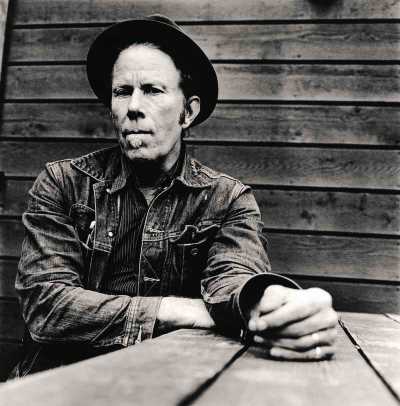
Stay cool, pour some bubbly, raise a glass, hope for rain, and heed the words of Tom Waits:
Tuesday, September 04, 2007
Thinking Inside the Box
"No, seriously," she said with an edge in her voice that gave me goosebumps. This is, after all, a woman who hiked the state of
So, how do they get the wine in there? The wine's not really in the box, of course. There's an aluminum or plastic pouch inside the box, tapped with a small spout of some kind. These containers are officially called "casks," although they're known in Australia
They hold up to five liters of wine, but the most common size we'll see is three liters. Three liters is equivalent to four regular-sized bottles. And there's the rub. I drink a lot of wine, obviously, but having three liters of a generally-not-great wine lying around for just myself and the Sweet Partner in Crime isn't what I'm looking for. Generally, you'd get these containers for larger gatherings -- or if someone is distracted, gone for work, or just lame enough to need a wine that will last for a month.
Still, the obvious reason was to par-tay. Thus, the First Annual Labor Day Box Wine Extravaganza was born. Christine and I each got two boxes of wine, and we went from there. The cast of characters:
- The Sweet Partner in Crime and I.
- Christine and her handyman husband Jeff.
- Katherine, a mutual friend.
- Marlene & Steve, our Francophile neighbors.
We did our best to take notes on our tastings, but by the end of the evening, predictably, we lost track of who said what. The quotes tell the stories well enough.
The wines:
- Angel Juice 2005 Pinot Grigio
- Banrock Station 2006 Chardonnay
- Black
- Black
(Christine and I bought our wines separately, so we ran with what we had.)
First up, the Angel Juice.
- "It's lawnmower wine. You know, for a hot day in the yard." (Which led to: "What? You mean you'd put it in the lawnmower?")
- "It'll drink, but there's not much body."
- "It's so light -- it's not really much of a wine."
- "It's like Crystal Light -- the Wine of the Astronauts!"
- "Kinda bitter -- like the seeds are crushed up in it."
- "It says 'honeysuckle and citrus' -- I don't get either. More lemon rind than lemon!"
- "It quenches your thirst -- but I won't say much beyond that."
- "One word: Wimpy."
We did find that it went reasonably well with food. Pesto paired well for some reason.
Then came the Banrock Station. Honestly, we all wished we'd just stayed on the train…
- "It smells like honey wine or cider."
- "It's sour. There's no oak -- none. It's just bad, bad, bad."
- "It's like a golden shower for your mouth."
- "I wouldn't cook with it."
- "It tastes like battery acid."
- "It's a cut above Mad Dog."
- "I'd give it to a homeless guy so he could get a change of pace."
Truly an awful wine -- unanimously one of the worst we'd had collectively. More optimistically, the suggestion was made: "Maybe you could make a spritzer out of it." (You couldn't.) Christine made the best suggestion: "Well, at least you could recycle the box…"
With palates collectively in shock, we were worried as we edged towards the reds. The Black Box wines -- we were dubious -- but we went forward. We were too invested to turn back:- "This isn't bad!"
- "It's not complicated -- but it's decent." (Surprised nods all around.)
- "It's versatile. This is good wine for a party."
- "It's inoffensive -- it would go with a lot of things. There's enough fruit and tannin to be interesting."
- "It passes the cube test. If it's really hot, you can put ice in it and it's still drinkable."
- "It's nondescript, but you really could drink it with anything."
- "It's a really simple wine."
- "Hey! This goes pretty well with chocolate!"
- "It's good."
- "It's yummy -- has a little bite to it, unlike that chardonnay, which just bites."
- "It's far too easy to dispense!"

UPDATE: While this has little to do with box wine, the Sweet Partner and I enjoyed some "regular" wine last night at Red, a restaurant in Cincinnati's Hyde Park district. Two thumbs up from us. The food was excellent (we had a filet and halibut, along with some of the best bourbon bread pudding outside of Lexington), the service was on par with the food, and the atmosphere was classy without being stuffy. Their website is fun, too -- allowing you to see the presentation of all their entrees. Give it a go for a special occasion.
Friday, August 24, 2007
The Rainbow Nation
They've dealt with apartheid, an illicit diamond trade, and the jailing of Nelson Mandela. They were the ostensible home country of the bad guys from "Lethal Weapon 2" and their national rugby team can never quite match
Since the end of apartheid in 1990,
Wine from
Here are a couple of possibilities for you:
Mulderbosch 2006 Chenin Blanc -- Mulderbosch Winery is located in Stellenbosch, one of the prime wine growing areas in
Brampton 2005 Unoaked Chardonnay --
Ken Forrester 2004 Stellenbosch Petit Pinotage --A really nice example of what you'll find with a Pinotage. The nose is an interesting combination of berries and smoke -- not scents that you'll often find together. One review I read said they smelled "bacon." (I didn't get that, personally.) The flavor is soft and medium bodied, with an earthiness to it that will remind you of a French Syrah. The finish goes back to fruit and smoke. As I mentioned above, anything gamey is going to go really well here. I had this with roast lamb, and it worked extremely well. Another nice value at $9-11.
If you're looking for some slightly different flavors than you've found in the mainstream -- give these South African bottles a try. Much like the country, there are some very unique quaffs here. Certainly worth exploration.
As a side note, the column's title is a term coined by Archbishop Desmond Tutu to describe the multicultural nature of
Tuesday, August 14, 2007
The Full Monte
A couple of years ago, I was going to assemble my world-famous (or at least within the world of the household) Eggplant Parmesan. I knew next to nothing about Italian wine at that point. I headed directly to the Chianti section of the wine store and puzzled over racks full of wines ending in I's and O's. On a whim, I picked a bottled labeled "Montepulciano." Took it home, made the parmesan, cracked the wine, poured glasses…
Zowie!
The flavor was not at all what I expected. This wine had a much deeper fruit flavor, was much less "chalky" than Chianti, and was smoother overall. I fell in love with the stuff then and there, and Montepulciano has become my staple Italian food wine ever since.
Let me amend that statement -- Montepulciano d'Abruzzo has become my staple Italian food wine.
Why the clarification? "Montepulciano" is a wine double-entendre. There's a Montepulciano region in
First, the region. The Montepulciano growing region is just to the northwest of Chianti. Most wines made in Montepulciano (much like Chianti) are blends made from around 70% Sangiovese. Since they're neighboring provinces, Chianti and Montepulciano wines taste somewhat similar. These wines are somewhat light in body, a bit tannic, and with that trademark "chalkiness."
The best of these wines are labeled "Vino Nobile di Montepulciano." These wines start at about $20 and go up quickly from there. Luckily, there’s a “second line” wine that works almost as well. Just as bottles simply labeled “Nebbiolo” are the bargain versions of Barolo and Barbaresco, there’s an inexpensive alternative to the VNdM – it’s "Rosso di Montepulciano." ("The Red of Montepulciano") Same growing area, similar style, and considerably less expensive. These pair best with pork, chicken, and hard cheeses.
The Montepulciano grape itself is largely cultivated in the
For comparison, the first two here are from the Montepulciano grape. The third is from the region:
Masciarelli 2002 Montepulciano d'Abruzzo -- A very straightforward, tasty wine. Some might call this wine "rustic" for its pronounced flavor. The nose is dark cherries and smoke. There's a fruity, earthy character to this that's got some weight to it. I put this one up with eggplant parmesan where I grilled the eggplant instead of frying it. The smoky flavors of the wine and the eggplant made a wonderful combination as the fruit bounced happily off the red sauce. Give it a go with lamb stew also. $9-11.
Villa Cerrina 2003 Montepulciano d'Abruzzo -- This is a deep, dark wine. The nose is similar to a Chianti Classico -- lots of dark berries and cherries. The flavor is round and full, with plenty of that rich fruit. The finish is long and very fruity, with only a little bit of chalk on the end. Unlike many Italian wines, in my experience, you could easily drink this one by itself if you chilled it just a smidge. The big fruity flavors, however, make it a perfect pairing for a hearty meal. I made baked angel hair with chicken chorizo and mushrooms with this. Another exceptionally tasty pairing -- and it could basically go with anything in the pasta family. For the price (about $6 at Trader Joe's), a fantastic table wine.
Poliziano 2003 Rosso di Montepulciano -- You'll notice this wine is very dark hued, but its color belies its weight. The nose is fruity and a little bit floral. The flavor is not too heavy with some really nice cherry tartness and fruit. The finish, like many Tuscan wines, is a little bit chalky. I wouldn't drink this alone. However, pair this up with a Penne Amatriciana or with some herb-roasted chicken, and you'll find a whole other realm of flavor. The complexity of this wine really shows through with the right food. At $15, it's an exceptional bottle -- probably half of what you'd pay for a Chianti Classico Riserva of similar quality.
Francisco Redi, a 17th century Italian physician, naturalist, and poet, concluded his poem Bacco in Toscana (Bacchus inSunday, August 05, 2007
Reese's Cup Wines
Allow me a moment of nostalgia.
I was speaking to a group of new freshmen at the institution of higher learning that funds my wine habit. As part of answering a question, I came out, for some reason, with, "You got your peanut butter in my chocolate…"
No one batted an eye. They had no clue. An entire generation of college students raised without "two great tastes that taste great together."
(Honestly, I don't remember the exact context -- and the Sweet Partner in Crime can attest that such a thing is fairly common.)
After the "jeez, you're getting' old" bell stopped ringing much later that evening, I decided to drown my sorrows a bit -- and what better way to honor that little piece of popular culture than with wines based on a similar principle.
Blending wines made from different grapes is almost as old as winemaking itself. Someone realized early on that proper proportions of different varietals greatly improve a wine's overall flavor. For instance, many cabernet sauvignons are bottled after being mixed with a touch of cabernet franc. This blend takes the edge off the tannin and brightens the fruit. Some wine growing areas even have laws requiring wines to be blended.
The French refer to a blended wine as a "cuvée." Literally translated, "cuvée" means "vat" -- which makes sense if you think about it. Cuvées were initially cheap table wine. The term has broadened significantly. Wine growers in
American wine growers wanted to get in on the act. However, the growers couldn't call their wines "
Meritage was the standard term for a bit -- but the growers discovered that few among the "normal" wine drinkers knew what the heck it meant. Then came the "Proprietary Blend" -- which basically meant that they'd put whatever they wanted in it. This was followed by "
Blended wines can be hit or miss. If the proportions are off, then the wine can end up a weak, flabby mess -- especially inexpensive blends. There are, however, many meritages with merit:
Oakley 2005 fourWHITES -- "It's very pretty," announced the Sweet Partner in Crime. This blend from Cline Cellars combines Gewurztraminer, Palomino (the grape from which sherry is made), Viognier, and Malvasia. I've never heard of that last grape. Honey and flowers on the nose like a viognier, a little of that sherry bite with the peach and citrus flavor, and a finish with a pepper like gewürztraminer. This one would be absolutely scrumptious with a salad with some mandarin oranges or something like bruschetta with fresh garden tomatoes and some balsamic vinegar. A steal at $7-9.
Toad Hollow "Erik's the Red" Proprietary Blend -- You want to talk about a serious blend? This wine has eighteen different grapes in the mix. It doesn't exactly follow any specific style -- rather, it's simply a tasty, full red. This wine has plenty of nice, deep flavors. Big dark fruit on the nose, coupled with a little of that
Rosenblum Chateau La Paws 2005
Wednesday, August 01, 2007
The Vine turns One
Happy birthday to me!
One year ago today, the Naked Vine was born.
One hundred twenty-some odd tasting notes, a couple of vacations, and only moderate liver damage later -- and the Vine is still going strong.
A few well-deserved kudos:
And most of all, to all of you who read regularly or just stop by occasionally -- wherever you are, I hope you've found something here to your liking.
Cheers, L'Chaim, Slainte, Prost, and on and on...to another year and another harvest. Thanks to all.
Time for a party!
One year ago today, the Naked Vine was born.
One hundred twenty-some odd tasting notes, a couple of vacations, and only moderate liver damage later -- and the Vine is still going strong.
A few well-deserved kudos:
- To the Sweet Partner in Crime -- the best partner and editor I could ever dream of.
- To Scott -- for the quote that led to this madness.
- To Dave -- for the pints that led to "Sommelier for the Common Man."
- To Renee and Brian from Vintner Select -- my mentors in this little project.
- To The Wizard of Covington -- for all sorts of moral support.
- To folks like Mark Morford, Bill Simmons, Digby, and Al Featherston -- for helping me find a voice.
- To the Benefactors -- The Dayton City Paper, Planet Weekly, Whatzup, and YES! Weekly -- for giving me the chance to expand beyond the blog.
And most of all, to all of you who read regularly or just stop by occasionally -- wherever you are, I hope you've found something here to your liking.
Cheers, L'Chaim, Slainte, Prost, and on and on...to another year and another harvest. Thanks to all.
Time for a party!
Tuesday, July 31, 2007
Krall's Thrall
One of the great guilty pleasure sites on the Intertubes is The Smoking Gun. The Wizard of Covington ("The Width of a Circle") passed along the recent TSG feature on Diana Krall.
Tour riders are great. The demands that touring bands have for their venues can be from the ridiculous to the sublime. Krall provides a list of some seventy-some odd wines deemed "acceptable" for her dressing room spread. Pretentious wine snob?
Heck no! She's practically a Vine reader. (Who knows...maybe she is...) A quick glance down the page reveals about half of the wines listed fall squarely in our acceptable range. Sure, there are some $40+ critters on there, but heck -- I've reviewed a bunch of them.
And I'm happy to work my way down the list and provide her with copious tasting notes if she can hook me up for drinks with her hubby, Declan McManus.
Tour riders are great. The demands that touring bands have for their venues can be from the ridiculous to the sublime. Krall provides a list of some seventy-some odd wines deemed "acceptable" for her dressing room spread. Pretentious wine snob?
Heck no! She's practically a Vine reader. (Who knows...maybe she is...) A quick glance down the page reveals about half of the wines listed fall squarely in our acceptable range. Sure, there are some $40+ critters on there, but heck -- I've reviewed a bunch of them.
And I'm happy to work my way down the list and provide her with copious tasting notes if she can hook me up for drinks with her hubby, Declan McManus.
Tuesday, July 24, 2007
Headfirst into the Wine Lake
French wine can be confusing.
As I've noted, French wines are usually tagged with the name of the region from which the wine hails. From there we can often get the specific city, the estate, the quality of the vines, and even the specific vineyard from which the grapes were harvested. From "Appellation d'Origine Contrôlée" to "Vin Délimités de Qualité Supérieure," French wine labels are a cascade of vocabulary. There's usually one thing missing:
The frickin' grape the wine's made from.
Unless you've done your homework, you likely wouldn't know that the
The French cling strongly to their winemaking tradition. Historically, they take as much pride in viniculture as in philosophy, art, or Fabian Barthez. Time changes all things.

French per capita wine drinking has dropped steadily for the last 40 years. In the 1990's alone, consumption dropped by almost 20 percent. During the same period, other countries markedly improved their own winemaking techniques, reducing demand for French wine worldwide. The "Freedom Fries" nonsense in the
The French government attempted to drain the lake by sponsoring vine pulls (as in
The French stood fast for a long time to their tradition, but they saw the effectiveness of
Les Jamelles 2005 Sauvignon Blanc -- Before the first shoots of The Vine caught sunlight, Les Jamelles was one of the first inexpensive French wines I discovered. It's been a solid, consistent choice ever since. This very drinkable Sauvignon Blanc has floral notes and peaches on the nose. The flavor is very light without too much initial acidity. The flavor is nice, round and peachy with some more citrusy flavor on the end. The crisp finish makes it perfect for the pool or any light meat or fish dish. $9-10.
Red Bicyclette 2005 Pinot Noir -- This pinot surprised me. We opened a bottle of this (among others) one night for the heck of it on our back patio with some friends of ours, and the bottle might have lasted fifteen minutes. Of course, that might have had to do with the company as much as the wine, but I digress. In any case, for the price, I certainly didn't expect a pinot this good. The nose is soft with cherries, and the flavor is very silky. Lots of berries and cherries. The finish was "relaxed." I thought it was a great kick-back wine, especially if coupled with some crackers and mild cheese – and, of course, the friends and conversation. Again, $9-10.
Georges Duboeuf 2005 Merlot Reserve -- Good old Duboeuf. Since they've basically cornered the market on inexpensive
By all accounts, the wine lake is still somewhat deep. While the high end French wines remain high end, the inexpensive versions should remain relatively good buys for the immediate future. Give them a swirl and see what you get -- and if you find one worth sharing, please do!
Cannonball!
Thursday, July 12, 2007
The Thunder Down Under
My initial experience with Australian libations came during my first semester in college. I was a semi-clueless freshman, hanging out with some of my soon-to-be fraternity brothers. One of them handed me something that looked like a can of 10w/30.

"Foster's. Australian for beer." (Any self-respecting Ozzie will clip you for repeating that phrase. Victoria Bitter is Australian for beer.)
I didn't bump into any other Australian beverages until eight or nine years later, when I learned the then-well-kept secret:
Set the Wayback Machine for the late 18th Century. Not long after
Prohibition.
While
The strategy paid off handsomely. In 1990,
Here's some Down Under tipple for you:
Penfolds 2004 Thomas Hyland Shiraz -- Penfolds, arguably the most famous Australian label, has the distinction of making the
Little Penguin 2006 Chardonnay -- The Little Penguin (like Rosemount, Yellow Tail, Four Emus, etc.) is one of the aforementioned "pop tart wines." I find most inexpensive chards pretty bland or, if Californian, oaky as a burnt tree. Little Penguin actually distinguishes itself from the pack. I bought a bottle on a whim. I needed a sluggable white to go with angel hair pasta and shrimp. I was pleasantly surprised. The nose is nothing too out of the ordinary -- typical chardonnay scents of pears and such. However, the first taste was spicy, almost like cloves, dissolving to a nice fruity middle. The finish was surprisingly crisp. It's nothing too complicated -- but for $4-5 a bottle, this wine's a great value. Pastas, seafood, chicken -- any of your typical chardonnay pairings would work.
Villa Maria 2005
Friday, June 29, 2007
"Shall I unscrew it for you?"
One of my favorite sitcoms of all time is Night Court. In one memorable episode, Dan Fielding, the Lothario of all prosecutors (played brilliantly by John Larroquette), finally gets his chance to bed his nemesis, defense attorney Christine Sullivan. Always the…ahem…gentleman, Dan takes Christine out for dinner, orders some bubbly, and the maître d' delivers a classic line:
"Chateau Libido isn't one of our usual selections. Shall I unscrew it for you?"
Screwcaps and cheap wine have a long association. For years, only wines of last resort had screwtops instead of corks. These wines generally could be found comfortably nestled in paper bags in the hands of…well…people who regularly drink wines of last resort. For many years, screwcaps had this unfortunate association.
Oxygen is generally the #1 enemy of wine. If you've ever had the misfortune to drink from a bottle with a deteriorated cork, you know that vinegar taste well. In addition, there's a chemical compound called TCA that can form in a cork when moisture, chlorine, and mold interact. This causes a wine to taste like damp cardboard. When a wine takes on this flavor, it’s said to be “corked” – an affliction affecting about one bottle per case of imported wine, on average.
Enter the "Stelvin closure." Stelvins were invented in the 1950's in
The Stelvin's popularity continues to spread. About 10 percent of all wine bottled worldwide now are sealed with screwtops. Two issues prevent screwtops from becoming more widespread. First, aging. No one knows how well wine will age in a screwtop bottle. Second, romance. Many feel there's something magical to that "pop" of a freshly drawn cork.
Since we're not worried about aging and you can open wines in another room -- I say ease of use wins out. Worse to be caught corkscrewless than seem cheap. Also, since you can twist the top back on and the seal is airtight, the wine maintains taste for a longer period of time. So, try a couple of these and twist to your heart's content:
Hogue 2005
Twin Wells 2004 Terra Australis Reserve
Verget du Sud 2006 Rosé de Syrah -- Not even the stodgy French could resist the temptation of the Stelvin. Winemaker Jean-Marie Guffens is a traveler. He wanders
Any of these selections would be superior to D.A. Fielding’s choice of sparkling wine. But few men have walked the earth armed with a better coup de grace than Dan’s clincher:
"How do I love thee? Let me count the ways....I know 52 of them."
Wednesday, June 27, 2007
Rammer Jammer Yellowhammer!
The Naked Vine's in Alabama!
The good folks at Planet Weekly in Tuscaloosa, Alabama, are the latest to join the Vine family. I may not be able to install sauvignon blanc as the official tailgating beverage at the Iron Bowl, but I guarantee I'll find you a pairing for some Dreamland take-out.
Get yourself a glass, pull up a seat, kick back, and stay awhile...
Get yourself a glass, pull up a seat, kick back, and stay awhile...
Thursday, June 21, 2007
"Woke up this morning/Got yourself the Vine…"
Only fitting as a tribute to the now-departed Sopranos that I give
What do I mean by "expatriate wines?" Many grapes are native to a certain region or country. For the most part, grapes prefer their original terroir. Wines from a grape's native region tend to be better examples of a particular varietal, but not always. Planting a grape in a different country’s soil sometimes yields an interesting result.
For example, malbec -- a humble blending grape in
Luckily, there are always a few winemakers who have enough stubbornness and desire for particular wine styles to overcome a grape’s homesick tendencies. A few other places around the globe are now making good wines from Italian stock. For instance, Sangiovese -- the backbone grape of Chianti, is now cultivated somewhat widely in
Blue Fish 2005 Pinot Grigio Pfalz -- Pinot Grigio actually hails from
The wine has a soft nose of grapefruit and honey. The wine is medium-bodied and is quite dry. There's also some tart, tropical flavor. The finish is grapefruity and of decent length for a simple wine. I'd consider it a cross between a Sauvignon Blanc and a Grüner Veltliner. A dry, acidic wine is usually refreshing and food friendly. You could have this with a risotto, with some grilled chicken, or baked swordfish. You could also sip this one by itself on a warm day. $6-7.
Rancho Zabaco 2004
I won't make any bones about it…I really enjoy this wine. Rancho Zabaco does three different, readily available zins. There's the "Dancing Bull" -- about $7-8 a bottle. There's the "Stefani Vineyard Dry Creek Valley Zinfandel," setting you back $28-30. Then you have the “Sonoma Heritage Vines.” At $12 or so, it’s a huge step up from Dancing Bull and holds its own against most other wines. Scrape your couch cushions for a few extra bits and try it.
The Heritage Vines has a big nose -- sharp with blackberries and mint. The body, not unexpectedly, is big and bold with a nice balance of dark fruit and tannin. The finish is long and dry, with a nice cherry taste winding it all up. You going to put barbecue sauce on anything this summer? Get a bottle of this to go with it.
Goats Do Roam 2005 "The Goatfather" -- Goats Do Roam has been a favorite value pick of mine ever since I had it for dinner a few years ago at Francesca's in Lexington, KY. The Goatfather ("Goats do roam…capice?") is a "reserve" release from this South African winery. This wine is a blend on which the winemakers claim omerta. It's a mix of traditional vinifera (Syrah, Cabernet, Merlot) and a couple of Italian varietals (Barbera, Primitivo). The result? While the nose of The Goatfather doesn't exactly conjure images of an Italian trattoria, you do get some interesting plum and licorice scents. The taste is strong and earthy. Decanting is a must. There's a surprising amount of tannin here -- it reminds me a great deal of a petit sirah with the chocolate flavors therein. The finish is long and smoky, with plenty of tannin. Like most big Italian reds, this wine would be much better paired with food than having it on its own. This would be a great match with earthy, savory foods. Sausages, ribs, stews and root vegetables would be excellent with this. You'll find it for $12-14. Similar "Super Tuscan" Italian blends will run you $20 and up.
One last thought about the Sopranos -- I thought the last two episodes were some of the best television I've ever seen. As for the last scene -- yes, it was a little over the top. I never thought I'd read about the symbolic confluence of Journey lyrics, onion rings, the Latin Mass, and the difficulty of parallel parking an Audi within a single textual analysis, but it's now part of our collective memory. In one single cut to black, David Chase's series cemented its place in pop culture history, and Victoria Principal didn't even have to find James Gandolfini in her shower.
(Shudder.)
Sunday, June 17, 2007
Nectar Restaurant -- note for Cincy readers
The Sweet Partner in Crime and I went for a birthday celebratory dinner at Nectar, a very nice restaurant on
For appetizers, we had their sautéed fresh calamari and their charcuterie (FoodSpeak for "bunch of various fresh meat items") plate, which included prosciutto, organic chicken liver mousse, homeade pickles, and whole grain mustard. The range of flavors was absolutely fantastic. We did hanger steak and duck for entrees. When perfectly done duck is the "least good" thing you've got in front of you -- it's a happy time.
Why include this particular restaurant recommendation? (Besides, of course, that we were ecstatic about the quality of the food?) The wine list was very affordable. Nothing under $15, of course, but you expect that kind of markup when you go out to dinner. You're not going to find any $200 bottles of wine on the list there, but you really don't need to. The wines are all basic, simple, affordable and complement the food wonderfully. Our server did us the favor of letting us interview a couple of wines before our entrees came out.
If you're local or coming to town -- do check them out. It's well worth your dinner (or brunch) dollar.
Sunday, June 10, 2007
Turning Back the Clock -- Chenin Blanc
The 70's. Sit back and smell the polyester.
Imagine looking in the avocado-colored fridge of any groovy, shag-carpeted urban apartment. You'll find a bottle or jug of white wine -- probably either Krug or Gallo. In script on the label -- "Chenin Blanc." (The red in the cabinet above the fridge is no doubt a "
The best Chenin Blanc is grown in the
Unfortunately, the ease of growing this grape has resulted in a great lack of care in some places, leading to some truly forgettable wines. Luckily, winemakers and consumers are starting to move past the wide lapel era into modern times, where there's some good white to be had. Done correctly, Chenin Blanc is an incredibly food friendly, drinkable wine. One of the few positives (for us) of the "Chenin Stigma" is that you'll be able to find a very good wine at a very reasonable price. Here's an example of what can be done:
Indaba 2005 Chenin Blanc --
Chateau de Villeneuve 2005 Saumur -- The Saumur region of the
Until next time, bite the bullet, put the leisure suit away, and relax in the summer sun with some Chenin. Cheers!
Subscribe to:
Posts (Atom)