My happy cooking accident led to a new vegetarian favorite.
This little bit of deliciousness started out as a humble side dish. Between not having a couple of the original recipe's ingredients, a misread of a couple of amounts, and several "You know, I bet adding this would taste gooood" inspirational flashes, I ended up with a big potful of vegetarian-friendly chili that I'll happily recreate.
Since we're in the low 60's in the beginning of frickin' August, I didn't even have to wait for football to crank this up:
The Naked Vine's Quinoa Chili
2 tbsp. olive oil
1 medium onion, diced
2 ribs celery, diced
6-8 garlic cloves, diced
1 tbsp. chili powder
1 tbsp. coriander
1/2 tsp. ground cloves
1 c. quinoa, rinsed and drained
1 can black beans, rinsed and drained
1 large sweet potato, cut into 1/2 cubes
1 can diced fire-roasted tomatoes, undrained
3 chipotle chilis from a can in adobo, diced, plus 1 tsp. adobo sauce
1 1/2 tsp. dried oregano or 1 tbsp. fresh, diced
1 roasted red pepper (jarred is fine), diced
4 c. vegetable stock or chicken stock
1 bottle stout beer
salt to taste (I start with 1 tbsp, but YMMV)
1 tsp. sugar
In a large pot, heat the oil over medium heat. Add the onion and celery and saute until the onion starts to brown, 5-6 minutes. Add the garlic and stir. Cook 1 minute. Add chili powder, coriander, and cloves. Stir and cook 1 minute.
Add everything else. Bring to a boil. Cover and cut the heat back back to a simmer. Cook for a couple of hours, until quinoa is done and the sweet potato and beans are very soft. Add additional liquid if your quinoa is extra-thirsty.
Top with sour cream, chopped cilantro, and some diced chives or scallions around. If you've got a bottle of something Bordeaux-ish with a slight chill on it around, crack it. You'll thank me.
Thursday, August 01, 2013


Wednesday, July 31, 2013
Naked Vine Double Barrel -- Geyser Peak

Here’s another pair of California summer whites, this time
from Geyser Peak. The winery dates back to some of the original Sonoma growers
in the 1880’s. The name refers to a mountain overlooking the Geyserville vineyards
where the morning clouds would crash against the summit and plume towards the
sky.
The winery produces a Chardonnay, a Merlot, and a Cabernet
Sauvignon in addition to the pair of lighter whites I was sent to sample for
consumption as the mercury rises. (And if the mercury's going to stay where it is right now, I'm not going to complain!)
Geyser Peak 2012
California Pinot Grigio – This wine is instructive on the American laws on
wine naming. For a wine to be labeled as a particular varietal – meaning it
says “chardonnay” or “zinfandel” – the wine must be comprised of at least 75%
of a particular grape. The remaining 25% can be used at a winemaker’s
discretion. Thus, a “Pinot Grigio” might have up to a quarter of its total
volume made up of other grapes. Lest you think that’s some sort of cheating, adding
a touch of a secondary grape variety or two can markedly improve a wine’s
complexity and flavor. In some areas of France and Italy, one can be
hard-pressed to find a wine that isn’t
a blend.
In this case, Geyser Peak blends some gewürztraminer into
their Pinot Grigio to produce a more aromatic character. I thought it brought
out some interesting scents in the bouquet, which to me smelled of sliced apples and apple blossoms.
The body has initial flavors of apple and melon alongside a mineral character which
I expect comes from the gewürztraminer. The finish quickly went from melon to a
lingering flavor of tart grapefruit. I picked up a bitterness at the end which
the Sweet Partner in Crime did not. She liked this wine quite a bit, while I
was somewhat lukewarm on it. $14.
Geyser Peak 2012
Sauvignon Blanc – No need for varietal-based discussion here. This white is 100% sauvignon
blanc. The nose is heavy with flowers and tropical fruit. I thought it was fairly
light bodied for a California sauvignon blanc, which can sometimes trend
towards the sticky. There’s also a minerality here reminiscent of some white
Bordeaux that is usually lacking in many domestic sauvignon blancs. The ripe,
tropical flavors on the nose are in full effect on the body along with some
melon, which fades gradually into a lingering fruity finish. I appreciated that
this wine had a very good balance. We ended up pleasantly polishing the bottle off on its
own, but I’d think this would be good with Thai food or a salad that had a
dressing with a little zing. It retails for $10-12.
Thursday, July 25, 2013
Naked Vine One-Hitter -- La Grêle Rosé

It's July 2012 in Provence, France. A freak, vicious hailstorm blows up over the vineyards of Chateau de Roquefort, a winery dating from the 1700's which produces "Corail" -- a longtime favorite here in the world of the Naked Vine. In seven minutes, their entire 2012 crop is more or less destroyed. There would be no 2012 vintage of this wine, or many of their other selections.
Enter a collection of 37 vignerons from around the province and beyond, each of which contributed some of their own harvest to the winemakers at Roquefort so that they would not have to miss a vintage. The folks at Roquefort got to work on a rosé thanks to the generosity of their friends.
The result was Chateau de Roquefort's "La Grêle" 2012 Rosé -- a true regional partnership borne from compassion and friendship. The story in and of itself warranted a tasting in my eyes.
One of the truly interesting notes about this wine is that it's a first of its kind in France. As we've discussed previously, French wine law is extensive and very specific -- especially when it comes to the naming of wines. Under normal circumstances, a wine can only be produced from grapes grown within a particular area. With La Grêle (French for "the hail"), however, the grapes came from multiple growing regions. Thus, rather than a "Cotes du Provence" as you'd usually see, this is an "IGP Méditerranée" -- which translates roughly as "frickin' mishmash that we don't have a real name for."
How is it? Pretty darned tasty. If you like Provence rosé (and if you don't, dear god why not, you silly person!), then you'll find this to be right in line with many of those. Substantial in flavor without being overly heavy, full of peaches and raspberries, and very clean. I thought it held its own against just about any pink wine I've tasted this year. Well worth the $16 pricetag, and easily spotted on your local wine store's shelf because of the distinctive label, adorned with the names of the "With a Little Help From My Friends" crew of winemakers.
Tuesday, July 16, 2013
The Italian Heavy Hitter – Sagrantino di Montefalco
“It is the vice of a vulgar mind to be thrilled by
bigness…”
– E.M. Forster, “Howard’s End”
“I’m feeling vulgar. Pour...”
– Mike Rosenberg, “The Naked Vine”
Last year, I did a story on
20 Mondi, a project by graphic designer and journalist Michael Loos in which he
visited all twenty Italian wine growing regions, focusing on autochthonal
grapes. “Autochthonal” is the term for grapes indigenous to a particular
region. There are over 600 indigenous grape varietals in Italy. Many are being
grown in increasingly smaller quantities, replaced by more commonly demanded varieties.
 |
| Montefalco, Umbria -- surrounded by Sagrantino vineyards |
Such was the case with the Sagrantino di Montefalco grape from the
province of Umbria. Loos describes Umbria as the “green heart of Italy,” as it
is the only land locked province. Cultivation of Sagrantino in Umbria can be traced
to the town of Montefalco in 1549, although vineyards in that area date back as
far as 1088. The name of the grape comes from the Latin “sacer,” meaning
“sacred” – referring to the concentrated raisin wine produced by monks in this
area both for religious rituals. A “regular” version of this wine was consumed
in quantity during religious feasts and festivals like Easter and Christmas.
Umbria is known
traditionally for white wines. A combination of demand for those whites and the relative low yields of Sagrantino vines pushed much of the native red varietal out of the local
vineyards during the 1960’s and 70’s, almost wiping it out completely. In
1979, a few wine producers sought a “classified status” for Sagrantino, which
allowed broader cultivation. The status was granted in 1992. From that time,
the acreage of Sagrantino vineyards has quadrupled.
If you’re in the “I drink red
wine because it’s good for my health” camp, you’ve found your wine.
Sagrantino’s claim to fame is that it has the highest concentration of
polyphenols of any grape varietal in the world. Polyphenols are the chemical
compounds found in red wine (sometimes called resveratrol) that help the body
protect itself from cellular damage.
I also discovered that
Sagrantino may be the most tooth-staining grape varietal. When I brushed my
teeth the night after drinking the first bottle, I spit almost-black. My teeth
looked like I’d been at a long red wine tasting. (And yes, I brushed again.)
Speaking of tasting, these
are frickin’ enormous wines. I considered Barolo and Barbaresco to be
the “big Italians” until I tried Amarone – the super-concentrated wine made
from partially dried grapes in Valpolicella. Move over, bambini. Sagrantino are inky black in color, highly tannic, and
very high in alcohol. One of the samples clocked in at 15.5%. So if you’re
trying them – decant, decant, decant! (And assign a designated driver if you’re
not at home.) Get the wine into a decanter a minimum of 90 minutes before you
start your meal. Honestly, I’d open it at lunch to serve it with dinner.
Sagrantino is not an
inexpensive wine. Most of them run between $25-50 for a standard sized bottle.
(Like Amarone, it’s often available in half-bottles.)
When I drink wines like this,
I generally try to cook up some Italian recipes that I think should pair
nicely. I worry less about the tasting notes than I do the overall experience
with this sort of wine. For the sake of comparison, here’s what the winemakers
say about this set of samples:
Arnaldo Caprai 2007
"Collepiano" Sagrantino di Montefalco ($50)


Aromatically sensational.
Intense, with notes of mature fruit and hints of spice and aromas of vanilla
transcended from the barriques. On the palate the wine is potent, soft and
velvety, with a slightly bitter aftertaste.
Perticaia 2007 Sagrantino
di Montefalco DOCG ($47)
Spicy nose with a scent of
cinnamon that doesn’t overpower the aroma of red fruit and black cherry. A very
full and persistent wine with an agreeable touch of rustic bitterness.
Scacciadiavoli Montefalco
Sagrantino DOCG ($37)
Complex, elegant and intense
nose with notes of red fruits, red citrus, ripe plums, herbs and leather. An
immense wine balanced by fresh acidity and a spicy finish.
The first meal I made for
these wines was lamb shoulder braised in a fresh-sage and rosemary tomato sauce
over penne, with the Perticaia alongside. The “middle” wine’s considerable
strength allowed it to harmonize beautifully with the rich flavors in that lamb
dish. The description above for the wine’s flavor above is apt, but alongside
the strong herbs and savory richness of the sauce & ultra-tender meat – the
fruit flavors hidden beneath that tannic blanket start to emerge and balance. A
hedonistically good pairing.
 With a day off for the 4th
of July, I put together one of my famous eggplant parmesans – one of the
SPinC’s faves. Eggplant parm needs a tannic accompaniment. The Collepiano
(selected by the Wizard of Covington) went into the decanter as I was making my
sauce. A couple of hours later, the parmesan was ready, the wine was poured,
and…we puckered. I can’t remember ever tasting a wine this tannic. Any fruit
there was lost beneath a layer of asphalt. The finish was almost an unearthly
level of dry.
With a day off for the 4th
of July, I put together one of my famous eggplant parmesans – one of the
SPinC’s faves. Eggplant parm needs a tannic accompaniment. The Collepiano
(selected by the Wizard of Covington) went into the decanter as I was making my
sauce. A couple of hours later, the parmesan was ready, the wine was poured,
and…we puckered. I can’t remember ever tasting a wine this tannic. Any fruit
there was lost beneath a layer of asphalt. The finish was almost an unearthly
level of dry.
“I just can’t do it,” said
the Sweet Partner in Crime, switching to a glass of Montepulciano d’Abbruzo. I
got through a glass of it and switched over to the Montepulciano myself. I put
the wine back in the bottle, stoppered it, and gave it a try a few other times
over the following weekend, hoping that it would develop some flavor structure.
It never did. I figure either this wine was more man than I am, or we might
have accidentally received a flawed bottle -- as it did develop a slightly
vinegary aftertaste.
However, I wasn’t going to
let a $50 dollar bottle of wine go down the drain. I’d always wanted to make a
traditional Risotto al Barolo, but I
don’t have the budget to blow Barolo money on a cooking wine. Sagrantino has a
similar flavor profile, so Risotto al
Sagrantino it is! Umbria produces
almost half of the black truffles in Italy, so I splashed a little truffle oil
on the risotto before serving it with our third wine, the Scacciadiavoli. The
risotto turned out fifty kinds of awesome, if I do say so myself. The
Scacciadiavoli (Italian for "Devil hunters") was considerably better than the Collepiano, in that it actually
had some plum and cherry fruit amidst the tannic tar.
 The heavy tannins cut
through the creaminess, helped by the wine already cooked in to the risotto. I
thought it was a really good match. The SPinC, possibly still scarred from the
Collepiano, had a small glass and returned to her Montepulciano. “It’s too
much,” she said of the wine’s tannin.
The heavy tannins cut
through the creaminess, helped by the wine already cooked in to the risotto. I
thought it was a really good match. The SPinC, possibly still scarred from the
Collepiano, had a small glass and returned to her Montepulciano. “It’s too
much,” she said of the wine’s tannin.

For my fans of big, powerful
Italian wines (Uncle Alan, I’m looking at you!), a Sagrantino di Montefalco is
going to be a nice change of pace. With rich, meaty dishes – especially when
there’s a chill in the air – it’s a good choice for a special occasion. I’d
definitely do it again with that lamb dish I made. However, if you like your
wines on the less intense side, you’ll find lighter reds that will fit the bill
better.
(Many thanks to Paul Yanon of
Colangelo PR for the Sagrantino samples.)
Thursday, July 11, 2013
Still Naked, Still Peppy -- The Return of Pepi Wines
Summertime sippers. Got to have them.
 A pair of samples from Pepi Wines
showed up not long ago. Astute readers of the Vine may remember that I wrote a
review on Pepi’s
2011 vintage last year. I’m certainly not one to shy away from repeat
performances. You know…for...um…quality control purposes.
A pair of samples from Pepi Wines
showed up not long ago. Astute readers of the Vine may remember that I wrote a
review on Pepi’s
2011 vintage last year. I’m certainly not one to shy away from repeat
performances. You know…for...um…quality control purposes.
Pepi, taglined as “A True California Original,” makes whites
only. They do a chardonnay, a pinot grigio, a sauvignon blanc, and a blend of
chenin blanc & viognier. The grapes for these wines are sourced from all
over California – largely from cool-climate areas in the state. According to
their trade info, Pepi was one of the first wines in California to be bottled
with a Stelvin closure, better known as a quality screwcap. (I am a long-time
unabashed fan of Stelvined-up wines, as many of you know.)
Pepi wines generally retail for right around $10. I had a bottle each of the pinot grigio and the sauvignon blanc. How'd they fare?
Pepi 2012 Pinot
Grigio – As with many California pinot grigios, this bottle makes a very pleasant
summertime picnic selection. I found the Pepi to have a more pronounced bouquet
than many inexpensive pinot grigios. The nose is full of apple blossoms and
lemons. On the palate, it was more full-bodied than I expected. It’s almost a
little “glyceriney” on the tongue, but I didn’t find that necessarily to be a
bad thing. The flavor is crisp and lemony, although the tartness does turn
slightly sour towards the lingering finish. It’s easy to sip on its own, but I would
prefer it with food. It would be good with almost any light meal, especially if
were seeking a wine pairing for a vinaigrette-dressed salad that has a little
bit of fruit in it. Pepi recommends a Cajun-flavored shrimp, fish, corn and
sausage skillet, which I could certainly see working.
Pepi 2012 Sauvignon
Blanc – The Sweet Partner in Crime and I were putting together a dinner of
steamed mussels with chorizo and white beans. The recipe we were pulling from
suggested a “fruity, California sauvignon blanc.” How convenient that we had
the second bottle of Pepi for pairing purposes. This is a much more balanced
wine than the price point implies. The nose is full of pineapple and green
apple. The body is fruity and citrusy, and the acidity never really becomes
sharp – even through the lingering, citrusy finish. Alongside the mussels, the
wine was a champ. I thought it handled the savory, spicy, and herbal flavors
without getting rolled. We agreed this is a nice, flexible “keep around for your
summertime needs” bottle.
Bottom line – after peeking back at my review from last
year, Pepi has done a good job keeping these wines consistent from vintage to
vintage. If you’ve tried them in the past and liked them, you won’t find any
surprises. If you haven’t tried them, I’d recommend the sauvignon blanc for a
tenner.
(Thanks to Stacey at Balzac for the samples.)
(Thanks to Stacey at Balzac for the samples.)
Monday, July 08, 2013
A Med Spread for Summertime
“Every culture makes wine to go with what they’re eating.”
– Naked Vine Wine Pairing Rule #1.
I have a slightly more difficult time pairing wines in summer.
I’m not a huge fan of massive, tannic wines when it’s hot, and I don’t have a
lot of patience for watery pinot grigio. I drink a lot of rosé, as
we’ve long established, and I do like to have options. At times like this, I
turn my sights to places where folks have dealt with blistering summers for
centuries – the Mediterranean.
Thanks to the good folks at Bourgeois Family Selections, the
wine fairy delivered an array of interesting, affordable Mediterranean
yumminess for our consumption here at Vine HQ.
 Bodegas Latúe 2012 Airén
White Wine – The first of the two biodynamic wines from the Bodegas Latúe
Bodegas Latúe 2012 Airén
White Wine – The first of the two biodynamic wines from the Bodegas Latúe
Bodegas Latúe 2012
Tempranillo – Latúe also makes a Tempranillo in a similarly organic fashion.
This one has a fairly fragrant nose of cherries and cranberries. The body is on
the lighter side, but there’s enough tannin to make it feel substantial, which
is a real plus as a summer wine. I thought there was a nice balance of fruit
and tannin, even if it is, as a whole, a bit lean. The finish is where the
tannins really make an appearance, drying out the palate or standing ready to
cut through the fat of a steak. Despite the relatively light body, it worked
nicely with a thick grilled, marinated flank steak. I’d snag it again,
especially at $10.

Domaine de Ballade
2012 Cotes de Gascogne – This wine is very refreshing blend of 70%
Sauvignon Blanc and 30% Columbard from the region of Gascony in southwest France.
All in all, I’ve discovered that Gascony really produces some of the most
consistently refreshing summer wines. This bottle is no exception. The nose is
full of lemon and wet stones. The medium-light body holds a grapefruity blend
of mineral and acidity that finishes with a nice snap. A super wine for a warm
day on the porch, at a picnic, or at the beach. It also turned out to be a really
nice pairing choice for seafood. We had this with seared scallops with a
grapefruit, fennel, and cucumber salad. Harmonious. Around $11-12.
 Clos Teddi 2011 Patrimonio Vermentinu – I admit to my surprise when I saw this wine was French. I’d always associated the Vermentino grape with Italy, specifically with Sardinia, where it makes a crisp, flavorful white wine. In France, the grape is known as “Vermentinu” and – like in Italy – is primarily grown on an island. This time, the island is Corsica. Patrimonio, which I initially thought was a nod to the grape’s Italian ancestry, turns out to eb the Corsican wine region. The site of the winery was a Greek settlement in 800 BC. The winery itself is named for Thethis, one of the Greek goddesses of the sea and mother of Achilles. How about the wine? Really nice. Smooth and minerally. The nose is another good demonstration of “wet stone,” mirrored in the mineral on the palate. There are rich apple and orange flavors on the body, with a nice pepperiness throughout. Simply put, this is a just a very tasty wine. It’s a bit more expensive at around $27, but if you’re looking for a nice bottle to share among friends, it’s a solid call.


Elicio 2011 Cotes du
Ventoux Blanc – Some nights, I land on an unexpectedly strong wine match.
On a hot, June evening, we needed something refreshing on its own that could
still go with some herb-broiled trout and fresh green beans in a honey mustard
vinaigrette dressing with almonds. That’s a challenging pairing with loads of
flavors shooting off in different directions. I needed something somewhat
substantial so it wouldn’t get trampled and still added something to the meal.
This $12 bottle rose to the occasion. It’s a pleasant sipper, also 100% Vermentino, full of flavors
of papaya and citrus with a load of minerals. The finish is fruity and crisp
and overall – it’s quite tasty. Alongside the dinner, it was balanced and
inoffensive. Honestly, that’s exactly what I wanted. I’d pick this up again.
Sunday, June 30, 2013
Just In Time for the 4th -- Return of the Ravens(wood)
Almost exactly a year ago, I received a couple of Zinfandels -- framed by some reminiscences of the trip to Sonoma County which led the Sweet Partner in Crime and I us down our path of oenological debauchery. The grape that started it all was Zinfandel. (Click up there to get the rest of the story.)
The wines in that particular review were from Ravenswood. Well, lo and behold, another pair of Ravenswood Zins landed on my doorstep for review as their new vintage rolls out. (Thanks, Lisa!) This package of goodness contained the following wines:
Ravenswood 2011 "Vintners Blend" Old Vine Zinfandel ($9)
Ravenswood 2011 "Napa Valley" Old Vine Zinfandel ($14)
To refresh your memory, the term "Old Vine" in relation to a Zinfandel is similar to calling a piece of beef "Angus." Just as "Angus Beef" roughly denotes "slightly higher quality," there's not a precise definition. Along those lines, there's no real guideline for what constitutes an actual "old" grapevine. The general rule of thumb is "older than 45 years." Since there's nothing cast in stone, the term can be applied somewhat loosely. Like I said last time, winemakers usually turn to Potter Stewart for direction. So, how do these wines compare to last year's entries?
The Vintner's Blend still is designed to be a crowd pleaser -- fairly big and juicy, approachable, and flexible. Thanks to the consistency of the California climate and the skill of the winemakers, this wine stays fairly consistent from year to year. There are still big cherry and blueberry scents and flavors, the tannins are relatively mild, and the finish lingers fruity and pleasant.
The Napa Valley, another one of the "County Series" wines from Ravenswood, has a little more character. (Ravenswood's other "County Series" Zinfandels are Lodi, Sonoma County, and Mendocino -- wonder what a side-by-side-by-side-by-side would be like?) Also like its cousin, it definitely needs some time in air before you can really get a handle on how the flavors actually are. After a good period of swirling and swishing, some vanilla and spice flavors start to emerge, followed by some cocoa and blackberry flavors. The finish is more tannic and grippier than the Vintner's blend.
The suggested pairing with Zinfandel is any kind of grilled meat or, for a twist, hearty red sauce pastas, and I'll put my big ol' red sauce up against just about anyone's. A big plate of penne tossed with Mike's Magic Quasi-Marinara seemed like a logical accompaniment for a side-by-side exploration. Both wines worked quite nicely alongside the sausage and mushrooms in the sauce. Again, just like last year, we split opinions. The Sweet Partner in Crime liked the Vintner's better -- and I was a bigger fan of the Napa. We had a similar split with our evening chocolate.
Bottom line -- Ravenswood makes a very solid, approachable Zinfandel. If you like the grape, you're probably going to like these wines. They're affordable and decent, and if you're doing some grilling out, your guests will be plenty happy with this.
The wines in that particular review were from Ravenswood. Well, lo and behold, another pair of Ravenswood Zins landed on my doorstep for review as their new vintage rolls out. (Thanks, Lisa!) This package of goodness contained the following wines:
Ravenswood 2011 "Vintners Blend" Old Vine Zinfandel ($9)
Ravenswood 2011 "Napa Valley" Old Vine Zinfandel ($14)
To refresh your memory, the term "Old Vine" in relation to a Zinfandel is similar to calling a piece of beef "Angus." Just as "Angus Beef" roughly denotes "slightly higher quality," there's not a precise definition. Along those lines, there's no real guideline for what constitutes an actual "old" grapevine. The general rule of thumb is "older than 45 years." Since there's nothing cast in stone, the term can be applied somewhat loosely. Like I said last time, winemakers usually turn to Potter Stewart for direction. So, how do these wines compare to last year's entries?
The Vintner's Blend still is designed to be a crowd pleaser -- fairly big and juicy, approachable, and flexible. Thanks to the consistency of the California climate and the skill of the winemakers, this wine stays fairly consistent from year to year. There are still big cherry and blueberry scents and flavors, the tannins are relatively mild, and the finish lingers fruity and pleasant.
The Napa Valley, another one of the "County Series" wines from Ravenswood, has a little more character. (Ravenswood's other "County Series" Zinfandels are Lodi, Sonoma County, and Mendocino -- wonder what a side-by-side-by-side-by-side would be like?) Also like its cousin, it definitely needs some time in air before you can really get a handle on how the flavors actually are. After a good period of swirling and swishing, some vanilla and spice flavors start to emerge, followed by some cocoa and blackberry flavors. The finish is more tannic and grippier than the Vintner's blend.
The suggested pairing with Zinfandel is any kind of grilled meat or, for a twist, hearty red sauce pastas, and I'll put my big ol' red sauce up against just about anyone's. A big plate of penne tossed with Mike's Magic Quasi-Marinara seemed like a logical accompaniment for a side-by-side exploration. Both wines worked quite nicely alongside the sausage and mushrooms in the sauce. Again, just like last year, we split opinions. The Sweet Partner in Crime liked the Vintner's better -- and I was a bigger fan of the Napa. We had a similar split with our evening chocolate.
Bottom line -- Ravenswood makes a very solid, approachable Zinfandel. If you like the grape, you're probably going to like these wines. They're affordable and decent, and if you're doing some grilling out, your guests will be plenty happy with this.
Thursday, June 27, 2013
Red Roost Tavern -- The Cincinnati Hyatt's new concept
 The Cincinnati Hyatt Regency hotel is in the process of a $20 million makeover. Like many of Hyatt’s other properties, the upscale hotel at 5th and Elm is going for sleeker, more modern décor. That momentum includes the former Champs sports bar space, now converted into the Red Roost Tavern, a modern-themed “farm to table” style restaurant. Earlier this week, the Hyatt hosted a “blogger dinner” for several members of the Queen City’s online writing community.
 First impressions walking into Red Roost? Gone are the neon signs, bright colors and pub grub from the old Champs. In its place are cleaner lines in greys and earth tones. Some of the accents and tabletops are repurposed from the local area. For instance, the paneling wrapping the entranceway columns are from a nearby old barn. The space is split roughly in half between the bar and restaurant sections. The bar section is still, in their words, “media friendly” with plenty of TVs, but the vibe is considerably more low-key. The dining area features an open kitchen line at all three meals and comfortable seating. The private dining area is still currently without its walls (perhaps an unintentional tribute to Les Nessmann?).
 |
| Reclaimed wood tabletop. (Photo courtesy Hyatt Regency Cincinnati) |
The restaurant incorporates some local flair into its offerings. Produce comes from Carriage House Farm in North Bend, OH; cheeses from Kenny’s Farmhouse Cheese in Austin, KY, Boone Creek Creamery in Lexington, KY, Trader’s Point Creamery in Zionsville, Indiana, Swiss Connection Cheese in Clay City, IN, Capriole Cheese in Greenville, IN, Lake Erie Creamery in Cleveland; charcuterie meats from Smoking Goose in Indianapolis; and gelato & ice cream from Madisono’s in Cincinnati. The beverage list gives a nod to local breweries. Beers from Cincinnati’s Mad Tree, Mt. Carmel, Rivertown, and Christian Moerlein breweries, Lexington Brewery (makers of Kentucky Bourbon Barrel Ale), and Cleveland’s Great Lakes and Fat Head breweries all make the beer list. Not all of the ingredients and produce are sourced locally. (I don’t think we have a local source for halibut and quinoa!)
On the dinner menu, soups and salads are $6-7. Flatbreads, appetizers, and vegetarian entrees range from $5-15. Meat-centric entrees go from a free-range chicken at $22 to the grass-fed ribeye at $38.
 |
| (Photo courtesy Hyatt Regency Cincinnati) |
Our first course was a crab cake served with a slaw and honey-chili mayo, paired with Rivertown Jenneke Belgian Blonde Ale. The crab cake was quite flavorful and was mostly crab meat, in stark opposition to the bready mess many “crab cakes” become. The blonde ale was a good pairing – since the honey flavors in the blonde ale played off the honey in the mayo. This pairing was, for me, the highlight.
 |
| Dining room at Red Roost (Photo courtesy Hyatt Regency Cincinnati) |
Next up was a sweet corn soup finished with a smoked tomato jam paired with a Mt. Carmel nut brown ale. The soup was sweet and straightforward. The tomato jam gave the soup some depth. The beer pairing didn’t work as well as I expected. The sweetness of the soup turned what would have been a slightly sweet beer quite bitter.
[Side note: At this point, I asked the sous chef -- who had been coming out to describe each course – how he arrived at the various food and beer pairings. He stated that he hadn’t been involved in the selections and that the managers had made the decisions. I asked one of the managers who was there, and he gave an answer about “the flavor profile meshing with the food” without giving many specifics.]
The third course was a quinoa salad with summer squash, walnuts, and an herb vinaigrette with a Rivertown Helles Lager. The salad was subtly flavored – and the vinaigrette didn’t really do anything to help with the beer’s flavor, which turned very sharp together. Salad courses are always the toughest to pair.
At this point, we got a “palate cleanser” of limóncello made in Columbus. While I like Limóncello as an after dinner drink sometimes, it seemed a bit odd here. Rather than cleansing my palate, it coated it in cream and alcohol. Again, I understand the “local” angle – but forcing an after-dinner drink in the middle of a meal felt a bit odd.
The fourth course was a take on “fish and chips” – with a piece of halibut filet and fried elephant garlic chips, served with a malt vinegar reduction. This was paired with the Mad Tree Psychopathy IPA. Disappointing. My fish was over-seared and extremely dry. The chips were basically burnt. The IPA, solid enough on its own, was done no favors by those flavors.
Fifth was a slow-roasted pork tenderloin with a port cherry reduction paired with a Kentucky Bourbon Barrel Ale. The cherry reduction connected nicely with what is usually not one of my favorite beers. The pork, on the other hand, was fairly tough and dry. Not so dry as the halibut, but still overdone. The beer at least made the pork palatable. (Also, one of the managers made sure we knew that they’d swapped the beers for courses 4 and 5 right before the meal after “going back and forth on that all day.” The pairing they went does make more sense, but I wish they'd been a little more thoughtful with the pairings instead of just shoehorning the local selections.)
Finally, we had an organic corn ice cream with salted caramel sauce from Madisono’s with a Rivertown blueberry lager. The ice cream was delicious. The blueberry lager was good. Together? It just didn’t click.
I will give high marks to the service. The wait staff was extremely pleasant and efficient, and they provided a good team approach to the meal. The presentation was attractive and the atmosphere was good. I can’t, however, recommend this place for spending your “going out” money – at least not as the menu currently stands. (Since the menu is seasonal, perhaps they’ll change it up soon.) The current concept – from meal selections to décor – felt like an easily duplicated frame with a few accents thrown in to get a “locally sourced” tag -- something that I could see conceivably ending up at other Hyatt locations. I imagine, at this stage, they’re still getting the kinks worked out in the kitchen and making more connections with local vendors. There’s room for really positive evolution in those areas.
Sunday, June 23, 2013
New Flights from CVG – Vino Volo

The “three ounces of liquid or less” rule effectively
prevents travelers from bringing a bottle from home in their carry-on luggage. If
you’re an oenophile at the airport and you want a glass of wine while waiting
for your flight, you belly up to a random airport bar and hope for the best –
and hope there’ll be a wine store somewhere near your hotel when you land.
Until now.
Vino Volo, the
new dining option at the Cincinnati/Northern Kentucky International Airport
provides a welcome, wine-centric addition for thirsty travelers. Located at the
top of the escalators rising to the concourse in Terminal B in the former
location of the Starbucks Coffee, Vino Volo is a tasting bar, tapas-style
restaurant, and wine store all in one. The lounge is nestled against the
floor-to-ceiling windows in that section of the terminal, and the “pergola
style” roof gives the place a very open, clean feel. I found it an attractive,
relaxing spot to kick back.

(Don’t worry, caffeine junkies – Starbucks is still there.
They’ve just moved it next door.)
“Vino Volo” literally
translates from Italian as “wine flight” and that’s their specialty – mixing
and matching sequences of wine samples. While wines are certainly available by
the glass, the beverage norm among the patrons I saw at the grand opening
appeared to be the three-wine sampler.
As the wine educator in these parts, I really appreciate
Vino Volo’s fairly unique approach to passing along information to its
customers about the wines. Rather than providing a simple wine list with no
information, a noncontextual 100-point scale or normal “shelf talkers” with
tasting notes, Vino Volo adds a four-quadrant graphic to illustrate the character
of the wine. Here’s an illustration of their "Shades of White" flight:

As you can see, the wine’s flavor gets bulls-eyed on the
graph depending intensity and complexity, making it simple to compare and
contrast. Major flavors and wine region are pulled from the tasting notes for
easy viewing, as well as the price if you decide you like the wine and want to
snag a whole bottle. Flights range in price from a $9 “Kentucky Thoroughbreds”
flight to the $19 “Sommelier Selection” pair of tastes. By the glass,
selections range from an $8 Benvolio Pinot Grigio to a $28 glass of Silver Oak
2008 Cabernet Sauvignon.
How were the bottle prices overall compared to a “regular”
retail location? Well, you are in an
airport. The “$2.50 bottle of airport soda” rule applies, especially among less
expensive bottles in the store. Looking at the flight of white wines displayed
above, the “standard” retail price for those would be $13, $11, and $23 from
left to right. That’s slightly more than standard restaurant markup, but hey –
you’re past security!
(One very pleasant surprise at the CVG location – the best
wine value I saw, in my opinion, was from our friends at La Vigna Estate
Winery. Vino Volo had their “Carnevale” Cabernet Franc – normally a $12 wine,
for $19. Snag.)
 |
| The bill of fare |
The staff at Vino Volo were friendly and seemed quite
knowledgeable about their selections. I overheard them helping a couple of
travelers with potential selections, and the “quadrant system” gave folks an
easy frame of reference.
I’d be shocked if Vino Volo doesn’t do very well. I thought
it looked like a great place to relax while waiting for a flight, and while the
bottle prices are a little on the high side, that extra money pays for the
convenience of not having to find a decent wine store (or, honestly, even a
Rite Aid) while navigating your path from your destination’s airport to your
hotel.
Since I know my readership, I also knew to ask the $64,000
question: “Since you can take food and drinks that you purchase beyond security
onto the plane, can you do the same with wine from Vino Volo?” Bringing wine
onto the plane is not a problem. However, alcohol can only be dispensed by the
flight crew and you’re not allowed to carry a wine opener anyway. That said, I
refuse to be held responsible if enterprising individuals decide to see what they
can do with some ingenuity, considerable discretion, and one of the many
screw-capped bottles available.
If you’re flying out of CVG, Vino Volo’s definitely worth
checking out. Just don’t get too comfy with a good glass in your hand. You
don’t want to miss last call for boarding…
Saturday, June 22, 2013
Naked Vine One-Hitter: Conundrum
In my review of Franciscan Estates' Equilibrium, I referenced an old fave of mine called Conundrum -- one of my first gold standards for white wines when I was starting down the slippery slope of wine fandom. I received several emails from readers asking, in effect, "Well, what the heck is this Conundrum stuff?"

Good question. I hadn't had a bottle of Conundrum in years. When the Sweet Partner in Crime and I were courting, this was one of our "special occasion" wines. We would save the corks and write the occasion on each. When Conundrum made the environmentally positive decision to switch from corks to Stelvin screwtops, a bit of that romance was lost -- and we were broadening the scope of our wine knowledge anyway, so we often looked at other options.
Still, after I wrote that review, I was largely going from my memory of Conundrum's flavor. For the sake of full disclosure, I thought it would be a good idea to return to the scene of the....crime.
Conundrum started in 1989 at Caymus Winery. It bills itself as "The Original California White Blend," which wouldn't surprise me -- since at the time, most California wine was more or less single varietal. In the 2000's, the Wagner family, who owns Caymus, decided to split Conundrum off as its own brand. "Caymus Conundrum" simply became "Conundrum," but the wine remained the same, retailing for around $20. (Meanwhile, the Caymus brand became exclusively a high-end label. Those wines go for $60-70 and up.)
The wine is a proprietary blend of up to eleven different grapes -- but it always includes Chardonnay, Sauvignon Blanc, Semillon, Muscat Canelli, and Viognier. The blend changes each year, depending on climate and harvest conditions. Conundrum also produces a red wine which is another "nontraditional" blend of red grapes. (My guess, however, knowing Caymus and reading the tasting notes -- would be that it's largely Zinfandel and Cabernet Sauvignon, perhaps with some Pinot Noir thrown in.)
I was relieved that my memory was still pretty good regarding the flavor. The Conundrum 2011 White Wine is still a hefty white. The nose is very floral and the body substantial from the Viognier. The Chardonnay gives it a green apple-dominant flavor, along with some citrus and a honey-like sweetness. It's a fairly complex wine. There's enough acidity to keep it from being too sweet, although the honey and apple hang around on the finish. I wouldn't be surprised if they'd slipped some Riesling into the mix -- because it really reminded me of some of those flavors. For a food pairing, rich fish or chicken dishes or Asian spicy flavors work well.
If you're looking for a crowd-pleasing wine that's a little higher end, it's a solid choice. The Conundrum did illustrate how much my palate has changed over the years. Before I'd explored much wine, I really liked how full flavored this wine was. Trying it now, it's actually a little heavy for my palate. I usually prefer my whites a little bit crisper. My vote for these similar white California blends would still be for the Equilibrium.
Good question. I hadn't had a bottle of Conundrum in years. When the Sweet Partner in Crime and I were courting, this was one of our "special occasion" wines. We would save the corks and write the occasion on each. When Conundrum made the environmentally positive decision to switch from corks to Stelvin screwtops, a bit of that romance was lost -- and we were broadening the scope of our wine knowledge anyway, so we often looked at other options.
Still, after I wrote that review, I was largely going from my memory of Conundrum's flavor. For the sake of full disclosure, I thought it would be a good idea to return to the scene of the....crime.
Conundrum started in 1989 at Caymus Winery. It bills itself as "The Original California White Blend," which wouldn't surprise me -- since at the time, most California wine was more or less single varietal. In the 2000's, the Wagner family, who owns Caymus, decided to split Conundrum off as its own brand. "Caymus Conundrum" simply became "Conundrum," but the wine remained the same, retailing for around $20. (Meanwhile, the Caymus brand became exclusively a high-end label. Those wines go for $60-70 and up.)
The wine is a proprietary blend of up to eleven different grapes -- but it always includes Chardonnay, Sauvignon Blanc, Semillon, Muscat Canelli, and Viognier. The blend changes each year, depending on climate and harvest conditions. Conundrum also produces a red wine which is another "nontraditional" blend of red grapes. (My guess, however, knowing Caymus and reading the tasting notes -- would be that it's largely Zinfandel and Cabernet Sauvignon, perhaps with some Pinot Noir thrown in.)
I was relieved that my memory was still pretty good regarding the flavor. The Conundrum 2011 White Wine is still a hefty white. The nose is very floral and the body substantial from the Viognier. The Chardonnay gives it a green apple-dominant flavor, along with some citrus and a honey-like sweetness. It's a fairly complex wine. There's enough acidity to keep it from being too sweet, although the honey and apple hang around on the finish. I wouldn't be surprised if they'd slipped some Riesling into the mix -- because it really reminded me of some of those flavors. For a food pairing, rich fish or chicken dishes or Asian spicy flavors work well.
If you're looking for a crowd-pleasing wine that's a little higher end, it's a solid choice. The Conundrum did illustrate how much my palate has changed over the years. Before I'd explored much wine, I really liked how full flavored this wine was. Trying it now, it's actually a little heavy for my palate. I usually prefer my whites a little bit crisper. My vote for these similar white California blends would still be for the Equilibrium.
Wednesday, June 12, 2013
A Couple of Local Favorites
As more wineries pop up around here, I’m increasingly asked,
“What are your favorite local places?” I have to take an invariable deep
breath when I get that question to keep from being, shall we say, overly
honest.
 |
| The view from La Vigna Estate Winery -- Higginsport, OH |
Most grapes that thrive around here are either going to be our
area’s indigenous grapes or hybrid grapes crossbred to withstand our humid
summers and cold winters. Let’s face facts – most of the wines made from either
of these grapes are inferior. I have yet
to find a winemaker that could wring consistently good wine out of Norton or
Chambourcin. (Especially the latter…by the Seven, that’s awful crap. Prove me
wrong, someone.) Even the native stuff, like Catawba and Concord, can rise a
level above Manischewitz, but not much more than that.
There are a few
wineries and winemakers in the area that fly in the face of our oenological
reality. A small number have the proper terroir to grow vinifera grapes –
grapes like Cabernet Franc, Cabernet Sauvignon, Viognier, Chardonnay, etc. The
winemakers at these wineries also need the technical knowhow to make these
grapes into decent wine. Most importantly, those folks must possess the level
of bullheaded stubbornness that prevents one from settling for an inferior
product. A couple of these combinations are in the vicinity of Ripley, Ohio – Kinkead Ridge Estate Winery and La Vigna
Estate Winery.
Every year on Memorial Day & Labor Day weekends, many local
wineries take the opportunity to release some of their new offerings. The Sweet
Partner in Crime and I took a little roll down the road to Ripley to enjoy a
beautiful day’s drive and sample some of their new goodies.
We started at Kinkead Ridge, where we got reacquainted with
Nancy Bentley, co-owner of the place with Ron Barrett, the winemaker. Nancy
handles all the “front of house” duties. Kinkead Ridge, available in many local
establishments, releases their new whites on Memorial Day. (Labor Day is for
the reds.) They were pouring their three new whites for the assembled folks.
They opened with their River
Village Cellars 2012 White Wine, a “field blend” of seyval blanc, Riesling,
chardonnay, and a few other grapes from their “experimental” block, including
albarino. The result was a light, zippy, grapefruity white that calls for a
porch and some warm weather. $10.
 |
| The Lineup at Kinkead Ridge |
Finally, they poured their River Village Cellars 2012 Traminette. Traminette (technically a
two-vinifera hybrid, but we’ll give it a pass) yields a wine that’s a little on
the sweeter side. It’s got a similar profile to gewürztraminer, but without the
fullness of flavor or pepperiness. It still creates a fruity product that’s
friendly enough – especially with spicy foods. I liked it, but it came in third
at this tasting. $10.
We also learned that Nancy and Ron are trying to sell
Kinkead Ridge and move eventually to North Carolina for their “second
retirement.” We will hate to see them go, for sure.
We then rolled back up US 52 a piece to Higginsport, where
we checked in on the latest offerings from La Vigna. Brad Hively, La Vigna’s
passionate winemaker, was quick to greet us when we bellied up to the tasting
table. Brad had two new releases to share with the world this time around, as
well as several of his past releases.
The first of his two new wines was the La Vigna 2010 Proprietary Red. This cabernet franc-based blend is
the winery’s signature wide-release red. I thought it was even, balanced, and
fairly straightforward at this point in its life. Aged for 26 months in barrel,
it’s got plenty of potential. $24. I thought it was fascinating to taste this
alongside the 2008 Proprietary Red, of which some still existed. The 2008 was
somewhat fuller and more complex than the 2010 – giving a hint into how the ’10
might develop. We split on this. I like the ’08 a little better. The SPinC
liked the ’10. Either would be lovely next to a nice hunk of grilled meat.
The second new release was something I’d not expected.
Because of last summer’s climate, the grapes ripened too quickly, which ordinarily
yields a wine that Brad said would not “have reflected what we’re trying to do
up here.” Rather than make an overextracted, one-note red, Brad used the whole
crop to make a dry rosé in the manner it’s made in places like Provence. The
result was, in my opinion, fairly remarkable. I’m a dry rosé addict this time
of year, and the La Vigna 2012 Carnevale Rosato di Cabernet Franc was excellent. Wonderful bold fruit, very
dry but substantial body, and crisp to finish – you could easily have this
alongside…well…just about anything, but risotto or Nicoise salad would be good
options. At $15, it’s a good value as well. It is a “crack and drink” wine. We
had a little bit left over, and it wasn’t as good the second day.
 |
| Hardtop! |
We also had the
opportunity to try one of the first “reserve” wines from La Vigna. Resulting
from the “winning” barrel of 2008 juice at a recent barrel tasting, Brad made a wine he called
“Hardtop,” sealed with a black wax capsule over the cork. This
Bordeaux-style blend isn’t inexpensive – it’s around $40 at the winery; but it
drinks like…well… a very good Bordeaux. I snagged a couple of bottles to stash
for a couple of years, because I believe it’s potentially something special.
There are a few
other wineries near Ripley with tasting events on those days. If you’re looking
for a nice Memorial Day getaway, it’s worth the little trip up the road.
Kinkead Ridge’s tasting room is open Saturdays for the rest of the summer from
11-5. La Vigna is open on Fridays from 2-7 pm and Saturdays from 12-5. For more information, see
Kinkead Ridge at http://www.kinkeadridge.com/
and La Vigna at http://www.winegrown.com/
Friday, June 07, 2013
Naked Vine One Hitter – Franciscan Estates “Equilibrium”
“This is a really good wine if you want to impress people. It would be great if you’re serving a nice brunch -- or if you’re opening it up for the first bottle of girls’ night.”
– The Sweet Partner in Crime
 I remember a conversation I had at a conference in the days well before I knew much of anything about wine. The woman I was speaking with (whose name and face are long-lost in my dusty, ethanol-laden synapses) was waxing rhapsodic about her favorite white wine – a white wine from California called “Conundrum.” The wine’s name was a reflection of its several-grape blend. I filed that nugget away.
A couple of years later, I met a very attractive professor at the University of Kentucky who agreed, in a stunning lapse of judgment, to let me cook dinner for her. I made a shrimp and scallop curry that night, and I’d splurged on a bottle of this Conundrum stuff. This wine tasted like nothing my unpracticed palate had run into before – very fruity, a little sweet without being heavy, and super-easy to drink. I also remember it as a great pairing with the curry. The attractive professor is better known to all of you as the Sweet Partner in Crime, and during the early days of our relationship, Conundrum was our “special occasion” wine. Conundrum became wildly possible (and more expensive) as the years went on.
What does all that have to do with the sample of Franciscan Estates 2012 “Equilibrium” Napa Valley White Wine from Folsom & Associates that showed up on my doorstep?
While white wines sourced from a number of different grapes certainly aren't a new thing, they were reasonably rare in American winemaking. These "field blends" tended to be inexpensive wines made from whatever was left over after making the "premiums." Conundrum was one of the first mainstream California wines to marry the tart acidity of sauvignon blanc, the body of chardonnay, and the sweet fruit of sauvignon blanc (and a few other grapes) in one bottle in a manner that suggested high quality.
Equilibrium, to me, represents a step forward with these sorts of wines. As my palate became more experienced, I found myself liking wines like Conundrum less. It seemed a bit overly heavy. Similar wines started appearing -- many of which simply weren't very good. (They were usually much too sweet or tasted like they were artificially "thickened.") Equilibrium, on the contrary, is quite nice.
It's a blend of Sauvignon Blanc, Chardonnay, and Muscat. The nose is grapefruity, like a sauvignon, but with an light undertone of flowers. The first taste gave me more grapefruit, melon, and nectarine. It's medium-bodied and fresh. The finish is very fruity. I expected a sweetness like honey or sugar at the end, but there's none of that. Instead, there's a lingering peachy flavor that's extremely pleasant. Very nice to sip on its own.
For dinner that night, in a lucky coincidence, I was making shrimp curry. (Seriously, I didn't plan it that way.) I was very impressed. The label recommends “BBQ and Asian cuisines” – so I thought, "Hey, close enough!" It went delightfully. The very prominent fruit flavors of the wine were strong enough to shine through the curry spices, both cooling the heat a bit and complementing the meal well.
A really nice effort. Equilibrium retails for around $23. Good first-bottle-of-the-night wine, especially if you're following the SPinC's advice above.
– The Sweet Partner in Crime
I remember a conversation I had at a conference in the days well before I knew much of anything about wine. The woman I was speaking with (whose name and face are long-lost in my dusty, ethanol-laden synapses) was waxing rhapsodic about her favorite white wine – a white wine from California called “Conundrum.” The wine’s name was a reflection of its several-grape blend. I filed that nugget away.A couple of years later, I met a very attractive professor at the University of Kentucky who agreed, in a stunning lapse of judgment, to let me cook dinner for her. I made a shrimp and scallop curry that night, and I’d splurged on a bottle of this Conundrum stuff. This wine tasted like nothing my unpracticed palate had run into before – very fruity, a little sweet without being heavy, and super-easy to drink. I also remember it as a great pairing with the curry. The attractive professor is better known to all of you as the Sweet Partner in Crime, and during the early days of our relationship, Conundrum was our “special occasion” wine. Conundrum became wildly possible (and more expensive) as the years went on.
What does all that have to do with the sample of Franciscan Estates 2012 “Equilibrium” Napa Valley White Wine from Folsom & Associates that showed up on my doorstep?
While white wines sourced from a number of different grapes certainly aren't a new thing, they were reasonably rare in American winemaking. These "field blends" tended to be inexpensive wines made from whatever was left over after making the "premiums." Conundrum was one of the first mainstream California wines to marry the tart acidity of sauvignon blanc, the body of chardonnay, and the sweet fruit of sauvignon blanc (and a few other grapes) in one bottle in a manner that suggested high quality.
Equilibrium, to me, represents a step forward with these sorts of wines. As my palate became more experienced, I found myself liking wines like Conundrum less. It seemed a bit overly heavy. Similar wines started appearing -- many of which simply weren't very good. (They were usually much too sweet or tasted like they were artificially "thickened.") Equilibrium, on the contrary, is quite nice.
It's a blend of Sauvignon Blanc, Chardonnay, and Muscat. The nose is grapefruity, like a sauvignon, but with an light undertone of flowers. The first taste gave me more grapefruit, melon, and nectarine. It's medium-bodied and fresh. The finish is very fruity. I expected a sweetness like honey or sugar at the end, but there's none of that. Instead, there's a lingering peachy flavor that's extremely pleasant. Very nice to sip on its own.
For dinner that night, in a lucky coincidence, I was making shrimp curry. (Seriously, I didn't plan it that way.) I was very impressed. The label recommends “BBQ and Asian cuisines” – so I thought, "Hey, close enough!" It went delightfully. The very prominent fruit flavors of the wine were strong enough to shine through the curry spices, both cooling the heat a bit and complementing the meal well.
A really nice effort. Equilibrium retails for around $23. Good first-bottle-of-the-night wine, especially if you're following the SPinC's advice above.
Tuesday, June 04, 2013
A Wink to the Pink

Few things bellow “Summertime!” more than my favorite warm
weather drink, dry rosé. Settle in for a spell, then proudly order
something fabulous and fuschia.
Now, I know there may be a few insecure souls out there in
Vine land who may fear the judgment of a haughty looking wine drinker at the
next table over on a restaurant patio, snootily and disdainfully glancing at
you and your delicious pink beverage. You’re concerned they think you’ve
ordered a glass of sticky white zinfandel. Worry not. Look these judgmental
layabouts square in the eye, lift your glass and smile knowingly, because you
know what is good. (And you know they secretly wish they’d ordered one.)
So, what is this stuff? What makes it so tasty, so food
friendly, and so refreshing? Think back to Winemaking 101. Grapes are crushed
and the juice is fermented. The color in red wine comes from the juice’s
contact with the skins as the sugars ferment. All juice from red wine grapes
starts clear and darkens as more tannin is leached from the skins in a process
called maceration. For some big red
wines, this skin contact in the fermenter can last over a month. Rosé, by
contrast, is generally only left in contact with the skins from 12-48 hours,
depending on a number of factors. The resulting wine is, not surprisingly, some
version of pink.
There are a few different ways to produce rosé. There is the
“skin contact” technique -- the purest form of rosé making. The juice is left
in contact with the skins for an appropriate length of time. The skins are
removed from the fermenter and the now-pink “must” completes the rest of its
fermentational journey into rosé. A winemaker using is basically committing to
a (generally) less expensive wine than making the whole tank into a full red, so
it’s a less common technique.
With that in mind, the most common method of rosé production
is called “bleeding” or saignée. A
winemaker generally uses this method if they’re trying to concentrate (or
“extract”) more flavor from a wine – or just if they want to make two different
types of wine from the same tank. For instance, a Spanish winemaker may have a
fermenter full of tempranillo, just pitched with yeast. She might then “bleed
off” a certain percentage of wine in the tank after a day or so of skin contact.
The remaining wine will be left with the skins to make a red tempranillo. The
drained off, less colored wine will become her rosé.
Just in case you’re curious, this is the method by which
white zinfandel is made – except the winemaker stops the fermentation while
there’s still a fair amount of residual sugar, resulting in white zin’s
distinctive strawberry Kool-Aid flavor.
Other, less common, methods include blending grape juices
from white and red wines. While atypical, this is the method used in Tavel, one
of the best known French rosé regions. In a real cheat, red wine can be
decolored by filtering it with activated charcoal. Ew.
So, how does a discriminating rosé consumer select a
particular bottle? Well, here’s the good news – it’s really difficult to pick a
bad one. The basic Naked Vine Rule of Food Pairing holds true, since (as a very wise woman once said) pink is not a flavor. Down through the
ages, civilizations made wine to go with their favorite foods. A rosé’s basic
flavor starts from the profile of its red wine grapes -- just lighter, fruitier,
and more acidic. So, a good rule is to
cling to flavor themes. If you have a meal that has a bit of a French flair,
get a French rosé. Got a spread of small plates? Grab a tapas-loving Spanish
rosé. Having a backyard grillout? American rosé will serve you well. But
experiment – finding the ones you like is much of the fun. To get my warm
weather repasts going on the right foot, we recently ran through a spread of
tasty bottles from a variety of locales. Here’s what we found:

Veleta 2011
Tempranillo Rosé – An evening with a “fajita bowl” type dinner prompted us
to open this Spanish rosé. In color, it’s considerably darker than many other
roses. The wine’s major flavors are melon and strawberry. My favorite aspect of
this wine is that can hold a bit of delicacy against a fairly spicy dish, which
in this case was topped with a vinegary, spicy sauce. I could almost taste a
trace of tannin to cool the heat. A great choice with summer tapas or Tex-Mex.
For $10, a nice choice.
 San Giovanni Pasini
2011 “Il Chiaretto” Valtenesi Chiaretto – From the Lombardy region in
Northern Italy, this blend of four red grapes was tart, tight, and acidic –
and, honestly, not altogether pleasant. (It may be that this bottle was
slightly over.) It had a bit of an odd scent that dissipated after a little
time open – and was much less noticeable as the cooling sleeve did its work.
Some strawberry and mineral on the palate with a little bitterness to the
finish. However, next to a somewhat spicy red snapper braised in a “Veracruz” style,
it was pleasant enough. I would say, though, that Italians are best known for
reds and whites – not rosé. In the future, I’ll probably follow that instinct.
$13.
San Giovanni Pasini
2011 “Il Chiaretto” Valtenesi Chiaretto – From the Lombardy region in
Northern Italy, this blend of four red grapes was tart, tight, and acidic –
and, honestly, not altogether pleasant. (It may be that this bottle was
slightly over.) It had a bit of an odd scent that dissipated after a little
time open – and was much less noticeable as the cooling sleeve did its work.
Some strawberry and mineral on the palate with a little bitterness to the
finish. However, next to a somewhat spicy red snapper braised in a “Veracruz” style,
it was pleasant enough. I would say, though, that Italians are best known for
reds and whites – not rosé. In the future, I’ll probably follow that instinct.
$13.
Von Schleinitz 2011
Pinot Noir Rosé – The Sweet Partner in Crime said, on tasting this wine –
“Not to be too stereotypical, but if you asked me what I thought a
German rosé would taste like – this would be it.” This is a wine that tells you
aggressively, “HELLO. I am full of strawberry FRUIT and lots of ACID. I really
work WELL with FOOD.” Honestly, I neglected to write down what we had for
dinner with this – as we were chuckling away at our German grape anthropomorphism.
That said, it’s worth a try if you enjoy German wines. $17.
the first German rosé either of us can remember having: 
Chateau de Roquefort
2011 “Corail,” Cotes de Provence – Ah, Provence rosé. Arguably my favorite
form of this pink stuff. If I think about rosé, close my eyes, and imagine a
flavor – I’d land somewhere close to this. Faint flowers on the nose, followed
with a light-ish body full of strawberry and peach. Slightly tart and slightly
creamy, rather than being a big blast of fruity acid. Soft finish. A wine for
exhaling with after flopping on the couch. Dinner with this blend of six
different grapes was an appropriately French roast chicken tenderloins with
tarragon with a “ratatouille sauté.” Scrumptious and sluggable. $14.
Charles & Charles
2012 Columbia Valley Rosé – A Washington wine made from 100% Syrah, which
gives it its substantial flavor. “Chunky” was at the top of my tasting note. I
found lots of firm cranberry and peach flavors with a pleasantly weighty body
and a slightly dry, fruity end. This is
a rosé for when you want a wine that has big flavors, but you’re not in the
mood for a deep, dark high-tide tannin red. You could conceivably have this
with steak, if the little yummy noises I made when I had this with an awesome
steak salad were any indication. $13.
So go forth and Love Pink, as the derrieres of many kids say these days…
Wednesday, May 22, 2013
Not a Pedicure, But Not Bad: Barefoot Refresh
 | |
| A little dizzy, a little fizzy. |
Lauren at Hunter PR asked if I’d like the chance to preview a new line of wines – Barefoot Refresh. I said that I’d be happy to try them, albeit with a little bit of trepidation. Most of you out there are probably familiar with Barefoot – the value-priced, easily available line of California wines, both still and sparkling.
Barefoot is clearly taking the “moscato boom” to heart. In addition to white, red, and “pink” versions of moscato as both sparkling and still wines; the Refresh “Sweet White” is moscato blended with pinot grigio and the “Summer Red” is a pinot noir rosé and moscato mix. The “Crisp White” is a Chenin Blanc/Riesling concoction.
Over the years, I’ve tried a number of their wines and realized that I probably wasn’t their target demographic. “Pink moscato” is not usually my first choice. Still, a new series of wines deserves an open-minded view, so I popped them all in the fridge. All of their labels state “Best Served Chilled,” which usually makes me dubious. Chilling wine to fridge temperature usually kills the flavor. So, I braced myself, cracked the screwtops, and poured.
I was pleasantly surprised. For what these wines are – they’re not bad. All are light bodied and have a slight effervescence. The effervescence makes these wines go. All of them are blends. They’re all low in alcohol – right around 9% -- marketed as “a lively and light style of wine made with a unique process that enhances the wine’s flavor, lifts the fruit intensity, and gives it a signature fizz.” All of these non-vintage wines will retail for about $7. My thoughts about each:
Barefoot Refresh (NV) Crisp White –A simple, easy to drink, made-for-summer wine. I found a nose of grapefruit and melon, flavors echoed on the palate, along with some zippy citrus towards the finish. The slight effervescence makes the finish live up to its name. I imagine this would be a reasonable choice for a meat-and-cheese-plate picnic. Bubbles and acidity will cut through fatty and creamy flavors, especially on a warm day.
Barefoot Refresh (NV) Sweet White – I hadn’t looked up the aforementioned blends before I tried the wines, and my note says, “Reminds me a lot of Moscato, but in a good way.” It’s not as tooth-numbingly sweet as many of the American, particularly Californian, versions, and the little bubbliness makes it more reminiscent of Moscato d’Asti. I found lots of peach on the nose, which also shows up on the palate along with some tangerine flavors. The finish is leaner than many other Moscato, which I think is a good thing. The bubbles prevent it from getting overly cloying. If you’re a Moscato d’Asti fan, this is a nice alternative. I’d imagine the varied flavors of brunch would be a good match.
Barefoot Refresh (NV) Summer Red – I had an odd progression of opinion with this wine. At first taste, I simply didn’t like it. It reminded me a lot of those non-alcoholic sparkling grape juices you’ll see in the supermarket that sometimes get opened as “alternative beverages.” The flavor was similar to a cranberry-and-strawberry spritzer. That said, something about this wine rang my memory bell. It hit me later that evening – it tasted a lot like Lambrusco – the inexpensive, sweet Italian jug wine which I never cared for much – unless it’s with shellfish. I was planning to make some herb-roasted peel-and-eat shrimp for dinner, so I tried it alongside. You know what? Sometimes “Not bad” is good enough. Afternoon shrimp cocktail or some such with this wine would be workable.
Are these the best wines in the world? Nah. But for a brunch with or a summertime pull-and-pour, you might them worth a try when they become available in your area.
(Originally published on 11/20/12)
Wednesday, May 15, 2013
The Alphabet Soup Project – “N” is for “Nero”
Quick quiz…I say “Nero.” What pops into your head?
Nero d’Avola is an Italian,
predominantly Sicilian, wine grape varietal. As you probably remember, most
Italian wines draw their name from the location they’re grown rather than the actual
varietal of grape. Nero d’Avola eliminates the confusion by including both.

 straightforward wine
of this particular sampling. It’s a simple, uncomplicated table wine – and this
is not a fault in the slightest. The major flavors are cranberry and cherry,
both on the nose and on the palate. The real winning piece of this wine is the
balance. As I said, there’s nothing complex here – but the flavor, minerality,
and tannin are in real harmony, making this a very pleasant and food-friendly
quaff. We had this alongside a rustic bean, barley, and wilted green soup, and
I thoroughly enjoyed the pairing. (I also discovered that our going-to-seed
lettuces made great soup greens!)
straightforward wine
of this particular sampling. It’s a simple, uncomplicated table wine – and this
is not a fault in the slightest. The major flavors are cranberry and cherry,
both on the nose and on the palate. The real winning piece of this wine is the
balance. As I said, there’s nothing complex here – but the flavor, minerality,
and tannin are in real harmony, making this a very pleasant and food-friendly
quaff. We had this alongside a rustic bean, barley, and wilted green soup, and
I thoroughly enjoyed the pairing. (I also discovered that our going-to-seed
lettuces made great soup greens!)
This guy?
 |
| Teenage Wasteland! |
No? Maybe this guy?
 |
| "Ambassador Spock will be joining us at our next wine tasting." |
Nah…how about these guys?
 |
| Now we're talking! |
In Italian, “Nero d’Avola” translates as “The Black [Grape]
of Avola” – Avola being a town at the southernmost tip of the island of Sicily
near the city of Syracuse. The varietal is less commonly referred to as “Calabrese”
– meaning “from Calabria,” the Italian province straight across the Strait of
Messina from Sicily.
Nero d’Avola grows best in hot, Mediterranean climates.
Sicily certainly falls squarely into that definition. Grapes that thrive in
warm weather regions tend to yield wines with stronger fruit flavors and higher
alcohol content, and Nero is no exception. Its dark, tannic juice has long been
sought as a blending grape to add depth and color to lighter wines on the
mainland. Advances in winemaking technology have improved the single-varietal
quality of these grapes markedly. Sicily is currently third in overall
production among Italian wine regions – with the skyrocketing production of
Nero d’Avola bolstering the already ample yield of the ubiquitous Marsala
grape.
What’s Nero d’Avola taste like? The best parallel I’ve seen
out there is Australian Shiraz, although I find The Black to be more tannic in
general. As with most high-tannin wines, it usually takes a couple of years for
the tannins to calm down and mesh with the other flavors, so if you’re looking on
the shelves of your local quality wine retailer, don’t be afraid to pick up a
bottle with a couple of years under its cork. Nero d’Avola also has aging
potential, so if you find one you enjoy, don’t be afraid to stash a few bottles
in the ol’ cellar for a little while. Nero d’Avola is also sometimes made into
rosé for summertime consumption.
Sicily, being the volcanic island that it is, has great
variation in altitude and soil content with microclimatic regions all over the
place. The flavor you’ll find can vary markedly from producer to producer and
from town to town. You may need to do a little independent research to see
where your palate’s sweet spot is with this grape. (But that’s half the fun, ain’t it?)
It also can pair with a broad variety of foods – from earthy vegetables like
roasted eggplant to tomato-based pasta sauces to lamb and chili. Here are a few
that I enjoyed recently:
Poggio Anima 2010 “Asmodeus”
Nero d’Avola – Asmodeus, as any owner of the original Dungeons and Dragons
“Monster Manual” can tell you, is the Lord of Hell. I doubt the terroir for
this wine is quite that intense, largely because brimstone is not part of this
wine’s big, bright flavor. My first impression was of blackberry and cherry on
the nose and palate. It’s medium-to-full body, but it’s not as “sticky” as a
similarly bouqueted Shiraz would be. Instead, the finish leans out, turning
first to a nice tannic dryness and then into that mineral character that many Italian
wines possess. I thought it was a wonderful food wine. We had this next to a
penne pasta with wilted arugula, diced tomatoes, and goat cheese, topped with
roasted pork (recipe
here). There are worse wines to accompany any number of sins, gluttony being
the top of the list. $13.
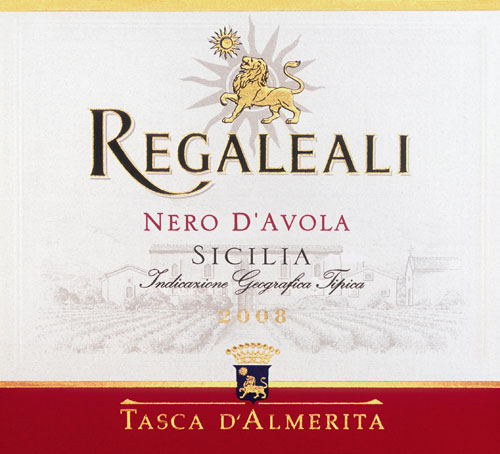
Regaleali 2008 Nero
d’Avola – Under other, more blindfolded circumstances, I might have
mistaken this for a Bordeaux. (And certainly more like a Bordeaux than a Rhone,
which I’d have expected with a “Shiraz-like” grape.) My first thought on spinning this was, “Wow.
Funky!” There’s a real whiff of earthiness on the nose, coupled with a nice bit
of cherry. I’d call it medium bodied, in line with the aforementioned French
doppelganger. Good dark fruit on the tongue with some gradually-building
tannins. There’s plenty of length on the
tannic, chalky finish. We had this with leftovers from the same meal we made
for the Asmodeus. The flavors of the pasta had blended into a nice yumminess,
and the extra earthy characteristic in this wine made it an even better
complement. Another great, though very different, food wine. $15.
Feudo Arancio “Stemmari”
2010 Nero a’Avola – The least expensive ($8) and most
If you’re a fan of sturdy, fruity wines and you’re looking
for a changeup this weekend, trundle down to the end of the “Other Italian
Wines” section and snag a couple of these. After all, once you go Black…
Subscribe to:
Posts (Atom)