Monday, August 27, 2012

Naked Vine Double Feature: A Blast from Banfi


Had the chance to attend the “yes, you really just got tenure” celebration for one Dr. Chris Sullivan not long ago. One of the partygoers was his neighbor John, who is affiliated with Banfi wine importing. Banfi, in addition to their own Italian wines, imports and/or manages a portfolio of 25+ new and old world wines. You’d probably recognize some of the wines: Bolla, Mont’Albano, Riunite, Little Black Dress, Trivento, and a number of others.

John and I got drawn into a fairly extensive conversation that started with wine and went considerably, and pleasantly, afield. As the Sweet Partner in Crime and I were starting to wind down, John graciously offered us a couple of bottles to sample. Here’s what he put into our hands:

Concha Y Toro 2009 Serie Riberas Gran Reserva Cabernet Sauvignon – Concha Y Toro is a Chilean winery known best for reasonably priced, solid wines. I’d not had a chance to try the Gran Reserva series. Cracked, poured, swirled, and was rewarded with a nose of smoke, cedar, dark fruit and a little alcohol. The flavors were quite soft for a young cabernet. Plenty of blackberry and cherry on the palate followed with some easy-access tannins. The finish is reasonably gentle and balanced, with tannins building after a few drinks. I could certainly see this as a quality porch wine you’d crack with some friends. With food alongside, we had it with some “mini meat loaves” and rosemary potatoes and it went along quite nicely. I think any kind of roasted meat would work here, especially if you go light on any sauces. At $15, quite a decent bottle.


Rainstorm 2009 Pinot Noir – Rainstorm is made by VinMotion, a “Pacific NW winery.” VinMotion used to be Washington’s Pacific Rim Wines, but has expanded its reach with Banfi’s assistance with Rainstorm, which focuses on Oregon pinot noir and pinot gris; and Sweet Bliss, a series of “sweet wines” that includes a red, a white, and a rosé.  Having just returned from Oregon, I had a reasonable idea of what an “Oregon pinot” would taste like (even though there’s an incredible amount of variation – but that’s for a future column). Oregon pinots tend to be a little pricier, and I was concerned with an $18 pricetag that I might be pouring a pinot that would be a little overly fruit-forward and high-alcohol for “Oregon style.” I was glad to see that the winemakers did their collective homework. Within this funky bottle lies a line with a slightly fruity, semi-smoky nose. Rather than being fruit-forward, the flavors are restrained but emerge quickly after a couple of sips. I wouldn’t call it “elegant,” but there’s much more subtle licorice and blackberry flavors than the cherry attack you’ll see in many inexpensive pinots. Finish is gentle and a little smoky. At this price point for a decent, relatively uncomplicated Oregon pinot, it’s surprisingly good. I’d give it a whirl again if I were in the mood for such.

Thursday, August 16, 2012

Flights of Fancy


I love doing flights of almost anything. A “flight” usually refers to a set of small samples of wine, but can be beer, whiskey, cola, orange juice, coffee…you get the idea. In general, I differentiate “doing a flight” from a “tasting” since there’s almost always a fun, social aspect involved.  Comparing notes with your slightly-buzzed nearest and dearest across a table strewn with glassware is good times, yo. 

I returned recently from a vacation in Oregon (And there will be future column inches devoted to the delicious wines of the Willamette Valley. Oh yes…). As a day in Portland drew to a close, I realized I’d downed four wildly different sets of liquid tapas:

Flight #1 – The Morning Meditation
After shaking off the previous evening’s revelry, the Sweet Partner in Crime and I left our hotel (the Monaco…a cool place!) for a day-long meander around the city. While Portland has a world-class public transportation system (in the eyes of practically everyone except dillweeds like Ohio’s Governor John Kasich and U.S. Rep. Steve Chabot), the city is eminently walkable. Our plan was to have a look around Old Town and buzz through Chinatown for some lunch before heading over to the Pearl District.
Lan Su Chinese Garden, Portland

After an intentionally aimless stroll, we turned a corner on the edge of Chinatown and came upon the Lan Su Chinese Garden. Portland is best known for the Rose Garden and the adjacent Japanese Garden – but we’d read (correctly) that the Chinese Garden was also not to be missed. From the outside, one wouldn’t know just how peaceful and beautiful this place plopped in the middle of a major city was. On one corner of the garden stands the tea house. Since lunchtime was still a bit away, we stopped in to discover that they offer flights of loose leaf teas. Since I had little notion of good tea beyond Celestial Seasonings, I was intrigued.
Ready for takeoff.

Careful now...careful...
Our server, Martin, was very patient and helpful as he explained to us the differences between the various offerings. We opted for a flight of three “old growth” teas – two green teas from different mountain regions in China and a black tea from Vietnam. I drink a fair amount of “normal” tea. I’d never thought much beyond a basic “tea” flavor – and I’d never really associated terroir with tea. But there it was. The flavors of the Chinese teas were quite different – one was earthier, the other a bit more tannic. And the black tea was another beast altogether.

More important was the preparation ritual, which I clumsily attempted to emulate. Quiet, contemplative, peaceful – looking out across lovely intricate patterns of water and stone – we lost ourselves in tea and serenity for over an hour. Marvelous.

(We ended up checking three small ziplocs of the leftover loose tea. We were half-expecting those aromatic little packets to be confiscated by the TSA, but they made it home.)

Flight #2 – Magnificent Midday Mold
Our walk resumed, our delicious Chinatown lunch was at a pan-Asian bistro called Ping. I had a fabulous kuaytiaw pet pha lo (a Thai-Chinese combo of a duck leg stewed in mushroom broth over fat fresh noodles). The SPinC enjoyed her yam yai (“big salad” in Thai). The food was delicious, but I was mesmerized by the discovery that Ping offered flights of shochu, which I’d always wanted to try.

Shochu is a Japanese alcoholic beverage. Like sake, it’s clear and can be served hot or cold. That’s where the similarities end. Sake is generally made from rice, is brewed in a similar process to beer, and is usually around 13-15% alcohol.

"I've smelled moldier in my sock drawer!"
Shochu can be made from basically any substance that contains convertible starch – rice (including leftover grain from sake production), buckwheat, sweet potatoes, molasses, potatoes, and so on. The raw material is steeped in water, steamed, and cooled. The resulting glop is treated with a mold called koji. The koji breaks the starches down into fermentable sugars. After several days of fermentation, the product is distilled, producing clear, 50-ish proof liquor with a distinct flavor.

I did a flight of three shochu: one made from rice, another from buckwheat, and a third from molasses. (I think the idea of a moldy drink scared the SPinC.) How were they? None of them will replace wine in my beverage rotation anytime soon. I did like the one from molasses, which maintained a bit of that blackstrap sweetness. Next time I’ll try the sweet potato shochu. It was still a little early in the day with the Pearl’s breweries still in front of us.

Flight #3 – Beer! At last, Beer!

We hoped to hit the Pearl’s “Brewery Blocks” for afternoon flights of local beers. As my beer drinkers know, there’s some good beer from Oregon. Alas, we discovered that, like the Manhattan’s Meatpacking District, “Brewery Blocks” now apparently refers to the former tenants of those buildings. The former brewery spaces are now largely retail spaces and upscale condos. We went looking for ales. We found Anthropologie.This gentrification was nicely done, mind you – but fantasies of little beer tasting rooms were dampened.

Slightly disheartened, we headed back towards the Monaco. Rounding a corner on our circuitous route, we saw a bar-front for “Tugboat Brewing Company,” but our bubbles burst as we discovered the door locked. Frustrated, we turned around and – to our joy and relief – saw a sign for “Bailey’s Taproom” directly across the street. With a giant flatscreen menu of 20 Oregonian beers on tap, we’d struck gold. We shared a flight – a couple of IPAs, a cask bitter, a hefeweizen, and a framboise. Since we’d been doing a limited-carb diet leading up to the vacation, these were the first beers we’d had in a month. I might have given thumbs up to an Old Style at this point. They just tasted GOOD.
Beer. Glorious Beer.

Flight #4 – The Plan of Attack Comes Into Focus
Before we headed off to dinner at a highly-recommended-but-ultimately-disappointing meal at a Peruvian place, we stopped at Oregon Wines on Broadway, a wine store and tasting. Wine tasting was heavily on the agenda for the remainder of the trip. We had names of a few places from friends and travel guides, but we weren’t as familiar with the geography, which winery specialized in what style of pinot noir, etc. Eager to learn, we bellied up to the tasting bar and our tastress Emily (who sported some of the most stylish body art you’ll ever see) lined up six Oregon pinots for us from producers large and small.

This sloth loves Oregon pinot. Really.
Emily explained (while cracking us up repeatedly) how Oregon wines were more terroir-driven than other domestics. Unlike California’s more consistent weather, Oregon’s changes markedly from year to year. A very warm year like 2009 leads to noticeably fuller and rounder wines than more subtle flavors of a cooler year like 2010 from the same vineyard. (How Euro!) Also, Oregon’s soil varies greatly – from clay to sediment to volcanic ash, all of which can sometimes be found in the same field of grapes. We picked out a couple of samples we particularly liked for flavor and structure -- “Patricia Green” and “Libra.” Emily gave us a map of the Willamette Valley and said, “If you like those – try these!” Within a few minutes, our itinerary was fleshed out. The adventure began…


Friday, August 10, 2012

Big House Wines


First, let me send another thank you to the good folks at Folsom who sent along a few of the whites from the Big House line of wines for sampling. Big House is a value-priced line of wines from Underdog Wine & Spirits. Underdog also makes Cupcake, Fish Eye, flipflop, and Octavin wines. Big House’s winery is basically across the street from the Soledad State Correctional Facility in Mendocino County, California – thus creating the obvious inspiration for both the name of the wine and the nicknames of many of the individual varietals.

I received three bottles for sampling – their “most popular summer sippers,” according to winemaker “Warden” Georgetta Dane. So, without further adieu:

Big House White 2011 – This white is a “field blend” of 10 primary varietals, plus whatever else they have around at the time. The largest chunk of the wine’s composition is Viognier (about 27%), followed by Malvasia and Gruner Veltliner. With a backbone of Viognier, I wasn’t surprised to find the nose rather perfumey. You can’t miss the floral characteristics unless your sinuses are acting up. Flavorwise, I got melon & tropical fruit flavors with a little bit of sweetness from a little bit of residual sugar. The finish is fruity and a little fat. I thought it tasted like an inexpensive Viognier without the oiliness common to many of those wines. A decent enough summer quaffer if you’re looking for something that’s aromatic.

Big House 2011 “Unchained” Naked (Unoaked) Chardonnay – I’m not a big fan of many California chardonnays because they’re usually heavily oaked and buttery. Some winemakers have tried producing unoaked chardonnay with mixed results. The big drawback to many of these unoaked specimens is a lack of acidity. When I tried the Unchained, I was pleasantly surprised to discover some tartness. (Now, it’s not super-acidic, mind you.) Lemon and green apple were major flavors. The body had a decent amount of weight and the finish was reasonably crisp. I thought it was OK, but I wouldn’t classify it as one of my favorite bottles to just slug on. Steak tacos were on the menu for the evening, and I hoped there’d be enough oomph within to handle them. With the beef, greens, avocado, and onion – everything was fine. As soon as I dolloped some spicy salsa on there, game over. The capsaicin just ran the flavors over. Lesson learned – it’s a flexible enough food wine, as long as you aren’t eating spicy.

Big House “The Birdman” 2011 Pinot Grigio – Again, this pinot grigio wasn’t exactly what I expected. Many pinot grigios are either highly acidic or downright watery. Neither was the case here. I found this to be quite full-bodied for a pinot grigio – and I certainly wasn’t expecting one which had lemon flavors that sat on my tongue for any length of time. That lemon is crossed with a strong dose of tropical fruit, especially pineapple. The finish is much more fruity than crisp. If I weren’t paying much attention and was looking for a wine to slug on, it was decent. However, I like more crispness in my pinot grigio. This one just wasn’t my speed.

Big House also offers Big House Red, “The Usual Suspect” Cabernet Sauvignon, “Cardinal Zin” Zinfandel, “The Slammer” sweet Shiraz, and “Grü-V” Grüner Veltliner. Big House’s wines generally retail for around $10. Three liter “wine casks” are usually around $22.  


Monday, July 23, 2012

Get Right Back Where We Started From


I have the good fortune to do a fair number of sample reviews in this space. After I finished my recent review of the wines from Biltmore Estates, Lisa at Folsom & Associates and I got into a discussion about grilling. She offered me the opportunity to sample a couple of Zinfandels from Ravenswood and I accepted. (Shocking, I know. I also received some Big House wines from them, but that’s for another column.)

Cracking these wines brought us a little reminiscence. Zinfandel was the grape that started us down the road towards the household’s oenological addiction. About seven years ago, the Sweet Partner in Crime and I took our first vacation to wine country -- Sonoma, specifically. We’d become wine drinkers at this point, but our house wines were generally Meridian Chardonnay and whatever Rosemount Garden Shiraz blend was on sale at the time.

This way lies madness...and tastiness!
We made our way towards our B&B in Healdsburg – a pretty cushy place called the Grape Leaf Inn. We got there in time for their “evening wine tasting” in the building’s cellar. The cellar was designed as a “speakeasy.” Seriously – the stairs down were hidden by a bookcase. (An architectural feature that I’ve always wanted for The Cave, but it just isn’t practical.) Anyway, we headed downstairs, bellied up to the bar, and our tastress Amy poured us a couple of glasses of Dark Horse Zinfandel. I was skeptical. All I knew about Zin at the time was the cotton-candy-in-a-glass. A little swirl, a little sip…Boom.

This huge, fruity monster of deliciousness changed me forever. I hadn’t encountered anything like it. Our normal Shiraz was a big, fruity creation – but there wasn’t a lot of structure. This was alcoholic, muscular, and in-your-face with dark fruit flavors, tannins, chocolate, and all sorts of other yummies. It practically screamed, “THIS is why you have a palate.”

The descent into oenological addiction.
Over the next couple of years, Zinfandel became a mild obsession for the SPinC and I. We loved the stuff. It went so well with anything grilled and was just dynamite with our evening chocolate. When we got back from California, we cast about for some Zins we could keep around as everyday wines. The one we settled on? Ravenswood.

As Zinfandel’s popularity rose across the country, the flavor profile of everyday Zins began to change, much as California Chardonnays did with “oaky & buttery” at the turn of the millennium. Zinfandels were big wines as it was – but it seemed like there was a race on between many of the major producers to make the biggest, baddest, highest-alcohol juice possible. I remember seeing Zins that were upwards of 17% alcohol. This change, coupled with our exploration of wines with a little more subtlety, caused us to drift away from Zin for a while. I was looking forward to sampling our old friend Ravenswood to see if things might have mellowed out a bit. Besides, everyone needs a big-ass wine from time to time, especially if that wine brings back happy memories.

Ravenswood makes several levels of Zin. Their “Vintner’s Blend” series comes from grapes from across California. They make “County” wines from some of the major Zin-growing regions of the state, as well as some single vineyard and limited release wines. We received two bottles – the Ravenswood 2010 Vintner’s Blend Old Vine Zinfandel and the Ravenswood 2009 Lodi Zinfandel. The Vintner’s blend retails for around $10. The Lodi around $13.

(One quick note about the term “Old Vine.” There's no real guideline for what constitutes an actual "old" grapevine. The general rule of thumb is "older than 45 years." Winemakers usually turn to Potter Stewart for direction -- they know it when they taste it. Since there's nothing cast in stone, the term can be applied somewhat loosely for marketing reasons.)

On tasting, I was relieved to discover the fruit bomb-iness that I’d come to associate with most California Zins had been dialed back a little bit, apparently. Don’t get me wrong, these are both pretty beefy wines, but the alcohol content is a much more manageable 13-15%. There’s a nice flavor contrast between those two. The Vintner’s Blend seems designed more of a crowd-pleaser. There are big cherry and blueberry scents and flavors, but the tannins are relatively mild and the finish is lingering and somewhat soft initially.

The Lodi had a little more character.” It needed some vigorous swirling, because straight from the bottle, it was very tannic and tight. Once it opened, there’s distinct vanilla on the nose. The flavor has the same backbone of dark fruit, but it’s spicier and adds plums. The tannins gripped firmly and lingered much longer than the Vintner’s. We split on these. I preferred the Lodi. The SPinC, the Vintner’s. In short, if more tannin is your thing, go with the “County” wines.

With food, Zinfandel cries out for MEAT, and the classic pairing is a slab of messy barbecue ribs. Alas, the SPinC and I are on a bit of a diet, so ribs weren’t an option. We settled for a couple of nice spice-rubbed steaks, some foil-pack beets from our garden, and some garlic-sauteed red potatoes. Alongside the meal, the Vintner’s was better as general all-around table wine. However, the Lodi was simply exceptional next to the beets and the potatoes. It seemed like it played along in a more friendly fashion with the beets’ sweetness. With chicken or ribs slathered in barbecue sauce or a sweet rub, the Lodi would probably be a solid bet.

Monday, July 09, 2012

Biltmore Estates


 “I never thought this would happen to me. I am an administrator at a small Midwestern college and I was on my way to a conference in Asheville, North Carolina…”

No, you’re not reading the start of my letter to Penthouse Forum. There are no scantily-clad medical students with heaving bosoms whose car overheated, stranded on the side of I-75. There were no offers for me to “accompany them on their Grand Rounds” once I got them into the college van and escorted them to safety.

The trip to and from was uneventful. When I returned home, however, there was a mysterious package waiting for me. I was expecting one set of wine samples (the ones from Pepperwood Grove, which I’ve posted about already) – but a second set of samples showed up unannounced. I long ago learned not to look a gift horse in the (bottle) mouth.

These wine samples turned out to be from the Biltmore Estate Winery. For those of you unfamiliar, the Biltmore Estate is an enormous chateau-style house built in the late 1800’s by George Washington Vanderbilt II. It’s still owned by the Vanderbilt family today. The Biltmore Estate Winery was a dairy farm until the early 1970’s. It is currently the most-visited winery in the United States with over a million visitors annually.

So, why is this of note? The Biltmore Estate and its associated winery are in…Asheville, NC. We just missed each other. I could have saved them some shipping charges, although I don’t think the Vanderbilts are hurting for cash these days.
Like ships passing in the night...

 Anyway, the Biltmore winery itself grows about 250 tons of grapes a year. On site, they grow Chardonnay, Riesling, Viognier, Cabernet Franc, Cabernet Sauvignon, and Merlot. They sell about 140,000 cases of wine per year. One ton of grapes yields about 60 cases of wine. Since the estate’s grapes can only provide a little over 10% of that yield, grapes get sourced from other growing regions – largely in northern California.

In the mysterious Biltmore box was one each of the red and white from the Biltmore’s “Century Collection.” These wines, which retail for $13-16, were first bottled in 1999 as tasting-room only offerings. The Biltmore’s winemaker, Bernard DeLille, said that he was trying to create a wine that would allow a wine drinker to “re-live their Biltmore experience at home by simply opening a bottle and pouring a glass. As the wines grew in popularily, they expanded production and began making them available through retail outlets.

Biltmore (NV) Century Century Red Wine – This red, sourced from three locations in California, is a blend of Sangiovese, Merlot, and Zindfandel. The Sweet Partner in Crime swirled this and exclaimed, “Vanilla!” For sure. The first whiff is powerful vanilla, followed by a bunch of dark fruit. Blackberries and cherries, predominantly. This is a wine that really improves with decanting as, straight from the bottle, the finish is clipped and the flavors don’t last long. With some air, the flavors brighten a bit. It’s a “firm” wine, but the finish stayed quick, even after decanting. The fruit flavors are quite nice while they’re there and the tannins are mellow. We had this alongside a grilled flank steak, some sautéed mushrooms, and a salad. The vinaigrette wasn’t the best match with the wine, but the crystallized ginger we’d thrown in the salad was wonderful with it. The steak and mushrooms were tasty enough matches. A decent enough bottle for an everyday quaffer.

Biltmore (NV) Century White Wine – Ninety-eight percent of the juice in this wine comes from Mendocino and Monterey. Two percent is actually from North Carolina. It’s a blend of some very aromatic grapes – Gewurztraminer, Muscat Canelli, Riesling, and Symphony (which is a cross between Muscat and White Grenache). The nose is peppery and peachy. I thought it smelled very much like a Gewürztraminer from the Pacific Northwest. The major flavors are ripe pineapple with some cloves and cinnamon underneath. It turned out lighter than I expected. I thought it would be a bit more palate-coating considering the residual sugar level. The finish is peppery with a good deal of sweetness, as the residual sugar finally shows up. Again, a very solid wine – flavors like a Gewurz, but milder and not quite as heavy. If you were trying to introduce the notion that “not all sweet wine is bad” to a friend, this wouldn’t be a bad start. Conversely, if you wanted to start moving an “I only like sweet wine” person towards the light, this would laos be a good starting point. Foodwise, we had this alongside a Thai-style chicken, shrimp and rice soup since gewürztraminer goes so well with those flavors. This one was no exception.

This was my first time with Biltmore wines. I can only hope I have the same good fortune after my upcoming trip to Oregon…aforementioned medical students optional.

Thursday, June 28, 2012

L is for Loire


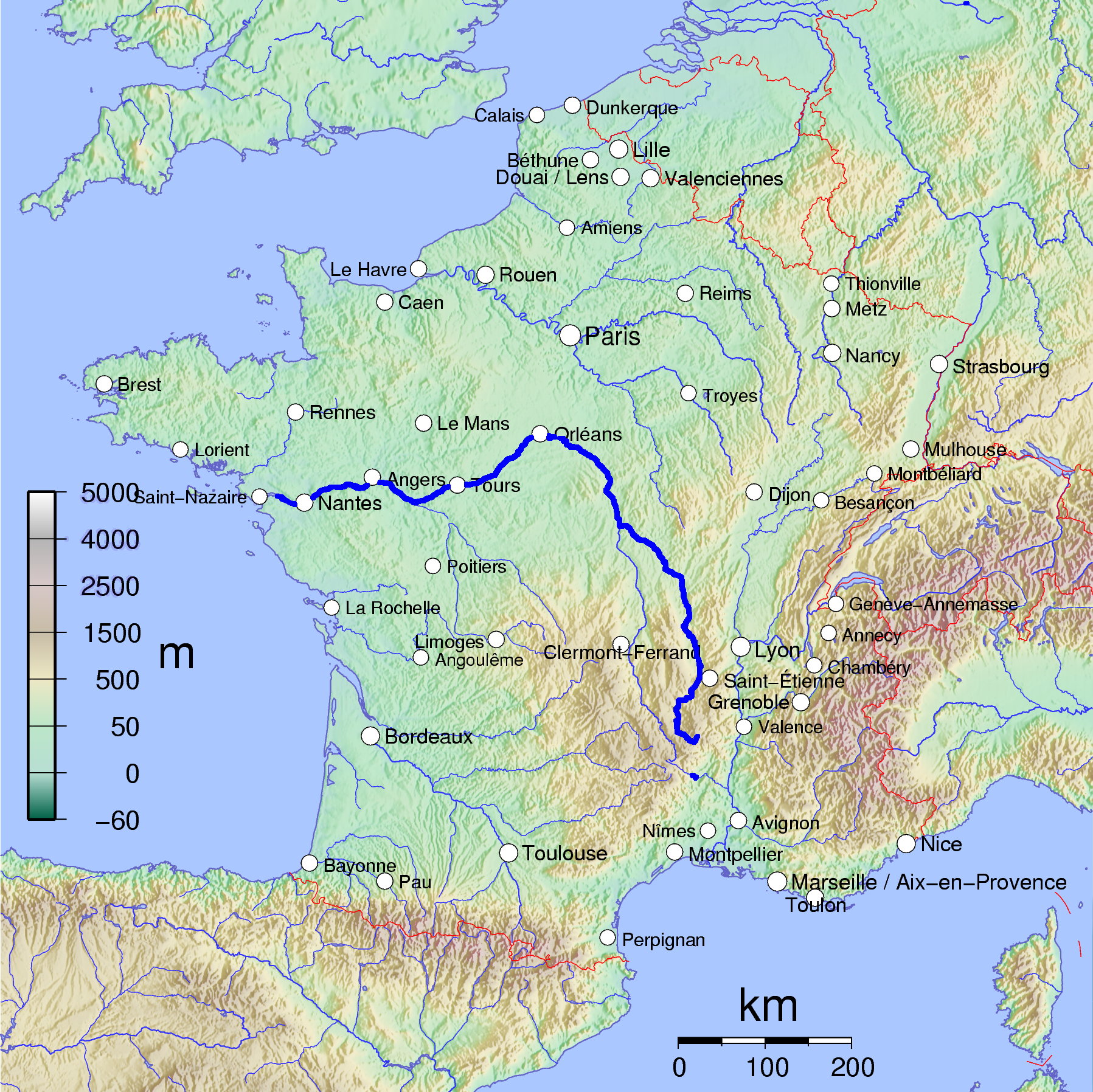
The Loire (pronounced luh-WAHR) Valley wine region is a long, skinny stretch of land that lies along the river of the same name in France. Some of the first evidence of winemaking in France dates to the 1st century A.D. in the evidence of vines planted by the Romans in the Loire. The river meanders north-northwesterly from its head in the Alps in south-central France near Ardèche for a couple hundred miles before taking a hard left turn near Orleans, about 80 miles south of Paris. (This is about where the grape growing begins in earnest.) From there, the river heads almost due west, eventually emptying into the Bay of Biscay on France’s west coast at Saint-Nazaire.
Here be the Loire!

Much of the area surrounding the Loire in northern France is relatively cool. Too cool, ordinarily, to ripen many wine grapes. Luckily, the river exerts influence on the climate, raising the average temperature within a few miles on either side of its banks by a couple of critical degrees. Within this “growing zone” lie some of the most densely planted vineyards in the country. Even so, an extra cool summer can prevent the grapes from ripening fully in some vintages. In those cases, some winemakers add extra sugar to the juice before fermenting. This occasionally-necessary process, called “chapitalization,” is illegal in other parts of Gaul.

The Loire region boasts a broad spectrum of grapes. As with most French wines, the name you see on the label indicates the area in which the grapes are grown. The Upper Loire, which includes subregions such as Sancerre & Pouilly-Fumé), trades heavily in sauvignon blanc with a little pinot noir grown in certain areas. The Middle Loire wines (Vouvray, Chinon, Saumur, and Touraine are the most common regions you’ll see) are predominantly chenin blanc among the whites and cabernet franc among the reds. The Lower Loire (mostly around the town of Muscadet), near the mouth of the river, is best known for white wines made from the Melon de Bourgogne grape.

Loire wines – red, white, and rosé – are known for high acidity and relatively low alcohol content. This combination makes them excellent pairings with broad varieties of dishes and excellent “just for drinking” choices. I think I drink more wines from the Loire than any other French region – partly because of their flexibility, but also because there are some real steals because of the region’s relative anonymity. (Woohoo More for me!) Here are a few offerings from the Loire that I’ve enjoyed recently:

Chateau de Fontaine-Audon 2010 Sancerre –Sancerre is the most prominent region in the Upper Loire, which is the wine growing region just south of Orleans. Most of the whites, as I mentioned before, are largely sauvignon blanc and are considered some of the finest examples of that grape in the world. Unlike many sauvignon blancs with heavy fruit or grass notes, Sancerre is known best for the mineral character of its wines. This particular bottle is a delicious example.  The first sip starts with plenty of pineapple and lemon flavors and a little undertone of flint. The general body is crisp with just a hint of creamy at the end. Poured this with both a goat cheese appetizer and a red snapper ceviche. With the cheese, the “metallic” piece of the mineral taste and the sour of the cheese negated each other, leaving a very nice rich flavor from the cheese, and a peachy flavor from the wine. Lovely. With the ceviche, the acidity of the wine merged with the lime juice in the ceviche. The fish tasted wonderful, as did the wine, which displayed a tasty flavor that reminded me of a melted lemon ice. Excellent. ($18.)

Remy Pannier 2008 Vouvray – Vouvray is a small parcel of land in the Middle-Loire outside of the city of Tours; an area known for growing wonderful chenin blanc. Not the chenin blanc you’ve seen in jugs, mind you. The genuine article, like this bottle. The nose reminds me of Rosh Hashanah: apples and honey – a flavor that translates directly from nose to palate. Unlike many crisp, light Loire whites, this one offers quite a bit of richness. It tastes like there’s a hint of residual sugar, but it’s more of honey flavor than a sugary one. There’s a little bit of acid underneath the richness, but the tartness is well-hidden. The finish has just a twist of crisp at the end. An exceptionally nice wine to just sip on while sitting on the porch one afternoon. It made a lovely food wine. Alongside fish tacos, it managed to stand up to Mexican-style spices without a problem. ($15)

Domaine de Noiré 2010 Chinon – Chinon, in the Middle Loire, is known for reds, particularly Cabernet Franc. Most Chinon reds are 100% cab franc, rather than the blends you’ll commonly find elsewhere in France. Cabernet Franc is the Chardonnay of red wine in that it can grow where many other grapes cannot. It reflects terroir strongly. Much like other Loire wines, cab francs from Chinon are light bodied and highly acidic – rather than strong and tannic as you might find in a California cabernet franc. If you’ve wondered how “pencil lead” in a tasting note translates to actual taste, this bottle is a solid illustration. There’s a “graphite” smell on the nose, which carries through to the palate along with some light blackberry and cherry flavors. The body reminds me of a fat Beaujolais. The finish is tart, minerally, and reasonably soft. One of the classic pairings with Chinon is grilled salmon. I now understand why. The smokiness of the grilling brought out lovely smoke flavors in the wine, while the acidity made a great counter to the oiliness of the fish. Definitely worth a try just to try that pairing. About $15. Let me know what you think…

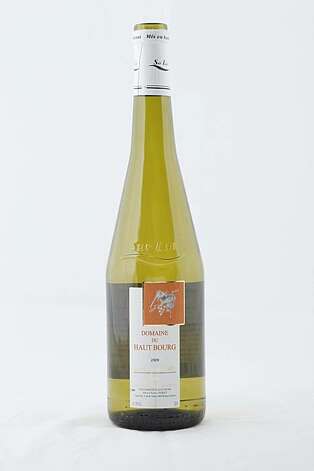
Domaine du Haut Bourg 2009 Muscadet Cotes de Grandlieu – As I mentioned, “Muscadet” is the area near the mouth of the river where this wine is made. Muscadet is made from the Melon de Bourgogne grape. Melon de Bourgogne is so inextricably linked with this region that the grape is now commonly referred to as Muscadet. On many bottles, you’ll find the words “Sur Lie.” Sur Lie means “on the lees.” Lees are the dead yeast that settles to the bottom of a fermentation tank. Leaving a wine “on the lees” for a time gives a wine some creaminess and additional texture. (Many Muscadet, if not made a little “thicker,” would have an almost watery body.) The du Haut Bourg starts off with a crisp blast of lemons and a flash of honey in the back of the mouth. Like most Muscadet, the wine has a very minerally – almost metallic -- character, but that flintiness bounces effortlessly off any kind of shellfish. For the sake of full disclosure, the flavor of Muscadet is so different from most other wines that we actually recoiled the first time we tried it. It’s got so much mineral that we didn’t know what hit us. Since then, the grape has grown on us – especially once we discovered how well it went with the aforementioned shellfish. I fooled around in the kitchen for a bit and created a delicious brothy stew of bay scallops, calamari, and shrimp with peas and lemon juice, topped with mint and goat cheese. (Seriously, this was one of the best meals I’ve whipped up in awhile.) It’s a magnificent pairing, especially for $10.


Tuesday, June 19, 2012

Lessons of Pepperwood Grove

On returning from a recent conference, I discovered Wine Fairy had visited. A sample pack of Pepperwood Grove wines, courtesy of our friends at Balzac Communications, had magically appeared.

O Happy Day! Wine Samples!
You’ve undoubtedly seen Pepperwood Grove. It’s an inexpensive wine from Don Sebastiani and Sons. The bottles have a “green wave” pattern on the label, but they’re best known for the “Big Green Box” – a three-liter…well…box of wine. As most of you know, we have no problem with box wine around these parts. As long as you’re not looking for top notch juice, box wine can be a great option for an “I don’t want to think about it” offering. You know, when you’re tired or after a few other bottles you did think about…

According to the release, Pepperwood Grove was the first “established” wine brand to launch a “boxed line extension” -- The Big Green Box. This version of their regular wines first appeared in 2010. Sebastiani and sons sent these samples to announce the launch of Pepperwood Grove’s “Little Green Box” – a 500ml mini-container made from 100% recyclable material. Each container holds about three glasses.  They sent me a Little Green Box of pinot grigio, a Big Green Box of chardonnay, and a “Groovy Green Bottle” of their pinot noir.

I’d not had Pepperwood Grove in quite some time. I see it in most every wine store I walk into. I honestly hadn’t given it much thought, but I’d never tried three wines consecutively from the same producer in different “formats” and the Wine Fairy was being generous…

First up was Pepperwood Grove Pinot Grigio, which turned out to be a very “soft” wine at first sip. By “soft,” I mean that there’s not the acidity I usually expect – especially if something is marketing itself as a “pinot grigio.” Winemakers usually brand their wines either “pinot grigio” or “pinot gris” depending on whether they’re more Italian (more crisp and tart) or French (more mineral and smooth citrus) in style, respectively. Honestly, this California offering was neither. It was lightly peachy on the nose, quite full-bodied for a pinot grigio with plenty of peach. I thought it was inoffensive and flexible enough to be a good picnic wine. This travel-friendly pack would go alongside most food – appetizer to dessert.

We moved on to the Pepperwood Grove Chardonnay – This was the wine they’d sent in the “Big Green Box.” It’s also from California, and is actually a blend of Chardonnay, Chenin Blanc, Pinot Grigio, and Viognier. It’s 77% Chardonnay -- anything over 75% and a winemaker can label it Chardonnay. I’ve had the Big Green Boxes before, and I’d found them to be decent, but I hadn’t tried the chardonnay. Honestly, I wish that were still the case. All due respect -- this wine was simply not good. The major flavor is very ripe apple with some creaminess. That’s the nicest thing I can say. On the downside, there’s what tastes like an attempt to do a chemical approximation of oak that doesn’t quite work, and an unfortunate tartness.

Finally, we ended up with the Pepperwood Grove Pinot Noir – This Groovy Green Bottle’s grapes are sourced from Chile. Basically, I’d consider it a serviceable sluggable wine – but I wouldn’t call on it if I were looking for a pinot noir. I thought it was plummy, medium bodied, and straightforward – it would be a very solid table wine if one wasn’t picky. We rated it clearly the best of the three.

I usually wait until after I’ve tried sample wines to read the tasting notes to see how close my palate discerned what the winemaker was trying to do. My observations were nowhere close to the company tasting notes for the whites. For instance, the pinot grigio was described as “light” and “mineral driven” with “bracing mouthwatering acidity,” which was far from what I got. The chardonnay was allegedly “crisp flavors of green apple and biscotti contrast with hints of grapefruit, toasted marshmallow, and fresh lime on the finish.” No. Just no. All tasting notes are subjective, but there’s a general neighborhood.

Turns out these wines were shipped during one of our first fairly hot bursts of the season. The flavors I found in the pinot grigio and the chardonnay reminded me of wines that had been blasted by heat and gone over. My hypothesis? My package was left out for a little too long on an unexpectedly hot loading dock somewhere. Since the glass bottle provides better insulation, it wouldn’t have been affected as much.

Upon reflection over my career purchases, I’ve had considerably more box wines be spoiled than bottled wines. While I’m certainly not turning against box wine anytime soon – it might be worth asking the folks in your local wine store about how quickly their box wine aisle turns over and how those wines are stored when they arrive at the store.

As it stands, I can’t say whether the Pepperwood Grove wines were exposed to poor treatment in transit that they’re just not as tasty. If you decide to try one, make s

Monday, May 21, 2012

20 Mondi


“Italy is not spaghetti and Chianti wine.”
     -20 Mondi introduction

I imagine Michael Loos sitting at a table in a trattoria in Milan, Italy, musing on his fledgling project, 20 Mondi. “Over the years of living in Italy, discovering the immense varieties of Italian wines, I yearned to share the experiences with my friends outside of Italy. Basically, I wanted to let them in on the ‘other world’; the non Merlot/Chardonnay/Cabernet world.”

Loos grew up in Dayton, Ohio “watching Gilligan’s Island while eating warmed-up Spaghetti-O’s.” An alum of Butler High School, he graduated from the University of Cincinnati’s world-renowned graphic design program in 1985. He worked in New York City as a graphic designer until 1989 when he lit out for Florence, Italy. In 1997, he moved to Milan and opened his own design business, Loos Image Communications. His passion, however, is the country of Italy and its wines.


20 Mondi, which translates as “Twenty Worlds,” is Loos’ attempt to explore and document the winemakers and, by extension, the people and the culture, of each of Italy’s 20 wine growing regions. Loos pointed out that few outsiders realize that much of Italy lies in central Europe – bordering and sharing languages with Slovenia, Austria, Switzerland and France. It also extends southward to within 43 miles of Africa. (I had no idea.)

The driving force behind the project? Autochthonal grapes.

What the heck’s an “autochthonal” grape? Pronounced “aw-TAWK-tow-nal,” autochthonal is the proper term for a grape indigenous to a specific region. There are over 600 autochthonal varieties of winemaking grapes in Italy. Some of them are fairly well known – Sangiovese, Nebbiolo, Prosecco, Nero d’Avola. But most of us have never had a glass of Forgiarin or Pompanuto. “The small producers [of these grapes] are being squeezed out by more mainstream, primarily profit-driven producers,” explained Loos. Many of these producers are introducing better-known grapes like merlot and chardonnay to more easily market wines internationally. “Each territory,” Loos said, “is a treasure island unto itself, full of unique landscapes & family trees, folks & folk tales, and oral & oenological traditions and customs.”

Loos wants to bring attention to these grapes and, by extension, the people who carry on local traditions in winemaking, special regional foods, and local arts and crafts. Historically, people from a certain region tailor local wine to go alongside “hometown” cuisine. Loos fears the loss of these distinct regional Italian identities, so he wanted to showcase them. His plan? Get a camper, some close friends (including his sister and brother-in-law), and take a 10,000 mile road trip around Italy, exploring these winemaking worlds. “I start with suggestions from people I know in each region, then connections usually progress by word of mouth… I ask about their wines and the stories begin. People talk when they have a glass of wine. Or two.”

Loos is currently raising funds for 20 Mondi across Italy and the globe. “The Barolo-colored camper is waiting on the sales lot for us to plop down the cash,” said Loos. He’s optimistic about raising the capital to make the trip a reality. “The great thing is that we've discovered that there is a real interest out there to support our project; we just need to harness it. In the meantime, we've started creating some content for our first "world,” Lombardia [the region surrounding Milan], just using the car.”

Michael Loos, friend to autochthonal grapes everywhere...

As Loos and his companions travel around the Italian countryside, they hope to create a comprehensive video and photographic record of their trip, the wines, and local recipes. They are creating a series of online guides set up as downloadable apps for visitors to these various regions, as well as some large-format photo books, documenting the highlights. I’m certainly planning to follow along on his trek. To do my little part for the world of autochthonal winemaking, here are a few I’ve recently tracked down. Unfortunately, I didn’t have the time to put together autochthonal recipes to go alongside these wines, but I did the best I could:

Leone de Castris 2008 Maiana Salice Salentino – From Puglia, which is the “heel of the Italian boot.” This wine is made from a 90/10 blend of Negroamaro and Malvasia Nera grapes. When I poured it, the dark, dark purple gave me the expectation of a monstrous wine. Not so. It’s medium-bodied, bordering on lean. Imagine coffee-flavored cherries, with a mouthfeel a lot like coffee, and you’ll get the idea. The wine’s tannins are subtle, as is the “chalky” characteristic that many Italian wines possess. The finish is an interesting mix of tartness and soft tannins. I thought this was quite pleasant. Tried it first with a couple of cheeses --“drunken goat” cheese was a particularly interesting pairing. Dinner was flank steak marinated in lemon juice and garlic with some steamed veggies – it turned out yummy as I hoped. About $13.

Tenuta Delle Terre Nere 2010 Etna Bianco and Tenuta Delle Terre Nere 2010 Etna Rosso – Both these $15 wines are from Sicily, the island being perpetually punted by the Italian boot. These wines hail from vineyards on the slopes of Mount Etna. (“Bianco” is “white” – “Rosso” is “red.”) The Bianco is a blend of Carricante, Inzolia, Grecanico, and Cataratto. The nose is full of tangerines and flowers. The flavor starts with a biting acidity that mellows into an orange-ish citrus. Body-wise, imagine a pinot grigio muscling up to a chardonnay. The finish is tart and lemon-rindy. On its own, just OK. Sicily’s cuisine includes a lot of shellfish, so I made a meal of shrimp & beans seasoned with garlic, sage, and pancetta. The food dialed the wine’s acidity way back, but the flavor had enough oomph to stand up to the big flavors in the food. Nomnomnom.

The Rosso was described to me as “very Burgundian,” which I can see since it’s lighter-bodied and fruit forward. I hit lots of cherry and mineral flavors right off the bat. Made from 100% Nerello, it’s certainly a friendly, delicate red. For dinner, though, I’d made an earthy pasta: rotini in a sauce of caramelized onion, pancetta, cremini mushrooms and parmesan. The pairing was outstanding. This wine was particularly to drink against a dusky background like that. Sign me up.

Azienda Agricola San Giovanni 2010 Il Lugana – This white, which you’ll probably find at a little closer to $20, is made from 100% Trebbiano from the province of Lugana in Lombardy. Two folks at one of my favorite wine stores independently described this wine as “killer.” I’d agree. This fairly complex, medium bodied entry is a dinner party pleaser waiting to happen – both flavorwise and because of its short, stumpy, cool looking bottle. It starts with a deliciously fragrant nose of apple cider and lemon meringue. The body is smooth with more apple and a twist of tartness to give it a little grip. The finish is lasting and slightly sweet. I thought this was a particularly nice white on its own, and it held up exceptionally well with a fresh green salad with a vinaigrette – a combination which would ordinarily be a wine killer. The salad was a side for some grilled chicken breasts stuffed with asparagus, tomatoes, and fontina cheese which, unsurprisingly, worked extremely well. I’d put this wine next to almost anything up to roasted red meat. Imagine an Italian dry Riesling if you need a comparison, but, as Loos points out, it’s best to think of these wines in context.

As we wrapped up, I asked Loos to posit a suggested pairing for his childhood lunchtime staple: “A good Bonarda [made with the autochthonous grape Croatina], I would guess would be superb with SpaghettiO's, but I'm just postulating from a 40 year-old memory!”

Information about the ongoing project can be found at the website – http://www.20mondi.com

Sunday, May 20, 2012

Memorial Day shindigs

If  you're casting about for things to check out over the upcoming long weekend, a couple of the local wineries we've featured here before are having events. Both of these are about an hour's drive (and a very pretty one at that) east of Cincinnati.

Kinkead Ridge Vineyard & Winery will be having their traditional Memorial Day release of their 2011 white wines. They're going to be releasing:
  • 2011 Kinkead Ridge Viognier/Roussanne. $15.99
  • 2011 Kinkead Ridge White Revelation. $13.99
  • 2011 Kinkead Ridge Riesling. $11.99
  • 2011 River Village Cellars Traminette. Residual sugar 1.9% Production. $9.99.
The winery will be open for tasting on May 26 & 28 from 10 a.m. to 6 p.m. each day They will also be showing these whites on June 7 at the Cincinnati Art Museum's "A Taste of Duveneck." Kinkead Ridge is located in Ripley, OH.

La Vigna Estate Winery will be having their 2nd Annual La Vigna Food and Wine Festival on May 26 & 28 from 11 a.m. to 7 p.m. each day. They're releasing their 2011 Proprietary White, made from 100% Petit Manseng.

The festival will feature Fireside Pizza made to order, complimentary goat cheeses from JZN Goat Farm, vegetables and herbs for purchase from Organic Farm at Bear Creek in Clermont County, and live music from "Rockin'" George LaVigne.  La Vigna is about a mile north of Higginsport, OH.

Previous Naked Vine coverage of these wineries can be found here and here.

Saturday, May 12, 2012

The Naked Vine tries Naked Tchopstix


Some restaurant experiences are wonderful. Some are awful. Some simply need to be documented.

Sushi is one of our indulgences. The Sweet Partner in Crime and I cook a lot, as followers of the Vine know, but sushi is an exception. Finding sashimi-grade fish and other ingredients, the prep, the ritual – it’s just better left to the experts. We were lucky to have one of the Cincinnati area’s best sushi restaurants, Aoi, within a short walk from our front door at Newport on the Levee. Aoi was a modern, classy establishment with excellent service, a quiet atmosphere and some of the freshest, best prepared sushi I’ve had anywhere. We were so disappointed when it closed.


Fast forward a few months. We read that a new Asian restaurant called “Naked Tchopstix” was opening in the old Aoi space. Naked Tchopstix is a small Indianapolis-based “sushi, pan-Asian food, and bar” chain, and the Newport location is their first outside of Indiana. The SPinC and I had a mutual sushi crave, so we decided to take an evening stroll to check it out.

Naked Tchopstix is a big place. They annexed a small art gallery next door and converted the space into additional bar/club space. A sign in front announced the evening’s featured appetizer as Hawaiian pizza. My eyebrow arched. We went inside. The place had been somewhat redone. The Japanese style partitions had been replaced by a more open, traditional dining room, part of which was set up for tatami – which were all in the middle of a room rather in more traditional private nooks. New place, new design – we could go with it.

Aoi set a very high standard, so I tried to keep an open mind. However, after being greeted by a young woman in a Sinful t-shirt whose perfume smelled like overripe apples, I began to worry a bit. She led us to our table, dropped off our menus and a drink list, and told us that our server would be there soon.

The menu is overwhelming. Imagine porting the Cheesecake Factory dining concept to Asian food. The menu was 10-12 pages long. Sushi (nigiri and about three dozen types of rolls), sashimi, Korean dishes, various Chinese stir-fries, noodles of various preparations, almost 30 appetizers (including frites?) and salads, and on and on. At the end, they had a list of “suggestions for the undecided” – which consisted of “rolls without raw fish” and similar things.  

As our eyes began to glaze over, we were approached by our server, who introduced himself, asked if we’d like something to drink “and the specials tonight are $2 Buds and Bud Lights and $3 Kentucky Bourbon Ales.” We asked for a couple of waters and I ordered a bottle of (nicely priced) Albariño. Our server said, “Is that all?” Erm…ok. I said yes and he departed, we assume to figure out what the heck “a bottle of “all beer eenyo” was.

Several minutes passed with no sign of our server. The SPinC suggested that I go check out the fish on the sushi bar. I looked it over – the fish looked good – and the sushi chef, who looked to be a recent college grad, asked if he could help me. I told him I was just checking out the fish. He said, “Yeah. We’ve got some really good stuff here.” I told him I was looking forward to it, but I couldn’t shake the feeling that he had just stopped short of calling me “brah.”

I returned to the table. Our drinks hadn’t shown up yet. At this point, a man who had been standing across the room pointedly watching our table, comes sauntering over. He looked like a thin version of Quarles from “Justified.” He asked in a raspy smoker’s voice if we’d been helped. I told him we’d placed our drink orders. He said, “Oh, OK” and walked off without another word. A bit creepy.

Finally, our server returns with a couple of waters. He puts them on the table and says, “And I’ll be right back with your wine.” Whew. At least we got the drink order cleared up. He returned with the bottle in a chiller. He struggled mightily with the screwtop for a minute before opening the bottle, turning to me, and saying – I shit you not – “Say when!” He poured some, I said when, and before I could reach for my glass, he started filling the other.

As I was checking the wine (which was fine), he then started telling a wonderfully ironic story about watching another server who “had never done a wine presentation” trying to open a screwtop bottle with a wine opener. He chuckled to himself about how dumb the guy looked. I tried desperately not to shoot wine from my nose.

He asked if we were ready to order. We decided to stick to our plan – sushi. We ordered the two-person minimum chef’s choice “Slow Boat to Tokyo” option. We said that we were pretty adventurous, so they could be creative. We just didn’t want any tempura. He told us that it would be about 25 minutes or more because they’d have to “work around the tempura.” We asked if it came with soups or salad or anything. He said that it didn’t, but added “That’s a lot of money, so I think I can find you some soup.” He returned a few minutes later with some miso soup which tasted OK.

We finished our soups as we waited for the sushi. After several minutes with our empty bowls in over on the edge of the table, Quarles returned and rasped, “I’ll take these for you.” We shuddered a bit.

The sushi boat eventually landed. When I order “Chef’s Choice,” I’m hoping for a little fun and a little flair from the chef. What arrived was a fairly standard array of nigiri and sashimi (tuna, white tuna, smoked salmon, salmon, yellowtail, snapper, octopus, eel) and two rolls – a “corona roll” and a “volcano roll.” I could have cobbled this array together a la carte more cheaply, I think. I asked the server what we had in front of us and he paused for a moment. He started pointing at the fish. “This is salmon…this is tuna…” and the SPinC stopped him, asking about the rolls. “That’s a corona roll and that’s a volcano roll.” I asked what those were. His face went blank.

He took a deep breath and launched into a story about how there’s a lot of things to learn on the menu. “And when the high rollers come in, they have these special kinds of tuna and shrimp that they only get in four or five times a month for them, and they have a whole other special menu we have to learn. You know, for the high rollers, like city councilmen and stuff.” I asked him again what the rolls were and he said, “Wow, you’re really testing me.” He came back with descriptions of what the rolls were and departed.

So…Sushi time! We dug in. And looked at each other with “hmmmm….” expressions. The sushi wasn’t *bad,* mind you. It looked really good, but with the exception of the yellowtail and white tuna, tasted completely unremarkable. The textures weren’t great, the flavors were OK. It was a step above what’s available in the fridge case at Kroger, but it was a huge step down from what had been such a wonderful dining experience for us for several years. When we’re going to drop sushi-type money on an indulgent meal, we’re hoping to be wowed. My overall thought was exactly what I told the sushi chef when he came over at the end of the meal and asked how everything was, “Eh…it’s alright.”

Naked Tchopstix isn’t gunning for the sushi-loving dining crowd. Their target audience is families, large parties of folks who want a mid-priced dining experience with lots of options, or twentysomething bros and chicks who want to feel adventurous before heading to the clubs.

Maybe I can convince Mayor Peluso or one of the other local “high rollers” to invite us to join them dinner there sometime. Otherwise, we likely won’t be coming back. If you’re a foodie searching for sushi, save your money for cab fare to one of the area’s other options.

Monday, May 07, 2012

Three Fat Guys


“Believe it or not, football players all want to be wine drinkers.”
            -Daryn Colledge, Arizona Cardinals offensive lineman & winemaker.


Start with three NFL football players weighing over a half ton combined; sprinkle in a business venture and good-natured rivalry with a Hall-of-Fame caliber defensive back; add some cabernet sauvignon grapes. Mix well. What have you got?

Jason Spitz, Daryn Colledge, and Tony Moll -- the Three Fat Guys
(courtesy threefatguyswine.com)
Three Fat Guys Cabernet Sauvignon.

The aforementioned large individuals are Daryn Colledge, Tony Moll, and Jason Spitz, all current NFL players. The three were drafted in 2006 by the Green Bay Packers out of Boise State, Nevada, and Louisville respectively. A combination of talent and injuries landed all three in the starting lineup for ten games as rookies. The seeds of a lifelong friendship friendship were sown. And over a conversation at Milwaukee steakhouse “Carnivore,” so was a different project…

"We'd had a few drinks, a huge dinner and we were all talking about being fat. Somewhere along the line, the idea came out and the name followed. The details after that are a bit cloudy," Daryn Colledge declared.

I had the chance to chat with Colledge for a few minutes as he took a break from his daughter Camryn tugging on his beard.

“Wine kind of snuck up on me. We did it initially just for ourselves and to be able to give some away as gifts. But people we knew who really knew wine said, ‘This is really good. You should try to sell it! It kind of went from there,” said Colledge.

One of Colledge’s teammates in Green Bay was Charles Woodson, future Hall-of-Fame cornerback – himself a winemaker. At a party sometime after the aforementioned carnivorous feast, they cornered Woodson and his winemaker Rick Ruiz. Some negotiations ensued and Three Fat Guys emerged.

To Colledge’s credit – he didn’t rise to the bait when I asked him who made better wines: offensive or defensive guys. He chuckled and said, politically, “You know that we’re each going to argue for their own side. Charles Woodson’s legacy and talent speaks for itself, and he’s been making the stuff a little longer than we have. He makes really good juice, and I like to think that we’re right there.”

Three Fat Guys released its first vintage in 2007. That was after the triumvirate’s second season in the league. I noted that they all must have been 24 or 25 years old. I was impressed. At 24, I thought Rolling Rock was high-end stuff. I asked Colledge how he got into wine so early. “It has a lot to do with the culture of the business that I’m in. In the offseason, you end up doing a lot of charity auctions and the like, and wine gets served. That’s what really got me into it. Then throw in Tony. He grew up in Sonoma, so he was around it as a kid. So when we’re over at his place, you know that’s what you’re getting.”


Colledge gave the nod to Moll for “best palate” honors. “Tony and Jason probably argue over the flavors more. I have to give the nod to Tony, though – he’s just been around it so long. He leads wine tastings in the offseason when he goes home and such.”

Three Fat Guys was good enough to send along a couple of samples. The bottles themselves are heavy enough to register as deadly weapons. These bottles have the deepest punt I’ve ever run across, perhaps as a tip of the cap to their special teams brethren. (WineSpeak: the “punt” is the dent on the bottom of the bottle.)

The 2007 is, not to put too fine a point on it, a vanilla bomb. The nose hits with a big whiff of vanilla and cassis. It’s medium-bodied for a California cabernet. The Sweet Partner in Crime described the powerful flavor as “strawberries and blueberries slathered in vanilla.” It does calm down a bit with some air. The finish is moderately strong with vanilla and some grippy tannins. If you’re a cab drinker that likes a big ol’ fruit-forward bottle, the ‘07 will be right up your alley. Myself, I think a couple of years might serve this well.

The 2008 was a different story. Nose is still full of vanilla and dark fruit, but it’s more balanced with some fresh cut wood and earthy scents. The flavor was much more balanced. Vanilla, blackberry, and oak all mingle very pleasantly. The finish of even tannin, vanilla, and fruit was much longer than the ‘07. This one pushed the right buttons for me.

Since many California cabs are fairly consistent from vintage to vintage, I asked Colledge how much tweaking they’d done with the mix. “We do a fair bit of sampling during the process to try to find what works best. We’re split on the vintages – Jason really likes the ’07 and Tony & I prefer the ’08. We offer up our ideas and our preferences, but the real genius lies with our winemakers: Rick and Gustavo (Gonzales). They’re amazing. Rick & Gustavo both say that the ’09 is going to knock it out of the park. We’re excited, to say the least.”

I asked Colledge about his suggestions for food pairings. “Well, you know I’m an offensive lineman, so I’m pretty much a traditionalist. Steak and potatoes are my thing, and I love it with them.”

I’d already broken into these wines before I spoke with him. I’d made this pretty tasty Asian beef & basil stew over some rice noodles a few nights before. The suggested pairing was a cabernet, so we used that as an excuse for our side-by-side. Both wines went well with this particularly yummy dish, but the ’08 was a particularly luscious pairing. The flavors ricocheted perfectly.

The three have all moved on from Green Bay. Colledge is now with the Arizona Cardinals. Moll is with the San Diego Chargers and Spitz is with the Jacksonville Jaguars. The wine helps their bond strong. “I like to think it’s one piece of what holds us together. We really forged a great friendship in Green Bay. We’ve all gotten older and gotten married. We’ve all got kids or kids on the way. But we always make sure that we take at least one trip together to California each year to celebrate the new vintage.”

Since “wine tasting” and “testosterone” generally don’t occupy the same sentence, I asked Colledge as we were wrapping up how his teammates reacted to his hobby. Are they into it? Do they give him shit? Colledge laughed: “You might not think it, but football players all want to be wine drinkers. They want to be able to do the business thing and seem sophisticated. But as for my teammates, they’ll tell me that they’re into it, but I know most of them just want free wine. So, we drop a couple of free bottles on them, then make them go through the distributor and jack up the price once we’ve reeled them in.”

A tried-and-true business model, to be sure. If the 2009 vintage makes the same sort of leap that the 2008 did, they’re certainly on to something. They also are in the planning stages for a “Skinny” chardonnay with their wives as consultants. For more information, you can check out http://www.threefatguyswine.com and/or follow on Twitter at @3FatGuysWine

(A final tangential observation: With the advent of fantasy football, offensive linemen have become the last players hometown fans can root for unreservedly. While a sizable number of “home team” fans in the stands may be rooting for an opposing running back to have a 3 TD day or an enemy linebacker to have multiple sacks, few leagues give fantasy points when a play happens the way it should.) 

Thursday, April 19, 2012

K is for Kabinett


I’ve neglected German Riesling for a bit around these parts. Not long after I started the Vine, I got asked in an interview what my favorite wine was. I said something to the effect of “Riesling. It’s tasty and it goes with anything.”

That was many moons and a considerably changed palate ago. German Riesling gave way to dry Riesling from the Pacific Northwest. Dry Riesling virtually disappeared after I discovered the lean, minerally joys of Alsatian Riesling, which is where my tastes dwell today. For old time’s sake, I decided to swing back around to Germany.

I had to give myself a refresher beforehand, though. Whereas the French and the Italians simply put the name of the region on the wine label and expect a wine drinker to know what’s inside, the German detail-orientation comes out. Look at a German bottle and you’ll get the winemaker, the type of wine, the style of wine, the wine region, and often the vineyard the wine came from. Throw all this together and you’ve got a long, intimidating string of Prussian to sort through. Thankfully, untangling those strings of consonants and diacritics isn’t too difficult. Here’s a quick vocabulary lesson:

There are two types of German wine you’ll usually see. Qualitätswein, which is abbreviated somewhere on the level as QmA. This is generally table wine. The other is Prädikatswein, which is a higher quality wine, subject to classifications. Until 2007, Prädikatswein was labeled with the abbreviation QmP. I mention this because most German wines are age-friendly. Good Riesling can age almost indefinitely. So, if you run into bottles with vintages from a few years ago, don’t be alarmed.

Prädikatswein is divided into a number of categories, based on the amount of sugar present when the wine is fermented. The three types you’ll see most commonly are Kabinett, Spätlese , and Auslese. Kabinett wines tend to be the lightest and potentially the driest. Spätlese , which means “late harvest,” is made from grapes left on the vine longer, thus increasing the sugar content.  The best Spätlese  grapes get made into wines called Auslese, which means “select harvest.” Spätlese  and Auslese wines tend to be sweet or semi-sweet. Kabinett wines can be either dry or sweet. How to know which is which? “Trocken” is German for “dry.” If you see “Trocken” on the label, you’ve got a dry wine. The exception would be Trockenbeerenauslese, which is a sweet dessert wine made from dried grapes.There's also "halβtrocken" -- which is "half-sweet" or "semi-sweet."

Since I’m into lighter-styled whites these days, I decided that I’d sample some Kabinett. I opened these three long, intimidating strings of Prussian:

Darting 2004 Dürkheimer Fronhof Riesling Kabinett Trocken
Darting 2007 Dürkheimer Michelsberg Riesling Kabinett
Leitz 2008 Rüdesheimer Klosterlay Riesling Kabinett

I tried them in that order, thinking I’d lined them up in order of sweetness. All three wines had very low alcohol. Usually, the lower the alcohol, the sweeter the wine. The Dartings were both 11.5%. The Leitz somehow turned out not to be as sweet as the sweeter Darting, checking in at only 8.5%. (Brunch wine, anyone?)

The Darting “trocken” started with a minerally, lemony nose. The taste was right down that alley -- minerally and sharply acidic. My note on it says, “Like a granite grapefruit.” It reminded me a great deal of the Alsace Rieslings that I mentioned above. I found it light in body and flavor with a dry finish that had a little hint of a metallic taste.

I found some big contrasts when I poured the other Darting. It had a similar mineral and lemon nose to the first, but it somehow smelled “fatter.” When I tasted it, I recognized a lot of that  granite grapefruit” flavor – if you’d dropped that grapefruit into a bowl of honey. I found it to be quite sweet initially, but that sweetness mellows into a peachy flavor. The finish starts as honey and ends up as grapefruit rind. That sensation wasn’t as gross as it sounds, trust me.

The Leitz had a very light nose. I got faint apple blossoms and pepper, but I really had to sniff at it. The initial taste was like apples and honey, but the honey morphs into a Granny Smith apple-ish tartness, along with some of that pepperiness. After a few sips, the flavor reminded me of  Chinese take-out “sweet and sour” sauce, if you dialed the sugar was back.

Riesling, as I mentioned before, is exceptionally good food wine, especially when paired with Asian dishes. I made a green Thai curry with shrimp & halibut to go alongside the wines. The Darting trocken, somewhat surprisingly, didn’t fare very well. Paired with the curry, it became somewhat alkaline. It simply wasn’t as good as the other two. The pepper in the Leitz jumped up and danced a little jig with the spice in the meal, cutting the sweetness a fair bit. Very pleasant and flavorful. The sweet Darting definitely held up to the spice, but it initially tasted too “honeyish” for that dish, overwhelming the flavors in the curry. Since Thai food is “creeper spicy,” the sweeter Darting got better as the meal went on.

There are flavors all over the map in German Riesling. With a little research, you should be able to find one you like. It’s also a great choice if you have friends who “don’t like dry wines” but you’d like to serve something a little more complex than white zinfandel. Don’t fear the umlauts. 

Prost!

Monday, April 09, 2012

Naked Vine One-Hitter: Moscato Allegro

On the heels of the lovely package I received from Shannon Ridge, I received another small box a week Martin & Weyrich 2010 Moscato Allegro.
later. Inside was a bottle of

My immediate thought was that this was an Italian wine sample, since I've rarely heard (and never tried) a Moscato from anywhere else.

I came to learn that this wine is not Italian, but comes from vineyards in the San Joaquin Valley. The growers of the Muscat Canelli grapes that go into this wine are Eric and Mike Shannon. "Too much of a coincidence," I initially thought. A little research turned up that they and the aforementioned "Shannon Ridge Shannons" are acquaintances but not kin. Simple serendipity works around here just as easily. We're flexible.

For those of you not familiar, Moscato is a sweet, slightly effervescent wine with extremely low alcohol content. When I say "low," I mean about as low as possible while still being considered wine. Moscato Allegro clocks in at 7.5% alcohol. (By contrast, many California reds are north of 15%.)

My old pal Brian once commented, "You can drink it for breakfast," when talking about Moscato. He's absolutely correct. Moscato is a top choice of mine for a brunch complement -- only a little below bloody marys and mimosas. (The SPinC makes the world's best bloody marys. I digress...) The Moscato Allegro is an excellent addition to such a menu.

I don't think it's easy to make quality sweet wine. Too much residual sugar makes a wine taste like syrup -- an unfortunate characteristic of much Moscato. Getting the balance right takes some care. That sort of care has certainly been applied here. The particular style of sweetness reminded me much more of fresh fruit than cane sugar. Big flavors of peach and citrus dominate here. The citrus notes are a nice touch, stemming from a relatively high level of acidity that cuts through the sweetness and makes the finish actually somewhat crisp. "Crisp" and "Moscato" aren't usually found in the same sentence.

At $10-12, it's an excellent choice if you're looking for something to go with a morningish meal. Or just if you're looking for something a little more on the sweet side.