Showing posts with label rosé. Show all posts

Thursday, June 11, 2020

Proof of Life -- And a Big Box of Rosé

Hello, friends. It’s been awhile.

Honestly, I’m not sure how to restart here, so I’m just going to ramble for a bit.

I intended to have a lot to say this year – was going to revamp things a bit and try to reboot the ol’ blog – but I started a new job at Penn State in October, which drew a lot of my energy, as did the day to day grind of surviving the reign of Der Gropenfűhrer.

2020 rolled around. The Sweet Partner in Crime and I decided to try to reset our respective livers. We more or less successfully completed a Dry January. Admittedly, we cheated a couple of times for special occasions (hey, Holly!) – but we managed to keep to the spirit of things.

Honestly, Dry January wasn’t as tough as I feared…at least for the first two weeks. We whipped up a supply of mocktails that kept us going, but I’ll tell you – the last week or so, until we staggered soberly across the finish line, were a real slog, because there were just some times that a glass of wine would have been perfect. We made it.

I lost some weight. I gained it back. I lost more. I weigh the same now as I did when I was half my current age. I started meditating regularly, which has been revelatory. Charlie and Rosie are still wonderful pups. The Sweet Partner in Crime was named a Fellow by the leading national organization in her field.

Then came COVID.

We went into our homes and, by all indications, started drinking our collective faces off.

Well, except here in Pennsylvania. Because of the crazy liquor laws – beer stores stayed open, but wine & liquor stores were all shuttered. Wine started getting in short supply around these parts. The grocery stores ran out quickly.

Thank goodness for our friends who drive the delivery trucks. Scott, our UPS guy, has been a godsend. Pennsylvania is a much easier place to ship to than our former address.

Which brings us to the actual wine content you’ve come here for, right?

As we were getting hard up for any kind of juice, particularly rosé -- I decided to venture onto Groupon and pull the trigger on a deal I saw for an inexpensive 15 bottle case. I’m happy to report that my experience with Splash Wines was highly positive. My order came with three bottles each of a selection of five rosé:

  • Midnight Black Rose (Italy -- Trentino)
  • “Rosé All Day” Beaujolais Rosé (France – Beaujolais)
  • Maison Williams Chase Rosé (France – Provence)
  • Domaine Jacourette Rosé (France – Provence)
  • Mazzei Belguardo Rosé (Italy – Tuscany)

Ah...good to have you back at the homestead...

Seeing a raft of Italian and French pinkness looking back at me from the box filled me with hope. My major worry when I ordered this grab bag was that these inexpensive wines wouldn’t really be “rosé-ish” – meaning that they’d be overly fruity, slightly sweet, and somewhat heavier in body.

Not the case here at all. I’m not going to do detailed tasting notes on these selections. All of them are fine. Do any of them have flavors that leap from the glass to choirs of angels and transcendent goodness? Of course not. But are they, as a whole, light and crisp with enough flavor to be interesting, perfect for sipping while contemplating (or trying to avoid contemplating) both the excitement of a real social change in this country and the terror of the inevitable pain that will follow as the dying mule of racism kicks back hard? You betcha.

We’ve tried all five of these by now in various contexts. They’re perfectly food-friendly, pull and pop wines that aren’t just plonk. After shipping, the price was about $5/per bottle. At that price point, who’s to complain?

My friends, we’re a long way from the end of our various national turmoils. The levels of dumbassery we keep seeing are only going to increase as people demand that lockdown be lifted so other people can be forced to wait on them. Political ideology is no match for epidemiology, so no matter where you are – be safe, listen to and embrace the experiences of people who don’t look like you, and wear your damned masks.

And, of course, vote against anyone running for office, incumbent or challenger, who won’t do those things. Because not to put too fine a point on it -- they don’t care if you die.

Thursday, November 16, 2017

The Naked Vine’s 4 B’s of Holiday Wine Buying

Congratulations, you social animal, you! You scored an invite to a holiday party. People like you…they really like you! I mean, that is, as long as you walk in the door with a bottle or two.

Sometimes a host or hostess will make your job easy. They might say, “Here’s what we’re having for dinner, so can you bring X, Y, and Z?” Chances are, though, you’re going to be on your own in the wine store, and, lucky for you, the Vine’s your trusty wingman.

Over the years, I’ve been asked to lug in a lot of wine. Unless something in particular gets specified, I’ve learned through experience that you can make holiday partygoers oenologically happy about 90% of the time with wine from one of four categories, and you shouldn’t have to spend more than $15 on a bottle. Think of them as our “Four B’s” of holiday wine buying: 
  1. Bubbles
  2. Blush
  3. Beaujolais
  4. Big

First off, Bubbles. This one’s pretty self-explanatory. Sparkling wine’s going to be a good choice for any number of reasons. A quick aside – you might notice that I didn’t say “Champagne.” While northerners may call all carbonated beverages “Pop,” not all sparkling wine is Champagne. Only wine from the specific region of France is Champagne. And, unless your friends are a lot swankier than mine, you’re not going to need to drop the kind of coin on actual grower Champagne for most occasions.

I have two go-to sparklers for parties. First is Prosecco, a sparkling wine made largely from the Glera grape made in the Prosecco region of Italy. Prosecco tends to taste of lemons and pears and has a fairly high level of carbonation. Prosecco has had a popularity boom over the last few years -- it globally outsold Champagne for the first time in 2013.

Next is Cava – Spain’s national sparkling wine. Made largely from the grapes Macabeau, Xarel-lo, and Parelleda, Cava’s flavors run towards the peach and pear with more and more of a toasty finish, similar to what you’ll find in Champagne.

Which to get? I prefer Prosecco with antipasti and light appetizers, while Cava is a traditional accompaniment for any sort of tapas or spread of various sorts of food. Also, most of the Prosecco and Cava you’ll find will be labeled either “Brut” or “Extra Dry.” Believe it or not, Extra Dry is sweeter than Brut. With food, I generally prefer Extra Dry. On its own, refresh with Brut.

Our second B, Blush, refers to the wine I’ve championed in this space for a decade – dry rosé. Now, I love the stuff no matter where it’s from. For my money, it’s the most flexible of the still wines, and the stigma of looking like you’re carrying white zinfandel into a party has largely gone by the wayside.

Rosé is made all over the world. French rosé, especially rosé from Provence, tends to be lighter-bodied, delicate, and acidic. Spanish and South American rosé tend to be somewhat bigger and fruitier. Italy generates what might be called “red wine drinker’s rosé.” Many of those rosato are full and rich, and could pass as light red wines. American rosé is steadily improving and is made in a variety of styles – depending on the wine region. Warmer climates, like central California, will produce fruitier wines, while cooler or higher altitude regions like Oregon offer wines which are more delicate. Choose according to your preferences.

Third, to make up for my Champagne slight, I’ll tip my hat to one of my favorite party reds, Beaujolais, the wine with something for everyone. Beaujolais, a French wine made from the Gamay grape, is a red that I find is best served slightly chilled. Beaujolais is another super-flexible food wine, pairing nicely with everything from salmon to steak. I think it’s the perfect wine for a Thanksgiving dinner, but it’s very enjoyable on its own.

The $15 price-range Beaujolais you’ll see most often is “Beaujolais-Villages” – meaning the grapes were grown anywhere within that particular region. You’ll likely get flavors of red berries, cherries, and cola therein. If you want to splurge, there are ten municipalities within Beaujolais which make more complex versions of the wine. These wines will cost $20-30 and will have the name of the town (like “Fleurie,” “Morgon,” or “Julienas”) on the label.

Also, don’t get suckered by Beaujolais Nouveau, the “early release” Beaujolais. In the States, the Beaujolais Nouveau release is little more than a marketing ploy. The wine’s of lower quality than other Beaujolais, and it’ll cost you more. Skip it.

Finally, when in doubt, go BIG. There will always be rosy-cheeked folks at a party who want super-fruity, high-alcohol red wine. Indulge them with a California Zinfandel. While there are many expensive California Zins that are rich, complex wines – we’re at a party (or maybe a barbecue) here, so we don’t want complicated and expensive. Zins are typically big and jammy. You won’t be hurting for flavor here. They’re the best wine pairing for ribs that you’ll come across.

I recently had Zinzilla, the “California Monster Zin” from McNab Ridge with a Groot-like creature on the label. While not for the faint of heart, it is well-balanced for a $12 wine that could easily have lurched into plonk territory. You can find this wine, and others with “Zimmilarly” fun names at wine stores everywhere.

Hope this helps you get your party on this holiday season. Cheers!


Friday, June 16, 2017

Naked Vine Showdown: Inexpensive Rosé -- Bota Box vs. Black Box vs. La Vielle Ferme

As the heat of summer continues to build, more and more of you are reaching for tasty bottles of cold rosé. Lots more of you, in fact. Whether from Provence or Petaluma, American consumption of rosé has exploded in the last decade.

When I wrote the first words in this space in 2006, the U.S. imported somewhere in the neighborhood of 200,000 liters of rosé from Provence. In 2016, upwards of 8 million liters found their way to American palates. Big Wine Store near me recently rearranged its shelves – devoting practically an entire aisle to the pink stuff from around the world, where I used to hunt for my goodies from Tavel and Provence tucked away in a dusty corner near the White Zin.

As I started my quest to get my readers to embrace my oenological mentor’s mantra that “Pink is not a flavor” and that dudes could drink pink wine and still feel manly, dry rosé was one of the best kept secrets of the wine world. But as the world’s caught on to just how daggone good the stuff is, winemakers and distributors picked up on the public’s new thirst and began raising prices to match demand. Where a $15 bottle of rosé was almost unheard of just a few years ago, many quality entries are now in the same range as premium reds and whites – in the $25-30 range. Heck, I sampled a rosé a few months ago tagged at $70.

The Lineup -- Drink Pink and Don't Think!
People, that’s just crazypants. Rosé is a wine for happiness. It’s a great choice for meals, sure – but it’s darned near impossible to drink rosé and be depressed. There’s something about that fruit and acid balance that just calls for friends and a social setting. And while, yes, there are certainly levels of quality that can roughly correlate with price – come on, that’s simply excessive. Give me $70 and the Spanish section and I’ll get you three bottles that will knock your socks off. A $70 bottle of rosé is just showing off.

The other end of the spectrum, thankfully, hasn’t been pushed out of the market entirely. I like my rosé cold and plentiful and if you’re reading this, I know you do, too. After a recent trip to the store where I saw that a couple of producers are now boxing rosé, I decided to pit three large-format rosés against each other in a happy-go-lucky wineglass rodeo. The contenders:
  • Bota Box 2016 California Rosé (3 liter box -- $20-25)
  • La Vielle Ferme 2016 Rosé (1.5 liter bottle -- $14-18)
  • Black Box 2016 “Limited Edition” California Rosé (3 liter box -- $20-25)
[Side note – a few of you may remember that I swore off Black Box wines after a series of messes in my fridge from spout issues. I let one back in the house…you know…for science.]

The La Vielle Ferme is from the Southern Rhone valley, just northwest of the Provence region. It’s a blend of Cinsault, Grenache, and Syrah. The Bota Box and Black Box wines are considered “California blends” – meaning there’s not 75% of one varietal in either. The Black Box wine says that it’s “built around Syrah,” and I couldn’t find info on the makeup of the Bota. I suspect it’s also Syrah-driven.

Pouring the wines side-by-side-by-side, the LVF was by far the lightest in color – the pale pink traditionally associated with much French rosé from Provence and surrounding environs. The Bota Box was a slightly darker pink, although still clearly on the lighter side of the ledger. The Black Box was a darker salmon color, almost orange. This shouldn’t be considered a defect – rose gets its color through brief contact with grape skins. The longer the contact, the darker the wine, so one would expect a richer flavor with a darker colored rosé.

On to the flavors – rosé typically has a fairly delicate nose, as was the general case here. The Bota Box’s nose was light with peaches and strawberries as the dominant characteristic. I found it to be medium weight for a rosé, with more strawberries and a mildly acidic palate. The finish was crisp and fairly clean. I see this as an inexpensive American riff on a French rosé.

The LVF was along the same lines as the Bota, but classed up a bit. While peaches and strawberries were in the game here, the nose was much more “blossomy” on those particular flavors. The wine was lighter and more crisp, with lemons, peaches, and strawberries all taking their turn on the palate. While it’s certainly not a complex wine by any stretch, it tastes like what you would expect from a dry French rosé.

The Black Box was produced in a different style altogether. Oranges and grapefruit were the first flavors I got from the bouquet, which was followed by melon and cantaloupe on the palate in a somewhat heavier style. The finish was fruitier, lower in acid, and had a minerally/metallic taste that wasn’t nearly as pleasant to drink as the other two. Served cold, this would be good if you really weren’t thinking about it much. A cheap rosé for day drinking perhaps.

So, as one might expect, the wine that came in the big bottle topped the two boxes, but not by much. I’d not hesitate to pour either the Bota Box or the La Vielle Ferme on a hot summer’s day for some kickback time or with a meal where you really aren’t looking for a perfect wine pairing. Drink your rosé without thought and with happiness, the way it was intended.


Monday, May 01, 2017

Rosés for Mother’s Day


The time’s come again, folks – Mother’s Day. The day to thank Mom for changing our diapers, wiping our tears, and laying the foundation for all of us to become the lovable lushes that we are. Many of us will be hosting some sort of brunch, lunch, dinner, or drinking jag on some front porch or other.

Anyone can get a bunch of roses for the celebration. I suggest sticking with the pale red color family and snag a bunch of rosés! What says love for your maternal unit like wine, I ask you?

Depending on where you find yourself on Mother’s Day, there’s a bottle of pink goodness that can accompany you.

For Brunch

If you’re doing brunch, you’re going to want bubbly. While I ordinarily recommend bloody marys for All Things Brunch, this is a celebration, dammit! Celebrations call for sparkly things. And if you’re feeling really, really classy (and don’t mind paying through the nose), you could snag a bottle of Charles Heidsieck Champagne Rosé Réserve.

This rosy bottle from “Champagne Charlie” is a blend of Pinot Noir, Chardonnay, and Pinot Meunier. This lovely, fruity sipper packs a load of flavor. Strawberries and a little bit of baking spice start the nose. The bubbles are soft and velvety, adding a luscious creaminess and lots of berry flavors on the palate. The finish is delicate, creamy, and slightly tart. Truly a lovely wine, one which carries a special occasion pricetag of $70-80.

Now, if you don’t want to go full-on walletbusting, but you’d still like to have the benefit of a bubbly brunch, you could go with a less expensive domestic alternative. One suggestion might be the Mumm Napa Brut Rosé from California. The distinctive delicacy and creaminess of Champagne may be missing, but many of the same flavors are there – although they lean more towards cherry than strawberry. Still a lovely bottle of bubbles – one you can find for $20-25.

For Dinner

If an evening meal is on your agenda, especially if you’re visiting one of your local dining establishments, everyone around the table might want something different. To limit any potential for familiar disagreement when the wine list comes around, I recommend that you consider a full-bodied rosé for the table. While rosé is often considered a delicate drink, many are now built with firmer fruit backbones to stand up to broader ranges of cuisine.

So long as Mom’s not insisting on steak au poivre, you certainly could get away with a bottle like the Villa Gemma 2015 Cerasuolo d’Abruzzo Rosé. This rosé is made from one of my all-time “just drink it” grapes, Montepulciano d’Abruzzo. (Cerasuolo is the town near where the grapes are sourced.) It’s considerably darker in hue than most rosé. In the bottle, the wine could easily be confused for a lighter red, like a Chianti. It pours bright ruby red with a medium weight body and flavors of cranberry and cherry. Despite the fruitiness, it’s quite dry and somewhat acidic on the finish, which would make it practically ideal for a varied table. $12.

For Cocktails

Several months back, I mentioned a rosé shortage because of the huge uptick in the wine’s popularity over the last few years. Wine supplies (other than high-end limited production wines) tend to trail a couple of years behind consumer demand. Some rosé producers may have overshot a bit when it comes to the most recent vintage.

In the wine stores I frequent, I keep running into very decent bottles of French rosé -- often Provence rosé, which can be quite pricey – for $6-8. If you’ve gone to the store and rightfully stocked up, you know know that dry rosé is actually a pretty good choice for a cocktail mixer. They’re usually somewhat acidic, have low sugar content and light body, and have those soft fruit notes that perk up mixed drinks. With that in mind, here are a couple of potential recipes you can use to surprise Dear Mum:

Rosénade

1 (5 oz.) glass rosé; 1 oz. citrus vodka; 2 basil leaves, ripped; lemon wedge; ½ oz. simple syrup; 1 ½ club soda.

Muddle basil, lemon, and syrup in a cocktail shaker. Fill the shaker with ice and add vodka and wine. Stir, then pour into glasses. Top with club soda. Garnish with a lemon wedge.

Rosé Bouquet

3 oz. rosé; 1 ½ oz. gin; ¾ oz. Lillet; 3 oz. red grapefruit juice; sprig of rosemary.

Fill a lowball glass ¾ full with ice. Add ingredients in order. Stir. Garnish with rosemary and a wedge of grapefruit.

Pink Glow

5 oz. rosé (use a full-flavored one); 2 oz. bourbon; 1 oz. orange juice.

Add to a cocktail shaker with ice and shake. Strain into martini glasses and garnish with an orange wedge.

The Mosé

2 strawberries, sliced; 1 tsp. sugar; 2 oz. white tequila; 1 oz. fresh lemon juice; 2 oz. dry rosé


Muddle strawberries and sugar in a cocktail shaker. Add ice and other ingredients. Shake well. Pour into a rocks glass.  

Tuesday, January 10, 2017

The Angels of Rosé and The Naked Vine’s Victory Lap

Yeah, I’m going to relish this one a little.

One of the developments I’ve seen in the US wine market has been the greater demand for rosé. More domestic producers are sending out the pink product, spending their resource to create better versions. Rosé has finally differentiated itself in the market from White Zinfandel and other similarly syrupy sweet concoctions.

They're #1!
One of the Vine’s continual quests is to get the wine drinkers of our great land to embrace the pink. Trying to buy a particular bottle of French rosé at Big Wine Store and being rebuffed by one of the employees on the floor is a significant part of our origin story. I think a good rosé is just about a perfect wine – refreshing and crisp, yet able to snuggle up alongside various dishes and cuisines.

My instant love of French rosé set me up as one of the first bloggy pitchmen for this yummy stuff. The second column I ever wrote in this space was about rosé. I’ve hearkened back several times to the wise words of my wine mentor Renee Koerner, “Remember, pink is not a flavor!” and I’ve written about rosé more times than I can count. (Actually, I can count it. 35 times!)

So when a news release came across the transom indicating that a rosé was now the #1 selling French wine in America, I couldn’t help but smile. The wine in question was Whispering Angel from Château d’Esclans, which sold 200,000 cases of the stuff in 2016. They first entered the market in 2006 (the Vine’s inaugural year), when they were pleased to just crack the 5,000 case mark.

Château d’Esclans is in the Côtes de Provence growing region, the classical center of French rosé production (although the good folks in the Tavel region of the Rhone valley might question that designation). The Côtes de Provence produces 75% of all wine in Provence, with 80% of that being rosé. The main grapes used in Provence rosé are Grenache, Cinsault, and Mourvedre.

As a quick review, rosé is produced using two methods, often in combination. The first is the maceration method – in which red grapes (such as those mentioned above) are crushed and the juice remains in contact with the skins for a brief amount of time – from a couple of hours to a day. The longer the skin contact time, the darker the color and deeper the flavor. The resulting pink product is then fermented into rosé.

The second method is called saignee or “bleeding.” In this method, a producer making a red wine will “bleed off” some of the macerating juice after a certain period of time to further concentrate the flavors and tannins in the remaining red wine-to-be. The pink-hued bled-off juice, once discarded as an afterthought (especially among red wine producers in the US) is then fermented into perfectly good rosé. At least 20% of the blend in a wine from the Côtes de Provence must be produced via saignee.

I had the opportunity to try the Whispering Angel 2015 Côtes de Provence Rosé side-by-side with its higher end cousin from Château d’Esclans, the Rock Angel 2015 Côtes de Provence Rose.

One of my favorite vacations with the Sweet Partner in Crime was a Mediterranean cruise. After stopping in Villefrance-sur-Mer, we took a train to Nice and had lunch in a little café there (where I now-regretfully asked why the SPinC’s lunch was called a Nicoise salad – I still haven’t lived that one down). Of course, we ordered a bottle of Provence rosé. The Whispering Angel took me right back to that café. It tastes like sunshine and the ocean. Pale pink, lean, and crisp – with gently acidic flavors of grapefruit and a backbone of mineral. It calls for leisurely dining over light noshables or the aforementioned salad. Hard for me to come up with a better example to point at and say, “This is what Provence rosé tastes like.”


Most wines are crafted for a certain context. Winemakers, through grape selection, vinification, and aging, determine whether a bottle will be a simple, straightforward sipping wine, a flexible-but-uncomplicated table wine, or something richer and more complex. Rather than a lean, stony, somewhat citrusy sipper, the Rock Angel has a lot going on – a complexity that I expect out of pricier reds and whites from Burgundy. Strawberries, herbs, and oranges are some of the flavors I found, along with an interesting creaminess layered atop the mineral backbone. I’d not tasted a rosé built quite like this one. This was a rosé you could open with richer preparations of chicken, fish, or salads and not fear it being run over by flavor. I had to tell myself to slow down and appreciate this wine, as I tend to drink rosé a little too quickly.

So, what the catch with all this deliciousness? While the consumption of French rosé has increased, wineries followed the logical economy and raised prices. Five years ago, a bottle of Provence rosé was rarely more than $10-12. The Whispering Angel usually retails for $22, although I found my bottle for $18. The Rock Angel runs around $30-35. And Château d’Esclans makes two other, more expensive versions – the most expensive retailing at around $100. I can’t imagine what that wine would be like (although I’d certainly love to find out).


This price increase had little to no effect on demand, especially among high-end drinkers (Google “Hamptons 2016 rosé shortage” for grins and giggles) – but you and I may need to do a little bargain hunting to find our pink goodness. From time to time, however, I’ll happily pay a few extra bucks to reminisce about our old café table…

Friday, November 11, 2016

A Few Thanksgiving Bottles

To accompany the Guide to Thanksgiving Wine Buying I put together for your reading pleasure, I recently got a few bottles from the Wine Fairy that could fall into the “let’s give this a go” category for your Turkey Day table. 


Villa Gemma 2015 Cerasuolo d’Abruzzo Rosé – This rosé is made from one of my all-time “just drink it” grapes, Montepulciano d’Abruzzo. (Cerasuolo is the town near where the grapes are sourced.) It’s considerably darker in hue than most rosé. In the bottle, the wine could easily be confused for a lighter red, like a Chianti. It pours bright ruby red with a medium weight body and flavors of cranberry and cherry. Despite the fruitiness, it’s quite dry and somewhat acidic on the finish, which would make it practically ideal for a varied table. $12.


Les Dauphins 2014 Côtes du Rhône Réserve Rouge – This is a solid, round, lightly tannined red. Rustic plummy flavor and aromas with a little smokiness towards the back. A lasting finish with very nice balanced fruits and tannin. I thought this was a great all-purpose red. There’s enough of that French earthy backbone to be interesting yet not scare off casual red wine drinkers. It would basically pair with anything roasted – turkey and pork would go very well, but you could pull it out for something like roasted fish in a darker sauce or even a beef tenderloin. Super flexible, which is what you’re looking for. $13.


Marina Cvetic 2010 Merlot – Instead of the Supertuscan blends one might expect, this wine’s made from 100% Merlot. Rather than a domestic fruit bomb, the blackberry and plum flavors are much more restrained within a framework of Old World earthiness, coupled with some background minerality from the terroir. The Sweet Partner in Crime thought this was a little too big for her, but I thought it was a pretty nice wine. I appreciated the fuller body without overwhelming fruitiness. Considerably better with food than on its own, this would be an ideal wine alongside something cheesy, like a casserole that uses gouda or sharp cheddar to hold things together. About $25 a bottle, which makes it a little pricier than I’d usually use for Thanksgiving, but if you have a small gathering of red wine drinkers and you want to provide something a little on the upscale side, it’s a solid option.


Wednesday, July 13, 2016

Naked Vine One-Hitter: Le Tour Scoots South

Yes, there's a point to this. Read on.
As we continue our occasional Tour de France coverage here at The Naked Vine, the peloton now swings across southern France. I was hoping that the route would go farther south, down into Provence, so that I could write oodles of joyous words about the beauty that is Provence rosé.

A quick aside -- long-timers around here know my rosé fetish. I've been pimping pink wine from the second-ever column I posted here. When we made our foray to St. Martin recently, rosé was the typical accompaniment with most of my meals. I think a good dry rosé is about as close to a perfect summertime wine as exists on the planet, and I've continued to sing its praises.

Fast forward ten years from that column. I walk into Big Wine Store (and most other smaller ones) now to find end caps full of quality dry rosé. Dry rosé has even found its way into the glasses of the hipster community, and I'm in full support. The mo' pink, the mo' better. But do kindly remind them that we've been waiting for them here in rosé land for a long time.

In any case, back to the Tour -- as I said, I was hoping that the course would run down into Provence, but alas -- the route stays north of the coast, again skirting the prime growing region for those rosé. However, closer inspection showed that the Tour *is* passing through the Ventoux region, home of Famille Perrin winery, producers of one of the house standards around these parts: La Vielle Ferme.


If you're a fan of inexpensive French wine, chances are that you've come across a bottle of LVF at some point. Instantly recognizable from the image of the big rooster on the label, LVF wines usually run between $8-10. They make a refreshing white from Bourboulenc (an indigenous grape), Grenache Blanc, Ugni Blanc, and Vermentino; as well as a juicy red from Carignane, Cinsault, Grenache, and Syrah.

But it's the LVF Rose that really tickles my fancy. The La Vielle Ferme 2015 Rosé is built on the same "grape platform" as the LVF red, minus the Carignane. It's not as delicate and clean as the more expensive versions that you'll find in Provence, but for my needs -- when I want to pull something cold from the fridge, pour a hefty glass, and unwind after being out in the summer warmth all day long Nice light fruits, a goodly shot of acidity, and a nice crisp finish -- it's just about perfect for a "I don't wanna think, and this is perfectly tasty" wine.

The other aspect of the LVF Rosé that I really like is that it's one of the few French rosé out there in my area that comes in a 1.5 liter bottle. If I don't get the big bottles, I tend to power through it a little too quickly.

In any case, if you stop by the HQ, you'll probably find a bottle of this in the fridge. I'd invite you to help yourself, but that might entail breaking and entering.

The Tour's next area will be the Rhone Valley, where we'll definitely find some wine...

Sunday, August 16, 2015

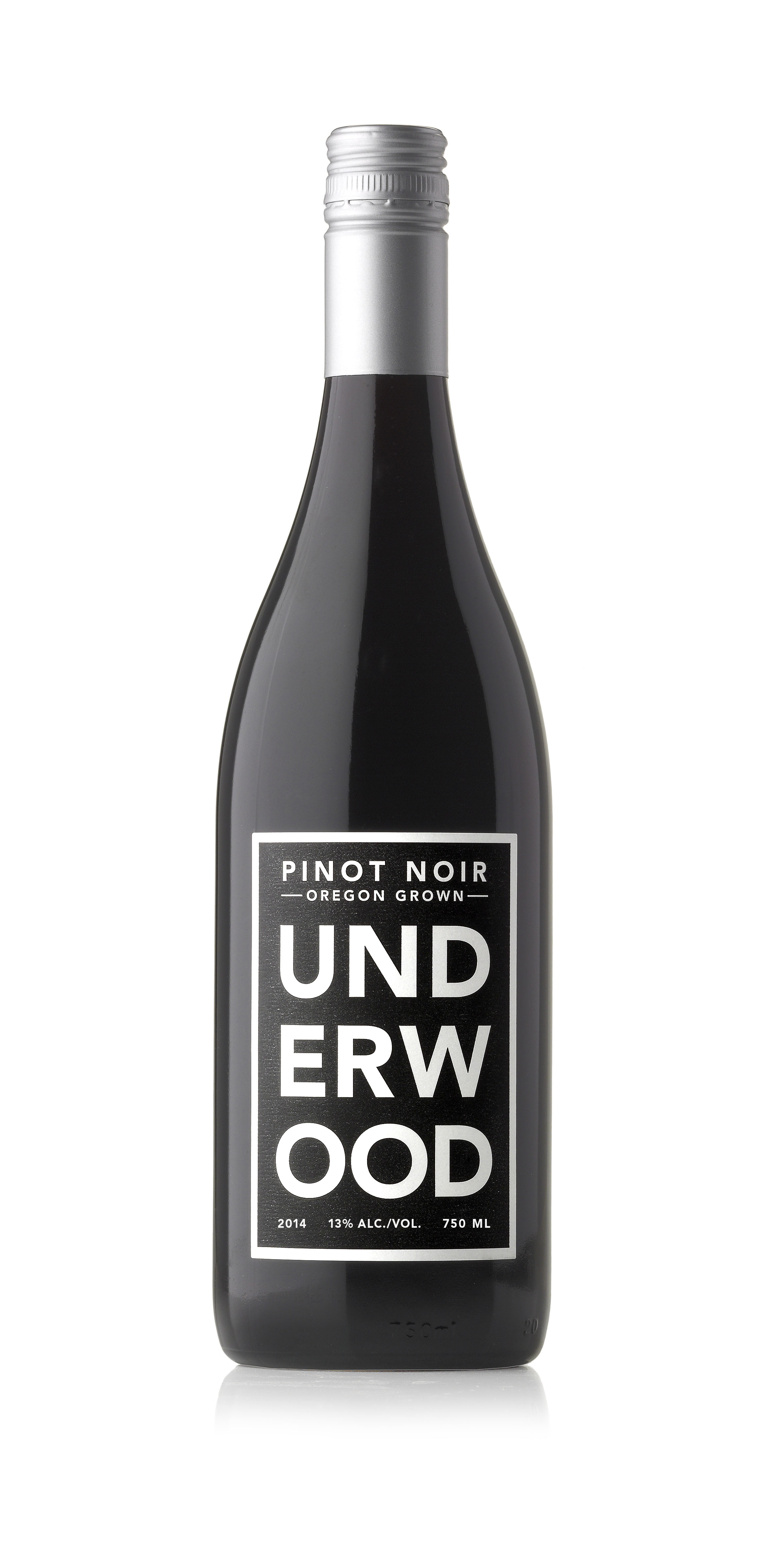
Underwood Wine in a Can: Pinkies Down, Thumbs...

Would you drink wine from a can? Should you?

Wine in a can? Sure. Let's do this!
Our neighbor, Christine the Pie Queen, relayed the results of a bit of work-related research performed by her loving hubby Jeff, both of whom you may remember from several write-ups over the years (including the ever-popular “Jeff’s Dinner Club” series). Jeff had uncovered a series of videos produced by Union Wine Company in Oregon for their Underwood Pinot Noir.

These videos, presented with the hashtag #pinkiesdown, are humorous takes on the overblown, overwritten world of wine reviews. The “sommelier,” “hipster wine bro,” and “sweater around neck guy” humorously hit your humble reviewer far too close to home with lines like “You know, I’m getting some strong notes of Axl Rose and a hint of heirloom purple carrots…” (Look for “Union Wine Company” on YouTube if you want to see. 15 solid minutes of chuckles.)

The videos are support for Underwood’s…yes, it’s true…wine in a can. Can-as-delivery-system is an interesting idea to be sure, just from hiking and poolside possibilities alone! The operatively begged question, of course, is “Is the damned stuff any good?”

As I usually do when there are oenological curiosities like this, I hit up the PR contact for Underwood to ask for review samples. Most companies are pretty good about sending along tasters for me to try. Underwood, however, informed me that press samples were not available “due to high demand.” In my mind, that either meant that they’re moving so much volume that they don’t need reviews to generate interest – or perhaps they don’t want reviewers looking too closely. Or maybe they just don’t have any to spare.

Undeterred, I popped down to Big Wine Store and made a couple of selections. I picked up two cans of Underwood Pinot Noir for ~$6 apiece. Each can is 375ml, slightly larger than a typical beer can. A standard wine bottle is 750ml, so each Underwood can is equivalent to a half-bottle or “split.” (Part of Jeff’s work, which includes occasional international espionage, consists of enforcing standards on alcohol labels.)

For science, I also snagged a bottle of Underwood 2013 Pinot Noir ($13), and a bottle of King’s Ridge 2013 Oregon Pinot Noir ($19), which is a higher end bottling from Union. (They also do an even more expensive one called “Alchemist” at $28, which wasn’t available.)

The Sweet Partner in Crime and I invited Jeff and Christine to Vine HQ for a “scientific comparison” of the various Union Wine offerings. To establish a “cross-inexpensive-vino” comparison, we also poured some Bota Box Pinot Noir because, well, it was cheap and we had it around. We took up our places around the living room and began to carefully pour, swirl, and…oh, who am I kidding? We commenced to pounding pinot whilst taking notes.

We started with the cans, of course. The unmistakeable “pffft” of opening aluminum proceeded pours all around. (We did our best to emulate the various characters from the videos as we tried the stuff.) Our first impression – this wine ain’t bad! It’s not the rich, earthy Oregon pinot that I can get all William Burroughs about (as in “If God made anything better, he kept it for himself…”), but the basic flavors certainly are along the lines of a solid, inexpensive Oregon wine. 

The can label helpfully suggests: “Notes: Raspberry, Cherry, Chocolate.” The actual flavors are pretty much along those lines. For wine that you can schlep in a cooler or backpack and slap a koozy on, it’s quite decent. For a picnic or other outdoor activity where glass isn’t practical, I’d consider it certainly workable. It’s also miles better wine when compared to the Bota Box, which tasted heavier, thicker, and sweeter than the Underwood.

We also had a tableful of snacks to go alongside our wine: Christine’s Caprese Skewers with homemade squeaky cheese; Jeff’s Smoky Baba Ganoush; and some dry sausage, gouda, and crackers. The wine went well enough with the entire spectrum of flavors, so it should be workable with nearly everything.

As I mentioned, we poured the wine into glasses to sample it, but I was the first of the group to step up and take a big ol’ chug straight from the can. In all honesty, I can’t recommend that particular technique. Since so much of wine’s flavor is scent, you get nothing aroma-wise when you drink it like a Coors Light, so make sure you pour it into some kind of available container – glass, mug, Solo cup, what have you – for best results.

Jeff also pointed out that its alcohol content (13%) is basically the same as Four Loko, so if you wanted to either mimic These Kids Today or pretend you’re back at a college kegger, you could #ShotgunAnUnderwood – but I wouldn’t recommend it. (However, if you’re going to try, I want video.)

Interestingly, we discovered that the canned and bottled Underwood pinots are completely different wines. The bottle’s label reads, “Notes: Cherry, Blackberry, Cola.” As I mentioned already, the Underwood in a bottle has a vintage, which means that all of the grapes were harvested the same year. The canned wine is non-vintage, meaning that it’s a blend of grapes or wines from different years. My guess is that the can wine is the “leftovers” at the end of a bottling run from a couple of subsequent vintages, but I’m not for certain. 

In any case, the bottled version of Underwood pinot is, by unanimous consent of our little foursome, a superior wine to the canned version, even though the price is basically the same. The fruit is brighter, there’s a nice smoky flavor that I liked, and there’s better balance overall. It’s very good for a $12 pinot.

We then poured some of the King’s Ridge for price point comparison purposes. The King’s Ridge, while somewhat more expensive than the Underwood, proved to be a bit of a disappointment. The flavors were darker and heavier, but that didn’t make them more interesting. In fact, when we compared the Underwoods to the King’s Ridge, which also has “Notes: Cherry, Blackberry, Cola,” we ranked them: Underwood bottle, King’s Ridge, Underwood can. In short, I wouldn’t bother with the King’s Ridge. There are better pinots out there for around $20.

Bottom line – if you’re considering taking wine to your next softball game, tailgate, or backyard hootenanny, you can safely snag some of these Underwood cans if you want to reduce the risk of ending up with shards of glass in your feet from an accidentally misthrown football. Or, if you’re hiking, it’s an excellent alternative to the traditional dinner flask of bourbon. Or maybe that’s just the Pie Queen’s tradition...

As an addendum, a few days later, the Sweet Partner in Crime and I tried a can of the Underwood Pinot Gris. Again, a decent enough white (notes: peach, grapefruit, and pear). It’s much more interesting than most inexpensive pinot grigio. I thought it had an odd yeasty scent that faded as it got some air. It’s certainly dangerously drinkable on a hot day. Underwood also is releasing a rosé, which I have not tried yet.

Bottom line – Underwood is a quality wine for any occasion where a can is your best beverage delivery option. It’s worth a try.


Wednesday, May 28, 2014

Sonoma and the Snowball

The Sweet Partner in Crime and I made our first trip to Sonoma County in 2005. Our first stop upon entering the county, before even checking in and unpacking, was at Iron Horse Winery, where we cobbled together a lovely picnic amongst rows of Cabernet Sauvignon vines. We hit a couple of other wineries before making it to our B&B, where we went to a happy hour down in their “speakeasy” of a tasting room. In just half a day, we had learned quickly that we were surrounded by so many good wines…zins, cabs, syrahs, merlots…and I wanted…no, I needed…to try them all. In three days. I saw the light. My mission was clear.

I went a little crazy.

The Origin of Madness
I had some recommendations from my more knowledgeable friends of several wineries to hit and we kept adding to the list as we tried new wines. We zoomed though the valleys, bouncing from tasting room to tasting room like a meth-addled census taker. I thought a dozen tasting rooms a day seemed perfectly logical, starting at the first one to open and running the gamut until they closed up shop. Sure, we covered a lot of ground, but needless to say, this isn’t the most relaxing way to spend a vacation.

To the great benefit of my palate, my liver, and the SPinC’s willingness to keep me around, my strategy has changed a bit in the ensuing years. I have no more illusions about trying to drain the contents of entire valleys. So, on our recent return to Sonoma, rather than trying to run down a bunch of wineries someone else thought would be good, we took matters into our own hands based on our own conversations and connections once we arrived. The Naked Vine Snowball Technique was born.

The Snowball’s central idea comes from a research method called snowball sampling -- a recruitment technique in which participants are asked to assist researchers in identifying other potential subjects. In short, after someone takes a survey, the researcher asks, “Do you know other folks who might be interested in participating?” Those referrals leads to other referrals, growing in number as the virtual snowball rolls down the hypothetical hill.

How does this work with tasting rooms? Start at the place where you’re staying. They live there. They know things. Say something like, “We’re looking for a good place to start. We want somewhere fun, laid back, and not overly pricey.” Replace those descriptors with whatever you want…expensive wines, pinot noir specialists, great gift shop -- whatever floats your cork. You’ll end up with at least a couple of recommendations. Pop in to one of them and do a tasting. Chat. Enjoy. If you feel like you make a connection, then repeat your question to the good folks behind the bar. They live there. They know things. They’ll mention a couple of other places. Those places will mention other places. Patterns form in the recommendations. You now have your guide. Go forth and enjoy.

We wanted a different experience this time around, so we parked it in the actual city of Sonoma, which is in the southern portion of Sonoma County. Our previous trips were to the northern end of the county near Healdsburg, and the surrounding valleys. Sonoma has 26 tasting rooms in and around its city square. (In the past, I might have tried to hit them all.) We found a distinct contrast with those tasting rooms. Most places we’d been, the tasting rooms were basically outlet stores for well-established wineries with very recognizable names. In Sonoma, however, the tasting rooms were generally run by smaller operations at which many didn’t own vineyards themselves. Many of these winemakers bought grapes from vineyards they liked that fit their needs, producing excellent wine. I like that notion. Egalitarian.

We got to town, dropped our bags at the Inn at Sonoma (highly recommended), made a couple of inquiries to get us started, and off we went. Did we hit all 26? Nope. Not even half of them, truth be told. We had a lovely, relaxing time and made some wonderful discoveries along the way. Heck, we barely had to move our car! Here are our top experiences from the trip:


Two Amigos Winery – We remarked that we’ve had good luck with “tastresses” when we’ve started our little treks. Our first trip to Sonoma was kicked off by a woman named Annalise. This time, Michelle was the one to get our trip off on the correct foot. She was there along with Bob, one of the aforementioned “amigos.” The other amigo is an actor named Squire Riddell, whom you’ll recognize if you watched any TV in the 80’s…


He also played Ronald McDonald after Willard Scott headed to the Today show, so plenty of McDonald’s and clown-themed memorabilia adorn the tasting room.

They had plenty of decent wines. Their 2013 Cabernet Sauvignon was fascinating for a wine that young. I’ll be curious how it develops. The other highlights were their Viognier, a port made from Syrah, and a Syrah from GlenLyon – which is Riddell’s other winemaking venture. Needless to say, McDonald’s must have been a pretty good gig. Michelle and Bob gave us the initial seed for the snowball, leading us to a couple of the following tasting rooms. (http://twoamigoswines.com/)


Bump Wine Cellars – We missed throwing our annual Derby Day party because of our Sonoma trip, but we felt right at home walking into Bump’s tasting room to find a beautiful horse-themed art exhibition by an artist named Tej Greenhill. Bump’s tasting room was far and away our favorite, with warm, contemporary décor and comfortable places to relax and sip. Sip we did. Bump was the best value we found in Sonoma. The winemaker, Geordie Carr, specializes in fermenting wines at cooler temperatures to preserve the aromatics. He sources his grapes from all over Sonoma County through friendly partnerships he’s developed in his travels. Their chardonnay was delicate and nuanced with just a kiss of oak. I don’t classify many zinfandels as “delicate,” but Carr’s technique of slightly early picking and cool fermentation yielded a beautifully aromatic wine that drinks like a good pinot – even at 15.2% alcohol. With nothing (currently) in their portfolio over $28, it’s a good time to stock up. (http://www.bumpwine.com/)


R2 Wine Company – Since we’re on a survey research kick, the SPinC, also sometimes known as the Queen of All Regressions, was so very excited to see a winery called R2. The r-square statistic, also known as the measure of “explained variance,” is a key measure of many of her multivariate analyses. While the name of the winery has nothing to do with statistics (it’s named after co-founders Richard and Roger Roessler), the notion of “Sonoma wine variance” shone through here. In tasting through the R2 portfolio, we noticed a distinct difference between wines made from Sonoma “mountain fruit” vs. “valley fruit.” The mountain fruit wines in general had earthier, deeper flavors with a mineral character, while the valley fruit wines had bigger fruit flavors and stronger tannins. We enjoyed their Black Pine pinot noir ($26), which was a delicious general California pinot noir. Their Hein Vineyard Pinot Noir ($48) was “smoketacular!” according to my notes. Their “1331” Cabernet ($54) was a quintessential example of a mountain fruit wine, and it was hedonistically complex. (http://www.r2winecompany.com/)


Bryter Estates – Oh, where to begin with Bryter? If you forced me to pick a favorite from this trip, the top prize would go to Bryter with its collection of nuanced, happy wines. Bryter is one of the few wineries we encountered with female winemakers. Terin Ignozzi, the winemaker and co-owner with her husband Bryan (“Bryter” is a fusion of their names), has crafted a portfolio with great range and exceptional quality. All of their wines -- red, white, and rosé – are exceptionally harmonious and clean. The Sweet Partner in Crime remarked, when we tried their rosé after getting back home, that it “tasted like what our walk in Yosemite felt like – sunshine and fresh air.”

We heard in at least three different tasting rooms that we needed to try Bryter “for their bubbles.” No lie. The “Le Stelle” brut sparkler ($38) is excellent, with a nutty, green apple flavor and a creamy mouthfeel. That would have been worth the stop alone, but as we went down the line, we found more surprises. The “Vivant” sauvignon blanc ($34) is crisp and melony – pleasant, pleasant!. Their “Jubilee” rosé of pinot noir ($32) gets a double plus for the lingering fruit and the touch of oak beneath the clean flavor. Our favorite was their “Cadeau” Pinot Noir ($50). “Cadeau” translates as “gift” and was, simply, the best bottle we had on our trip. My note says, “So subtle, so beautiful.” This wine edged its way in with my faves among the Oregon pinots. A must-not-miss. (http://www.bryter.com/)


Walt Wines – Walt sources grapes from all over the west coast, and they do an interesting array of wines. The highlight of our visit with Liz and Terry, our pourers, was their “850 Mile Road Trip” where they showed pinots from the Shea Vineyard in Willamette Valley, Oregon, “The Corners” in Anderson Valley in Mendocino, and Rita’s Crown Vineyard in Santa Rita Hills. (All $65) The pinot flavors ranged “from brambles to boom!” across these three wines, and the tasting was a wonderful exploration of terroir. They also release a wine each year called “Pinpoint Extreme,” which is an anagram for “pinot experiment.” Last year, they added roasted stems to the fermentation. This year, they flash-heated some of the grapes until they exploded. Fun to try new stuff. (http://www.waltwines.com/)


Hawkes Wine – Memorable wine-wise for a really fantastic licorice-and-dark fruit flavored merlot ($35) sourced from vines planted on a seam of clay in one of the vineyards where nothing else would grow; some very well-balanced cabernets; and an estate-pressed extra-virgin olive oil (proceeds to a local kids charity) that blew us away. Before we went to Hawkes, though, I realized that I hadn’t packed very well, and I needed another t-shirt. Hawkes has a neat logo, so I picked one up to wear on our flight home. On the way to the Sacramento airport from Yosemite -- which followed Sonoma on our itinerary -- we stopped for lunch at a restaurant in Lodi called the Dancing Fox. The waitstaff was mostly male and powerfully metrosexual. At least three of them stopped by my table to ask, “Is that Hawkes Winery?” Lodi is about two hours from their tasting room, so I guess it’s the winery of choice for expensive-yet-casually dressed men. (http://www.hawkeswine.com)
Kamen Estate Wines – Kamen is the child of Robert Kamen, whose name you might not recognize, but you’d know his work. He’s the screenwriter for “Taps,” "The Karate Kid," “The Fifth Element,” “The Transporter,” “A Walk in the Clouds,” “Taken,” and various other films. He bought a property in the mountains with the paycheck from his first screenplay, not realizing that he was sitting on a goldmine. His wines were some of the best we tried on the trip, and they’re certainly not inexpensive. His top-of-the-line, “Kashmir,” runs $100+ per bottle. The Syrah ($75) and Cabernet ($80) are also top notch with layer upon layer of flavor. “Opulent” is as good a descriptor as any. “Darned awesome” would also fit. It’s worth a swing through their tasting room – both to try these wines and to hear Robert’s story, which stands in contrast, and made a very interesting bookend, to that of Two Amigos’ Squire Ridell. Needless to say, a commercial actor and a screenwriter have very different views on how wine should be made and how life lands you in various circumstances. While we were there, we were lucky enough to meet Robert himself, who popped into the tasting room briefly. He struck me as an affably sarcastic M.O.T. -- much the same way I hope people think of me. His "Sin while you can -- otherwise Jesus died for nothing" shirt will live forever in my memory. (http://kamenwines.com/)

In addition to all of the wines that you can sample, the town of Sonoma is home to any number of fabulous restaurants, and we worked our way through several. Try the Red Grape for lunch. La Salette is a Portuguese restaurant with fabulous variety and flavor. The Girl and the Fig is a local favorite – contemporary French. The El Dorado Kitchen does some neat takes on American classic cuisine. One of our favorite dining experiences, however, was the Tuesday night we were there – which coincided with the first Sonoma community farmer’s market of the year. The farmer’s market turns into a big community picnic, so we joined right in with a bottle of Bump rosé. Once things started winding down, many locals head over to Murphy’s Irish Pub for an oyster roast and multiple beers. After a few days of wine tasting, beer made for a great way to close a wonderful stretch of vacation.