Showing posts with label alphabet soup project. Show all posts

Sunday, May 20, 2018

The Alphabet Soup Project: P is for Pinot Noir


When I started filling this space with words, the cultural touchstone for wine was a 2004 indie-film-that-blew-up called Sideways. The events of the film surround a wine tasting bachelor trip through Santa Barbara County’s Pinot Noir country. Sideways hasn’t held up as a film terribly well, but the movie had a large economic impact.

According to a 2017 NPR report, since the release of the film, US production of Pinot Noir has increased by 170%, while total grape production has only increased by 7-8%. (Merlot’s sales also took a significant hit for awhile, due to a main character’s disdain for “fcking merlot.”)

I enjoy few red varietals more than Pinot Noir. Pinot Noir, by nature, yields a light-bodied wine with delicate yet full aromatics. The flavors most associated with pinot are cherries, berries, backed with smokiness. Pinot is not usually terribly tannic, and it’s fairly acidic, which makes it a perfect food wine, pairing with anything from salmon to duck to big stews like beef bourguignon. Pinot also takes on many characteristics of the soil, so terroir is a major factor in the wine’s flavor.

Pinot Noir is a tricky grape to grow, which can make it pricey. Pinot vines grow best in cool climates, have low yields, and a thin skin, which can make it susceptible to damage from quick temperature changes, mildew, fungus, and sunburn. All these factors pop up on the pricetag, sending many vino-newbies to the next aisle.

Many winemakers blend Pinot Noir with less expensive juice to stretch their supply at the expense of quality. For the sake of this column, I tried to stick to wines made from 100% Pinot Noir.
 
France’s Burgundy region is the world’s best known locale for Pinot Noir. If you see a red wine from Burgundy (“Bourgogne” to the locals…), it’s going to be 100% Pinot Noir. Burgundy’s Pinot Noirs are consistently considered some of the finest wines in the world and many are built for long aging and super complex flavors.

That’s not our consideration here. The wine I chose, Louis Jadot 2015 Bourgogne, will give you the general idea of what Pinot Noir from that part of the world tastes like, at the sacrifice of some complexity. One common difference between Pinots from France and elsewhere in the world is an earthy undertone – the “Old World Funk.” This wine has just a hint of that earthiness to go with its berry and smoke flavors. This would be best considered a “starter Burgundy,” and you can snag this for $15-17, so you might get your bearings on the region with this one.

If you flew due west from Burgundy, you’ll eventually land in Oregon’s Willamette Valley, home to some of my favorite wines. The richer, fruitier California Pinots traditionally lead the market for domestic Pinot Noir, but I think Oregon provides better value and flavor for my Pinot dollar. Oregon pinots tend towards a sultry fruitiness and smokiness.

I’ve written about Locations Wines previously. Winemaker Dave Phinney tries to create wines that he feels reflect the basic characteristics of a region. His Oregon Pinot Noir sources grapes from across the Willamette Valley. I certainly thought it was a decent reflection of the basic flavors of Oregon Pinot – but with the volume turned up. The cherry, smoke, and tannin involved here were all much more pronounced than I find in many Oregon wines, which tend to be somewhat subtler. Still, at $18, a decent value, and a decent regional intro.

Finally, New Zealand, known for many years as a Sauvignon Blanc hotspot, has been filling its barrels with Pinot since the mid 1990’s. You might sense a theme, but the EnZedd growing regions’ map coordinates are a mirror in south latitudes what you’ll find Oregon and France’s growing areas in the northern hemisphere. New Zealand pinots tend to be some of the lighter-styled versions, drawing accolades for fruity complexity.

The inexpensive one I tried was Oyster Bay 2015 Marlborough Pinot Noir ($13-15). I found it to be much lighter than the other two. The initial flavors are light and fruity, with the smokiness comes out after a little bit of time. Cherry, raspberry, and cola are the main flavors. The finish is lightly fruity. Quire delicate, and honestly, I didn’t think it was all that interesting. It’s better with a light type of food pairing, like trout with veggies.

Two final thoughts. First, as a rule, plan to spend $20+ on a bottle of Pinot Noir. There’s a big leap in quality right around that price point. Second, since Pinot has such complex flavors, decant the wine at least a half hour before drinking to let the complexity open up. Or, at the very least, dump the bottle into a pitcher and pour it back, which is my usual “speed decanting” method.

Enjoy!

Saturday, March 01, 2014

The Alphabet Soup Project -- "O" is for "Oak"


(c) Mike Rosenberg 2014
Wood is good.
Go to any winery and you’ll find oak barrels everywhere being used for fermenting wine, for storage, or just for decoration. But why? Obviously there’s some reason that, for years, wine and barrels are united in the wine drinker’s consciousness? Why do winemakers use barrels? While they look neat, it seems like they’re not particularly airtight, and there are many other ways to store liquid.

For an answer, let’s set the Wayback Machine for the early days of winemaking – 4000 years ago, give or take several centuries. Early winemakers figured out how to ferment grape juice into something delicious – but once you’ve got wine made, you’ve got to be able to store it and, just as importantly, move it around. The storage containers available were fired clay pots. The Greeks called them amphorae. They worked well – so long as you didn’t drop them, or have them fall over, or have a stray mule kick a hole in one out of spite.

Around 800 BC, during the Iron Age, fully enclosed wooden barrels were developed. By the first century AD, they were commonly used for containers for liquids of all sorts. They were stronger than clay, obviously, they didn’t usually break into a million pieces at the drop of a hat, and they could be stacked, rolled, and moved much more easily. They became the medium of choice.

Somewhere along the line, winemakers began to notice that the flavors in many wines change, improve, and become more complex during time in barrel. There are two reasons for this. First, especially where red wines are concerned, small amounts of oxygen get to the wine while stored in a barrel. This gradual oxidation tones down the sharpness of the tannin in the juice, makes the wine a deeper color, and preserves the wine for a longer period of time.

Second, as the wine seeps into the grain of the wood, it picks up chemical compounds that imparts certain flavors and aromas -- usually vanilla, tobacco, spice, and a “toasty” flavor. The wine also picks up tannins from the wood itself, which are a different sort of tannin than what’s in the juice in the case of red wines, adding additional complexity. White wines pick up less of the flavor than do reds, since the barrels are usually used for fermentation rather than storage. They still do change in barrel, however.

As time passed, winemakers found that different types of oak affect the wines in different ways. There are three common types of oak – American, French, and East European (usually Hungarian). The differences in the effects of the oak basically come down to the wood grain. American oak has a wider grain than French oak, so the wine penetrates the wood more deeply. American oak imparts a stronger, smokier flavor than does French oak, with stronger vanilla flavors. French oak tends to bring a spicier flavor. Hungarian oak is similar to French oak, although there’s a sweeter characteristic that gets imparted from those barrels.

If you’re reading winemaker notes, you might see references to a wine being “done in new oak.” Barrels are expensive, so they’re commonly reused. New oak barrels impart more flavor to wines than do used barrels. Since barrels are so expensive ($300 for a typical 55 gallon American oak barrel and $750 for a French), some winemakers cut corners by fermenting or storing wines with oak chips or old oak staves. The results of that cost cutting measure tend to be inferior.

The flavor of oak, like any other flavor in wine, can be overdone. I basically gave up on most California chardonnay for a long time because the wines in the late 90’s and early aughts were made so oaky. I remember Meridian chardonnay for years tasted to me like chewing on a charcoal briquette, but lots of people obviously call for that sort of flavor. Thankfully, in my opinion, cooler heads have prevailed on the oaking of wines – and there’s a great deal more balance to be had out there with both reds and whites.

Also, as a reaction to the heavy oak, some enterprising winemakers began marketing “unoaked” wines. This means that they’re fermented and stored entirely in a different type of container – be it stainless steel, concrete, plastic, or what have you. Removing the oak, as you would imagine, creates a very different wine, even with similar starting juice. Many unoaked wines are excellent. They do require a certain amount of skill to balance the flavors.

As an experiment in the difference between oaked and unoaked wines, I selected a couple of wines for a side-by-side tasting. I tried to find something from the same producer, same area, same vintage, and a similar price point. But I wanted one of the wines to be done with oak; the other without. After a bit of searching, I came across this pair of chardonnays:

Estancia 2011 Monterey County Chardonnay
Estancia 2011 Monterey County Unoaked Chardonnay


Doesn’t get much more similar than that, I guess! Both of these are $10-14 bottles. To go as a pairing alongside these wines, we went with slow cooked salmon filets with chickpeas and mustard greens.

The difference in these wines was pretty striking. We started with the unoaked one. Rather than being fermented in barrels, this wine was done in stainless steel. Typically, I find most unoaked wines to be fairly crisp and light. This Estancia was not light at all. In fact, it had a pretty considerable weight – I’d go so far as to call it a little “fat.” The main flavors I pulled from this were pear and lemon, if you smeared both of them in butter. The finish was full of cream and almost cloying. I honestly didn’t care very much for it. As it got some air, the buttery characteristics toned down a bit – but just the same, I thought the flavors weren’t all that interesting. With the food, it was just OK.

The reason for oak became pretty clear when we tried the oaked version. According to the winemaking notes, half of the juice for this wine is fermented in oak, with half of the oaked wine being in new barrels. Not surprisingly, this imparted a very strong vanilla and toasted wood flavor to the wine, which was a shock to the palate after tasting the first one. As it got air and the smoke “blew off” a bit, the wine improved greatly. I toss the word “structure” around a lot when I’m writing reviews – and that’s what the oak added in this case. The flavor profile of the wines is basically the same…except that the vanilla and toast of the oaked version balances the wines’ flavors and makes it, ultimately, a more pleasant wine to drink.

Only through tasting and trial will you decide how much oak is best for your palate. Once you find a wine you like that has that toasty flavor, however, make sure you look at the winemaker notes. That way, you’ll be able to find other wines made in a similar style. I think that’s a good way to be a smart wine consumer.


Wednesday, May 15, 2013

The Alphabet Soup Project – “N” is for “Nero”

Quick quiz…I say “Nero.” What pops into your head?

This guy?

Teenage Wasteland!


No? Maybe this guy?

"Ambassador Spock will be joining us at our next wine tasting."


Nah…how about these guys?

Now we're talking!
Nero d’Avola is an Italian, predominantly Sicilian, wine grape varietal. As you probably remember, most Italian wines draw their name from the location they’re grown rather than the actual varietal of grape. Nero d’Avola eliminates the confusion by including both.

In Italian, “Nero d’Avola” translates as “The Black [Grape] of Avola” – Avola being a town at the southernmost tip of the island of Sicily near the city of Syracuse. The varietal is less commonly referred to as “Calabrese” – meaning “from Calabria,” the Italian province straight across the Strait of Messina from Sicily.

Nero d’Avola grows best in hot, Mediterranean climates. Sicily certainly falls squarely into that definition. Grapes that thrive in warm weather regions tend to yield wines with stronger fruit flavors and higher alcohol content, and Nero is no exception. Its dark, tannic juice has long been sought as a blending grape to add depth and color to lighter wines on the mainland. Advances in winemaking technology have improved the single-varietal quality of these grapes markedly. Sicily is currently third in overall production among Italian wine regions – with the skyrocketing production of Nero d’Avola bolstering the already ample yield of the ubiquitous Marsala grape.

What’s Nero d’Avola taste like? The best parallel I’ve seen out there is Australian Shiraz, although I find The Black to be more tannic in general. As with most high-tannin wines, it usually takes a couple of years for the tannins to calm down and mesh with the other flavors, so if you’re looking on the shelves of your local quality wine retailer, don’t be afraid to pick up a bottle with a couple of years under its cork. Nero d’Avola also has aging potential, so if you find one you enjoy, don’t be afraid to stash a few bottles in the ol’ cellar for a little while. Nero d’Avola is also sometimes made into rosé for summertime consumption.

Sicily, being the volcanic island that it is, has great variation in altitude and soil content with microclimatic regions all over the place. The flavor you’ll find can vary markedly from producer to producer and from town to town. You may need to do a little independent research to see where your palate’s sweet spot is with this grape. (But that’s half the fun, ain’t it?) It also can pair with a broad variety of foods – from earthy vegetables like roasted eggplant to tomato-based pasta sauces to lamb and chili. Here are a few that I enjoyed recently:

Poggio Anima 2010 “Asmodeus” Nero d’Avola – Asmodeus, as any owner of the original Dungeons and Dragons “Monster Manual” can tell you, is the Lord of Hell. I doubt the terroir for this wine is quite that intense, largely because brimstone is not part of this wine’s big, bright flavor. My first impression was of blackberry and cherry on the nose and palate. It’s medium-to-full body, but it’s not as “sticky” as a similarly bouqueted Shiraz would be. Instead, the finish leans out, turning first to a nice tannic dryness and then into that mineral character that many Italian wines possess. I thought it was a wonderful food wine. We had this next to a penne pasta with wilted arugula, diced tomatoes, and goat cheese, topped with roasted pork (recipe here). There are worse wines to accompany any number of sins, gluttony being the top of the list. $13.

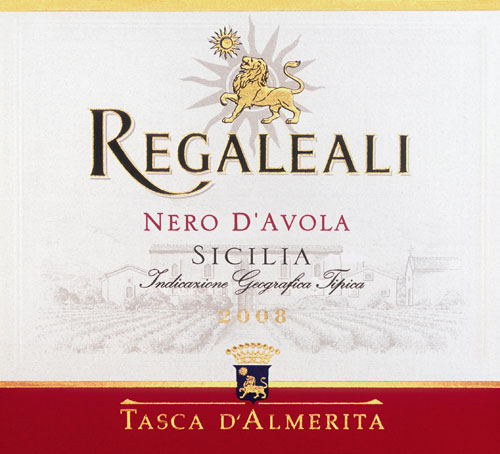
Regaleali 2008 Nero d’Avola – Under other, more blindfolded circumstances, I might have mistaken this for a Bordeaux. (And certainly more like a Bordeaux than a Rhone, which I’d have expected with a “Shiraz-like” grape.)  My first thought on spinning this was, “Wow. Funky!” There’s a real whiff of earthiness on the nose, coupled with a nice bit of cherry. I’d call it medium bodied, in line with the aforementioned French doppelganger. Good dark fruit on the tongue with some gradually-building tannins. There’s plenty of  length on the tannic, chalky finish. We had this with leftovers from the same meal we made for the Asmodeus. The flavors of the pasta had blended into a nice yumminess, and the extra earthy characteristic in this wine made it an even better complement. Another great, though very different, food wine. $15.

Feudo Arancio “Stemmari” 2010 Nero a’Avola – The least expensive ($8) and most
straightforward wine of this particular sampling. It’s a simple, uncomplicated table wine – and this is not a fault in the slightest. The major flavors are cranberry and cherry, both on the nose and on the palate. The real winning piece of this wine is the balance. As I said, there’s nothing complex here – but the flavor, minerality, and tannin are in real harmony, making this a very pleasant and food-friendly quaff. We had this alongside a rustic bean, barley, and wilted green soup, and I thoroughly enjoyed the pairing. (I also discovered that our going-to-seed lettuces made great soup greens!)

If you’re a fan of sturdy, fruity wines and you’re looking for a changeup this weekend, trundle down to the end of the “Other Italian Wines” section and snag a couple of these. After all, once you go Black…

Thursday, December 27, 2012

The Alphabet Soup Project -- "M" is for "Meatless" (Wine pairings for vegetarians)


Pumbaa: “Hey, kid, what's eatin' ya?”
Timon: “Nothin'. He's on top of the food chain!”
-The Lion King

Astute observers of the Vine know that I love me some meat. Well, I love most food in general, but I'm not sure that I could ever be a vegetarian. I tried removing animals from the ol' diet during a brief, dark once-upon-a-time down Florida way, but it didn't take. I've got too much of the "how do you know you don't like it if you've never even tried it" hardwired into my palate, I guess.

I try my best to include potential food pairings with my reviews – pairings which often involve some suggestion of a meat dish. I do realize not everyone shares my particular omnivorous eating pattern. There are lots of folks, like my friends opening Kitchen 452 in Cincinnati, who choose to be more kind to our web-footed friends (and their hoofed, finned, & clawed compatriots), sparing these critters a quick trip to Dinnersville.

One of the better dinner parties we've thrown here at Vine HQ involved an entirely meatless menu, so I've seen firsthand not only how much wine my vegetarian friends can throw down, but also how well vegetarian dishes go with well-paired wine.

In the interests of egalitarian dining, or if you’re considering doing some more meatless meals for health purposes or new year’s resolutions, here are some general wine recommendations to go with whatever meat substitute you’re planning to plate up for the evening.

All these recommendations should be viewed through the prism of one of the Vine’s universal truths: "People make wine to go with what they're eating.” For example, if you’re making an Italian-based recipe, Italian wine is your best bet. Tapas will work with Spanish wine. Also, if you’re making spicy curries or other Asian flavors, the classic pairings of Riesling and Gewurztraminer will likely be winners.

Tofu: The Swiss Army knife of vegetarian cooking, tofu is made by taking soy milk and adding a coagulant of some sort to curdle the milk. The resulting curds are then pressed into the blocks you see in the grocery store. The type of coagulant used determines the texture of the tofu, so combinations are often used. Acid-coagulated tofu creates softer, “silken” tofu while salts and/or  enzymes create a firmer texture.

As for what wine to pair with your tofu dish? There’s not an answer to that question. Tofu in and of itself barely has any flavor, as you probably know. It does, however, absorb the flavor of whatever else is in the pot, wok, skillet, or other cooking implement. Your wine pairing reflect the dominant flavor of the sauce. For Asian preparations, a dry Riesling or a very light red like a Beaujolais would be fine. For grilled tofu, especially if marinated, a fruity wine like a merlot would go well. For flavored tofu preparations like “soyrizo” or “tofurkey” use the corresponding pairing for the meat. I’d go with Rioja and either a pinot noir or a chardonnay, respectively, in those cases.

The same sort of pairing suggestions guide also works with tofu’s first cousin Tempeh, which is made from soybeans fermented and pressed into blocks. This has a much firmer texture and can be used for kabobs, broken up for a ground meat substitute in something like vegetarian chili, etc. It has a slightly nutty flavor, but is generally pretty neutral. 

Roasted Vegetables: When you roast almost anything, the heat causes the sugars in whatever you have in the oven to caramelize, bringing out the sweetness and deepening the flavors as the cooking process proceeds. Sweet potatoes, zucchini, squash, cauliflower, broccoli, tomatoes – you name it. Toss them in olive oil and sliding them into a 425˚ oven for an appropriate amount of time yields a scrumptious base for any number of dishes. Smoky, bright, and slightly sweet works well next to a chardonnay that’s got body and a little oakiness. California chardonnays make an excellent choice with almost any roasted vegetarian preparation, as do most white Burgundies other than Chablis. Chablis’ delicacy gets run over a bit by roasted flavors. In my kitchen, there are two major exceptions to the chardonnay rule, which are…

Eggplant and Mushrooms: Two of my favorite foods of all time. I use eggplant in any number of dishes – my favorites being eggplant parmesan where I grill the eggplant slices and a roasted eggplant and tomato dish served over couscous. Eggplant gets a very smoky, savory flavor when roasted or grilled. The chemical composition that can give eggplant a bitter flavor is actually countered nicely by tannic wine, so think big. For the Parmesan, I’ll break out a Barbera, or Super Tuscan Italian wine. For the roasted dish, I look to the Rhone region. If you’re feeling like splurging, roasted eggplant and Chateauneuf-de-Pape is a gorgeous side-by-side, but Cotes du Rhone works well, too. Young California cabernet is also a good match with almost any eggplant dish.

As for the tasty, tasty fungus – mushrooms add, unsurprisingly, an earthy flavor to any dish. On their own, whether grilled or sautéed, they’ll have a flavor that you want to keep far from almost any white wine. You want something with an earthy backbone, yet not too heavy. Either of the French “B’s” – Bordeaux or Burgundy – work well. I personally think grilled Portabella mushroom caps and an Oregon pinot is a little slice of heaven.

Quinoa – America is finally catching on to this wonderful, nutty-flavored South American grain, which is one of the best meat substitutes our there as far as nutritional content goes. Quinoa (pronounced KEE-nwah) has a complete spread of amino acids, lots of iron, and cooks faster than rice in most preparations. Often used as a side, much like brown rice would be, I find it’s also an excellent base for a Latin-flavored salad, tossed with bell peppers, black beans, lime juice, cilantro and such. The “regional” pairing works nicely here, so look for a red from South America. You can’t go wrong with either Malbec or Carmenere. And speaking of beans:

Beans, Chickpeas, and other Legumes – Ah, the musical fruit. Beans and their various cousins are also very high in protein, fiber, B-vitamins, and all sorts of other goodnesses. The basic pairing rule is “the darker the berry, the darker the juice.” White beans like cannellini and cranberry beans, as well as chickpeas, like to go next to lighter whites. Sauvignon blanc and Chablis are good choices. For lentils, peas and the like – go with dry rosé or lighter reds like Chianti and Beaujolais. With kidney beans, black beans, and other dark ones, go bold! Zinfandel and earthy French reds like Cotes du Rhone and Bandol will pair nicely.

Thursday, June 28, 2012

L is for Loire


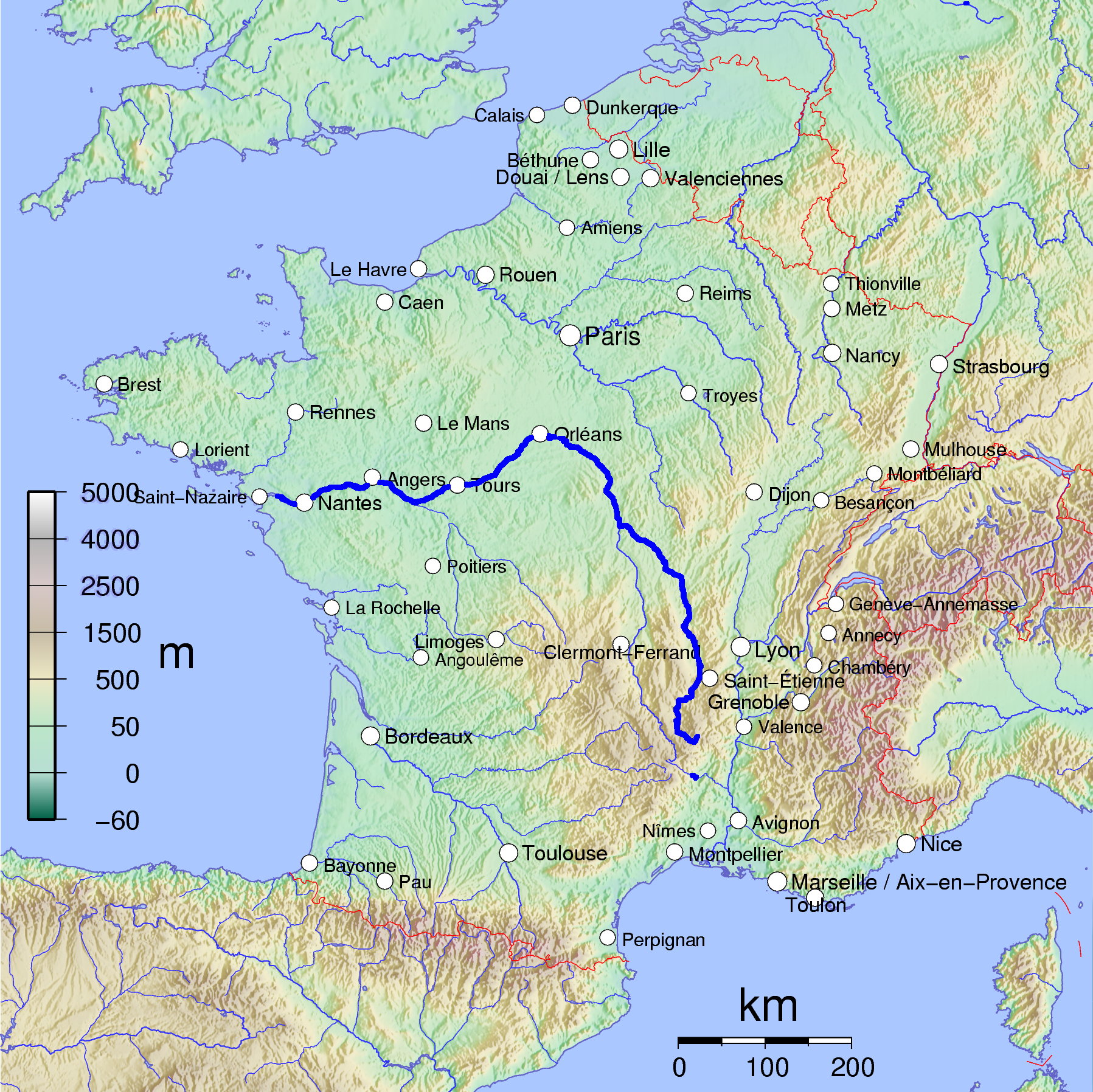
The Loire (pronounced luh-WAHR) Valley wine region is a long, skinny stretch of land that lies along the river of the same name in France. Some of the first evidence of winemaking in France dates to the 1st century A.D. in the evidence of vines planted by the Romans in the Loire. The river meanders north-northwesterly from its head in the Alps in south-central France near Ardèche for a couple hundred miles before taking a hard left turn near Orleans, about 80 miles south of Paris. (This is about where the grape growing begins in earnest.) From there, the river heads almost due west, eventually emptying into the Bay of Biscay on France’s west coast at Saint-Nazaire.
Here be the Loire!

Much of the area surrounding the Loire in northern France is relatively cool. Too cool, ordinarily, to ripen many wine grapes. Luckily, the river exerts influence on the climate, raising the average temperature within a few miles on either side of its banks by a couple of critical degrees. Within this “growing zone” lie some of the most densely planted vineyards in the country. Even so, an extra cool summer can prevent the grapes from ripening fully in some vintages. In those cases, some winemakers add extra sugar to the juice before fermenting. This occasionally-necessary process, called “chapitalization,” is illegal in other parts of Gaul.

The Loire region boasts a broad spectrum of grapes. As with most French wines, the name you see on the label indicates the area in which the grapes are grown. The Upper Loire, which includes subregions such as Sancerre & Pouilly-Fumé), trades heavily in sauvignon blanc with a little pinot noir grown in certain areas. The Middle Loire wines (Vouvray, Chinon, Saumur, and Touraine are the most common regions you’ll see) are predominantly chenin blanc among the whites and cabernet franc among the reds. The Lower Loire (mostly around the town of Muscadet), near the mouth of the river, is best known for white wines made from the Melon de Bourgogne grape.

Loire wines – red, white, and rosé – are known for high acidity and relatively low alcohol content. This combination makes them excellent pairings with broad varieties of dishes and excellent “just for drinking” choices. I think I drink more wines from the Loire than any other French region – partly because of their flexibility, but also because there are some real steals because of the region’s relative anonymity. (Woohoo More for me!) Here are a few offerings from the Loire that I’ve enjoyed recently:

Chateau de Fontaine-Audon 2010 Sancerre –Sancerre is the most prominent region in the Upper Loire, which is the wine growing region just south of Orleans. Most of the whites, as I mentioned before, are largely sauvignon blanc and are considered some of the finest examples of that grape in the world. Unlike many sauvignon blancs with heavy fruit or grass notes, Sancerre is known best for the mineral character of its wines. This particular bottle is a delicious example.  The first sip starts with plenty of pineapple and lemon flavors and a little undertone of flint. The general body is crisp with just a hint of creamy at the end. Poured this with both a goat cheese appetizer and a red snapper ceviche. With the cheese, the “metallic” piece of the mineral taste and the sour of the cheese negated each other, leaving a very nice rich flavor from the cheese, and a peachy flavor from the wine. Lovely. With the ceviche, the acidity of the wine merged with the lime juice in the ceviche. The fish tasted wonderful, as did the wine, which displayed a tasty flavor that reminded me of a melted lemon ice. Excellent. ($18.)

Remy Pannier 2008 Vouvray – Vouvray is a small parcel of land in the Middle-Loire outside of the city of Tours; an area known for growing wonderful chenin blanc. Not the chenin blanc you’ve seen in jugs, mind you. The genuine article, like this bottle. The nose reminds me of Rosh Hashanah: apples and honey – a flavor that translates directly from nose to palate. Unlike many crisp, light Loire whites, this one offers quite a bit of richness. It tastes like there’s a hint of residual sugar, but it’s more of honey flavor than a sugary one. There’s a little bit of acid underneath the richness, but the tartness is well-hidden. The finish has just a twist of crisp at the end. An exceptionally nice wine to just sip on while sitting on the porch one afternoon. It made a lovely food wine. Alongside fish tacos, it managed to stand up to Mexican-style spices without a problem. ($15)

Domaine de Noiré 2010 Chinon – Chinon, in the Middle Loire, is known for reds, particularly Cabernet Franc. Most Chinon reds are 100% cab franc, rather than the blends you’ll commonly find elsewhere in France. Cabernet Franc is the Chardonnay of red wine in that it can grow where many other grapes cannot. It reflects terroir strongly. Much like other Loire wines, cab francs from Chinon are light bodied and highly acidic – rather than strong and tannic as you might find in a California cabernet franc. If you’ve wondered how “pencil lead” in a tasting note translates to actual taste, this bottle is a solid illustration. There’s a “graphite” smell on the nose, which carries through to the palate along with some light blackberry and cherry flavors. The body reminds me of a fat Beaujolais. The finish is tart, minerally, and reasonably soft. One of the classic pairings with Chinon is grilled salmon. I now understand why. The smokiness of the grilling brought out lovely smoke flavors in the wine, while the acidity made a great counter to the oiliness of the fish. Definitely worth a try just to try that pairing. About $15. Let me know what you think…

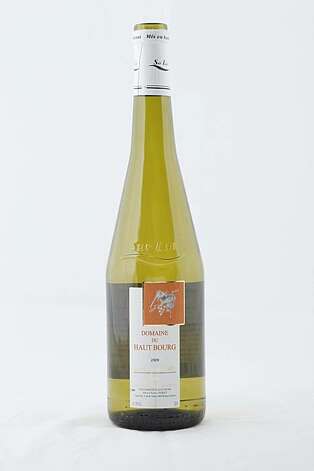
Domaine du Haut Bourg 2009 Muscadet Cotes de Grandlieu – As I mentioned, “Muscadet” is the area near the mouth of the river where this wine is made. Muscadet is made from the Melon de Bourgogne grape. Melon de Bourgogne is so inextricably linked with this region that the grape is now commonly referred to as Muscadet. On many bottles, you’ll find the words “Sur Lie.” Sur Lie means “on the lees.” Lees are the dead yeast that settles to the bottom of a fermentation tank. Leaving a wine “on the lees” for a time gives a wine some creaminess and additional texture. (Many Muscadet, if not made a little “thicker,” would have an almost watery body.) The du Haut Bourg starts off with a crisp blast of lemons and a flash of honey in the back of the mouth. Like most Muscadet, the wine has a very minerally – almost metallic -- character, but that flintiness bounces effortlessly off any kind of shellfish. For the sake of full disclosure, the flavor of Muscadet is so different from most other wines that we actually recoiled the first time we tried it. It’s got so much mineral that we didn’t know what hit us. Since then, the grape has grown on us – especially once we discovered how well it went with the aforementioned shellfish. I fooled around in the kitchen for a bit and created a delicious brothy stew of bay scallops, calamari, and shrimp with peas and lemon juice, topped with mint and goat cheese. (Seriously, this was one of the best meals I’ve whipped up in awhile.) It’s a magnificent pairing, especially for $10.


Thursday, April 19, 2012

K is for Kabinett


I’ve neglected German Riesling for a bit around these parts. Not long after I started the Vine, I got asked in an interview what my favorite wine was. I said something to the effect of “Riesling. It’s tasty and it goes with anything.”

That was many moons and a considerably changed palate ago. German Riesling gave way to dry Riesling from the Pacific Northwest. Dry Riesling virtually disappeared after I discovered the lean, minerally joys of Alsatian Riesling, which is where my tastes dwell today. For old time’s sake, I decided to swing back around to Germany.

I had to give myself a refresher beforehand, though. Whereas the French and the Italians simply put the name of the region on the wine label and expect a wine drinker to know what’s inside, the German detail-orientation comes out. Look at a German bottle and you’ll get the winemaker, the type of wine, the style of wine, the wine region, and often the vineyard the wine came from. Throw all this together and you’ve got a long, intimidating string of Prussian to sort through. Thankfully, untangling those strings of consonants and diacritics isn’t too difficult. Here’s a quick vocabulary lesson:

There are two types of German wine you’ll usually see. Qualitätswein, which is abbreviated somewhere on the level as QmA. This is generally table wine. The other is Prädikatswein, which is a higher quality wine, subject to classifications. Until 2007, Prädikatswein was labeled with the abbreviation QmP. I mention this because most German wines are age-friendly. Good Riesling can age almost indefinitely. So, if you run into bottles with vintages from a few years ago, don’t be alarmed.

Prädikatswein is divided into a number of categories, based on the amount of sugar present when the wine is fermented. The three types you’ll see most commonly are Kabinett, Spätlese , and Auslese. Kabinett wines tend to be the lightest and potentially the driest. Spätlese , which means “late harvest,” is made from grapes left on the vine longer, thus increasing the sugar content.  The best Spätlese  grapes get made into wines called Auslese, which means “select harvest.” Spätlese  and Auslese wines tend to be sweet or semi-sweet. Kabinett wines can be either dry or sweet. How to know which is which? “Trocken” is German for “dry.” If you see “Trocken” on the label, you’ve got a dry wine. The exception would be Trockenbeerenauslese, which is a sweet dessert wine made from dried grapes.There's also "halβtrocken" -- which is "half-sweet" or "semi-sweet."

Since I’m into lighter-styled whites these days, I decided that I’d sample some Kabinett. I opened these three long, intimidating strings of Prussian:

Darting 2004 Dürkheimer Fronhof Riesling Kabinett Trocken
Darting 2007 Dürkheimer Michelsberg Riesling Kabinett
Leitz 2008 Rüdesheimer Klosterlay Riesling Kabinett

I tried them in that order, thinking I’d lined them up in order of sweetness. All three wines had very low alcohol. Usually, the lower the alcohol, the sweeter the wine. The Dartings were both 11.5%. The Leitz somehow turned out not to be as sweet as the sweeter Darting, checking in at only 8.5%. (Brunch wine, anyone?)

The Darting “trocken” started with a minerally, lemony nose. The taste was right down that alley -- minerally and sharply acidic. My note on it says, “Like a granite grapefruit.” It reminded me a great deal of the Alsace Rieslings that I mentioned above. I found it light in body and flavor with a dry finish that had a little hint of a metallic taste.

I found some big contrasts when I poured the other Darting. It had a similar mineral and lemon nose to the first, but it somehow smelled “fatter.” When I tasted it, I recognized a lot of that  granite grapefruit” flavor – if you’d dropped that grapefruit into a bowl of honey. I found it to be quite sweet initially, but that sweetness mellows into a peachy flavor. The finish starts as honey and ends up as grapefruit rind. That sensation wasn’t as gross as it sounds, trust me.

The Leitz had a very light nose. I got faint apple blossoms and pepper, but I really had to sniff at it. The initial taste was like apples and honey, but the honey morphs into a Granny Smith apple-ish tartness, along with some of that pepperiness. After a few sips, the flavor reminded me of  Chinese take-out “sweet and sour” sauce, if you dialed the sugar was back.

Riesling, as I mentioned before, is exceptionally good food wine, especially when paired with Asian dishes. I made a green Thai curry with shrimp & halibut to go alongside the wines. The Darting trocken, somewhat surprisingly, didn’t fare very well. Paired with the curry, it became somewhat alkaline. It simply wasn’t as good as the other two. The pepper in the Leitz jumped up and danced a little jig with the spice in the meal, cutting the sweetness a fair bit. Very pleasant and flavorful. The sweet Darting definitely held up to the spice, but it initially tasted too “honeyish” for that dish, overwhelming the flavors in the curry. Since Thai food is “creeper spicy,” the sweeter Darting got better as the meal went on.

There are flavors all over the map in German Riesling. With a little research, you should be able to find one you like. It’s also a great choice if you have friends who “don’t like dry wines” but you’d like to serve something a little more complex than white zinfandel. Don’t fear the umlauts. 

Prost!

Thursday, March 08, 2012

The Alphabet Soup Project – “J” is for “Jumilla”


I like climate-based cooking. Lighter dishes and salads in spring, cold soups and garden-laced goodness in summer, grilling in autumn, soups and stews in winter – you get the idea. The wacky weather we’ve had has occasionally left me flatfooted. I find it hard to plan a menu when the temperature’s swinging 40 degrees from day to day, paired with the occasional severe thunderstorm. (And no frickin’ snow.)

Unpredictability requires flexibility, which means I have a perfect excuse to open some Spanish reds. I’ve always thought they were great food wines. They’re usually big enough to handle chops and steaks, but they have enough subtlety to go with roasted or spiced chicken and some vegetarian dishes.

Unfortunately, some Spanish winemakers have become victims of their own success – especially in Rioja, the best known of the regions. Don’t get me wrong, there are a lot of good wines from Rioja, but many winemakers have gone the route of California Zinfandels (and many cabernets) in the 90’s and early oughts – high oak, in-your-face extracted flavors with monstrously high levels of alcohol. There’s nothing wrong with wines like that if you’re grilling ribs, but they’re not really for sipping and can overload a lot of foods. Luckily for us, there are plenty of Spanish reds out there which aren’t replications of those kind of fruit bombs. My choice for this stretch of menus is Jumilla.  

Jumilla (pronounced who-MEE-yuh) is a fairly mountainous region in the southeast corner of Spain, overlooking the Mediterranean Sea. Weatherwise, Jumilla can be a blast furnace. The constant winds from the sea do nothing to cool things down. The average high temperature in the summer months is north of 90 degrees (over 110 is not uncommon) with sharply cooler nights and almost no rainfall. This climatic arrangement is a little slice of heaven for wine grapes.

Red wine is Jumilla’s calling card.  Jumilla reds are largely made from the Monastrell grape. Never heard of Monastrell? It’s known more widely as Mourvedre – a grape widely grown in France, especially in the Rhone valley. Also, as in the Rhone, Monastrell is sometimes blended with Garnacha (Grenache). Left to its own devices, Monastrell produces powerfully fruity, tannic, peppery wines, reminiscent of Zinfandel – especially since the alcohol content is usually north of 15%.

Where Jumilla differs from the cinder block-like subtlety of Zinfandel is in how well it pairs with food. Wines this strong aren’t normally considered flexible food wines, but a skilled winemaker can cool some of the harsh, hot edge Monastrell can bring to the table. The basic Naked Vine pairing rule certainly holds in Jumilla – people make wine to go with food they regularly eat. Jumilla is in the Murcia region of Spain, known as the “fruit and vegetable garden of Europe.” Thirteen percent of all vegetables grown in Europe come from Murcia. Pork and chicken are very common meats, and the proximity to the Mediterranean allows for a fair amount of fish. Paellas and stews are extremely common, as are salads and a number of gouda-ish cheeses. With a potential tapas menu that broad, a one-note wine wouldn’t work well.

Speaking of paella – I was in the mood to cobble one together after the Sweet Partner in Crime had a particularly stressful several days. The one I managed to put together, I have to say, was perhaps the best I’ve ever made – featuring chorizo, chicken thighs, and bay scallops spiced, baked and simmered to perfection. I poured the Bodegas Juan Gil 2008 Jumilla ($15) alongside. I was concerned at first sniff. The first taste held a lot of oak and tannins that immediately parched the back of my throat. That sharpness faded quickly, thankfully, leaving a punch-packing but nicely-balanced mix of blackberry, chocolate, and pepper. As a side note, this wine starts much like a Beaujolais – with carbonic maceration (adding yeast to whole clusters of grapes), but the flavor isn’t in the same neighborhood. I was afraid such a big wine would demolish the subtle flavors in the paella, but my worries faded quickly. As muscular as this wine was, it was about as lovely a pairing as I could have imagined for a cool evening.

The next night, we cracked a couple of others:

Bodegas Juan Gil “Wrongo Dongo” 2010 Jumilla ($9) – This is the Juan Gil “second label” wine. They’ve changed the label recently – from a confused-looking man to a geometric pattern that reminds me of a Roach t-shirt iron-on. At first sniff, I would have mistaken it for a cabernet. The wine holds a pronounced note of vanilla on the nose along with some leather and mild fruit. My first sips were intensely tannic, but like its slightly more expensive cousin, it eases back a bit into cherries and leather. The finish is more tannic than the other Juan Gil, also.


Bodegas Luzon 2008 Altos de la Luzon Jumilla ($14) – Although this wine starts you with a Wrongo Dongo-esque vanilla blast, it’s a much more subtle wine all in all. The vanilla is underlain with some floral scents (lavender?) and blackberry. The tannins are much tamer – so much tamer, in fact, the fruit ends up overwhelming the tannin a bit initially. Like the others, it balances out after a little bit of air. As for which is the better wine, it depends on your taste – if you like drier, stronger wines, the Wrongo Dongo is for you. If you want more fruit, go with the Luzon.

That night, we made a scrumptious veal, mushroom, and artichoke stew. The Altos was the better choice here. Its subtlety meshed with the flavors more easily. The Wrongo Dongo was a little overly assertive, so it masked the delicacy of the stew’s flavors.

The following night, we had the remainder of these two wines (it’s true -- we didn’t finish either bottle) with chicken breasts braised in a dried fruit and olive sauce with some saffron rice. The Altos, after a day open, had lost much of its complexity. It wasn’t great on its own and was nondescript with the food. The Wrongo Dongo held onto much of its character (since it was a simpler wine to begin with) and was much tastier with the assembled plate.

Summing up -- Jumilla – it’s wine for people who like big reds but have a varied food palate. I think these are some of the most flexible “big reds” you’ll encounter. Definitely worth a try.

Thursday, September 22, 2011

The Alphabet Soup Project – I is for “Inspiration”

Hope folks didn’t mind bit of a pause while the Sweet Partner in Crime and I were vacationing (well, I was – she had to work for a few days...) in Amsterdam. If you’d like to take a gander at our pictures...

Like my travels, one of my great wine tasting joys is discovery. That’s the kind of experience that made me start writing this crazy thing to begin with. This bolt from the blue can take lots of different forms. I might be impressed by someone’s advice on a wine; I could find a random pairing that works; or I could run into into something unexpected. Let me share a few of those fun times with you…

My newly-certified sommelier buddy James V. turned me on to the Domaine Sautereau Sancerre. This is a French sauvignon blanc from the eastern part of the Loire. He gave it two thumbs up and I trust his palate, so I gave it a run. This is simply a pretty smelling wine. "Flowering cantaloupe" was my first thought. Yes, I know – that’s an odd description, but I like it better than "floral with melon undertones." The flavor was intriguing. Like most Sancerre, this is a light bodied, acidic, minerally wine. This one, however, had a wonderfully balanced creaminess that I had never tasted before in one of these wines. Made me light right up.

When James first tried this wine, he had the good fortune to visit the property. He told me that they served it with chevre (goat cheese) and hard salami on crackers, so I tried to duplicate the experience. I was initially a bit skeptical. With the cheese alone, the wine developed an odd flavor, but adding the crackers and meat -- unearthly good as a pairing. I experimented by replacing the water crackers with a rosemary-flavored Triscuit -- and it turned into one of the best "appetizer pairings” I’ve had. The wine is into the 2010 vintage now. It’s $22 from Bond Street Wines (http://www.bondstreetwines.com), and I highly recommend it.

Another day, the Sweet Partner in Crime and I cooked up a pot of turkey chili, which was an interesting concoction. I ran out of cumin, one of my base spices, so I substituted garam masala, an Indian spice blend, and a little bit of coffee. (Rule of good chili: Just keep throwing things in until it tastes right.)

With this amalgamation. we were at a loss for a wine. After reviewing our on-hand options, I rolled the dice and cracked the Bodegas Salentein Killka Collection 2008 Malbec – a $12 Argentinean number I’d picked up on a whim. I love it when a plan comes together. The Killka turned out to be a fruity, fairly complex wine that went down nicely on its own. It had plenty of blackberry and vanilla to start, and its flavor stays quite smooth throughout. There’s that yummy smoky quality a good malbec has, but it lingers in the background and stays subtle on the finish – a finish with a good, firm fruity flavor and enough tannin to be interesting.

Alongside the chili, the malbec’s tannins worked nicely with the spices, revealing some very interesting complementary flavors. The Indian spices deepened and the chili powder had a “fuller” flavor. Also, since tannin is an acid and capsaicin (the molecule that makes chili hot) is a base, the malbec tamed the fire a bit. I don’t know if I could duplicate it, but we sure liked it.

Trips to the wine store occasionally shoot a bolt of inspiration. K2, one of my wine pals, recommended the Highflyer 2009 Grenache Blanc, saying it was his “favorite white wine of the moment.” The Highflyer is a Napa Valley creation. I don’t think I’d ever tried a white Grenache that didn’t come from the Rhone or Spain, so I was, on one hand, really looking forward to the experience . That said, I was also somewhat wary of a white wine from Napa, since I’m not usually a big fan. I had the heavy oak and heavy butter of Napa chardonnay in my head, but I was trusting. I poured and swirled. Bottom line? It’s a tasty, tasty bottle. My first reaction was, “This is California chardonnay, dialed way back.” Sure, there’s oak and butter, but that’s nicely balanced with some prominent pear and berry flavors. The body is medium with am evenness of oak and pear. The finish is oaky and softly lasting. Very enjoyable. It also turned out to be a killer choice with some spice rubbed, grilled chicken breasts and a green bean salad. The Highflyer will run you around $20, but it’s worth it.

Every once in awhile, I even get a little twinkle of inspiration from something utterly mundane. It’s not always tasting central around Vine HQ. Sometimes, one of us just needs a glass of wine to throw down without thinking. We usually have a box of white wine lingering in the fridge for just such a purpose. I’d snagged Big House Wines “The Birdman” Pinot Grigio at around $18 for 3 liters. I was aware of Big House red & white, but I hadn’t tried one of their “single varietals” before. In past experiences, box pinot grigio is normally one step above flavored water. The Birdman was a very pleasant find. (Somewhere, Chris Anderson is smiling…) Light and pleasant with actual structure in its pear and lime flavors, it’s a simple, easy quaffer that’s certainly not the flabby, watery mess you might expect. For a box wine, that’s pretty much all you can ask for.


Technorati Tags: ,,

Thursday, May 05, 2011

The Alphabet Soup Project – “H” is for “Horizontal”

Wine tastings. Sources of inspiration, knowledge, and occasionally a pretty decent buzz by the time all’s said and done. When I’m asked how I started getting into wine, I can point to a monthly wine tasting series the Sweet Partner in Crime and I used to attend regularly. These events introduced us to varietals, wine regions, the idea of terroir – but the most important part of it all is that we got to compare wines.

Comparison is key. Tasting a chardonnay from California next to one from Chile next to one from France gives you a clear vision of how wildly different a grape can taste when grown in different places. Similarly, you can taste three California chardonnays next to each other – one might be oaky, one buttery, and one crisp – all because of how the wine was treated after harvest. on These kinds of comparisons helps you learn what you like and what you’re looking for in a glass of wine.

Most tastings you find are freeform. They’re often simply collections of wines that someone either thinks would taste good together (like “Wines for Summer” or my May 18th “Wines across the Continents” tasting with Danny Gold at Party Source…hint, hint…) There’s nothing wrong with these and they’re a lot of fun, but it’s not necessarily the most educational experience.

If you hang out in the wine tasting world long enough, you’ll hear the WineSpeak terms “Vertical Tasting” and “Horizontal Tasting.” Either one of these should make your ears prick up like a beagle. These types of tastings are where you can learn the most.

I’ve only been to a couple of vertical tastings. A vertical tasting is a series of wines, usually from the same winery, from different vintages. As you can guess, these don’t come along too often. They’re often pretty high-end affairs, since if someone has that many bottles from a single winery lying around, they’re usually a collector – which will usually put the pricetag largely out of Vine range. So, if you ever get invited to one of these – jump at the chance and befriend this person! It’s a unique experience.

Much more common (and much more naughty sounding) is the Horizontal Tasting. Horizontal tastings you can do at home. (Hmm…more naughty sounding by the minute!.) A horizontal tasting is usually wines of the same varietal, vintage, and region. They often have similar price points. They’re usually from different wineries. If you find a region’s wines that you really like, you can gather a few bottles (and perhaps a few friends) to compare and contrast. This sharpens your palate and gives you a much better understanding of what you like and don’t like about that particular wine.

For example, the SPinC and I decided to do a horizontal tasting of Sauvignon Blanc from Marlborough, New Zealand. When we’re out on the town looking at pre-dinner drinks, she tends to go for these wines. We like them – they’re usually crisp, relatively light, grapefruity, and have an “herbaceous” quality on the nose. They’re good food wines because of their high acidity, but they’re plenty quaffable on their own. We decided to try three of them, all in the $12-15 range:

  • The Crossings 2010 Marlborough Sauvignon Blanc
  • Brancott 2010 Marlborough Sauvignon Blanc
  • Kim Crawford 2010 Marlborough Sauvignon Blanc

Our selections established quite a contrast. We started with the Crossings, which is so light in color that it practically looks like water. It was extremely acidic, full of grapefruit and lime, and very light. Lighter than most pinot grigio, I’d say – although with more character. I thought it tasted delicate and finished somewhat “prickly.”

The Brancott was heavier on the palate and richer. It wasn’t quite as tart – there were some honey flavors next to the citrus. The wine had a little more “oomph” to it. “If the the first is a lime, then this one is key lime pie,” remarked the SPinC.

The Kim Crawford tasted like it was designed for an American palate. Everything was toned down and smoothed out so as to be firmly middle of the road. Very easy to drink. There wasn’t as much herb and the citrus was less pronounced. “This is key lime pie with plenty of whipped cream,” came the comparison. It wasn’t bad – it just wasn’t nearly as interesting.

For dinner that evening, I grilled up some turkey burgers and some asparagus and tried the wines. We topped the burgers with avocado and tomato, and had some extra tomato slices alongside. When we did a little research, New Zealand sauvignon blanc was a recommended pairing for both asparagus and avocado – two foods that can be wine killers.

We discovered that the Crossings was one of the few white wines that tasted really good with tomatoes on their own. It makes sense with its high level of acidity, but we almost always think red wine with tomato-based stuff. It was also our choice with the asparagus (which we drizzled with balsamic vinegar and olive oil). Some people think the “herbaceousness” of New Zealand sauvignon blanc smells like cat pee. While it might, it was a benefit with the asparagus. The flavors actually melded nicely.

The avocado and burgers worked best with the Brancott. The creaminess of the wine worked well with the texture of the avocado. Since this wine had a little more body, it was able to better handle the turkey. The grilled flavor didn’t overwhelm the wine at all.

The Crawford was just “wine” alongside this particular meal. It didn’t really do anything all that interesting for us. However, when we did a steamed sea bass and sautéed squash, tomatoes, and zucchini the next night, this wine was a very solid pairing. While it didn’t do as well for us next to these other New Zealand sauvignons at our initial tasting, on its own with different food, it was plenty tasty enough. The greater “creaminess” of this wine probably complemented the bass better than the other, more acidic Sauvignon Blancs would have.

All of these wines, in general, fall into the general flavor profile for New Zealand Sauvignon Blanc that I mentioned above, but it was fascinating to see how much the wines varied within that general definition. This is what I mean by “sharpening your palate.” The more you try, the more you learn. The more you learn, the easier it is to find exactly what it is you’re looking for.


Technorati Tags: ,,

Sunday, March 06, 2011

The Alphabet Soup Project – G is for “Grenache”

A quick programming note before we get rolling. I’m going to be co-leading a wine tasting with Danny Gold on Wednesday evening (March 9, 2011) from 6:30-8:00 at the Party Source in Bellevue, KY. The cost is $20, but you get a $5 gift card. The theme is “California Wines under $15,” so come on down, grab a glass, and hang with us. Want to reserve a spot? Click here.

*************************************

I owe my earliest memories of Grenache to my folks. Back in the day, they usually kept a jug of Gallo white Grenache around for entertaining visitors. (In case you’re wondering, Mom – I never sneaked any…) Almaden, Rossi, Franzia – all of the major jug wine producers cranked out inexpensive, sweet blushes made from Grenache. White Grenache was what White Zinfandel eventually became in the wine market – a “refreshing” wine. (Gallo actually tried to market White Grenache as an upscale alternative to White Zin in the late 80’s. That campaign didn’t last long.)

Since pink, sweet wines were never really my thing, I put Grenache out of my head for a long time. Along came the Sweet Partner in Crime. In our wine-appreciation infancy, we powered through many a bottle of Rosemount Estates’ Shiraz blends from Australia. When the weather got warm, we’d replace our bottle of Rosemount Shiraz/Cab with their Grenache/Shiraz blend, since it was lighter. Once our wine preferences began to broaden a bit, our everpresent bottle of Rosemount got replaced with other stuff and Grenache again retreated to an afterthought.

Fast forward a bit. I started seeing Grenache as a varietal more and more, especially as French and Spanish wines became more common in my rack. But what is it? One way to find out…

Grenache is a high-yielding grape that’s extremely common in the world’s hottest, driest wine regions. It’s best known as the backbone of the wines of the Southern Rhone region – especially Chateauneuf-de-Pape and many Cotes-du-Rhone. It’s the primary grape in Tavel, one of the best regions for rosé in the world. In Spain, it’s known as “Garnacha” and the wines of Rioja, Priorat, and Navarra simply wouldn’t exist without it.

Post-Prohibition winemakers in California grew a lot of Grenache. The sturdiness and drought-resistant properties of the vines (not to mention the high yields) made it a natural match for many of the growing areas. The wines, however, were often of the aforementioned jug variety. This began to change with the advent of the “Rhone Ranger” movement, where many winemakers started putting together high quality French-style blends in the late 1990’s.

Rarely used as a single varietal, Grenache yields a fruity, low-tannin, medium-bodied wine. The French Grenache-based wines tend to be quite earthy, since the bitterness of the tannin doesn’t get in the way of the “funk.” Spanish Grenache tends to be on the smoky side. American Grenache blends usually are more

fruit forward. Most good Grenache is be easy to drink and extremely food friendly. As a pairing, Grenache works in almost any instance where you’d normally choose a pinot noir. I’ve seen Grenache described as “pinot with a punch,” and that’s accurate – similar flavors, slightly heavier body, and a more fruit-forward flavor.

The SPinC and I did a side-by-side with a pair of Grenache-dominant wines. The first was the Writer’s Block 2008 Grenache from Lake County, California. The other was Penelope Sanchez 2009 Grenache/Syrah from Campo de Borja, Spain. The Penelope is 80/20 Grenache/Syrah and the Writer’s Block is over 80% Grenache with some Syrah and Conoise blended along. Both retail for $12-15.

Both wines improve greatly with a little decanting. The Penelope, especially, was very “tight” initially. (Javier Bardem commentary withheld…) It took a few minutes, even after some heavy swirling, for the smokiness and tannin to start balancing with the fruit. Once it had a few minutes in the air, it opened into a nose laced with herbs and vanilla. The body is light-to-medium and is well-balanced cherries, smoke, and vanilla. Those flavors all twined through a long finish.

The Writer’s Block (one of my favorite names for a wine) was heavier. Like most American wines compared to Euro-counterparts, the Lake County Grenache wasn’t as subtle and had a much “stronger” profile. Everything tasted “bigger,” even though the color of the wine itself was lighter. The nose was cherries and bubblegum with much less smoke. Very straightforward. There’s more of a “leather and cigar box” flavor on the finish. The SPinC thought it tasted like black licorice.

For dinner, we grilled some salmon and roasted some cauliflower with garlic and balsamic vinegar. When we tasted the two initially, our first reaction was that we liked the Spanish version better. The flavors in the food made the wine taste bigger and smokier. After a few bites, though, we came to the realization that we weren’t observing closely enough.

The Writer’s Block was better with the fish. There was more tannin (as would be expected from a Lake County wine *add link*), so the wine’s flavors cut much more easily through the oiliness of the fish and stood up better to the grilled flavors. The Penelope was better with the cauliflower. The roasting and the balsamic brought out the sweetness in the cauliflower, which was a much more harmonious pairing with the complexity of the Spanish entry.

Both wines were quite good. They’re excellent values and either would be fine with almost any food, short of something really heavy like a cassoulet or a meal dripping with cheese.

One last point about Grenache. I’ve mentioned grapes like Alicante and Cannonau a few times in this space as varietals with which I wasn’t very familiar. Turns out that I was more familiar than I thought – both of them are actually Grenache. Whatever name’s on the bottle, it’s well worth your time geting familiarized or re-familiarized. I’m certainly glad that I did.

(Also, for remembrances’ sake, I tried a bottle of the old Rosemount Estates Grenache/Syrah. Interesting how time changes one's view of things. Sweetish nose of blackberry jam. Lots of fruit on the palate and a little noticeable residual sugar. The finish is fruity and you sort of have to hunt for the tannins in the blend. I wouldn’t pick it for a normal tipple these days. A little knowledge can be a dangerous thing, I guess…)


Tuesday, February 22, 2011

The Alphabet Soup Project: F is for “First” – Aperitifs

Aperitif --a common word in wine descriptions. I’m 100% guilty of throwing it out there myself, usually when I’m describing light, dry white wines that are easy sippers. I started using it because I’d seen any number of other writers do the same. (Yes, yes – we wine writers can get lost in “monkey see, monkey do,” or “Mikey see, Mikey do” in my case.)

I’ve described any number of wines as Aperitifs – everything from rosé to sherry to bubbly. So, when I’m writing about these things – just what am I supposed to be talking about and why is it something we should be interested in?

The word “Apèritif” (uh-pair-uh-TEEF) is a French word stemming from the Latin aperire, meaning “to open.” An Aperitif is a drink (or drinks, depending on who’s serving the chow) taken before a meal to stimulate the appetite. Aperitifs are usually served on their own or with some kind of light snack. Aperitifs should not be confused with appetizers, which are considered part of the actual meal. There’s not one single “traditional” Aperitif – they vary widely by country and custom. You’ll see liqueurs, cocktails, wines, and shots of alcohol used as Aperitifs.

Broadly, they tend to employ a bit of bitterness to get the salivary glands working and some sweetness to make the bitterness more palatable. With liqueurs, there’s often a notable herbal component. The most notable Aperitif in the U.S. is probably the martini. In France, anise-flavored liqueurs like Pastis or Pernod (or absinthe, if your tastes swing towards the hallucinogenic) are common. Greece’s most famous is ouzo. Italy brings us Cinzano and Campari if you’re looking at bitter liqueurs; limoncello if you want something a little sweeter.

I’ll be honest, though – I’ve tried many of the above bitter liqueurs, and I really don’t much care for them (martinis being the exception). I’ve had some very, very painful experiences with a couple of them as well. (Word to the wise…avoid ouzo. Just stay away.) For our purposes, we’ll largely stick to wine-based Aperitifs.

Wines served as Aperitifs are usually light whites. While I’ve written about any number of things as Aperitifs, traditionally, an Aperitif wine is a sparkler. Brut Champagne is a classic Aperitif, as is cava in Spain, but any dry bubbly will generally do.

The Sweet Partner in crime and I were a bit peckish one Saturday afternoon. Since I was working on this article and I never need an excuse to crack a bottle of bubbly, I decided to open one to go along with the grocery store sushi I’d picked up while I was out. I went with a relatively inexpensive dry Prosecco.

Lunetta Prosecco, imported by Cavit, was my choice for the day. It’s a relatively low-alcohol bubbly, so it doesn’t completely fog one’s brain. It’s a very pleasant sparkly sip, crisp and light with a bit of a citrus backbone. With the sushi, a very pleasant sideboard. Didn’t detract from the fish flavor at all and didn’t back down from the wasabi.

While sparkling wines are the most fun wines of all, and they’re certainly a great way to kick off a dinner party, you can use just about any light wine here. Think pinot grigio or whites from the Loire like a Muscadet or Sancerre if you want to go the still wine route here. Dry vermouth is also a very traditional Aperitif. I like martinis, and I think a person who eschews vermouth in a ‘tini is truly missing out. But on its own as an Aperitif, I’ve tried it and I wouldn’t put it high on my list of favorites.

Along the lines of vermouth, there’s a very unique wine-based beverage used as an Aperitif that I’d seen on the shelf at various stores for a long time and always wondered about – Lillet. Lillet is around an 85/15% blend of wine from Bordeaux and various citrus liqueurs. There are red and white versions of Lillet, although I’ve only seen the latter. The white is largely a Semillon-based wine while merlot provides the structure for the red.

Lillet is served chilled, either refrigerated or on the rocks. I decided to try it in one of the traditional manners: on ice with a slice of orange. (Some use lime or lemon slices.) I braced myself for the bitterness of Campari or Pernod – ready for either an herbal blast or a biting dryness. What did I find?
It’s a curious drink. It smells like fresh orange rind and flowers. As I took a sip, It’s a slightly sweet, light sipper, full of citrus. The herbal taste is similar to Chartreuse, although the flavor itself bears no resemblance. While there’s sweetness on the palate, the finish is quite dry thanks to quinine – the same stuff that gives a bite to tonic water. I found it to be extremely pleasant, and I can see how one could certainly enjoy some of this before a meal.

Additionally, Lillet became famous in American thanks to Bond. James Bond. In Casino Royale (the book, mind you – not the George Lazenby version), Bond orders a martini made of three parts gin, one part vodka, ½ part Lillet, and a twist of lemon. I couldn’t resist. I whipped one up. That Ian Fleming knew what he was writing about. It’s an extremely tasty version of a martini. Dangerously drinkable. If having as an Aperitif, limit yourself to one of these. I put one away, for scientific purposes, of course…then promptly took a nap.

As I think about the everyday implications here – I usually have some kind of pre-dinner glass of wine, and it’s almost always something white and light. I’m often cooking while I’m drinking it, so I’m normally not thinking too hard about the flavors in my glass – and I don’t want whatever it is to interfere with the inevitable spice adjustments that go on while I’m putting dinner together. I’d suggest you keep this in mind as you’re thinking about Aperitifs. This is usually a drink for conversation. People’s minds will be elsewhere, and they’ll often be mindlessly noshing. Whatever you choose, let it be something that pairs easily with almost any food. You won’t go wrong.

Sunday, January 09, 2011

The Alphabet Soup Project -- “E” is for “Extract”

Happy New Year, everyone! I’ve neglected the Alphabet Soup Project for far too long. Thought I’d start the new year off right…

At your next wine tasting, you could hear a wine referred to as “highly extracted” and wonder what the heck the pourer is talking about. “Extracted from what?” you might think to yourself before trying your sample. When you do get a sip, what will probably come to your mind is “Whoo…that’s a big wine!” Extract is what makes a big wine “big.”A “highly extracted” wine will likely taste somewhat “chewy.”

Where does this chewiness come from? Think a moment about what wine is – grape juice to which yeast is added. The yeast fermentation creates alcohol. Once the sugar in the wine is converted into alcohol, it’s stored and eventually bottled. The basis of wine is alcohol, any remaining sugar, and what remains of the juice.

Alcohol itself isn’t heavy. (Do a shot of Everclear if you doubt this.) Residual sugar can add weight to the feel of a wine on the palate, but that much residual sugar usually only exists in dessert wines. The heavy feeling of these extracted wines comes from all of the other stuff floating around in the mix.

Along the wending path of fermentation, the wine gathers various elements. “Extract” in a wine means anything that the wine collects or extracts from its surroundings during its creation. Or, in short, anything that doesn’t result directly from the act of fermentation itself.

What do I mean? Red and rosé wine picks up color and tannin from coming into contact with the grape skins during the fermenting process. White wine may gain character from “resting sur lie” (meaning that it sits on the dead yeast for awhile before bottling). Barrels can impart various flavors and additional tannin. Grapes may reflect the composition of their terroir’s particular soil, like the funk of French wines. Winemakers may add additional sugar, juice, or even (gads) flavorings to wines.

Any or all of these things make up “extract,” which gives a wine its particular flavor and character. The level of extract one prefers may be second only to preference for acid in determining the style of wine one will order at a given point in time.

Although it may be absolutely applicable, “extract” isn’t a term that pops up too often with white wines or reds that are traditionally light like Beaujolais. It’s used most often with bigger reds and then, usually, to describe the fullness of the body of the wine and the strength of its primary flavors.

Generally, you’ll hear bigger wines like shiraz/syrah, merlot, cabernet sauvignon, and zinfandel get described in terms of being “extracted.” The level of extract is a major consideration for a winemaker. Wine with less extract will be of a leaner, lighter style – while more extract leads to a chewier, fruitier wine. There is such a thing as too much extract. If a wine is made in an overly extracted style, then any nuance or subtlety of the wine gets blasted out of the flavor by the heavy fruit or tannin.

Through the “oughts,” highly extracted, chewy red wines were in high favor, mirroring what happened with California chardonnay in the nineties. Thankfully (at least in my opinion), winemakers across the board have decided to start moving back to a somewhat less in-your-face style to allow the various components of the extract to make appearances.

The easiest wine for me to use as a demonstration of extract is California zinfandel. Zinfandels as a rule are big, powerful wines. They have full fruit flavors, are high in alcohol, and are usually quite tannic. That particular profile of wine requires a winemaker to create a “highly extracted” wine. It’s very easy for a winemaker to get overly cautious and produce a wine that doesn’t have a lot of body or flavor. It’s also easy to go over the top with extraction and create something mouth puckeringly strong. (Relatively inexpensive zinfandel is notorious for being overextracted.)

I tried a few zins recently that showed off different extraction levels quite nicely. If you’d like to get a sense of the “rules of extraction,” here are a few examples, all $12-18:

Kenwood 2007 Yalupa Old Vine Zinfandel – I would consider this an “underextracted” Zin. The nose is straightforward with plums and menthol. The body is very thin for a Zinfandel. In fact, the wine almost comes across as light-bodied, which is a bit odd. There are some coffee flavors from the tannins, but they’re weak. I tried this wine with dark chocolate, and the chocolate completely overwhelmed the flavor of the wine, which almost never happens with a zin.

Murphy Goode 2007 “Liar’s Dice” Zinfandel – This is the flipside of the Kenwood. I find the Liar’s Dice to be overextracted. Now, some people really like this fruit-bomby style of zinfandel. If you’re into big cherry and blackberry flavors on top of some heavy tannin, then this is your wine. For me, that’s really all there was to it. Big fruit and alcohol. Subtle as a cinder block. There’s a time and place for this kind of wine, but they usually involve loud music and lots of people.

Van Ruiten Vineyards 2007 Old Vine Zinfandel – This is still a really big wine, but they did a nice job with the balance here. The nose is amply filled with vanilla and plums. It’s full bodied and spicy. There’s a lot of fruit here, balanced with a pleasant smokiness, the latter of which intensifies on the long finish. With some chocolate, bacon flavors emerge. This is not a bad thing, by any stretch. For me, the most appropriate level of extract of this sample.

Monday, July 05, 2010

The Alphabet Soup Project – “D” is for “Decant”

How many times have you heard or read something to this effect in a wine description:

“Make sure you open the bottle and let it breathe for an hour or so before you drink it.”

Astute Vine readers probably remember that very recommendation from me in this space.

Guess what? Anyone who tells you something like this (including myself, admittedly) is more or less full of it as it applies to most bottles. Honestly, if you crack a bottle and let it sit for awhile, any difference in flavor – at least initially – is going to be largely psychosomatic…like most tasting notes. When someone tells you that a wine has a “strawberry nose,” you’ll unconsciously sniff for strawberries.

Same deal with letting a wine breathe. When you’re told that a wine tastes better after you uncork it for the hour, you’ll usually believe it. We think there should be a difference after a wine “breathes.” There is…if you actually let the wine breathe correctly. Correctly letting a wine breathe usually involves decanting.

Decanting wine is all about physics. Think about why we swirl wine – since alcohol evaporates on contact with air, bringing those wonderful aromatics to our nose so we get flavor. The more surface area gets exposed to air, the more aromatic a wine will become. Some wines also develop a sulfury smell or a sweatsock stink after being in bottle for awhile. Exposing the wine to air allows some of those scents to dissipate a bit. Simply opening a bottle and letting it stand only allows a tiny bit of the wine’s surface to contact the air. Using a decanter provides much more oxygen exposure, which causes the wine to “open” more quickly and effectively.

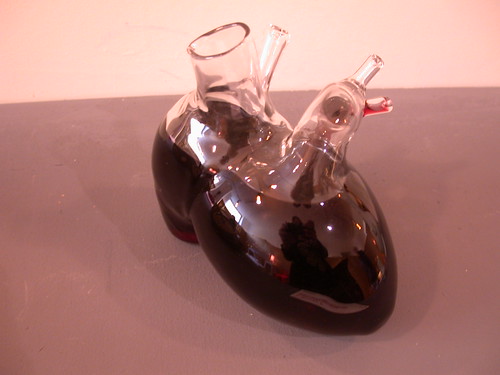
So, what is a decanter? In a nutshell, it’s simply any container into which you can carefully pour (usually) an entire bottle to expose more of the wine’s surface area to oxygen. Decanters come in all shapes, sizes, and styles, ranging from very simple to curvy, twisty shapes that make for better art than function. I mean, if you’re feeling vampiric…

Heart decanter

But, honestly, I prefer something like this:

IMG_0799

I can’t remember where we came up with this, honestly. I think it may have been a bottle of white zinfandel once upon a time that I bought for sangria, and we’ve used it as a flower vase ever since. It’s a perfect size – comfortably fits an entire bottle, easy to pour from, and I don’t have to worry about being clumsy with crystal. You can also use a water pitcher. Works fine. In a real pinch, just pour the glasses early and put them somewhere that they won’t be disturbed.

How to decant wine? Easy. Open the bottle, then pour the contents into the decanter slowly and reasonably gently. I use the pouring method long-perfected by any knowledgeable sophomore at a keg party – tilt the decanter and pour down the side. While you don’t have to worry about your wine foaming up everywhere, cabernet sauvignon stains don’t come out as easily as Natty Light. After you’ve poured your wine, just set the decanter down somewhere for 20 minutes or so (longer for certain wines) – and go to town. Now, if you want to show off the bottle itself, you can pour the wine into a decanter, let it sit, and then pour it back into the bottle. Use a funnel! (Another side benefit of decanting -- it’s an opportunity to get any sediment out of your wine – especially unfiltered wine. Wine sediment usually doesn’t have any effect on the taste, but “gritty” isn’t a sensation I want when I’m quaffing.)

During the afternoon & evening of the Sweet Partner in Crime’s recent birthday, we did a little experiment with a few bottles. We opened each bottle and tasted it immediately. Then we decanted, let the wine sit for a bit, then sampled it again. We used the following bottles:

  • Domaine Bachelet-Monnot 2007 Bourgogne Blanc
  • Saintsbury 2004 Carneros Pinot Noir
  • Tenimenti Fontanafredda “La Villa” 2000 Barolo

First up, the white Burgundy. I don’t usually decant white wines since they’re made to be drunk young. As a rule, the younger a wine’s made to drink, the less good you’re going to do by decanting. Most of these wines, however, are built to last and we thought it would be interesting to see the contrast. At first taste, the “typical” white Burgundy profile came out – fairly crisp and minerally in a lean style with plenty of citrus. After decanting, new flavors emerged. Peach and pear popped up, as did a mild oakiness that really pointed up the lemony flavors. Made a good wine that much better. I decided to do a “day of small plates” and started off with some smoked salmon and crackers. The oakiness worked well with the smoked flavors and the acidity cut through the oils nicely.

I picked up the Saintsbury on a “vintage clearout” sale – it’s typically around $35. This vintage was getting towards the end of its “recommended peak,” and it was pretty straightahead pinot at first taste. I certainly got the “smoked cherry” flavors you’ll get from most pinot, but it didn’t seem overly complex. When you have a wine that’s getting near the end of its peak, decanting will allow you to wring all of the flavor you can from the wine. With the Saintsbury, after a little decantation, revelation. The nose picked up a caramel twist and the body added some yummy ginger and raspberry flavors. The smokiness was enhanced at the end. This went from a solid, everyday pinot to something more supple and sexy. I made a little “seared sashimi” with it. I read it was a good pairing, and I can stand and tell you to three decimal points that it’s heavenly.

Finally, the Barolo. Now, Barolo is a special case. These powerful Italian wines from the Piedmont are so tannic on bottling that they usually need a minimum of 8-10 years in bottle before the bitter edge has softened enough to drink. Tannic wines almost always improve with decanting. (The same applies to young California cabernets and the like.) This Barolo was a great deal from Garagiste Wines – even so, it was still around $45. When first opened, the light color of this wine belied the power within. At first sip, though, it was tannic but not overly so and fairly easy drinking. I might have even confused it with a Chianti. The recommended decant time for Barolo is at least a couple of hours, so I set it aside and got to work on my special birthday eggplant parmesan. When I served it up and poured the wine – a transformation. The wine “woke up.” That’s about as well as I can explain it. Everything was more powerful. The tannins were stronger, the plummy, somewhat tarry flavors were pronounced, and the wonderful complexity showed up. It went delightfully with the parmesan. Actually, the post-decanting version was too strong in the opinion of the SPinC. She said that she liked it better before decanting, actually. As I’ve said, everyone’s palate is different.

So, when should you decant? Almost anytime you can, really. Unless a wine is a bargain-line wine, you’re probably going to see a marked improvement in flavor and complexity after you decant a wine for a bit. In a pinch, you can use an aerator. These work well for most wines – but for something that needs more time in air (older European wines or younger American wines in general), you’re still going to be better off finding something to pour the wine into for awhile.