Showing posts with label red wine. Show all posts

Wednesday, April 24, 2019

Naked Vine One-Hitter: Castiglioni Chianti

As I've gotten older and more full of years, my palate's changed a bit. Lighter-styled wines have been finding their way to our table more and more often. As a result, I've been grooving on Chianti -- that famously food-friendly red from Tuscany.

Now, if you're new here, remember that the naming conventions for Italian wines (as well as many European wines in general) are different from here. Many folks I know think that "Chianti" is a grape and "Chianti Classico" means a higher grade of Chianti. Release yourself from those assumptions. Chianti is the region within Tuscany from where the wine hails. (Chianti Classico is a subzone of the Chianti region.)

Chianti is made primarily from the Sangiovese grape -- at least 75% of the blend must be Sangiovese to be considered a Chianti. There are a number of other grapes, that can provide the other 25% of the blend, including red grapes Syrah and Merlot -- and whites like Malvasia and Trebbiano.

Because of this blending diversity, Chianti can be all over the map as far as flavor profile. Leaner, more acidic Chianti tend to have a higher percentage of white grapes blended in. The Chianti I had the chance to try recently -- Castiglioni 2016 Chianti -- was on the other end of the spectrum.

Castiglioni is the original estate of the Frescobaldi wine family. Wine has been produced from its vineyards since the 1300's. Their current version of Chianti is a straight blend of Sangiovese and Merlot. The result is an Italian wine that's a bit more approachable than many Chianti.

I find Chianti to have a bit of a "chalky" background flavor, which might not sound great to drink on its own -- but it actually allows it to mesh in a complementary fashion with just about any type of food. The Castiglioni has less of that chalk flavor because of the merlot in the blend, which masks it with a bigger dose of fruit. Cherry and blackberry are the dominant flavors here. This is a round, full, uncomplicated version of Chianti that can be sipped on its own.

With food, as with many Chianti, it's a much better choice in my estimation. We had this over the weekend alongside a savory lamb stew and it was a very nice accompaniment. It would also be a solid choice with roast chicken, red sauced pasta, or almost any kind of cheese, in my estimation.

Castiglioni Chianti retails for around $15. It's a very decent quaffer. Also, if you're new to Italian wines, this might be a good gateway bottle to start a vinous exploration of the region.


Monday, October 01, 2018

Bourbon Barrel-Aged Wine -- Does the Wood Make it Good?


Fall, finally! Cooler nights, bigger foods, darker drinks.

Once the weather starts to turn away from heat, I tend to turn my sights back towards both bigger red wines and brown liquors. Outside of Derby, bourbon’s largely a winter drink for me. Red wine’s year round, of course, but my red rack’s generally filled with lighter stuff during the summertime.

What happens, though, when a winemaker decides to put wine and bourbon together?


Over the last four or five years, I’ve seen a few wines marketed as “bourbon barrel aged” popping up. Many red wines are barrel-aged. What’s the difference with aging wine in a bourbon barrel?

Barrel aging is an important stage in the life cycle of many wines, both red and white. When a wine spends time in a barrel, the juice seeps into the wood, extracting chemical compounds that mix with and change the flavor of the wine within. For white wines like Chardonnay, the “oaky” flavor often comes from contact with wood in barrels. For reds, barrel aging adds a depth of flavor and boosts the tannin level.

Reading the description of many wines – you’ll see wines aged in French, American, or Hungarian oak most commonly. The interior of these casks are usually “toasted” to some degree. The more toasting, the stronger the oaky flavor. Bourbon barrels, taller and thinner than most wine casks, as well as more heavily toasted, could potentially add a boatload of flavor. Even after being used, a barrel can still impart distinct flavors to whatever’s stored inside it.

Finding old bourbon barrels sounds like a difficult step, but, according to the legal rules governing distillation in the U.S., Bourbon can only be aged in a new cask. After that, the barrels have long been sold to distillers making whiskeys and other spirits – and sometimes beer makers. The recent “Bourbon Boom” has, naturally, added a great number of additional barrels to the market, and some winemakers have jumped at the opportunity to ride that particular wave of popularity.

I recently had the chance to try two bourbon barrel aged wines: 1000 Stories 2016 California Bourbon Barrel Aged Zinfandel and 1000 Stories 2016 Gold Rush Red (both $16-20). The former is a blend of Zinfandel from Lodi and Paso Robles, with a touch of Petit Sirah juice sourced from Lake County. The latter is a field blend largely of Cabernet Sauvignon, Syrah, and Zinfandel.

The winemaker, Bob Blue, states that it was rare to see wine aged in French Oak when he started learning his craft, and most American oak barrels were used for whiskey. Over the years, using these barrels has become more commonplace – and now Blue uses used bourbon barrels as a flavoring method.

In any case, both wines start out in standard American and French Oak barrels before being racked into used white oak Bourbon barrels. After a period of months, the wine is finished in older (some apparently 13 years old) Bourbon barrels.

Both these wines can use a little taming. The Zinfandel clocks in at 15.7% ABV, while the Gold Rush comes in at around 15%. If you pop and pour, you’re going to get a snootful of alcohol before you really get to any of the flavors. I’d suggest, at the very least, you either decant thoroughly or let it have at least half-an-hour’s worth of air after you crack it.

In both cases, the toasted vanilla and crème brulee flavors that are common in bourbon do find their way into the wine. The nose of the Zin has a bit of that smokiness in the background, on top of dark fruit and some fairly interesting notes of spice like nutmeg. On the palate, this is a big, honking glass of vanilla, spice, smoke, and considerable alcohol. Once it opens up, plum and sage flavors pop their heads out of the mix and the alcohol recedes a bit. The finish is long, dry, and smoky – the various oak instillings lending pepper and a tooth-staining level of tannin.

The Gold Rush red is more straightforward. It’s a big ol’ bomb of intense dark fruits, especially plums and dark cherries. There’s a spicy, leathery backbone to this wine – along with a long, tannic finish. I found it to be much more straightforward than the Zin. Either wine would be workable with some sort of barbecued meat, big cheeses, or dark chocolate.

To be honest, though – I don’t see how much of a difference, other than a slightly sharper oak flavor, that the bourbon barrels actually make with this wine over standard barrel aging. It’s an interesting marketing idea, especially if you’re interested in conversation with whiskey aficionados or Kentucky fans. But keep an eye on the price. These wines both seem a little more pricey than they should be, considering the competition. See what you think.


Wednesday, July 05, 2017

Greek Wine: From Across the Ionian Sea

There are wines in the Vine’s archives from all over the world – but one place we haven’t stopped often in our oenological travels is Greece. The Greeks have been making wine longer than anyone else in the Western world. They’ve got nearly 6,000 years of experience cranking the stuff out. Why don’t we Statesiders know more about them?

The Vine's proprietor gets all animatronic
at the Santorini Wine Museum
First off, production – Greece produces in the neighborhood of 300 million liters (about 80 million gallons) of wine each year. Compare that to their neighbors across the Ionian Sea, Italy, which churns out between four and five billion liters annually. Second, winemaking processes in Greece only really began to modernize in the 1980’s. Before then, Greece produced a lot of interchangeable table wines and Retsina – a native wine-based beverage flavored with pine resin. Yes, you read that correctly – and it’s as much of an acquired taste as you might imagine.

Third, not to disparage Greek language, but the nearly 300 autochthonal (Winespeak for “indigenous”) varieties of grapes carry names that translated, to the uninitiated, can look like a Scrabble draw pile. While many American consumers would undoubtedly enjoy a glass of Athiri or Malagousia – they tend to shy away from unfamiliar grapes.

Well, stop overlooking them. Greek wines are excellent food complements, especially seafoods, cheeses, and other Mediterranean-styled dishes. If you’d like to give them a go, there are four primary Greek grapes with which you should start your explorations. Here are examples of each of the Greek Big 4:

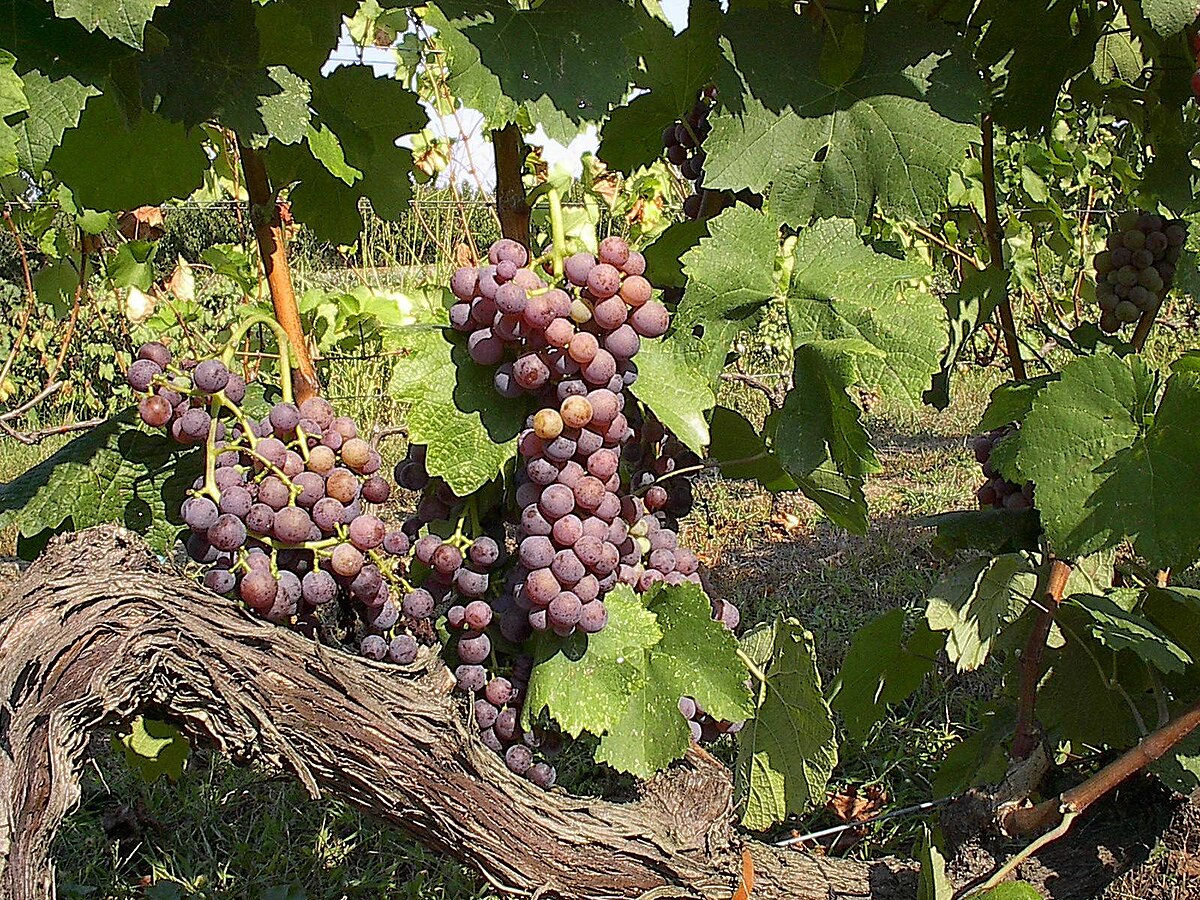
Moschofilero grapes -- red grapes for white wine!
Tselepos 2015 Mantinia Moschofilero White Wine – OK, first -- to unpack this wine’s name: “Tselepos” is the winery. “Mantinia” is the region, which is just north of the city of Tripoli in Pelleponese. “Moschofilero” is the grape. This particular grape, pronounced MOS-ko-feel-er-o, although used to make white wines, is reddish in color. I found the wine’s flavor to be quite similar to a Muscadet – fairly high in acid, floral notes on the nose, and lemony flavors over a flinty, minerally backbone. The finish is crisp and cool. Noting that it was Muscadet-ish, shellfish immediately sprang to mind as a pairing, and we tried it with a bay scallop ceviche. Our thoughts were correct, as the acids complemented each other to make a lovely meal on a warm summer evening. $16.

Bairaktaris 2015 “Monolithos” Nemea Agiorgitiko Red Wine – This red wine’s moniker comes from, what else, a giant rock that sat in the midst of the vineyards of Nemea. This rock was demolished and the dust spread across the vineyards, which apparently improved the quality of the soil. For mythology geeks like myself, Nemea is the site of one of the 12 Labors of Hercules, where he slew the Nemean Lion and then probably settled in for a flagon of red wine made from Agiorgitiko (AY-ee-or-YEE-tee-ko), the most widely cultivated red in Greece.

I found the wine that the Big Man might have been drinking to be quite an interesting quaff. It’s a lighter-styled red in body, but there’s still a considerable amount of tannin and flavor punch here. Plenty of cherry and blackberry flavors and scents alongside nice, even tannins and an interesting mineral character. I think it’s along the lines of a Languedoc red or a less “chalky” Chianti. We had it alongside a couple of grilled lamb steaks, and I thought it a very solid summertime red. $18.

Chatzivariti 2016 “Eurynome” Goumenissa Assyritiko White Wine – Eurynome is one of the Titans who ruled Mt. Olympus before the Greek Gods took the place over. When cast from Olympus into the earth-encompassing Ocean, according to myth, she had nowhere to rest, so she
“split sea from sky” and danced on the waves, creating the land. (Hey, don’t ask me for the physics of it…) Assyritiko (Ah-seer-tee-ko) is Greece’s signature white – the most exported and well known grape on the international market.

This wine, made from 100% Assyritiko, is a difficult wine to pin down. Initially acidic, the wine develops an interesting creaminess as it gets some air. Reminiscent of a Sancerre or a light unoaked Chardonnay, there’s plenty of peach and citrus over a steely backbone. The creaminess that emerged made for an interesting balance. We actually tried this with a thin crust pizza with serrano ham, artichokes, olives, roasted garlic, and Parmesan. Darned good combo, if you ask me, although the price of this particular bottle -- $24 – seemed a tad high.

Boutari 2012 Naoussa Red Wine -- This wine is made entirely from our fourth autochthonal Greek varietal, Xinomavro (Ex-SEEN-o-Mahv-ro). Nouassa is a region in northern Greece in Macedonia. (This is not to be confused with the Republic of Macedonia, which was once part of Yugoslavia – a locale which also makes darned good wine.)

After I cracked the bottle and poured, I could have been looking at a glass of light-styled Beaujolais. The nose is a little more alcohol-scented than a Beaujolais, but the basic profile is similar, and reminded me somewhat of cranapple juice, minus the sugary scent. There are some nice understated red fruit flavors -- it's almost delicate…until you swallow. The wine then hits you with a load of tannin on the long, dry finish. The bottle suggests pairing with "roast meats and cheeses of…an intense character." I can certainly see that -- the tannins will slice through just about any kind of rich flavor. Lamb, again, would be great with it, not surprisingly. $14.


Since these wines are lesser-known at the moment, they’re fun to spring on your wine-loving friends as a change of pace. They’re certainly worth getting to know, especially in restaurants, where their relative anonymity will keep the markup to a minimum. Give them a go.

Monday, May 16, 2016

What’s in your Glass? A Case of the Blends.

“I like Cabernet.”
“I like Merlot.”
“I like Zinfandel.”

These are typical responses to “What’s your favorite type of wine?” Simple enough question with a simple enough seeming answer. You love Pinot Noir, for instance. You go to the wine store and head for the sign that says “Pinot Noir.” You snag a bottle. You pay and head home. Pop. Pour. Drink. Easy peasy.

But how do you know that the pinot noir in your hypothetical glass is actually, you know, pinot noir? “It says so right there on the bottle,” you might say. In reality, that Pinot juice in your glass may have some friends along. Very few wines, especially American wines, are made strictly from a single varietal. Instead, they’re generally blends, with certain varietals being a greater percentage.

In the U.S., the Alcohol & Tobacco Tax and Trade Bureau of the Department of Treasury (that mouthful “acronyms down” to “TTB”) monitors the blending of wines. For a U.S. wine to be labeled as a single varietal, at least 75% of the blend must be made up of that varietal. That said, up to a quarter of that glass of Shiraz you ordered might be made up of different grapes – white or red. If a wine has less than 75% of a single varietal, it’s simply going to be labeled as “red wine,” often with the percentages of the various grapes listed.

Now, there’s nothing new about blending wine. If you’ve ever sampled Bordeaux (and if you haven’t, what in tarnation’s wrong with you?) – then you’ve gone to town on a blended wine. A bottle of red Bordeaux will be a blend of various percentages of primarily Cabernet Sauvignon, Cabernet Franc, and Merlot, with some Petit Verdot and Malbec thrown in for good measure. Chateauneuf-de-Pape, that magical wine from France’s Rhone region, may have up to 18 different grapes in the blend.

"We make there's none of that
pesky antifreeze in your wine..."
Why blend wine? There are some practical reasons – like trying to stretch production in a lean year or complying with regional winemaking guidelines. The terroir also plays a role. Not every harvest is the same. Varying amounts of sun and rain, seasonal differences in temperature, and other factors all affect the final flavor from a grape. Winemakers usually like to deliver a consistent product. A wine’s particular profile is, after all, what draws in a consumer initially. A skilled winemaker will often make tweaks to a wine’s final blend to try to create consistency from year to year.

Primarily, though, winemakers blend wines for flavor. Each grape has its own flavor profile. Some grapes yield wines that are fruity but watery on their own, while others are so inky and tannic that they are nigh undrinkable. Blending grapes in various ratios allow a skilled winemaker to produce something, as the cliché goes, more than the sum of its parts. A winemaker is typically trying to make the best of what’s around, which is, in my mind, the true art of wine production.

Blending should not be seen as a mark of inferiority. The most expensive wines produced domestically and abroad around the world are blends, such as Sine Qua Non’s “Queen of Spades” – a Syrah-dominant blend from Santa Barbara that will set you back about $5,000 a bottle. While I’m not willing to shell out that kind of scratch for a blend, I did recently have the opportunity to check out three blends at slightly lower price points.

The first was from New Zealand. The Trinity Hill 2014 “The Trinity” Red Wine has a slightly misleading name. This merlot-dominant (55%) blend is actually a mix of five grapes. Tempranillo, Cabernet Sauvignon, Syrah, and Malbec make up the remainder. Merlot on its own can be a little one-note, so the other additions add some complexity, tannin, and depth. I found this wine to be full of plums and spice, with a surprisingly earthy backbone – not something I see in many New Zealand wines. This wine’s very straightforward, so it’s an easy drinker on its own or would pair with any number of meaty or cheesy dishes. At around $15, it’s a pretty solid buy.

To South Africa for the Mulderbosch 2013 “Faithful Hound” Red Wine. South Africa is best known for the Pinotage grape, but there’s none to be found in this bottle. Instead, this is a straightforward Bordeaux blend – Cabernet Sauvignon and Franc, Merlot, Malbec, and Petit Verdot. Don’t expect the somewhat lean flavors of a Bordeaux here. This is a fairly burly offering with lots of cherries and leather flavors and a big smoky backbone. I found this wine
to need some considerable air before the tannins die down. Once they do, however, you’ve got a nice option for alongside any type of grilled meat. It’s around $25, which I thought was a tad pricey. (Also, the wine’s label tells the story of the “faithful hound” who kept a three-year vigil at a house on Mulderbosch farm after being abandoned by his master. The dog died. Side of sadness with your steak?)

Finally, back to the States for the Leviathan 2012 California Red Wine. The winemaker, Andy Erickson, has worked with some of the best known cult wineries in Napa, including Screaming Eagle, Harlan, and Staglin. Through his connections, he sources small quantities of grapes from across various California regions (though largely Napa-centric) to blend into his signature juice. I gotta say, Erickson knows his stuff. This is a gorgeous wine. With a name like Leviathan (which is a nasty mythological sea creature), I expected a knock-you-on-your-ass California monster red. What I found was a bold, rich wine – but it’s so balanced and silky that you don’t realize you’ve got 14.5% ABV in your glass. A blend of the Cabernets, Merlot, and Syrah, the flavor is a polished mix of candied plums, berries, smoke, and spice. The finish is velvety and lasting, full of cacao and happiness. It’s not cheap at $48, but I’d be hard pressed to find much out of Napa at this quality at that price. Try it with dark chocolate, close your eyes, and enjoy the ride.


Tuesday, April 12, 2016

Cru Bourgeois du Medoc, Craft Beer Hipsters, and French Courts

Before the Naked Vine was but a twinkle in my virtual eye, I was a fairly prodigious homebrewer. This was before the early-aught’s explosion of homebrewing. Working out of a closet in my old bachelor pad tucked away off Harrodsburg Road in Lexington, I cranked out wildly varied batches of beer. I’d pore through brewing books and the scant online resources at the time to find new styles. Steam beer, Scotch ale, Belgian lambic, bitter (which isn’t bitter), porter, stout. I tried to taste the rainbow.

(I also tried making wine, but the juice I could produce was inferior to what I could buy in the store. That is, except for one particular batch, codenamed “Libido Blanc,” which had an effect on mere mortals so powerful that the recipe was classified as a state secret.)

I enjoyed learning how the various styles were classified, the various malts and hops that were signatures of a particular type. That knowledge made me a good consumer, especially once my preferences started to shift from beer to wine.

Fast forward about…well…a decade and a half from my brewing days, and the craft beer revolution is in full swing. I’ve lost count of how many different permutations of India Pale Ale I’ve stumbled away from in the last few years. Hop heads carrying Moleskins have become common sights in the world’s brewpubs, sampling and classifying beers by taste, color, region, grain & hop terroir – even water sources. Some of them have adopted a bit of a hipster mentality, loudly proclaiming the superiority of a region or a style over another.

“Dude, I’m here for French wine,” you’re probably saying, “What’s this got to do with Vin de Bordeaux?”

For centuries, the French have treated wine like the craft beer crews do their steins of suds. In Bordeaux, red wine is parsed so finely that our beery hipster’s ironic Grizzly Adams beard would grow half an inch from sheer envy. Traditionally, Bordeaux is classified according to the “Classification of 1865,” stemming from a decree from Napoleon.

As we’ve covered before, the top wines in Bordeaux were classified into five “Growths,” based on their chateau of origin. The designation supposedly represents where the winery ranks on a hierarchy of general wine quality. (And if you imagine there might have been some skullduggery as wineries tried to get themselves “classed up,” you’d be 100% correct.) In all, there are 61 classified growth chateaux, and the wines they produce are historically the most expensive. If you’re curious, the wineries that make up the “Premier Cru Classe” (First Growth) are Chateaux Lafite, Latour, Haut-Brion, Margaux, and Lafite-Rothschild. Looking up the prices is left as an exercise for the reader, but fifth growth wines usually start around $50.

Below the classified growths come the “AOC” wines, which tend to be less expensive – and will be the ones you tend to find in the French section of your local wine store. They’re labeled with the sub-region of Bordeaux, such as Graves, Fronsac, or Medoc and with the name of the Chateau that produced the bottle. Below that on the classification scale are Bordeaux AOC and Bordeaux Superieur AOC. These wines can be made from grapes grown anywhere in Bordeaux. These tend to be the standard “table Bordeaux.”

Needless to say, the “official classification” led to some consternation among growers, mainly in the Medoc region, who felt that their own products were of higher quality than ordinary table wine. They wanted a classification above AOC even if they weren’t classified growths. For this reason, 444 estates were designated as “Cru Bourgeois” in 1932, indicating that they were a “cut above.”

Eventually, of course, some of those chateaux wanted a more prestigious designation within Cru Bourgeois. In 2000, the classification was revised again into three quality tiers, released in 2003. The reaction was swift and nasty, leading to French courts annulling the classification in 2007.

Ever enterprising, the winemakers of the region compromised. They brought back the Cru Bourgeois designation in 2010 – but rather than a blanket award to an entire chateau, the designation is applied on a wine-by-wine basis, based on a yearly blind tasting.

Crus Bourgeois tend to run between $20-50. The winemaking techniques and production costs are
very similar, if not identical, to those used in classified growth wines. The producers of Cru Bourgeois argue, since their wines are tasted for quality on a yearly basis, that they can promise a product of equivalent quality to many classified growth wines.

I was fortunate enough to receive a couple of examples of these Cru Bourgeois. I wound up with the Chateau Tour des Termes 2012 St. Estephe ($30) and the Chateau Lestage Simon 2012 Haut-Medoc ($22). We tried these over the course of a couple of evenings.

The Tour de Termes was a real treat. The bouquet had a really interesting mint scent over a bit of old world funk. Smooth and silky, the palate yielded complex flavors of dark cherry and blackberry, with a little bit of tar and some firm tannins. The finish was easy and lasting, with really nicely balanced tannins. Definitely a wine for consenting adults. When we came back to it the next evening, it still held on to many of its smooth characteristics. Even at $30, I thought this bottle was a great value.

The Lestage was also a good wine, but it lacked the wow factor and the complexity of the Termes. I thought it was a little more straightforward with the fruit, and didn’t have quite as much depth on the palate. This one had a little bit of a licorice flavor that seemed not to quite line up with the fruit. A day later, it had pretty much fallen apart and wasn’t too different from a “standard” Bordeaux to my tastes. Again, it wasn’t that it was bad – it just didn’t do as well in comparison.

I think that a quality designation like this carries a lot more weight than simply relying on a historical classification from 200 years ago. As my sommelier buddies would tell me, the French “Grand Cru Classe” designations aren’t inaccurate, but there are always considerable differences from vintage to vintage – and the price point doesn’t always line up with the quality. A yearly “stamp of approval” at least lets you know that a wine has passed muster. I find that process eminently sensible. And if you can get a Bordeaux for $30 that’s comparable in quality to a classified growth, you’re doing pretty well for yourself. Try some and thank me later.


Sunday, August 16, 2015

Underwood Wine in a Can: Pinkies Down, Thumbs...

Would you drink wine from a can? Should you?

Wine in a can? Sure. Let's do this!
Our neighbor, Christine the Pie Queen, relayed the results of a bit of work-related research performed by her loving hubby Jeff, both of whom you may remember from several write-ups over the years (including the ever-popular “Jeff’s Dinner Club” series). Jeff had uncovered a series of videos produced by Union Wine Company in Oregon for their Underwood Pinot Noir.

These videos, presented with the hashtag #pinkiesdown, are humorous takes on the overblown, overwritten world of wine reviews. The “sommelier,” “hipster wine bro,” and “sweater around neck guy” humorously hit your humble reviewer far too close to home with lines like “You know, I’m getting some strong notes of Axl Rose and a hint of heirloom purple carrots…” (Look for “Union Wine Company” on YouTube if you want to see. 15 solid minutes of chuckles.)

The videos are support for Underwood’s…yes, it’s true…wine in a can. Can-as-delivery-system is an interesting idea to be sure, just from hiking and poolside possibilities alone! The operatively begged question, of course, is “Is the damned stuff any good?”

As I usually do when there are oenological curiosities like this, I hit up the PR contact for Underwood to ask for review samples. Most companies are pretty good about sending along tasters for me to try. Underwood, however, informed me that press samples were not available “due to high demand.” In my mind, that either meant that they’re moving so much volume that they don’t need reviews to generate interest – or perhaps they don’t want reviewers looking too closely. Or maybe they just don’t have any to spare.

Undeterred, I popped down to Big Wine Store and made a couple of selections. I picked up two cans of Underwood Pinot Noir for ~$6 apiece. Each can is 375ml, slightly larger than a typical beer can. A standard wine bottle is 750ml, so each Underwood can is equivalent to a half-bottle or “split.” (Part of Jeff’s work, which includes occasional international espionage, consists of enforcing standards on alcohol labels.)

For science, I also snagged a bottle of Underwood 2013 Pinot Noir ($13), and a bottle of King’s Ridge 2013 Oregon Pinot Noir ($19), which is a higher end bottling from Union. (They also do an even more expensive one called “Alchemist” at $28, which wasn’t available.)

The Sweet Partner in Crime and I invited Jeff and Christine to Vine HQ for a “scientific comparison” of the various Union Wine offerings. To establish a “cross-inexpensive-vino” comparison, we also poured some Bota Box Pinot Noir because, well, it was cheap and we had it around. We took up our places around the living room and began to carefully pour, swirl, and…oh, who am I kidding? We commenced to pounding pinot whilst taking notes.
We started with the cans, of course. The unmistakeable “pffft” of opening aluminum proceeded pours all around. (We did our best to emulate the various characters from the videos as we tried the stuff.) Our first impression – this wine ain’t bad! It’s not the rich, earthy Oregon pinot that I can get all William Burroughs about (as in “If God made anything better, he kept it for himself…”), but the basic flavors certainly are along the lines of a solid, inexpensive Oregon wine. 

The can label helpfully suggests: “Notes: Raspberry, Cherry, Chocolate.” The actual flavors are pretty much along those lines. For wine that you can schlep in a cooler or backpack and slap a koozy on, it’s quite decent. For a picnic or other outdoor activity where glass isn’t practical, I’d consider it certainly workable. It’s also miles better wine when compared to the Bota Box, which tasted heavier, thicker, and sweeter than the Underwood.

We also had a tableful of snacks to go alongside our wine: Christine’s Caprese Skewers with homemade squeaky cheese; Jeff’s Smoky Baba Ganoush; and some dry sausage, gouda, and crackers. The wine went well enough with the entire spectrum of flavors, so it should be workable with nearly everything.

As I mentioned, we poured the wine into glasses to sample it, but I was the first of the group to step up and take a big ol’ chug straight from the can. In all honesty, I can’t recommend that particular technique. Since so much of wine’s flavor is scent, you get nothing aroma-wise when you drink it like a Coors Light, so make sure you pour it into some kind of available container – glass, mug, Solo cup, what have you – for best results.

Jeff also pointed out that its alcohol content (13%) is basically the same as Four Loko, so if you wanted to either mimic These Kids Today or pretend you’re back at a college kegger, you could #ShotgunAnUnderwood – but I wouldn’t recommend it. (However, if you’re going to try, I want video.)

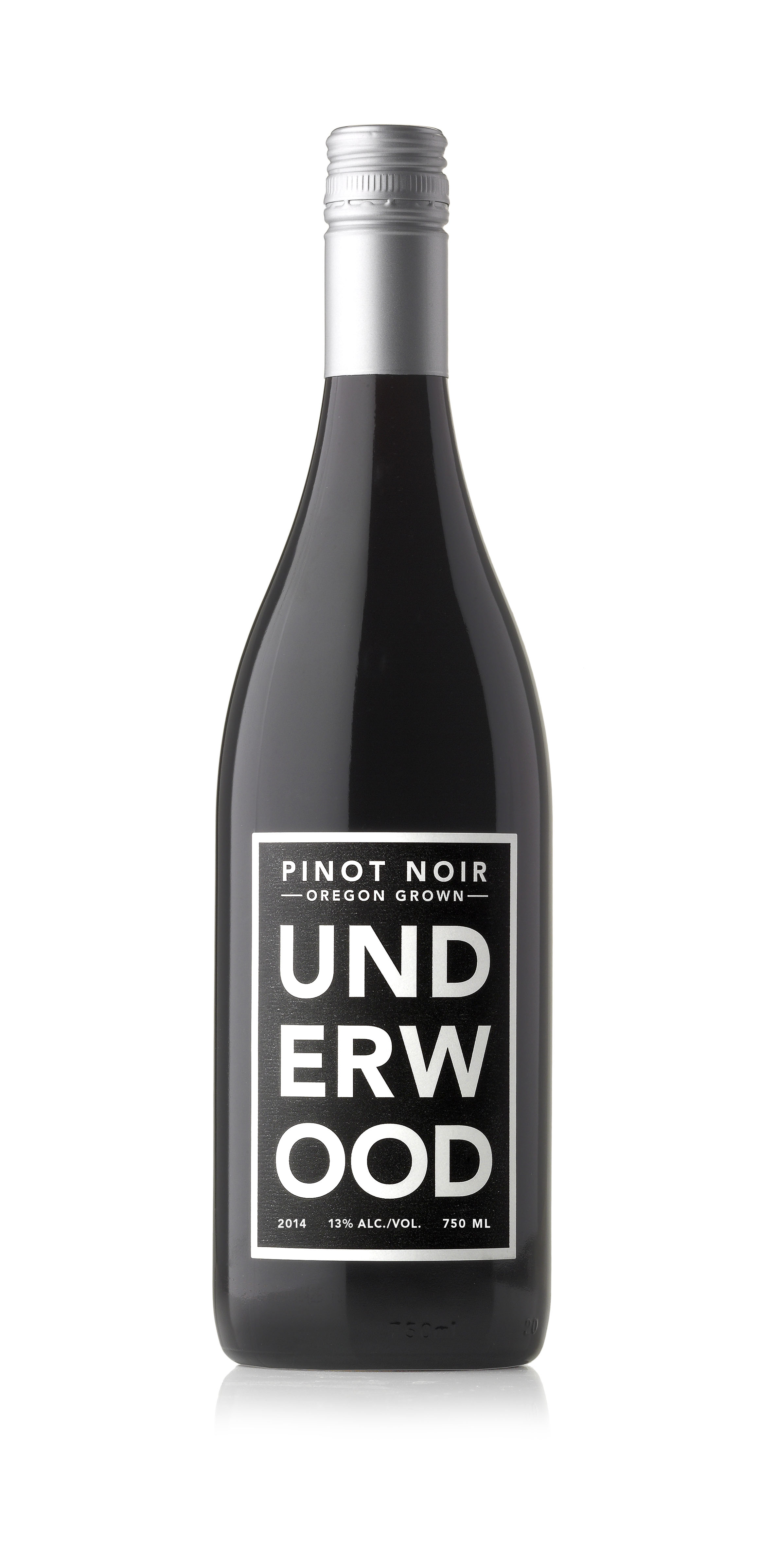
Interestingly, we discovered that the canned and bottled Underwood pinots are completely different wines. The bottle’s label reads, “Notes: Cherry, Blackberry, Cola.” As I mentioned already, the Underwood in a bottle has a vintage, which means that all of the grapes were harvested the same year. The canned wine is non-vintage, meaning that it’s a blend of grapes or wines from different years. My guess is that the can wine is the “leftovers” at the end of a bottling run from a couple of subsequent vintages, but I’m not for certain. 

In any case, the bottled version of Underwood pinot is, by unanimous consent of our little foursome, a superior wine to the canned version, even though the price is basically the same. The fruit is brighter, there’s a nice smoky flavor that I liked, and there’s better balance overall. It’s very good for a $12 pinot.

We then poured some of the King’s Ridge for price point comparison purposes. The King’s Ridge, while somewhat more expensive than the Underwood, proved to be a bit of a disappointment. The flavors were darker and heavier, but that didn’t make them more interesting. In fact, when we compared the Underwoods to the King’s Ridge, which also has “Notes: Cherry, Blackberry, Cola,” we ranked them: Underwood bottle, King’s Ridge, Underwood can. In short, I wouldn’t bother with the King’s Ridge. There are better pinots out there for around $20.

Bottom line – if you’re considering taking wine to your next softball game, tailgate, or backyard hootenanny, you can safely snag some of these Underwood cans if you want to reduce the risk of ending up with shards of glass in your feet from an accidentally misthrown football. Or, if you’re hiking, it’s an excellent alternative to the traditional dinner flask of bourbon. Or maybe that’s just the Pie Queen’s tradition...

As an addendum, a few days later, the Sweet Partner in Crime and I tried a can of the Underwood Pinot Gris. Again, a decent enough white (notes: peach, grapefruit, and pear). It’s much more interesting than most inexpensive pinot grigio. I thought it had an odd yeasty scent that faded as it got some air. It’s certainly dangerously drinkable on a hot day. Underwood also is releasing a rosé, which I have not tried yet.

Bottom line – Underwood is a quality wine for any occasion where a can is your best beverage delivery option. It’s worth a try.


Monday, October 22, 2012

Österreichischer Rotwein (Red Wines of Austria)

Quick…”Austria” – what just popped to mind? The Hapsburg Dynasty? Any one of a list of composers longer than my arm? A certain ex-governor of Gully-fornee-uh? Probably. How about wine?

“Aha!” a couple of you might say, “I thought about wine! That groovy sounding grape Grüner Veltliner.” Well, bonus noogies for you. You’re absolutely right. Austria wasn’t exactly a major player in the world of wine until the last decade or so as more and more folks discovered that umlaut-speckled, mineral-slathered bottle of deliciousness. About half of the wine made in  Austria is white, with Grüner making up two-thirds of that. Austria is on a similar latitude as Alsace, and the mountainous terroir yields lean, minerally, acidic wine.

Austria actually has a long history of winemaking. There’s archeological evidence of wine production as far back as 700 BC in Austria. Through the Middle Ages, wine production waxed and waned, depending on various invasions, religious incursions, and various pestilence. In the 19th century, Austrian wine really hit its stride – only to be laid low by that little louse phylloxera. Austria bounced back quickly, though – and after World War I, Austria was the third-largest wine producer in the world, selling largely to other Central European countries.

In the 1980’s, though, everything came crashing down because of a scandal in the Austrian wine industry. Austrian wines are generally acidic, light-bodied, and minerally. Some enterprising winemakers discovered that the taste could be “fattened up” a bit by adding small amounts of diethylene glycol to the wine. The more common term for diethylene glycol is...well…antifreeze.

Needless to say, this did the Austrians no favors. Even though there were only a small number of producers following this creative production method, many countries out-and-out banned Austrian wine. In the 1990’s, Austria set up a control board for their winemakers to ensure quality. As a result, more care was taken in general in production of wine, and a higher-quality product resulted. Quality versions of Grüner reopened the gates for Austrian whites, and over the last five or six years, there has been an increased demand for Austrian red wine.

Austrian reds are largely autochthonal varietals (you may remember this term, meaning “native grapes,” from our profile of 20 Mondi). These grapes, alas, don’t roll trippingly off the American tongue. Asking for “Blaufränkisch,” “Zweigelt,” or “Sankt Laurent” is likely to cause an accidental spray of saliva in the face of your unfortunate local wine salesperson.

I’d encourage you to practice your Germanic pronunciation, however, as there are some tasty offerings out there. So you know, the pronunciation of Blaufränkisch is “Blau-FRONK-isch,” the pronunciation of Zweigelt is “ZVEI-gelt,” and the pronunciation of Sankt Laurent (St. Laurent, as it’s sometimes written) is “Zankt LAUER-ent.” All of these wines are in the weight class of pinot noir and Beaujolais, so if you’re looking for a red that’s a little different (perhaps for Thanksgiving dinner), these would be distinct possibilities.

Neckenmarkt 2009 Blaufränkisch and Neckenmarkt 2010 Zweigelt – I include these together because I found them to be very helpful wines, vocabulary-wise. Both have helpful phonetic spellings of the varietals on their labels. The Blaufränkisch a very light, pleasant red. I thought it had a surprising depth of flavor for a wine this light in body. Lots of cherry and blackberry flavors without a full mouth feeling, although thankfully not fading into watery. As the wine opens, I got a little more mineral and a little more spice. An excellent summer red alternative, had I found it a couple of months ago. We poured this wine with some roasted grouper and vegetables and it went splendidly. About $10.

As for the Zweigelt – I was hit initially with a whiff of cranberries and graphite. Its taste is light – almost a bitter cranberry flavor. The flavor feels like it should be a lighter bodied, but there’s almost a glycerine-y thickness. (Um…what was that about antifreeze again?) The finish is graphite and light tannin. Not my favorite. Around $13.

Sattler 2010 Burgenland Sankt Laurent  -- A very light, fruit forward, flexible red that I found exceptionally easy to drink. I found it full of smooth berry flavors with a firm, pleasantly smoky backbone. I found it quite pinot noir-ish in character, although not quite as complex. I recently rigged up my little kettle grill to double as a smoker. I sugar-and-salt cured some trout filets and put them over the applewood. We had a little smoked trout with the Sattler. My tasting note reads “Holy crap!” An unexpectedly wonderful pairing. You could conceivably have this for a brunchtime red, as it’s clearly a wine that’s not scared of a little oil and a little salt. Solid for around $15-16.


Heinrich 2008 “Red” – So, what happens when you start blending these autochthonal grapes? Oftentimes, these grapes take on entirely different characteristics when blended as when poured alone. (Case in point – just about any non-Burgundian French wine will be a blend.) This Austrian table wine is a blend of 60% Zweigelt, 30% Blaufränkisch, and 10% Sankt Laurent. The result? A much darker, deeper wine than any of those varietals singly. This one has a very fragrant nose of cherries and herbs. The mouthfeel is considerably heavier, and the flavors are fuller. Those flavors resemble pinot noir: cherry and smoke – with some pepper thrown in for good measure. The finish is long, firmly tannic, and peppery. For a fairly unique experience, give it a run for about $18.