Showing posts with label pinot gris. Show all posts

Sunday, August 16, 2015

Underwood Wine in a Can: Pinkies Down, Thumbs...

Would you drink wine from a can? Should you?

Wine in a can? Sure. Let's do this!
Our neighbor, Christine the Pie Queen, relayed the results of a bit of work-related research performed by her loving hubby Jeff, both of whom you may remember from several write-ups over the years (including the ever-popular “Jeff’s Dinner Club” series). Jeff had uncovered a series of videos produced by Union Wine Company in Oregon for their Underwood Pinot Noir.

These videos, presented with the hashtag #pinkiesdown, are humorous takes on the overblown, overwritten world of wine reviews. The “sommelier,” “hipster wine bro,” and “sweater around neck guy” humorously hit your humble reviewer far too close to home with lines like “You know, I’m getting some strong notes of Axl Rose and a hint of heirloom purple carrots…” (Look for “Union Wine Company” on YouTube if you want to see. 15 solid minutes of chuckles.)

The videos are support for Underwood’s…yes, it’s true…wine in a can. Can-as-delivery-system is an interesting idea to be sure, just from hiking and poolside possibilities alone! The operatively begged question, of course, is “Is the damned stuff any good?”

As I usually do when there are oenological curiosities like this, I hit up the PR contact for Underwood to ask for review samples. Most companies are pretty good about sending along tasters for me to try. Underwood, however, informed me that press samples were not available “due to high demand.” In my mind, that either meant that they’re moving so much volume that they don’t need reviews to generate interest – or perhaps they don’t want reviewers looking too closely. Or maybe they just don’t have any to spare.

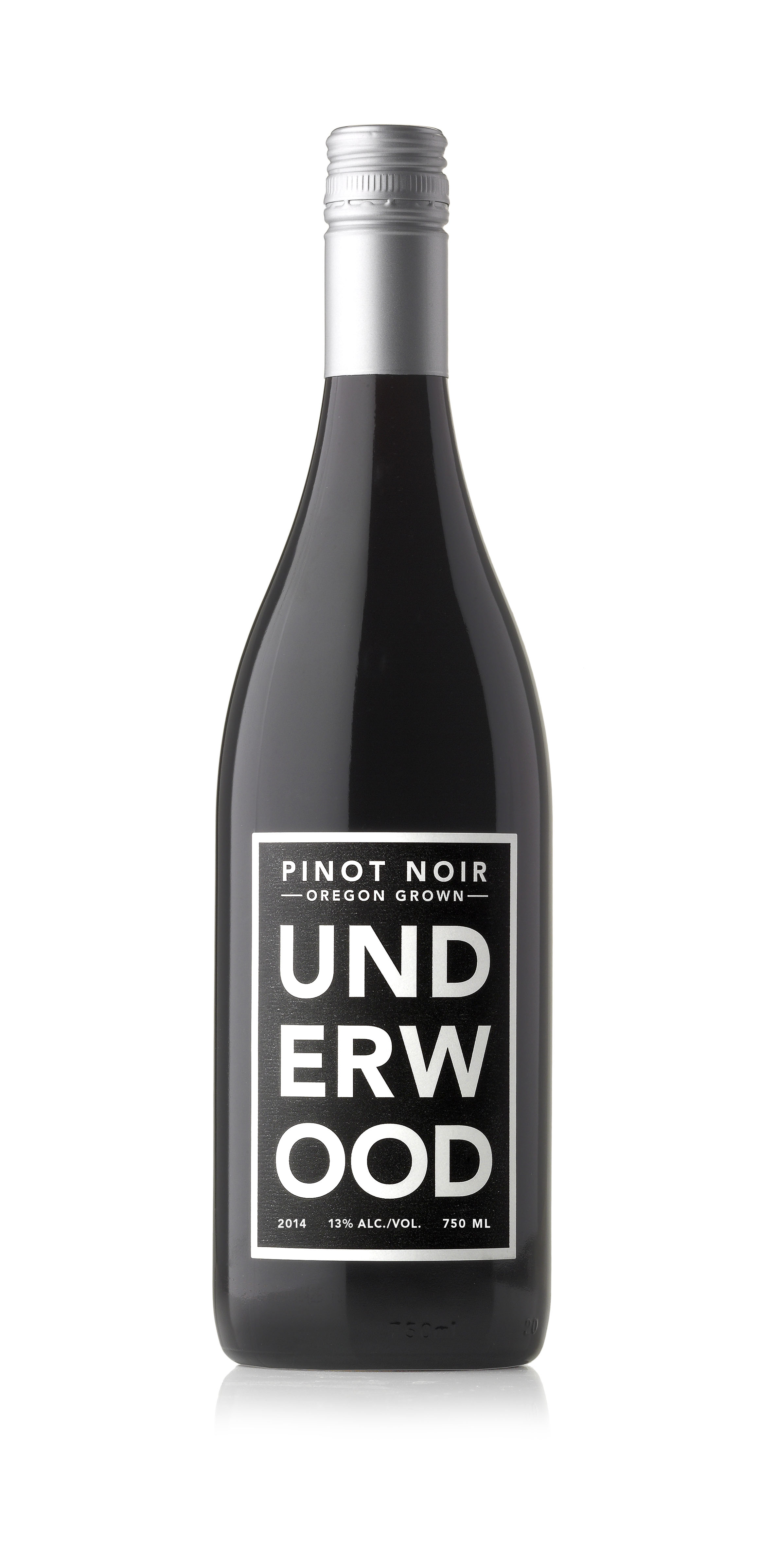
Undeterred, I popped down to Big Wine Store and made a couple of selections. I picked up two cans of Underwood Pinot Noir for ~$6 apiece. Each can is 375ml, slightly larger than a typical beer can. A standard wine bottle is 750ml, so each Underwood can is equivalent to a half-bottle or “split.” (Part of Jeff’s work, which includes occasional international espionage, consists of enforcing standards on alcohol labels.)

For science, I also snagged a bottle of Underwood 2013 Pinot Noir ($13), and a bottle of King’s Ridge 2013 Oregon Pinot Noir ($19), which is a higher end bottling from Union. (They also do an even more expensive one called “Alchemist” at $28, which wasn’t available.)

The Sweet Partner in Crime and I invited Jeff and Christine to Vine HQ for a “scientific comparison” of the various Union Wine offerings. To establish a “cross-inexpensive-vino” comparison, we also poured some Bota Box Pinot Noir because, well, it was cheap and we had it around. We took up our places around the living room and began to carefully pour, swirl, and…oh, who am I kidding? We commenced to pounding pinot whilst taking notes.
We started with the cans, of course. The unmistakeable “pffft” of opening aluminum proceeded pours all around. (We did our best to emulate the various characters from the videos as we tried the stuff.) Our first impression – this wine ain’t bad! It’s not the rich, earthy Oregon pinot that I can get all William Burroughs about (as in “If God made anything better, he kept it for himself…”), but the basic flavors certainly are along the lines of a solid, inexpensive Oregon wine. 

The can label helpfully suggests: “Notes: Raspberry, Cherry, Chocolate.” The actual flavors are pretty much along those lines. For wine that you can schlep in a cooler or backpack and slap a koozy on, it’s quite decent. For a picnic or other outdoor activity where glass isn’t practical, I’d consider it certainly workable. It’s also miles better wine when compared to the Bota Box, which tasted heavier, thicker, and sweeter than the Underwood.

We also had a tableful of snacks to go alongside our wine: Christine’s Caprese Skewers with homemade squeaky cheese; Jeff’s Smoky Baba Ganoush; and some dry sausage, gouda, and crackers. The wine went well enough with the entire spectrum of flavors, so it should be workable with nearly everything.

As I mentioned, we poured the wine into glasses to sample it, but I was the first of the group to step up and take a big ol’ chug straight from the can. In all honesty, I can’t recommend that particular technique. Since so much of wine’s flavor is scent, you get nothing aroma-wise when you drink it like a Coors Light, so make sure you pour it into some kind of available container – glass, mug, Solo cup, what have you – for best results.

Jeff also pointed out that its alcohol content (13%) is basically the same as Four Loko, so if you wanted to either mimic These Kids Today or pretend you’re back at a college kegger, you could #ShotgunAnUnderwood – but I wouldn’t recommend it. (However, if you’re going to try, I want video.)

Interestingly, we discovered that the canned and bottled Underwood pinots are completely different wines. The bottle’s label reads, “Notes: Cherry, Blackberry, Cola.” As I mentioned already, the Underwood in a bottle has a vintage, which means that all of the grapes were harvested the same year. The canned wine is non-vintage, meaning that it’s a blend of grapes or wines from different years. My guess is that the can wine is the “leftovers” at the end of a bottling run from a couple of subsequent vintages, but I’m not for certain. 

In any case, the bottled version of Underwood pinot is, by unanimous consent of our little foursome, a superior wine to the canned version, even though the price is basically the same. The fruit is brighter, there’s a nice smoky flavor that I liked, and there’s better balance overall. It’s very good for a $12 pinot.

We then poured some of the King’s Ridge for price point comparison purposes. The King’s Ridge, while somewhat more expensive than the Underwood, proved to be a bit of a disappointment. The flavors were darker and heavier, but that didn’t make them more interesting. In fact, when we compared the Underwoods to the King’s Ridge, which also has “Notes: Cherry, Blackberry, Cola,” we ranked them: Underwood bottle, King’s Ridge, Underwood can. In short, I wouldn’t bother with the King’s Ridge. There are better pinots out there for around $20.

Bottom line – if you’re considering taking wine to your next softball game, tailgate, or backyard hootenanny, you can safely snag some of these Underwood cans if you want to reduce the risk of ending up with shards of glass in your feet from an accidentally misthrown football. Or, if you’re hiking, it’s an excellent alternative to the traditional dinner flask of bourbon. Or maybe that’s just the Pie Queen’s tradition...

As an addendum, a few days later, the Sweet Partner in Crime and I tried a can of the Underwood Pinot Gris. Again, a decent enough white (notes: peach, grapefruit, and pear). It’s much more interesting than most inexpensive pinot grigio. I thought it had an odd yeasty scent that faded as it got some air. It’s certainly dangerously drinkable on a hot day. Underwood also is releasing a rosé, which I have not tried yet.

Bottom line – Underwood is a quality wine for any occasion where a can is your best beverage delivery option. It’s worth a try.


Wednesday, April 10, 2013

Libra Wines

 
The sun’s setting on the last day of our Oregon vacation. I’m sitting on the back deck of the home of Bill Hanson with a fat glass of Libra Wines’ 2008 Momtazi Reserve. Bill, the owner and winemaker of Libra, looks out over the vineyard as sunset approaches and cracks a little smile.

“Yep. Livin’ the dream.”

Our long, twisty road from the baggage claim at PDX to Bill Hanson’s back deck began at Oregon Wines on Broadway in downtown Portland. One of the wines in their pinot flight was the Libra 2009 Willamette Valley Reserve. We absolutely loved it. Rich, perfectly balanced, and flavorful without being too heavy. We asked the fun-loving folks at OWOB if Libra had a tasting room. They said no, but indicated that they thought he showed his wines at the Carlton Winemaker’s Studio.

When our travels led us to that end of Willamette Valley, we discovered the aforementioned studio was a dead end. No Libra. They told us that he’d been working as the winemaker at Panther Creek and they sometimes poured Libra in the tasting room. We thanked them and moved on. At Panther Creek, we discovered that Bill and the higher-ups had had a parting of the ways. Thankfully, the Panther Creek pourer gave us Bill’s phone number. Which was disconnected. However, the pourer let Bill’s wife, Linda, know that we were trying to get in touch with them – and gave them our number, which we’d left at the tasting room. After a couple of phone tag calls, we were able to set up a tasting for the end of the last day we’d be there.

We made our way out into the Yamhill countryside, following directions which included, “take a hard left onto the dirt road… I’ll try to remember to leave the gate open for you,” which, thankfully, he did. We exchanged a few pleasantries before discovering that Bill and the Sweet Partner in Crime were both born in Danville, Illinois.

The ice officially broken, we made our way to the deck to enjoy a gorgeous afternoon and sip Libra’s selections. Not long after we headed outside, Linda joined us the porch, followed by their precocious smile-and-mop-of-dark curls Lily, both back from an afternoon trip to the local pool. Lily, a country music aficionado, came bearing a bowl of peanut-butter filled pretzels for noshing. She said that the best thing about waking up each morning and looking at her own vineyard is “knowing that we all did this together.”

The Libra Wines Crew -- Linda, Lily, and Bill
Bill caught the wine bug in, of all places, a community college Geography class. “[My teacher] really got me, as an 18 year old kid, fascinated with wine. When I was waiting tables at 18, I started learning about wines from all over the world, and I was just fascinated. I wrote papers comparing the climate of Oregon to the world’s other great wine regions. I was hooked. I got into it when I was 20 and I’m 49 now.”

Bill’s first job in the wine world was at Eola Hills’ Hidden Springs Winery in 1985, followed by a stint at Mendocino County’s Parducci. He decided to try the sales end of things for awhile, but the vineyard kept calling him back. He became assistant winemaker back in Oregon at Matello in 2002, then moved on to (and now away from) Panther Creek. He and Linda started Libra in 2007 and made wine from their first estate grapes in 2009. “I always wanted to live on my own vineyard and make wine,” Bill said, “And I just love being around wine people – from consumers who love wine to growers and producers. It’s a great feeling to be able to do what I love.”

Libra’s tagline is “Balanced Wines,” a hat tip to Linda’s Zodiac sign. Libra’s origin story also references the Greek goddess Persephone, who spends six months of each year in Hades’ timeshare, causing the changes in the seasons. “Bill originally had the idea for the Persephone tie in, he did a lot of research and the story really resonated with him,” said Linda, “the whole cycle of the seasons thing… the symbol of balance, and of course we all know how finicky Pinot Noir is to grow and to make.”

Bill says that he tries to craft wines as each vintage demands. “We just try not to get too crazy as far as doing ultra-low yields or overcropping. We’re more interested in flavor development than sugar development, although we hope they come together,” Bill explained. “This year, Mother Nature did a lot of our thinning for us. We don’t want too much alcohol. We just try to run with what Mother Nature gives us. We’re L.I.V.E. (low-input viticulture) certified sustainable.” Linda echoed Bill’s view: “Each of those plants are like one of his children! We do both love the land and firmly believe in only putting into the earth things that will not harm it. Even in my vegetable and flower gardens…we love the end result, a beautiful, natural product which you helped produce--your touch each step of the way had a hand in how it turns out.”
Libra's Lineup

Run with it they have. Bill started us with his Willamette Valley Pinot Gris, full of sunlight, citrus, and tropical fruit. We went from there to back-to-back tastings of his 2009 and 2010 Willamette Valley Reserve. These wines, a mixture of estate and Valley fruit, were completely different. The 2009 tasted fruitier, higher in alcohol, and (in Bill’s words), “a little slutty.” The 2010, thanks to cooler temperatures, had much more complexity. I thought it was an absolutely beautiful wine, even young.

From there, we moved on to Libra’s Umpqua Valley Tempranillo, sourced from the , and finally to his Momtazi Vineyard Reserve. The tempranillo was good stuff, full of chocolate and tobacco flavors. The Momtazi was nothing short of a rock star – smoky, sultry, and special. The most expensive wine in the Libra catalog is the Momtazi. At $35, it absolutely blew away many of the wines we tried on the trip that retailed for twice as much. After that, we retasted a few things – but we weren’t paying a lot of attention by that point. We were soaking up the sun, good conversation, and good company.

I asked Bill what it was like using his deck as a tasting room. You could hear genuine appreciation in his voice: “It’s awesome. It really helps us appreciate what we have. I mean, we are really living the dream out here, but sometimes the dream can be a lot of work! Having folks over, sharing our wines and good conversation with them – it’s fun! And it helps us remember just how much of a blessing this is.”

Bill said that his goal is to “keep it simple.” His hope is to produce more and more of the estate wines, eventually getting the production to 600-800 cases per year – in addition to doing some more vineyard specific wines like the Momtazi and Ribbon Ridge since they’re “big fans of that fruit.” He said that he’ll also keep crushing pinot gris because “you’ve always got to have some white wine around, you know?”

Libra’s a limited distribution wine, so it will likely be difficult to track down in local stores. The best way to find it is to order it straight from the source: http://www.librawines.com -- trust me, you’ll be glad you did. And if you happen to be in the Willamette Valley, give Libra a call. Bill will leave the gate open for you.

(Originally posted on October 18, 2012)

Tuesday, September 11, 2012

Oregon

“If God made anything better, He kept it for Himself.”
-William S. Burroughs, Junky
The Sweet Partner in Crime and I talked for years about a vacation to Oregon. We’d always wanted to see Portland and we hoped to visit my cousin in Eugene. I wanted to return to Crater Lake to take the (spectacular!) boat ride that I’d adolescently skipped twenty years prior. And we wanted wine, of course.

Oregon, specifically the Willamette (rhymes with “Dammit!”) Valley, is known best for pinot noir. The area is nestled between the low Oregon Coastal Range mountains on the west and the tall Cascades on the east and stretches from the Columbia River on the north to just south of Eugene. The entire valley comprises about 3.3 million acres. The Willamette Valley’s temperate climate is quite friendly to those cool-weather loving grapes. (France’s Burgundy region is at the same north latitude, not surprisingly.)

The most common appellation you’ll see on a bottle of Oregon pinot is “Willamette Valley AVA.” AVA is WineSpeak for “American Viticultural Area” – the wine growing region. That designation means the grapes were grown within the valley. There are six sub-AVA’s within the larger Willamette Valley: Chehalem Mountains, Ribbon Ridge, Yamhill-Carlton, Eola-Amity Hills, Dundee Hills, and McMinnville. Each has distinct terroir.

Oregon’s fascinating topography, carved by glaciers, volcanic eruptions, wind, and water, contains wildly different soil types. The soils do fall into two major categories: marine sedimentary (which generally imparts an earthy complexity) and volcanic (which yields a fruity smokiness). Some vineyards have both soil types, often within a few hundred feet of each other.

The first pinot noir from Oregon was produced in the mid-1960’s, and Oregon became a major player in the market in the 1980’s.When Sideways kickstarted the California pinot boom in the mid-2000’s, Oregon pinot producers came along for the ride. Oregon pinot is very different from California pinot. In general, the terroir of Oregon produces a more subtle, lower-alcohol juice, which created a nice contrast for wine connoisseurs. Oregon pinot made a name for itself, and prices rose.

Alas, the mass market, fueled by our old friend Miles, demanded pinot. Inexpensive pinot from places like Chile and Australia, as well as some…shall we say…less-well-crafted-but-cheaper California offerings flooded the market. $10-15 pinot made in a big, fruit-forward style became common. Also, thanks to California’s maddeningly consistent (but beautiful) climate, a casual wine drinker usually can be fairly confident of what’s in the bottle. A 2010 wine from a particular producer in California will taste a lot like a 2009, which in turn will taste a lot like the 2008, and so on. Oregon’s climate has much more variation, so specific vintage plays a huge role in a wine’s flavor.

For a while, it was difficult to locate much Oregon pinot at local wine stores. California pinot ruled the roost of mid- to high-end domestic pinots, and Oregon’s low-key marketing approach (not to mention many fewer wineries) caused a pricing problem. A few major producers (Domaine Serene, Domaine Drouhin, Erath) were able to keep up – but a good number of the mid-sized and smaller producers had to make some major readjustments. As a result, very high quality Oregon pinot became available for about half what you’ll pay for a premier cru Burgundy.

Many Oregon wines really hit my palate’s sweet spot, particularly those from Eola-Amity, Yamhill-Carlton, and Ribbon Ridge. I thought many of these wines had similar flavor profiles as good Burgundy, but with an addition of the “brightness” that American wines tend to exhibit. The following were our faves for quality & price. Some of these may be difficult to find in your local wine stores, but they’re all well worth a few website clicks:

Witness Tree Vineyard (Eola-Amity) – The “witness tree” is an ancient white oak that marked the corner of the historical boundary of the property. A lovely location for our first stop -- with a couple of very solid choices. While the Willamette Valley is known best for pinot noir, there are a few whites spread around as well. Witness Tree produces a wonderful estate Viognier, which was the best bottle of that varietal I’ve ever tasted at $15. Their estate cuvee pinot noir, called “ChainSaw,” was a steal as well at $20. http://www.witnesstreevineyard.com
Witness Tree Vineyard's namesake

Cristom (Eola-Amity) – One can almost see the Cristom winery from the Witness Tree parking lot.They specialize in slightly higher-end pinot noir which was well-worth the extra few shekels. In honor of our beagle, Jessie Louise, we took home two bottles one each from their “Jessie” and “Louise” vineyards. More like $40 for these. I had a nice conversation with their winemaker, Steve Doerner, who said, “I’m the winemaker, but I have plenty of help – a few thousands of helpers in the vineyard and 10-to-the-sixth in the lees…” http://www.cristomwines.com/
Cristom Winery

Spindrift Cellars (Willamette Valley) – A cool, unpretentious little place we pulled into on the edge of an industrial section of Corvallis as we were on our way from Eugene to Dundee. We learned that “spindrift” is the name for the foam that rises from the top of a breaking wave. The star of the place for us was their rosé of pinot at $16 -- a perfect picnic wine with much more complexity and depth than you’ll see in many pinks. http://www.spindriftcellars.com/


Twelve Wine (Yamhill-Carlton). We first tasted this at a fantastic wine store in Eugene called Authentica. Twelve is run by a husband/wife duo – he an electrical engineer from Silicon Valley (who still works in high tech as a day job), she a high school counselor. We ran through their entire gamut at their tasting room in downtown McMinnville. (The vineyard is in Yamhill.) The quirky story of the wine’s name, their wicked cool labels, and their downright friendliness added to the experience. The estate pinot ($25) had a wonderful richness that played along especially nicely with the offerings from the gourmet chocolate shop with which they share a tasting room. Their currently-sold out reserve, called “144” (12-squared, get it?) was exceptional. http://twelvewine.com/
 

Patricia Green Cellars (Ribbon Ridge) – Patricia Green’s tastings are appointment only -- so we headed there semi-private late-morning tasting with eight other folks. We sampled 12 different wines from across three vintages, and two “futures” barrel tastings. The winemaker, Jim Anderson, sources grapes from many Willamette sub-AVAs, so we had an exceptionally educational experience. We experienced side-by-side the real differences between sedimentary and volcanic soil, as well as the wide variation that exists between vintages. We especially liked their “sedimentary” series, particularly the Etzel Block ($60), Ana Vineyard ($45), and their straight Estate ($30). They're also one of the few producers of sauvignon blanc ($20) in the Valley. Highly recommended on all counts. And we needed carbs for lunch immediately afterwards. http://www.patriciagreencellars.com/
Damage done at the Patricia Green Cellars tasting

Libra Wines (Yamhill-Carlton) – I’m writing a separate column on our experiences at Libra – a true vacation highlight. I’ll just say for now that Libra’s 2010 Willamette Valley Pinot Noir at $25 knocked the pants off almost anything else we tasted on the trip. Just try. It’s kickass. http://librawines.com/


If you decide to take a wine tasting tour around the Willamette Valley and you want to really pamper yourself, consider staying at the Le Puy Inn in Newberg. (http://lepuy-inn.com) Lea and Andy will take good care of you. Though there a number of top-notch restaurants in the area, make sure you have a meal at Tina’s (http://www.tinasdundee.com/), a favorite of Valley locals in Dundee. You’ll be glad you did.

Friday, March 23, 2012

Naked Vine One-Hitter...Terrapin Cellars

One of the great perks of this gig is receiving samples. Wine at the door always brightens the day. Wine showing up unexpectedly really brightens the day. I'm not sure exactly where this particular bottle came from. I have my suspicions, but I'm sure not complaining...

Terrapin Cellars 2010 Oregon Pinot Gris

Oregon has become rightfully well known for Pinot Noir. I've had a number of Gewurztraminers and Rieslings from Oregon, but I was interested to learn that the "other" Pinot -- Pinot Gris -- is actually the second-most planted grape in the state. A number of winemakers recently decided to start carving out a niche for Oregon Pinot Gris. The wineries in this marketing group have vowed to stop making comparisons to Italy or Alsace, focusing on the uniqueness of their own terroir. I'm personally very interested to see where this marketing effort goes.

I'm even more interested after trying this offering from Terrapin Cellars. My first thought was, alas, "Alsace." The pleasant aromas of melon and lemon made me immediately think of an Alsatian wine. The flavor was quite different. Yes, the high acidity and minerality were certainly there, but there was a creaminess to balance those characteristics that's often lacking in Alsatian wines. Pineapple and melon were the strongest flavors I picked up. The finish is fruity, gentle, and lasting. We had this wine with a pretty tough pairing grilled orange roughy alongside asparagus sauteed with ginger. Most wines shrink from asparagus. This one most certainly did not. If it can handle asparagus, it can handle just about anything you'd have a white with.

Simply put, this wine's a winner, especially at a $14 price point. I'll extend an apology to the folks at Terrapin for drawing the Alsace comparison, but for any of the readers who are fans of that style of wine -- you'll probably dig these Oregon offerings. You'll also save a few shekels in the process. 

Whomever sent this along, many thanks. It's a keeper.


Tuesday, April 12, 2011

A Tale of Two Tastings

The Naked Vine’s social calendar has been loaded the last couple of weekends. As I posted before, I had the opportunity to lead one tasting and emcee another (and thanks to all of you who showed up and hopefully enjoyed the events!). When the dust cleared, one ended up being extremely educational. The other…well…

The first tasting was at Water Tower Fine Wines. David & Jan Lazarus and I opened a spread of what was originally going to be six wines, but expanded to 11 when all was said and done. My intent was to do a comparison tasting of Pinot gris/grigio and Grenache.

We started with the whites. In case you’re curious about the naming conventions, it’s “pinot grigio” in Italy and “pinot gris” in France. In the U.S., it’s named (as far as I can tell) after whichever style the wine most resembles. With the PG’s, I had these three to offer:

  • Ca’ Brigiano Pinot Grigio Bennati Italy 2009 ($9-11)
  • Lucien Albrecht Pinot Gris Cuvee Romanus Alsace 2008 ($17-20)
  • Willamette Valley Vineyards Pinot Gris 2009 ($14-17)

I thought the first two were good representations of Italian and French (Alsatian) versions of this grape. The Ca’Brigiano was light and acidic. Pool wine. Lots of crisp lime flavor. The Albrecht was a fuller wine, much richer and almost creamy. Much more tropical fruit. The color was markedly different. The Alsatian version had almost a coppery, honeyed color that matched the flavor. I thought, personally, it was the more interesting of the two.

In this case, if you had a continuum with Italy on one side and France on the other, this one would be about ¾ of the way to Alsace. The wine’s flavors tended towards apple and pear with some of that rich honey flavor coming through as well. I thought it lovely.

I admit…I have a crush on Grenache (Get it? Crush! Grenache! I made a wine funny!) The grape’s exceedingly broad potential for flavor and ability to change markedly based on terroir fascinates me. After tasting the wines, I poured them in a couple of “sets:”

  • Espelt Old Vines Garnacha Emporda Spain 2009
  • Evodia Old Vines Garnacha Altovinum Calatayud Spain 2009

The first two provided a fascinating contrast at about the same price – $10-12. Both wines are 100% Grenache. Same winery, same winemaker (although not marketed as such). However, the grapes from the first came from vineyards close to sea level, while the other was from vineyards planted around 3,000 feet. The climate at the Evodia’s high altitude tends to vary much more widely (hotter days, cooler nights) while the Espelt enjoys a more stable temperature. The result? The Evodia emerged a bigger, jammier, more in-your-face wine with blackberry and cherry flavors. The Espelt was softer, richer, and more complex. If you want an American parallel, think about the difference between red wines from Napa or Sonoma vs. Oregon. Both were extremely tasty.

Next up: soil vs. soil!

  • Las Rocas Garnacha San Alejandro Calatayud Spain 2007
  • Dom Mirelle & Vincent Cotes du Rhone 2007

As a point of clarification, Cotes du Rhone are blends -- not straight Grenache. CdR’s from the Southern Rhone are usually Grenache-based (rather than syrah-based). These two wines, also both around $12-15, were a fascinating contrast of “Spanish earthy” vs. “France earthy.” The CdR had the classic “Old World Funk” –a little like a barnyard. The Los Rocas had much more of a “digging in the garden” earth. The CdR had a mushroom flavor undertone, while the Los Rocas had more of a charcoal taste. Neither would have been “crack and drink” wines, but either would be spectacular earthy food pairing wines.

Finally, we poured the Quivira Grenache Wine Creek Ranch Dry Creek Valley California 2008. This was normally around a $30 bottle, but it was on sale that day for $21. This was a California Grenache. The Quivera bore no resemblance to either the French or Spanish Grenaches or to the jug Grenache you may have seen. This is a beautifully constructed wine – balanced and powerful. Plums and strawberries on the nose with a rich fruity flavor that eases into a harmony of tannin, pepper, and interesting acidity. This wine is a foodie’s swiss army knife. I can imagine it going with steak as easily as fish. Try. You’ll like.

So, this other tasting… For the third year in a row, the Madisonville Education and Assistance Center has asked me to lead the wine tasting at their annual fundraiser. When I started giving my spiel, I noted that the tasting had the potential to be one of the most interesting social experiments ever recorded in the wine world.

The tasting, as in previous years, was a blind tasting. Unlike past years, there wasn’t a varietal theme. Last year, for instance, was “Sauvignons of Spring.” We had a collection of sauvignon blancs and a collection of cabernet sauvignon. That straightforward this year? Heck, no.

The theme was: “ABC – Anywhere But California.” A no-holds-barred varietal free-for-all. “Red” or “White” was the only certainty. An unsuspecting taster could get a Riesling next to a Chardonnay, an Aussie Shiraz next to a South African Pinotage. Wine judges would run screaming.

The tasting lasted a couple of hours. Folks sampled, scribbled notes, sampled, swished, pretended to spit, and went back for more. At the end of the evening, people voted on their favorite wines – the top two won a prize. What rose from the carnage of our collective palate?

The most “favorited” white was a Trebbiano/Pinot Grigio blend that tasted (to me) like water. The most “favorited” red? A blueberry wine. I have no idea where it was from, who made it, etc. I was literally too dumbfounded to make a mental note. #3 was an Arbor Mist “Tropical Fruits” Chardonnay, followed by a “soft rosé wine,” again from somewhere I can’t remember.

How did a bunch of low-end, cheap wines end up being favorites? I felt like the slogan on the “Meetings” Demotivational Poster: “None of us is as dumb as all of us.”

The commonality is that they’re all very “easy to drink,” much in the same way that fruit juice is very easy to drink. In this social situation like, people aren’t doing much quiet, careful evaluation. They simply need social lubricant – and cheap wine’s been playing that role for millenia. So, while we didn’t create any new science, we all certainly had ourselves a good ol’ time and raised some cash for a good cause – which was, after all, the point.

Technorati Tags: ,

Sunday, May 30, 2010

A Day In The Life

I was talking to the Sweet Partner in Crime over dinner this evening (bulgogi-style chicken, fish sauce-soaked cucumbers, kimchi, and a tasty Brancott Sauvignon Blanc if you're curious) and I was feeling a little down. I got nominated for the international Wine Blog Awards, and I wasn't named one of the five finalists. Honestly, I was pretty disappointed, especially after I looked at the finalists and figured I could write circles around a couple of them. I was gritting my teeth a little that people didn't recognize.

When I started this little wine blogging adventure of mine, I had no idea where it would lead. Sure, I had "Julie & Julia" fantasies that I've mentioned before -- that someone from the Food Network would stumble across the Naked Vine one day, be so impressed that they'd ask me to take my "sommelier for the common man" act on the road, and people would know my bald pate all over the place.

I think I do what I do pretty damned well. But every single writer I've ever known who's published publicly does as well. While there may be nothing new under the sun, every writer thinks that he or she has a unique take, even if it's a topic that's been covered a million times before. It's like the old guitar joke:

Q. How many lead guitarists does it take to screw in a light bulb?

A. Four. One to screw in the bulb, and three to say, "I could do it better."

Anyway, there are now thousands of wine blogs on the Internets, and there are a fair number of good writers. Complicating matters, I'm a bit of a throwback. I'm not much on social media. Hell, I have an actual job, people...I'm at a loss as to how people have time to work, tweet 200 times a day, and harvest their Farmville crops. I'm more interested in getting in print than being a Twitter trending topic. I also lack the energy to play the grip and greet game, so I don't know too many of the "people who know people."

Leave it to the SPinC to give me some perspective. She looked me right in the face during the midst of my little rant and asked me, "Do you still enjoy doing this?" In a typical display of my brilliant repartee, I looked right back at her and said, "Huh?"

"Really, why are you doing this? Are you having fun, or is this just something that you're doing to try to get people to give your site hits?"

I've learned one thing over the last eight-plus years. When the lady's right, she's right.

Every now and again, it's really is a good thing to count your blessings. Ever since my conversation with Scott so many years ago, this little endeavor of mine has allowed me to meet some pretty damned cool people, exposed me to a body of knowledge and science that I didn't fully understand, got me the occasional wine sample, and is something I take pride in.

So yeah, I do have fun, especially when I get on opportunity like last weekend. D.E.P's Fine Wine and Spirits let me have the run of their tasting table for their weekend tastings. I decided to do a live version of my last column.

I had a great time talking with people about the wines and why I found them interesting. I used to worry that I sounded like a complete clod, and while I still may, at least I'm a semi-authoritative clod, and most people walked away from the table with a bottle or two in their hands and a smile on their face, so I must have been doing something right. Since I have that little victory under my belt, I give you, straight from the soundboard, my picks:

I poured a pinot grigio next to a pinot gris to illustrate the difference. I had the Kris 2008 Pinot Grigio from Italy ($13) and the King Estates 2008 Pinot Gris from Oregon. The Kris was light, crisp, and full of citrus. A great lawnmower wine. The King Estates was fuller, had some softer fruit and had a honey-ish sweetness. I found it an instructive contrast between the two styles of the same grape.

I'd picked out a pinot noir to go between the two contrasts, but K2 let me know that there wasn't enough of the one I'd picked, so he substituted the Underwood Cellars 2008 Pinot Noir instead. This was a super-light pinot. Some nice cherry flavors out of such a light body. Not as much smoke and depth as I'd usually like. I prefer my pinots a little bit heavier, but it was certainly drinkable. At $10, a pretty decent value.

The last two wines I did was the syrah/shiraz comparison. I had the Gordon Brothers 2005 Syrah ($17) set up next to the Torbreck "The Woodcutter" 2006 Shiraz. ($19) The Gordon Brothers is from Columbia Valley in Washington State. It took a little while to open up, but once it did...yum. A somewhat restrained syrah, there were layers of dark fruit, coffee, and chocolate. As I told more than one person, "Pour a glass of this and get some dark chocolate, have some of both, and just lay back and let it happen..." The Torbreck was a typical ballsy Aussie shiraz. Lots of fruit with enough backbone to keep it from being a mess. Lots of in your face flavors that pair well with anything on a grill.

Like most writers, I fall into the trap of taking myself too seriously -- but yes, this is still fun, especially because of all of you out there -- both those who I've met and those I haven't. Thanks to all of you who came by the tasting to visit, that regularly read me or who have stumbled over here for the first time. From the bottom of my heart, I appreciate you letting me share this little experiment with you. You guys make my life better. Thank you.

Thursday, May 13, 2010

The Flipside of Syrah -- Pinot Grigio/Pinot Gris

I did a little background piece back in the Wine School days on the difference between syrah and shiraz. Which is to say, there isn't one. Same grape. What matters is terroir, vinification, and the whims of winemakers. You may remember the basic rule: "Syrah" is the grape's name in France, where it, along with Grenache, is the backbone of many Rhone reds. French Syrah tends to be deep and earthy. "Shiraz" is the name in Australia Those wines tend to be fruitier, bolder, and less tannic. The American tradition, such as it is, is usually to tag the wine with whichever "profile" the flavor more closely resembles.

Red wines aren't alone in this multiple monickering of single grapes. Look over on the other side of the wine store, and you'll see one of the more common dual named wines -- Pinot Grigio & Pinot Gris. Now yes, I realize it's just a language difference between Italian and French -- but there's a similar process at work.

A quick aside: Pinot Gris is a "cousin" varietal to Pinot Noir. "Pinot" is French for "pine tree," which is the general shape of the tiny-berried clusters of grapes. The difference in their names stems from the color of the fruit. One is dark ("noir" is French for "black"), the other is more grayish ("gris" and "grigio" are Italian & French for "grey").

There's actually a third grape in the family, pinot blanc, but it's not grown very widely. If you see a wine labeled "pinot blanc," it can be made from Pinot Blanc, Pinot Gris, Pinot Noir fermented as a white, Auxerrois Blanc, or any blend of the four.

Anyhoo, I digress...back to pinot gris and pinot grigio. Both wines' styles are light, usually citrusy, and quite easy to drink. So easy, in fact, some of them are so light that some of the more inexpensive of either give you the experience drinking flavored, slightly alcoholic water. In general, this wine is made to be drunk young -- usually within a couple of years of bottling. The varietal has been tagged with this "don't think, just drink and work on your tan" image for quite some time. Thankfully, any number of winemakers now treat these grapes with a little more care, and versions worth taking seriously are readily available.

I can already hear you asking, "Other than the language of the grape's name, is there any real difference between the two?" The answer is yes. Italian Pinot Grigio tends to be light, have a distinct citrus character, and be very crisp. French Pinot Gris usually has a more floral nose, more mineral flavors, and usually a little more fruit and honey on the body. Versions from the rest of the world tend to follow the naming convention of the region that the flavor most resembles. For instance:

Start with Italian pinot grigio. Much of Italy's pinot grigio is grown in the Veneto, the area around Venice. I tried the Zenato 2008 Pinot Grigio della Venezie ($13) as one example. The nose is pleasantly light and peachy. It's not in the least bit watery, and certainly has some weight, with a little bit of a sugary undertone. This gets followed by more peachy flavors with an edge that tastes a little like orange peel. The finish starts soft, but eventually becomes tart, crisp, and dry.

Along those lines, if you look at an American version, you'll see many of the same characteristics. The Estancia 2008 Pinot Grigio is from California. Like its Italian counterpart, it's a citrusy, high-acid wine. Even so, it's a slightly fuller wine than the Zenato, although neither wine could be considered "heavy." Otherwise, there's a very similar flavor profile to the Italian, plus a little extra lemon on the finish.

The hub of French pinot gris production is Alsace. Alsace is famous for its dry, minerally Rieslings and Gewurztraminers. It seems like what little residual sugar is left in the country ends up in the pinot gris. These wines give you a "fuller" experience and can usually be aged a little longer than their Italian counterparts. These wines tend to be somewhat richer and more floral.

For instance, the Lucien Albrecht 2006 Cuvee Romanus Pinot Gris ($16). The nose is really "blossomy" and quite pretty. It has almost a metallic quality when initially poured, but that flavor dissipates quickly when it's had some time to breathe or been given a good swirl. What's left is a full fruity flavor. Pears and sweet apples dominate, rather than the strong citrus of the Italian versions. It still finishes reasonably crisply.

On the American side, I tried the Acrobat 2008 Oregon Pinot Gris ($12). I found a lot of the same characteristics here -- a floral nose, and a fuller body. While it is somewhat acidic, there's a lot more creaminess to this wine that you'd expect. Very nice structure and balance.

I'd really suggest that you do a pinot gris/pinot grigio side-by-side tasting, especially with summer just around the corner. Find out what you like best before the heat sets in! Also, as far as food pairings, trust the "home" regions. Pinot grigio will go well with anything light and traditionally Italian. We tried it with broiled rosemary shrimp, and it was scrumptious. As for pinot gris, it goes nicely with most of the things you'd think of with dry Rieslings and Gewurztraminers. It was very tasty with chicken and chickpea curry.

Tuesday, April 20, 2010

Tarrica Wine Cellars

Some of you who read my less-than-enthusiastic writeup of the last Cincinnati Wine Festival may remember that I still managed to run across a couple of wines I really enjoyed. One of the real finds at this little event was Tarrica. I did a double take when I tasted their merlot, and had a really nice conversation with their rep, Michael Gwin, about the wines, the winery, and sundry other things. Michael was good enough to set me up with a raft of their wines to sample.

Tarrica Wine Cellars is the 1999 creation of winemaker Sam Balakian, who named the winery after his two daughters, Taryn & Erica. Tarrica is located in Paso Robles -- a region gaining more and more national recognition outside of corkhead circles. Tarrica wines are made to be, in Balakian's words, "both affordable and immediately enjoyable." I could certainly speak for the first. All of the wines were listed between $9-15 (except for the petit sirah, which I've seen as high as $30).

So, how were they? As you might be able to ascertain, these are built to be solid wines you don't need to think about a great deal. Tarrica's selections aren't made to compete with the high-end stuuf from Paso, but they're certainly as good, if not better, than many California wines you'll find at similar price points.

I thought Tarrica stood out by...well...not having anything really stand out. For relatively inexpensive wines, I certainly noticed that they were crafted with balance in mind. Many of these bottlings succeeded on that front. Some were certainly better than others, in my opinion, but I'm certainly comfortable inviting you to see for yourself. Here's what we tasted, more or less in the order we tried them:

Tarrica 2007 Merlot -- Yep. I led off with this to make sure that I wasn't off base at the festival. I was instantly pleased, since it was almost exactly as I remembered. It tasted like a mainline Bordeaux, which I think is out of the ordinary. There's usually not a lot of earthy flavor in California wine, and this certainly has a bit of the "tasty funk." Now, I'm not talking Chateau Latour here or anything -- but for the price, I'd taste it blind against some $20-25 French bottles and probably fool a lot of folks. Good berry and floral nose with a solid tannic structure and excellent balance. Definitely recommended.

Tarrica 2009 Pinot Gris -- Fairly substantial body for a pinot gris. You can tell there's a little residual sugar, but it comes across as more of a honey flavor than simply sugary. It's got a lighter taste than the weight implies. Decent flavor with crisp acidity. When I first tried it, there was a little astringent nip at the finish, but that faded after the wine had been open for a few minutes. A decent enough pinot gris, just not out of the ordinary.

Tarrica 2008 White Zinfandel -- "I just can't do it." The Sweet Partner in crime looked askance at her glass. We don't usually allow this type wines into the nest unless I'm making sangria. In the name of science, though, I tried it. Like most white zins, it's quite sweet -- strawberries are the main fruit flavor initially. It does subdue itself a bit before finishing sugary. If you're into this sort of thing -- it's a good glass of white zin. I will admit, though -- I did end up making a spritzer out of the bulk of it.

Tarrica 2008 Chardonnay -- Very serviceable Chardonnay. Definitely made in a California style with the oak and butter, but neither get overwhelming. The nose is oaky, and the flavor is a good steady balance of fruit, butter, and oak. Nice smooth pear flavors on the palate. Good weight with a gently creamy, smoky finish. I'd certainly get it again.

Tarrica 2008 Riesling -- Not one of our favorites. A little heavy on the sweetness, but I'll readily admit to preferring drier style Riesling (unless I'm eating something really fiery, that is). I got apples on the nose and tongue. Sweet-ish finish. We had it with supermarket sushi, and it was decent, but I could have found a better one without too much difficulty.

Tarrica 2008 Pinot Noir -- Another very pleasant surprise! A very light-styled pinot that drinks best with just a hint of a chill. (A few minutes in the fridge after you open it will do the trick.) The nose is floral and delicate. Pinot noirs at this price tend to be either very fruity and almost thick or so light that there's barely any flavor. The Tarrica, however, is a very straightforward, well-constructed pinot. I got smoke and cherries all over the place, with a well-balanced flavor and a gentle finish. I really liked this wine, especially for the value.

Tarrica 2007 Petit Sirah -- If you think, "What would a petit sirah taste like if it were toned down a bit?" -- you'll understand where this wine is coming from. Bolder petits are more my speed, but it was a solid enough quaffer to have with evening chocolate. There was plenty of fruit, but that was more or less it -- not a lot of complexity and the tannins were light. I got blueberry flavors in a medium bodied wine, and the finish just sort of fades away. When I saw the price, however, I was surprised. There's a decent blueprint for a wine here, but I think it's probably better to wait a year or so until their yield gets better to try it again.

Tarrica 2008 Zinfandel -- The Tarrica "subtlety" motif certainly holds here. Definitely a smokier, more restrained wine than a lot of inexpensive California zins, which I don't see as a drawback. Not a fruit bomb by any measure. The nose has a strong vanilla tone. It remains a pretty muscular wine with plenty of fruit, but it's got smoky complexity and solid tannins, especially on the finish. Very drinkable and a very solid value. Grilled up a couple of steaks with this one and they went very well.

Tarrica 2007 Cabernet Sauvignon -- Nicely complex and another solid value. Plenty of blackberry on the nose with good black cherry and blackberry flavors. Not overly full-bodied, but very pleasant as a good "drinkin' cab" with its solid set of flavors. Good length on the finish with some lasting mild tannins. A perfect choice for a "third bottle" on an evening where you might be sharing some red wine and chocolate with good company.

Tarrica 2009 Sauvignon Blanc -- Peaches on the nose. Some mineral on the palate with a little more residual sugar than I usually like. Fruity rather than acidic on the finish. I'd certainly recommend it If you like softer, non-grapefruity sauvignon blancs. Otherwise, it's a  decent enough early evening/late afternoon quaffer.

Old Shandon Port Works Paso Robles Syrah Port -- One of two dessert wines that Tarrica offers up. I enjoyed this wine more a couple of days after I opened it. Right after opening, the sweetness was a little overpowering, but that backed off after a day and the wine grew more interesting. Some raspberry and chocolate flavors start showing up, the latter especially on the finish. The bottle reminded me, flavor-wise, of an Australian port. For a cold evening, it'll warm you up right enjoyably.

Tarrica "Koda" Dessert Wine -- Anyone who's followed this blog for any length of time knows that one of my tests of a red wine is trying it with something chocolate flavors. I was curious to see what would result when Tarrica took the above port and infused it with chocolate essence. The result? Well, I'll call it "interesting." The sweetness of the port runs a little roughshod over the chocolate flavors, which are pretty subtle. Long, chewy flavors and a warming glow at the end. I thought it was interesting and worth a try, and I think a lot of folks would probably like it if they're into dessert wines. I'd probably stick to getting the "component parts," however -- having the port and chocolate individually.


Tuesday, October 13, 2009

Maryhill Winery

When I attended the Cincinnati International Wine Festival, I noted that Maryhill Wineries in Goldendale, Washington, was one of the labels with which I was the most intrigued. While my palate was somewhat blunted by the cacophony of flavors that I'd been working with that day, I found myself really drawn to Maryhill. They were priced right, seemed tasty and straightforward, and were easy to quaff.

They grow a broad variety of grapes, which can sometimes give pause, but they manage to keep the quality fairly consistent. Most of their wines are in the $10-20 range, which makes them quite attractive. Since the festival, Maryhill's done pretty well for itself. They were recently named the 2009 Washington Winery of the Year by Wine Press Northwest. Their production has expanded greatly over the last few years, and their wines are becoming much more available.

I was understandably pleased when a case and a half of the wine showed up on our doorstep to review. The Sweet Partner in Crime and I were up to the challenge, so over the period of a few weeks, we cobbled together some notes:

Maryhill Winery 2006 Cabernet Franc -- Because of a story too long to relate here that involved a Sangiovese that was...um..."missing" from our cellar, a rosé that ended up being too sweet, and a football game we needed to watch -- I ended up popping this wine on a night when we were having a more "Italian Friendly" meal. (I also ended up pulling a little trickeration on the SPinC...) This is definitely a more fruit-forward, "New World" Cab Franc. A plummy, slightly minty nose with a full mouthfeel. The flavor is quite fruity, with a nice blueberry and smoke undertone. I might have mistaken it for a Cabernet Sauvignon, except the tannins were much softer and the acidity level considerably higher. The finish is acidic and a bit smoky. We had a grilled salmon with roasted tomatoes and tomato risotto for dinner that evening. The pairing worked really well. The grilled flavor of the fish accentuated the smoke behind the fruit in the wine. The acidity tamed the oil in the fish, and the tomatoes didn't overwhelm it, as they could have. I opened another bottle of this with friends Danny and Ryan. We got to this one after a couple of other bottles and some tastes of old scotch. Surprisingly, the fruit still made it to our scorched tongues. ($18)

Maryhill Winery 2008 Rose of Sangiovese -- For folks who like slightly sweet rosés, this will be a favorite. I'd be interested to know how this wine came about. It's somewhat heavy in the mouth for a rosé, since it's got a fair amount of residual sugar. There's enough acidity to keep it from becoming cloyingly sweet, but I can't say that it was my favorite. It's actually the rosé I mentioned in the Cab Franc writeup. I think it would have been better if it were either made in a fruitier style or allowed to dry out a bit more. The sweetness made it neither fish nor fowl. (Although it might be reasonably tasty with either -- $14.)

Maryhill Winery 2007 Pinot Gris -- "Simple and uncomplicated" is about as apt a description as you'll find for this wine. It's a straightforward, summery wine. The nose is extremely light and lemony. The flavor is much like the bouquet, light and citrusy with some pear and lemon flavors. The finish is quick and acidic, with a bit of a lingering astringency -- almost like a little bit of oak crept through -- but not enough to really be a strong part of the flavor. There's also a little peppery hint as well. It's a decent enough wine. Not my favorite pinot gris, but certainly one that works well enough on a hot day to relax with. ($15)

Maryhill Winery 2006 Zinfandel -- We first tried this as a "second bottle" of the evening. We'd had dinner and had a bottle of pinot noir with it. We were having post-meal chocolate, and the SPinC asked, "Do we have anything that's good with chocolate?" After surveying the scene, I cracked this open. After it opened up a bit -- the nose is big and bold with blueberries and bubblegum. The palate is uncomplicated, but nicely jammy with more blueberry and raspberry flavors. This slides smoothly into a finish with balanced tannins and great flavors of dark chocolate and coffee. And yes, it went remarkably well with dark chocolate and brownies. We had to try both with it...you know, for science's sake. ($22)

Maryhill Winery 2008 Viognier -- We were putting together a salad of our garden veggies, some grilled chicken, and a balsamic vinaigrette and hadn't opened a wine for it yet. I took a shot in the dark here, and it paid off. The nose of this wine is less floral than many viogniers, nosing more of light wood and minerals than of flowers. The flavor is a medium bodied mix of pear and pineapple with a touch of the traditional viognier oiliness. Vanilla dominated the finish. Quite tasty. The salad had a number of strong flavors -- citrus, smoke from the grilled chicken, fresh lemon basil, earth from mushrooms, and this wine stood right up next to it all. It didn't overwhelm the salad's flavors, but it didn't turn either insipid or astringent. A great wine to pair with the salad. The longer the wine sat, the more pronounced the smokiness and vanilla became. I'd really consider letting this sit open for a half hour before diving in. We confirmed the pair's quality at the end when the SPinC reached for the bottle and said, "Hey...well...this sure didn't last long...." One of the highlights and a steal at $15.

Maryhill Winery 2006 Proprietor's Reserve Malbec -- We cracked this on a night where we'd both had a long week and wanted to put together a nice meal. We'd watched a few episodes of some old Julia Child shows from Netflix and we decided to try our hand at some green beans and stuffed mushrooms. For a main course, we marinated up a London broil in some vinaigrette and lime juice and tossed it on the grill. Grilled food & Malbec. We figured we couldn't lose. Nice nose of vanilla and dark fruit. I might have mistaken it for a good Merlot. Nice smooth, balanced fruit on the palate that slides easily towards a finish full of vanilla, pepper, and coffee. It's a very balanced Malbec without some of the really harsh tannins that some of them can have. It's also not quite as spicy, so if that's what you're focusing on, that's probably not going to ring a bell for you. But if you're looking for more of a balanced flavor, it's nice. I get the sense, also, that this is somewhat of an "experimental," limited production wine. It's about $30, so I might wait a couple of years on this one, unless you want to lay it up for a few years, which could prove interesting.

Maryhill Winery 2006 Syrah -- I'm very glad we had a spare bottle of this one from the shipment. We opened the first one and it drank easily enough that we went through the whole thing without writing a note! Second time through, we had it with what started as fajitas and turned into a "lots of beef, peppers, garlic and onions over black beans" meal. Yeah, so it might not have been the "perfect pairing," but it worked nonetheless. Really nice nose on this wine -- plenty of vanilla and soft wood scents. It's medium-bodied for a syrah, slightly jammy -- good blackberry flavor and some pepperiness. Good, easy finish with some lasting clove and coffee flavors. We made the meal with more of a smoky heat than a spicy one (Tabasco Chipotle sauce is great stuff...), and the peppery notes complemented those spices nicely. Again, dangerously easy to drink, but we held off a little for chocolate, and we were glad we did. ($20)

Maryhill Winery 2006 "Winemaker's Red" -- The Maryhill "Bordeaux Blend with a twist" is their most popular wine. It's a blend of Cabernet Sauvignon, Cabernet Franc, and Merlot, with the "twist" being some Syrah thrown in for good measure. It's got an interestingly plummy, funky nose -- very earthy for a wine from the Northwest. Like a Bordeaux, it's lighter on the palate than many of the California meritages, so they've got the body right. The finish is where the wine was a tad disappointing. Initially, the finish seemed a little watery, smoky and clipped. After some serious swirling (and drinking about half a glass), some coffee notes come forth and the balance improves. Not the most complicated wine, but very drinkable. I wonder what it would be like with another year in bottle. A decent value at $14.

Maryhill Winery 2006 Proprietor's Reserve Cabernet Sauvignon -- The few cabs that I've had from the Pacific Northwest have tended to be mellow, "drink me now" concoctions. The cooler climate tends to make more subtle wines. Maryhill's Cab is certainly subtle, but it carries a little muscle with it. It's not as powerful as many of the California versions, but it is a full wine just the same. The nose simply wasn't there at first, but after an hour of breathing and quite a bit of swirling, I got rewarded with a very smooth, licorice and berry nose. The palate is fruity once the wine opens. At first, it's a wall of tannin, but the fruit does emerge. Once it does, lots of dark fruit and coffee. The finish is long and a bit heavy on the tannin. With the steak we had for dinner, though, that tannin was a bonus -- allowing the wine's fruit to show up and balance the meat, the mushrooms, and even the wilted spinach. With the mandatory chocolate and cabernet pairing, we were a bit underwhelmed. It was good -- but the flavors didn't quite marry. The reserve is $36. (Their "normal" cab is $20.) Would be a good one to grab a few bottles of and stick in the cellar for 3-4 years. Once the tannins have calmed, this'll be a rock star.

To sum up, with the exception of the pinot gris, I'd recommend most of these. (Warm weather whites like pinot gris generally don't do as well in the Northwest, in my experience.) The price is right for most of them and they've all got some depth for wines at these price points. If you can find these in your local store, give them a go.


Sunday, July 12, 2009

Finger Lake'n Good™ -- Part II

For part I of the trip, click here. For pictures, watch below and click for closeups...


As you drive around Seneca, there's a bend in the lake east of Watkins Glen, which is on the southern tip. The southeastern side of Seneca Lake is known as the "Banana Belt" because of its shape. This stretch of the lake catches the most daily sun of anywhere on the lake. Since red wines tend to need more sunlight and heat, we found the better reds on Seneca come from there. To wit:

Shalestone Vineyards-- "Red Is All We Do" proclaims the sign at the entrance to this little winery on the east side of Seneca -- and they do it quite well. Tasting there is a wonderfully laid back experience. The tasting notes on their wines are fabulous, such as this from their luscious 2007 Pinot Noir: "Pinot Noir has a presence that is very seductive. Black cherry aromas and flavors are indeed there, but tune your senses… there is a whole lot more. Oh the fickle femme fatale! Some are like a cold shower and others give you multiple orgasms. They are always worth a try."
Their "Red Legend" blend was also a favorite of ours. They have an interesting setup -- they built their cellars into the side of the hill on which the tasting room rests. Natural a/c!

Red Newt Cellars -- One of the prettiest views that we found just about anywhere around either lake. Most of their wines were very solid offerings, but their "Sawmill Creek" 2007 Gewurztraminer was absolutely exceptional. Made in the Alsatian style -- so quite dry -- there were layers and layers of watermelon, kiwi, spice, and various other yumminess. One of the better representations of that varietal we'd ever tried, honestly. (It's a little pricey at $36 a bottle, though.) Red Newt also had a very good bistro where we had a thoroughly enjoyable late lunch and some flights of various wines.

Atwater Estate Vineyards -- Our last stop on Seneca Lake was a winner. Atwater's friendly folks gave us a thorough rundown of much of their current catalog in their gorgeous tasting facility. We were especially impressed with their 2007 Chardonnay. Many of the Chardonnays in the Finger Lakes were overoaked, in our opinion. This one had just a hint of oak, some tasty tart apple flavors, and a nice vanilla finish. Their 2005 "Celsius" ice wine, also made from chardonnay, was absolutely delicious, full of tangerines and honey.

Seneca Lake is much more heavily populated winery-wise than its neighbor to the East, Cayuga Lake. Most of Cayuga Lake's wineries are clustered about midway up the western shore of the lake. We'd heard more about the wineries on Seneca and Keuka, and after our first couple of stops on Cayuga, we thought we understood why. We stopped at a couple of the "more established" wineries on Cayuga and were roundly disappointed in both. Their wines were clearly "made for the tourists" -- lots of cheap, sweet plonk that they'd been selling to tour busses from NYC and bachelorette parties for years. We were filled with trepidation -- and then our luck changed:

Buttonwood Grove Winery -- We were a little nervous when we drove up to the place. When I see wineries that offer a lot of non-wine stuff, I start to wonder how much effort they actually put into crafting their wines. Signs at Buttonwood advertised "cabins for rent," grape pies, and goat cheese. By the parking area we met Melody, a long-haired Scottish Highland cow and her three friendly goat companions (which we unsuccessfully tried to feed on the way out -- they sold treats for them at the register). Despite possible appearances to the contrary, Buttonwood clearly takes the wine seriously. They poured the best tasting chardonnay (Their 2005 Reserve -- $16!) we had in the whole region -- a little oaky with a balanced creaminess and excellent, refreshing fruit. Also had a very nice 2004 Cabernet Franc which was exceptionally smooth.

Thirsty Owl Winery -- Another wonderful bit of scenery to back up some very tasty wines. Our favorites were their 2008 Pinot Gris, which was fresh and clean with some wonderful acidity and fruit that rivaled much more expensive Pinot Gris'; and their 2008 semi-dry Riesling, which was an absolute crowd-pleasing peach explosion. They also had a great little bistro where we enjoyed some appetizers for another late lunch and watched the lake for awhile.

Finally, our tour ended at Hosmer Winery -- which was, again, one of the real finds of our trip. They had a ton of excellent selections. Both their 2007 Pinot Gris and Dry Rosé were fresh, tastily acidic, and full of fruit. The rosé, at $6, was a steal. They did a wonderful methode champenoise brut made of a blend of chardonnay and Cayuga grapes that was bone dry and yet tasted of honey. Absolutely delicious. Friendly atmosphere as well. They also were one of the few wineries that shipped to Kentucky, so we took full advantage.

So, all in all, what did we think? For scenic beauty, the lake views were hard to beat. For white wines, while Riesling was certainly king, they're growing a number of other really solid varietals, including some of the hybrids. The whites also tend to be very consistent across vintages. The reds were a little more uneven, but considerably better than we expected. The quality of the reds tends to be inversely proportional to rainfall. 2007, for instance, was a very dry year in the area -- and the reds from that year were a slice better, on balance, than the 2006's. Also, with the exception of Hosmer, most of the wineries we liked best were the relatively new ones -- quite different from our experience in a number of other places. I wouldn't hesitate to suggest this area for a getaway. So, make your reservations to fly into Ithaca -- the only airport I've seen where the gates don't even open until 45 minutes before a flight. You'll find plenty to help you relax.