Showing posts with label moscato. Show all posts

Saturday, June 09, 2018

Bubbles to Beat the Brunch Backlash


I casually peruse food articles, as you might guess. One emerging set of hot takes seems to revolve around brunch. Specifically, that brunch sucks.

It’s all the same – just dressed up eggs and bacon, they say. Starchy home fries lead to long afternoon naps, crushing the productivity we’re supposed to be chasing in this crazy, overly plugged-in world of ours. Anthony Bourdain, in his initial New Yorker article that eventually became Kitchen Confidential, said chefs hate brunch. (May all your steaks be rare on the other side, Tony…rest in calm and light…)

I don’t subscribe to that point of view, myself. I’m still personally a big brunch fan, although I’m not a huge fan of what many brunches have *become* -- waiting for hours in line for quickly prepared slot machine meals from some new, trendy locale. Bottomless mimosas amped with triple sec and double vodka bloody mary bars to accelerate the food coma.

No, what I enjoy about brunch is the pace. Late enough timeframe for sleeping in, slowly letting consciousness return from whatever you might have been up to the night before. And a little hair of the dog – but not too much. I prefer having a brunch that refreshes – so I tend to stay away from, the heavy, greasy food -- and along with that, I stay away from the mixed drinks. They tend to go down too quickly, so I stick to relatively low-alcohol sparkling wine.

Some of the more popular brunch sparklers tend to be Italian. For most people, there will be two basic schools of thought about noontime bubbles, Moscato and Prosecco.

Moscato, born in the Piedmont region, is a sweet, fruity wine made from the Muscat grape. Easy to drink, Moscato is the fastest-growing style of wine in the United States, driven in part by a great deal of love from the hip-hop community. Moscato like this one are slightly fizzy – a style called “frizzante” in Italian.

The Moscato I sampled was the Castello del Poggio Moscato. Starting with a floral nose of honey, pineapple, and blossoms, my note after taking my first sip reads, “This is like eating a peach.” After a mite more reflection for detail, I thought it’s an initially weighty wine. Peaches and honey are the primary flavors, cut through by a slight effervescence. The finish is surprisingly light, ending with a lingering flavor of honeycrisp apple. At 7% ABV, this would make it a natural brunch pairing, especially with something like a salad with some fruits. If you were interested in having it with something later in the day, spicy foods would be tamed by the residual sugar. $13.

As for Prosecco, this is a much more “traditional” sparkling wine, full in its carbonation. For a long time, Prosecco was both the name of the grape and the region from which the wine hailed. In 2009, to avoid confusion, the name of the grape was changed to “Glera.” Prosecco is carbonated in tanks – a technique called the Charmat method – rather than in the bottle like Champagne and many other sparkling wines. Prosecco tends to be fairly dry, and is a solid accompaniment for many types of foods. If you’re thinking a heavier menu for your brunch, Prosecco will be a good choice to cut through the fat and starch.

I gave a go to the Zonin “1821” Prosecco – A straightforward glass of refreshing bubbles. This Prosecco is on the dry-but-fruity side. I found it had a gentle, blossomy nose of apples and pineapples. Green apple and lemon flavors on the palate are balanced with the lasting, tight bubbles and a zippy acidity. The finish is fruity, with more of those pineapples lingering at the end. As I mentioned, the bubbles will let this wine line up against almost anything you’d order, from brunch salads and soups to greasy hangover relief food. It also works well at the end of a meal, if you’re into the dessert thing. $13.

Wednesday, November 18, 2015

In Time for the Holidays -- The Naked Vine Guide to Champagne and Sparkling Wine

Champagne. Sparkling wine. Spumante. Bubbly. It’s that time of year.

Dom Perignon, the monk who popularized the concept of carbonated wine apocryphally stated, “Come quickly, I am drinking the stars!” upon opening a bottle in the wine caves of his monastery, and generations thereafter have shared that particular sensation, especially around this time of the year, when the loud pop of a cork accompanies celebrations large and small.

As party season cranks up, you might get called on by your friends to “pick up some Champagne” for your next soiree. The word “Champagne” is, for all intents and purposes for most people, a stand in term for all sparkling wine – much like “Coke” in the South translates as “any kind of soda/pop.”

“Champagne,” remember, is not a grape varietal or type of wine. It’s the region of Northern France where this style of wine originated, and where the most famous and most expensive versions of this sparkling wine -- like Veuve Cliquot, Moet & Chandon, and the aforementioned Dom Perignon -- are produced. If you go to the wine store and ask for “Champagne,” you might get steered over to this rack, where you’ll be staring at a bunch of French names and pricetags starting at forty or fifty bucks.

“Waitaminit!” you say. “I’ve seen Korbel Champagne in the store! Isn’t that Champagne?” Nope. It’s sparkling wine made in California that was labeled for years as “Champagne” as a marketing ploy. In 2006, a trade agreement outlawed labeling US wines as “Champagne” unless they’d been using that as a traditional trademark – but they were required to relabel their wines as “California Champagne.” Sparkling wine that’s not from Champagne, whether from California or elsewhere, is now generally labeled “sparkling wine.”

Getting back to the French stuff, and getting down to brass tacks – in all honesty, Champagne can be a real ripoff. Yes, Champagne is wonderful. I’ve had the opportunity to try a few high-end champagnes, and they’re delightful. They’re flavorful and sensuous…and completely overpriced for my semi-educated palate. I say this since, if you’re reading this, I’m guessing you’re likely not going to be doing vertical tastings of high enders like Krug or Pol Roger anytime soon. Still, why are these wines so damned expensive?

Simply put? Brand loyalty.

We pay a premium for these wines because of the name on the label – no different from buying clothes, cars, or headphones. In some cases, the quality of actual Champagnes might be slightly higher than other sparkling wines, but at 11:59 on December 31st, are you really thinking about doing a Parker-esque pull-apart of the various flavors? I thought not. If you’re opening vintage Champagne at midnight on New Year’s, you’re either showin’ off, or you’re at a ritzier party than I’m ever getting invited to.

That said, there’s nothing quite like the ritual of cracking open a bottle of celebratory bubbly. Good news! Consumption of sparkling wine has increased sharply in the first half of this decade. (We must be in a collective mood to get down!) Because of this increased demand, there are many options to allow you to have a good experience while still maintaining a grip on your fiscal sanity.

A couple of quick things to consider about buying sparkling wine. Unlike most reds and whites, many sparkling wines do not have vintage dates, as they’re often made from blends of wines from different years to produce a consistent product. Vintage wines often command higher prices, but that doesn’t necessarily mean that they’re better.

Also, remember that the wine’s sweetness level is on the label. The traditional French nomenclature for sparkling wine is more or less the standard. The ones you’re likely to see are, from sweetest to driest: Doux (sweet) → Demi-Sec (semi-dry) → Sec (Dry) → Extra Dry → Brut. Yep. Brut is “drier than dry.” There are actually another two, even drier, levels -- Extra Brut and Brut Nature, but you’re unlikely to come across those.

What you will come across, however, are plenty of alternatives to higher-end stuff. Here are a few that you’ll be able to find without too much trouble:

Crémant – We’ll start in France. Crémant (pronounced cray-mahn) has come to refer to French sparkling wine produced outside the Champagne region. Most Crémant is produced with the same methode Champenoise process that Champagne is, often with the same grapes. The big difference? These are more “everyday” French sparkling wines, and usually can be had for between ten and twenty bucks. The best known will be labeled Crémant d’Alsace, Crémant de Bourgogne, Crémant de Loire, and Crémant de Jura. All of these make excellent alternatives if you’re trying to look classy by putting a bottle of French sparkling wine on the table at your next party. Are they as high quality as high-end Champagne? No. Is that quality difference worth $50 or more? You be the judge.

Cava – Over to Spain. Cava is my go-to inexpensive sparkling wine. This sparkler, produced in the area around Barcelona. The name “Cava” stems from the caves in which these wines were originally stored and aged. These wines are also produced in the same method as Champagne. I find most Cava to be crisper and somewhat more acidic than the creamy gentle bubbles in the French versions. The extra acidity, in my opinion, is what makes Cava perfect for tapas – allowing it to go alongside almost any kind of food. Cava is also quite inexpensive. For a typical bottle of Cava, if you’re spending more than $15, you’re overpaying.

Prosecco & Moscato – The Italian sparkling entries. Prosecco is the more “traditional” version of sparkling wine – and you’ll typically find it nestled next to the Cava in your local wine store. I find it to be fruitier and slightly sweeter than other sparkling wines, which I think makes it a better option for an early evening palate cleanser or morning-after mimosas than for cracking at the end of the year, but your mileage may vary. Moscato, whose popularity boomed in the early 2000’s, is a sweet, peachy, low-alcohol sparkling wine that – as a wine-savvy friend once put it – “you could drink for breakfast.” Produced in both sparkling and still versions, Moscato is a favorite of brunch aficionados and high school shoplifters everywhere.

United States Sparkling Wine – While some more expensive versions of “California Champagne” are decent (for instance, President Obama celebrated his inauguration with a special version of Korbel Natural), in general, they’re best used for christening boats or hosing down your friends after winning the sports contest of your choice. That said, there’s no shortage of high quality bubbly within our own borders. In my experience, the highest quality stuff comes from Northern California, and can be every bit as expensive as its French counterparts. However, there are many of these California products you’ll find in the $15-20 range that are very serviceable for any occasion. Oregon, Washington, and New Mexico are producing very good sparklers at bargain prices.

Bottom line – unless you’re really wed to the idea of having “traditional” Champagne for whatever your occasion may be, you’ll have good luck finding alternatives that won’t break your bank. So snag some bottles and pop your corks. You deserve it.

Thursday, May 22, 2014

Naked Vine One-Hitter: Pas De Deux, a Wine Not Meant for Me

"The wine quickly gained an enthusiastic following, particularly with women who enjoyed its aromatic effervescence with a hint of sweetness and its year round quaffability."
OK, seriously -- what am I supposed to do with that?

Now, I'm never one to look a gift from the wine fairy in the mouth before putting it down my gullet, but it's clear that I'm not the target audience for this particular sparkler from Biltmore Estates called Pas de Deux. As I've written about in the past -- wineries market differently to women and men.

According to Leslie Sbrocco, author of "Wine for Women," women "look for the experience" in wine. "We think about who we're with, what we're eating," she said. "Women buy visually, paying attention to packaging. They look for a transition between day and night, work and play."

This is one of the few bottles of wine I've received (shoutout to Lisa Klinck-Shea at Folsom, by the way!) where the press release and shelf talkers concentrated more on the wine's packaging than on the flavor and winemaking process. Most releases generally don't discuss the "attractive floral palette" of the label and the "sophisticated foil treatments in hues of pink" that create an "overall effect that is contemporary, fun, and of high quality." 

I don't mean this as a rip on Pas de Deux. Shoppers picking out a bottle take less than a minute to decide on a wine, in general, and the label and bottle design weighs heavily on the decision for most wine drinkers. Let's just say that while I'm quite partial to pink wine, I'm not necessarily as likely to snag a ballet-themed wine, especially when the pairing recommendation is for "toasting the end of the work week or brunch with best friends -- and of course, chocolate-covered strawberries!"

The winemaker, Sharon Fenchak, was inspired to make this wine after spending some time in Prosecco country in the Veneto. She wanted to create a similar wine for Biltmore -- so, 10 years ago, she experimented with a methode champenoise-style sparkling wine using Muscat Canelli sourced from California instead of Prosecco grapes. The result was a wine called Pirouette, eventually renamed Pas de Deux

Anyhoo, what is this wine? Muscat Canelli is better known as the grape that Moscato comes from. Now, this isn't a bad thing in and of itself -- Moscato d'Asti is a favorite brunch wine of mine. But regular "Moscato" that's not sparkling is normally similar in flavor to a non-pink white zin. Needless to say, I was hoping for the former. 

Since there's a winemaker in North Carolina inspired by Prosecco, making wine from the same grape as Moscato, who carbonated the wine via a traditional French method, how'd it end up once it was chilled down? Like an amalgamation all of those things. Prosecco tends to be very dry and apple-flavored. Moscato (especially Moscato d'Asti) is somewhat sweet and peachy with a light carbonation. 

Pas de Deux reminded me of a more highly-carbonated Moscato. It's quite floral and pineappley on the nose. There are some strong peach, orange, and strawberry flavors that creamily wash over your tongue. I was reminded a little bit of a Dreamsicle. The bubbles are even and lasting. The finish is pretty sweet. 

We tried it alongside brunch, and I would have imagined it would have been good with something like fruit crepes. Honestly, it didn't do a lot for me. I'm not really into sweet wines at the moment, but if I did want something along these lines for a fruity brunch, I probably would have gone with either the original Prosecco or the Moscato d'Asti, rather than a fusion of the two.

For what it is, it's a pretty well put together wine. It's just not *my* well put together wine. Pas de Deux retails for $19.99, but I've seen it on sale recently for $13.99. 

Wednesday, May 22, 2013

Not a Pedicure, But Not Bad: Barefoot Refresh

A little dizzy, a little fizzy.
Sometimes you have to appreciate a wine for what it is instead of what it isn’t.

Lauren at Hunter PR asked if I’d like the chance to preview a new line of wines – Barefoot Refresh. I said that I’d be happy to try them, albeit with a little bit of trepidation. Most of you out there are probably familiar with Barefoot – the value-priced, easily available line of California wines, both still and sparkling.

Barefoot is clearly taking the “moscato boom” to heart. In addition to white, red, and “pink” versions of moscato as both sparkling and still wines; the Refresh “Sweet White” is moscato blended with pinot grigio and the “Summer Red” is a pinot noir rosé and moscato mix. The “Crisp White” is a Chenin Blanc/Riesling concoction.

Over the years, I’ve tried a number of their wines and realized that I probably wasn’t their target demographic. “Pink moscato” is not usually my first choice. Still, a new series of wines deserves an open-minded view, so I popped them all in the fridge. All of their labels state “Best Served Chilled,” which usually makes me dubious. Chilling wine to fridge temperature usually kills the flavor. So, I braced myself, cracked the screwtops, and poured.

I was pleasantly surprised. For what these wines are – they’re not bad. All are light bodied and have a slight effervescence. The effervescence makes these wines go. All of them are blends. They’re all low in alcohol – right around 9% -- marketed as “a lively and light style of wine made with a unique process that enhances the wine’s flavor, lifts the fruit intensity, and gives it a signature fizz.” All of these non-vintage wines will retail for about $7. My thoughts about each:

Barefoot Refresh (NV) Crisp White –A simple, easy to drink, made-for-summer wine. I found a nose of grapefruit and melon, flavors echoed on the palate, along with some zippy citrus towards the finish. The slight effervescence makes the finish live up to its name. I imagine this would be a reasonable choice for a meat-and-cheese-plate picnic. Bubbles and acidity will cut through fatty and creamy flavors, especially on a warm day.

Barefoot Refresh (NV) Sweet White – I hadn’t looked up the aforementioned blends before I tried the wines, and my note says, “Reminds me a lot of Moscato, but in a good way.” It’s not as tooth-numbingly sweet as many of the American, particularly Californian, versions, and the little bubbliness makes it more reminiscent of Moscato d’Asti. I found lots of peach on the nose, which also shows up on the palate along with some tangerine flavors. The finish is leaner than many other Moscato, which I think is a good thing. The bubbles prevent it from getting overly cloying. If you’re a Moscato d’Asti fan, this is a nice alternative. I’d imagine the varied flavors of brunch would be a good match.

Barefoot Refresh (NV) Summer Red – I had an odd progression of opinion with this wine. At first taste, I simply didn’t like it. It reminded me a lot of those non-alcoholic sparkling grape juices you’ll see in the supermarket that sometimes get opened as “alternative beverages.” The flavor was similar to a cranberry-and-strawberry spritzer. That said, something about this wine rang my memory bell. It hit me later that evening – it tasted a lot like Lambrusco – the inexpensive, sweet Italian jug wine which I never cared for much – unless it’s with shellfish. I was planning to make some herb-roasted peel-and-eat shrimp for dinner, so I tried it alongside. You know what? Sometimes “Not bad” is good enough. Afternoon shrimp cocktail or some such with this wine would be workable.

Are these the best wines in the world? Nah. But for a brunch with or a summertime pull-and-pour, you might them worth a try when they become available in your area.

(Originally published on 11/20/12)

Monday, November 12, 2012

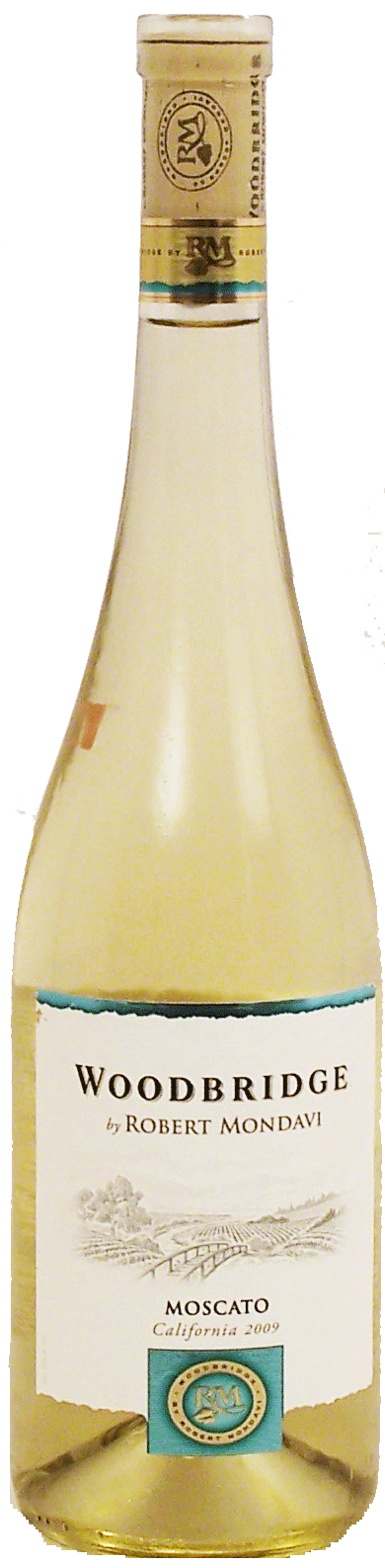
Naked Vine One-Hitter: Woodbridge by Robert Mondavi Moscato


Another offering from Robert Mondavi thanks to the folks at Folsom & Associates – this time their "Woodbridge by Robert Mondavi" series.

I’ve written a few times about Moscato d’Asti, for many years the most common version of the wine available. From the Piedmont region in Italy, this sweet, aromatic wine was a niche product for quite a while. Over the last couple of years, fans of sweeter wines have latched onto Moscato, making it the second most popular white varietal behind chardonnay. California production of Moscato has almost tripled, fueled by this demand and hip-hop shout-outs. (“I'm a’sip Moscato/And you 'gon lose them pants,” raps Wale.)  

While I can’t speak to its aphrodisiac qualities, Moscato is a marvelous brunch wine. Brunch is largely filled with mishmashes of strong flavors. Sausage next to salsa next to asparagus? Very possible. In my estimation, a sweet, relatively uncomplicated wine like Moscato works well. The food is the star of brunch. Wine just needs to taste good while staying out of the way. When I drink Moscato, what I’m looking for is the quality of the sweetness – is it more of a “honey” sweet or a “sugar” sweet. I prefer the former.

Woodbridge’s version does have the honey sweetness. Lots of peach and pear flavors ride on a full, slightly glycerine-thick body. The nose is peach-blossom floral. The finish is very peachy, with just a little bit of bitter right at the end. If you’re having this with food at all, you won’t notice that. Like all Moscato, it is an extremely flexible food wine. Everything from charcuterie to hash with egg on top go just fine alongside.

I always enjoy when wineries send along suggested pairings, recipes, and the like to go alongside the vino. On this occasion, The folks at Folsom & Associates sent a recipe using this wine as an ingredient for making peach preserves. The recipe sounded fabulous, but I don’t use a lot of jam and such. (I’ll still include the recipe below…)

However, one of the other included suggestions was to use it for pickling. I sliced some cucumbers into spears and pickled them with equal parts Moscato and champagne vinegar, with a hot pepper, salt, and dill thrown in. You know what? It turned out to be downright delicious. If you have some leftover Moscato, consider it!

For the price, $8, it’s a decent-enough wine. It’s not going to blow you away, but it doesn’t have to. I think I still prefer  the Italian version with its slight effervescence, but I wouldn’t turn down the Woodbridge if you poured it for me.


Sweet Peach and Moscato Preserves
Styling + Recipes by Candice Kumai
Photo by Emma Chao

Ingredients
8 Ripe peaches, sliced ½" thick
3 Cups sugar
2 Tablespoons fresh lemon juice
Rind of 1 lemon, peeled into large pieces using vegetable peeler
1 cup Woodbridge by Robert Mondavi Moscato
½ (3 oz.) packages liquid sure gel pectin
1 Tablespoon mint, sliced into thin ribbons
6-7 Sterile ½ pint mason jars with lids

Instructions
1. In a medium stockpot, combine peaches, sugar, lemon juice, lemon rind and Moscato, bringing to a boil. 
2. Stirring gently, reduce to a slow simmer over medium heat. Cook 45 minutes, stirring occasionally.
3. Some foam may appear at the top of the pot, using a spider or a slotted spoon skim off the foam and discard. Remove lemon rind with a fork.
4. Add mint and cook for an additional 2-3 minutes.
5. Remove from the heat and add the liquid pectin stirring constantly. Return to a full rolling boil and cook for 1 minute. Quickly and very carefully ladle the preserves into sterilized jars, leaving 1/2 in head space at the top.
6. Place the lids on top of the jam jars. Carefully twist on the tops.
7. To Seal: Gently, place the jars in a large stockpot full of boiling water. Make sure that the jars are fully submerged in the boiling water. Let it sit in the simmering water for 10-15 minutes to set. Jars should seal by then. If not, they will seal while cooling.
8. Remove jars after 10-15 minutes, set aside to cool and set. You will hear a “pop” noise when jars are sealed.
9. Allow jars to set for 24 hours before opening.

Monday, April 09, 2012

Naked Vine One-Hitter: Moscato Allegro

On the heels of the lovely package I received from Shannon Ridge, I received another small box a week Martin & Weyrich 2010 Moscato Allegro.
later. Inside was a bottle of

My immediate thought was that this was an Italian wine sample, since I've rarely heard (and never tried) a Moscato from anywhere else.

I came to learn that this wine is not Italian, but comes from vineyards in the San Joaquin Valley. The growers of the Muscat Canelli grapes that go into this wine are Eric and Mike Shannon. "Too much of a coincidence," I initially thought. A little research turned up that they and the aforementioned "Shannon Ridge Shannons" are acquaintances but not kin. Simple serendipity works around here just as easily. We're flexible.

For those of you not familiar, Moscato is a sweet, slightly effervescent wine with extremely low alcohol content. When I say "low," I mean about as low as possible while still being considered wine. Moscato Allegro clocks in at 7.5% alcohol. (By contrast, many California reds are north of 15%.)

My old pal Brian once commented, "You can drink it for breakfast," when talking about Moscato. He's absolutely correct. Moscato is a top choice of mine for a brunch complement -- only a little below bloody marys and mimosas. (The SPinC makes the world's best bloody marys. I digress...) The Moscato Allegro is an excellent addition to such a menu.

I don't think it's easy to make quality sweet wine. Too much residual sugar makes a wine taste like syrup -- an unfortunate characteristic of much Moscato. Getting the balance right takes some care. That sort of care has certainly been applied here. The particular style of sweetness reminded me much more of fresh fruit than cane sugar. Big flavors of peach and citrus dominate here. The citrus notes are a nice touch, stemming from a relatively high level of acidity that cuts through the sweetness and makes the finish actually somewhat crisp. "Crisp" and "Moscato" aren't usually found in the same sentence.

At $10-12, it's an excellent choice if you're looking for something to go with a morningish meal. Or just if you're looking for something a little more on the sweet side.


Sunday, August 22, 2010

The Naked Vine Italian Wine Primer

Ah, Italian wine. Love it. Love it. Love it. As the foodie that I am, I’m hard pressed to come up with wine that goes better with a meal than Italian wines. After all, one of the few things that Italians do better than making wine is cooking, and because they’ve been making wine as long as they have, winemakers in each region have been tailoring wines to cuisine for centuries.

As such, each region’s wine varieties tend to be fairly consistent as far as the basic flavor profile goes. I wouldn’t choose to drink a lot of them on their own for one reason or another, but line up some steamed mussels next to an Italian pinot grigio or a Sangiovese with marinara-sauced pasta and you’ve got yourself a little slice of heaven.

The trick, though, is figuring out which of these heavily vowel-labeled bottles is the right wine. Like France, Italy’s gotten a little bit better about putting the names of grape varietals and/or descriptive blurbs in English on the bottle for the “ordinary American consumer.” For the most part, however, the traditional convention still holds. The names on the bottle are generally the producer and the region. The grape is often nowhere to be found. As I’ve mentioned before, I spent most of my pre-Vine life thinking that “Chianti” was a grape varietal instead of a region in Tuscany.

Further confusing matters are exceptions to this rule. Some Italian wines do put the name of the grape on the label as a matter of course. The name of the grape is usually followed by the name of the locale, so you’ll see wines like Moscato d’Asti, Barbera d’Alba, etc. The first one, for instance, translates as “The Moscato (grape) from Asti (the town).” You’ll even run into “Montepulciano d’Abruzzo” vs. “Vin Noble di Montepulciano.” The first is a fruity, easy-drinking table wine made from the Montepulciano grape. The second is a somewhat complex Sangiovese-based wine from the town of Montepulciano.

But why? Why stick to an antiquated, confusing system of nomenclature, especially now that the world has grown much more wine savvy? Why not just label the bloomin’ bottles with whatever the heck is in there?

The answer?

Two thousand.

There are at least 2,000 indigenous grape varietals in Italy. Gaining an encyclopedic knowledge of all the grapes in the Boot that go into their bottles of yummy would be next to impossible. So, how do you know what you’re getting?

The Italian government simplified matters for us a little. They created a classification system somewhat similar to the ones in France. If you look at most bottles of Italian wine, you’ll see “DOC” or “DOCG” somewhere on the label. Without going into too much detail, the DOC/DOCG designation shows that a wine was made in a certain region using pre-determined methods containing certain grape varietals. This usually aligns with the geographic region, but a grape will sometimes be included in the designation if the varietal is a specialty of the area – like the aforementioned Moscato d’Asti, et al.

In my experience, Italian wine is an experience where you largely get what you pay for. This isn’t to say that there isn’t really good inexpensive wine from Italy. Think about it this way -- if you blindly choose $30 Bordeaux, there’s a chance that you’ll end up with a wine inferior to the $10 dollar one on the rack nearby. Italian? $15 Chianti will be perfectly drinkable, but also usually consistent with its brethren of the same price point. If you splurge on a $30 bottle, you can usually tell a difference in quality (although you may not feel that difference was worth the extra moolah).

There are hundreds of DOC/DOCG growing regions, but many of them are extremely small and you probably won’t run into them very often. Here are some of the more common regions and DOC/DOCG designations you’ll run into at the local wine stores for your reading and drinking pleasure…

Region: Campania
Common wines you’ll see: Taurasi, Fiano, Falerno
Major grapes: Aglianico, Piedirosso, Primitivo (red); Falanghia (white)
General info: Campania is the region around Naples. The best known wine from there is a robust red called Taurasi made from the Aglianico grape. Fiano is a seafood-loving white and Falerno is another big wine made from Primitivo (Zinfandel). Much of the rest of the wine from there has traditionally been known as fairly generic, although it’s improved greatly in recent years.

Region: Tuscany
Common wines you’ll see: Chianti, Brunello di Montalcino, Vin Noble di Montepulciano, Rosso di Montalcino, Rosso di Montepulciano, IGT Toscana
Major grape: Sangiovese (red – not many whites in Tuscany)
General info: Ah, Tuscany – home of some of the most famous reds wines in Italy. Most Tuscan reds are backboned by the Sangiovese grape. Brunello di Montalcino is also Sangiovese, but a specific clone of that particular grape. There’s also “Vin Santo” – a sweet dessert wine. You’ll also find “super Tuscan” wines that are bigger and heartier. These are almost always Sangiovese blended with a non-indigenous varietal like merlot or cabernet, often to please an American palate. If you see “IGT Toscana” on the label, it’s probably a Super Tuscan of some stripe. The wines tend to be very flexible, since Tuscan cuisine is some of the most varied (and delicious) food in the world. However, in my opinion, these wines are not the best to drink by themselves. They need food to show their full potential.

Region: Piedmont
Common wines you’ll see: Barbaresco, Barolo, Barbera d’Alba, Barbera d’Asti, Dolcetto d’Alba, Dolcetto d’Asti, Moscato d’Asti, Gavi
Major grapes: Nebbiolo, Barbera, Dolcetto, Moscato (red); Cortese (white)
General info: Piedmont is the mountainous region in the northwest corner of the country. The bulk of Italy’s hearty reds come from this region – especially Barolo and Barbaresco. They’re some of the most famous of the world’s wines. Barbera is a big, juicy red and Dolcetto is a lighter, acidic red – both of which make excellent everyday wines in their “generic” form. The versions from “named” places (like Barbera d’Alba for instance) have more complexity. Gavi is a crisp white made from the Cortese grape (not to be confused with Dan Cortese) which makes an interesting contrast. Piedmont wines are built to stand up to heavier meats and sauces. Even the whites handle cream sauces easily. There’s also Moscato d’Asti – a low alcohol, sweet sparkling wine which may be the best brunch wine in the world.

Regions: Sardinia & Sicily
Common wines & grapes you’ll see: Cannonau (red); Malvasia, Vernacchia, Verdicchio, Moscato (white)
General info: The islands of Italy usually end up putting the names of the grapes on the label, so you can generally run with those. Both islands, especially Sardinia, produce quantities of dry, crisp white wines made from Vernacchia, Malvasia, and Verdicchio that go perfectly with shellfish. Sicily produces a huge amount of dessert wine. The most common red is made from Cannonau, which is currently getting a great deal of publicity for its hypothesized life-extending properties. Cannonau is similar to Grenache and often makes for powerful wines, but on the islands, they’re made in a much lighter, more aromatic style.

Region: Veneto
Common wines you’ll see: Bardolino, Valpolicella, Soave, Prosecco
Major grapes: Corvina, Sangiovese (red); Prosecco, Garganega (white)
General Info: The region around Venice cranks out a huge amount of wine. The reds are usually blends backboned by the Corvina grape. These reds tend to be some of the lightest bodied in the country. Many are often served slightly chilled, much like Beaujolais. There’s actually a “Bardolino novello,” made in a similar style as Beaujolais Nouveau. The whites, like Soave are usually fruity and more or less dry. The Valdobbiadene district is the home of Prosecco, Italy’s most famous sparkling wine. It resembles Spanish cava in many ways. Interestingly, with all the light reds produced in Valpolicella, it’s also home to the most powerful red wine in Italy: Amarone. Amarone is made from raisinated grapes, which yields a concentrated, potent (upwards of 15% alcohol), tannic, tasty wine.

There are 14 other major wine growing regions in Italy and literally hundreds of DOC & DOCG designations. It’s worth it to explore. Ask for your Italian wine expert at your local store. There’s usually one major “Italophile” in every shop. They’ll usually steer you correctly. But for basics, this should take care of you for right now. Hope it helps!

Sunday, December 21, 2008

The Best Meal of the Day -- Brunch wines

Breakfast is "the most important meal of the day." Lunch is all too often fast food or something you scarf while you're plowing through the workday, since America hasn't adopted the tremendously civilized siesta. Everyone puts their focus on creating tasty dinners. I'd venture that upwards of 90% of wine pairings, tastings, et al focus on dinner.

But what about brunch?

Brunch is decadence. It's the "No alarm. I slept in today." meal. It's flexible -- go light or heavy, healthy or greasy. It's my most mood-dependent meal. At what other time will you see a Reuben, poached eggs, breakfast sausage (or goetta for the locals), fresh fruit and a panini happily coexisting on the same table? A good brunch means you've had a good time the night before -- either in a big group (which often means nursing a hangover along with your V-8) or with one other lucky person so that, come late morning, you're gazing moonily across steaming lattes.

Of course, if you're going to be truly decadent, you need wine. [I know, I know -- there are some of you out there saying "Beer. It isn't just for breakfast anymore," but let's move past shotgunning a Schaefer's to get ourselves going on a morning after.]

If you're thinking of wines to go with brunchiful goodness, keep it simple. Sure, you could put a lot of thought into finding the perfect wine, but just like with Thanksgiving, you're probably not going to have much success. Honestly, who has that kind of mental energy in the morning?

So, easy enough...Sparkling wine. You can't miss. No one's going to care. Most people's palates wake up more slowly than they do, so give them something that's basically going to cut through the clutter of foods and just plain ol' taste good.

If you're out and about and you want to impress a group without breaking the bank, order a bottle of Gruet Brut Sparkling Wine ($15). While it may sound like a French bottle, it's actually produced in New Mexico and, for my money, is as interesting as almost any sparkler out there. The reason, I suspect, is that it's made in the traditional French method, called "Methode Champenoise." (If you want to know more about that, I wrote about it once before.) The result is a very crisp, balanced sparkling wine that pairs with almost anything -- but dry sparkling wine really shines when you've got something that's a little bit (or a lot) fatty. So, if you need a plate of hash browns to go with that throbbing headache and queasy stomach, this will be the perfect hair of the dog.

For those of you who aren't big fans of dry wines, you're not out of luck. One of the best brunch wines out there is on the sweeter side -- Moscato d'Asti. Moscato d'Asti is, in general, a sweet, fruity, lightly carbonated wine. "Asti" refers to the Italian locale where the wine is made.Also, these wines are traditionally only between 5-6% alcohol, so if you're looking for something you can drink without catching too much of a morning buzz, this type of wine is a perfect choice. These wines generally have a lot of peach and pear flavors, and are quite refreshing. The nicest thing about them is that they're generally rather uniform in quality, so the majority are going to be decent, and usually around $8-10. The best I've tried is the Tintero 2007 Moscato d'Asti. (Many thanks to the Liquor Direct crew for turning me on to this one.) While it shares many of the same characteristics, for a couple of extra dollars, I thought its flavors were more defined and more interesting. See what you think.

Finally, there's the "champagne cocktail." Way back in January, I wrote about toasting in the new year with cava, and then saving the bulk of the bottle for morning mimosas. Now, honestly, if you're just mixing together some store bought OJ and some leftover bubbly, you don't have to be too choosy. That said, if you're doing this right, and you've got some fresh squeezed on hand, I'd prefer to use some relatively decent wine as a mixer. I've also discovered that "extra dry" sparkling wines make better mixers, largely because they have a little bit of residual sugar. I started the year with Freixenet and I'll finish the same way. I stand by Freixenet Extra Dry Cordon Negro Cava ($10) for any of your mimosa-making needs. It would also work well with kir (which is sparkling wine with crème de cassis) or bellini (sparkling wine with peach puree).

And, with that, The Vine closes the book on 2008. Your humble reviewer is going to take a couple of weeks off to let his liver recover, and I'll be back with more fun in the new year. Thanks to all of you out there for sticking by me in this little venture. You guys are my motivation, and I appreciate all the good vibes.

Have a great holiday season, travel safely, enjoy the parties, and may the new year bring you health, happiness, and wonder.

Later days.

Monday, October 13, 2008

Thanks...and the rundown

One more time -- thanks so much to K2 and the gang at Liquor Direct in Covington and Ft. Thomas for being such fantastic hosts at the wine tasting last Friday and Saturday. I had a great time. Honestly, I had as much fun meeting the staff as I did talking about the wines. I hope we can do this again sometime.

So, what does a cheap wine guy select from a store to taste when given the run of the place? For those of you who couldn't make it down (or up, or over, depending on your geography), here's the rundown of what I had out for folks to try:

Martin Codax 2007 Albariño -- "As if a chenin blanc mated with a bottle of honey." Maintains all the crispness and fruitiness of this wonderful Spanish grape, but with a little residual sugar to take the edge off the acidity. The result, a very approachable, mostly dry, friendly wine that you could have on its own or with any kind of fish. $10-12.

Muga 2007 Rosado -- Lighter than when I first wrote about it, but still one of the best pink wines I've run into. Bone dry, but with plenty of melon and grapefruit flavors, I described this as my "fallback if I've been invited to dinner and don't know what's cooking." Anything short of a ribeye will pair nicely. $12-14.

Verget du Sud 2006 Syrah d'Endes -- A French syrah that will show you what the "Old World Funk" is, if you still don't know how that smells. The...ahem..."forest floor" smacks you right in the nose at first whiff, but beneath that (especially on the palate) is one of the more complex wines you'll find for around $10. There are all sorts of smoky, dark berry, and earth flavors playing around here. Some balanced tannin dries your palate at the end. As one taster put it, "This one makes my tongue feel fuzzy." Think mushrooms, ratatouille, or anything with legumes to go alongside.

Marques de Caceras 2004 Rioja Crianza -- Probably the overall winner by seeing the number of bottles I saw walking out of the store after tasting. I love this wine. The label says that you should "open an hour before drinking." If you follow those instructions, once this wine opens up, it's wonderfully fruity without being overwhelming. Nice body of blackberries and cherries. The finish is long and soft, eventually turning dry. An extremely well-balanced wine, especially for $10-12. As I told folks, "Anything you can drag across fire goes with this wine."

Batasiolo 2007 Moscato d'Asti -- I don't see a lot of dessert wines at tastings, and I thought it would be fun to throw this out there. When I saw the range of wines, I thought, "Start with honey...finish with honey." Unlike the Albariño, however, this wine was quite sweet -- pears and honey were the dominant flavors. This wine could be an aperitif, go by its own as a dessert, or pair with a fruit and cheese brunch board. And, at 5% alcohol, you don't have to worry. Just enjoy. $10-12.


Stumble It!

Monday, June 16, 2008

Cherries Jubilee

When the Sweet Partner in Crime and I consolidated households and moved northward, one of our favorite features of the house we ended up with was a couple of wonderful old cherry trees in our backyard. The blossoms welcome in spring in a beautiful way. We're also able to get some wonderful tart fruit from the trees.

These were some of the best "pie cherries" we've found, and I made a pretty tasty batch of cherry-flavored beer a couple of years ago with part of our pickings. Last year, unfortunately, a late frost followed by a drought killed our entire harvest. We didn't know what we'd see this year.

The trees bounced back in style. We had a bumper crop this year. Our neighbors, Jeff and Christine (from a few earlier episodes), came by for a partial harvest. We've still got more on the tree than we know what to do with. They're going to be out of town later this week, so they won't be here for the SPinC's monumental birthday celebration.

Christine, bless her soul, had the fabulous idea to take the cherries and put together a meal with that tasty fruit in each course. The results were wonderful and, since cherries are coming into season just about everywhere, I thought we might share some of these potential pairings for public consumption.

We started off with an appetizer of goat cheese topped with a "cherry-walnut-bourbon thing" -- which was close enough to chutney for government work. We initially had this with a cherry-vodka cocktail that Jeff whipped up, but if you wanted wine, I'd probably put this up against something relatively light, a little sweet, and bubbly. The Lazurro Moscato d'Asti ($8-9) would be a possibility. It's quite a sweet wine, reminding me actually a little bit of a sparkling grape juices, except not as carbonated and with a kick. The sweetness and a slight acidity would cut through both the cheese and the chutney nicely.

Our next course was a salad made from our neighbor's "yeah, you betcha" garden with tomatoes, cucumbers, and a cherry vinaigrette dressing. We had this with Lindeman's 2007 Bin 99 Pinot Noir. ($9-10) Ordinarily, I haven't been a big fan of Australian pinots. I think they tend to be a little bit heavy for this type of wine -- but this one worked pretty well. I think that we needed something relatively fruity and non-tannic without being overwhelming, and this worked. I think even inexpensive pinot will work if you need something relatively food friendly and flexible. Just don't expect the wine of a lifetime.

The main course was grilled pork tenderloin with a cherry sauce and asparagus. We had this with another pinot noir -- this time one that was safely out of Vine Range -- Amphora 2006 Pinot Noir. Amphora is one of our favorite wineries from Sonoma -- but they're known more for big cabernets and zinfandels than pinot. This one was more lush than many pinots, but had a delightful smokiness to it that worked well with the grilled flavors.

For dessert, of course, cherry pie. Pie-making is one of Christine's considerable talents and her cherry pies are unmatched. We had this with Oak Grove 2005 Reserve Zinfandel. ($7-8) You'd definitely want a relatively fruity wine to go with a pie like this. The Zinfandel worked reasonably well -- this wine is certainly that. By this point in the evening, it also held up as we continued to drink on it through the evening. If I'd had it to do over, I'd probably have gone with a dessert wine made from Zinfandel -- a late-harvest Zinfandel of some kind. Rosenblum Cellars does a late harvest called "Rosie Rabbitt" that you can often find for right around $15. The sweetness would have worked quite nicely with the pies.

All in all, a delightful evening in excellent company, and an exceedingly proper way to kick off the Sweet Partner's week of birthday celebration. More on that as it unfolds, of course...