Showing posts with label Sweet Partner in Crime. Show all posts

Sunday, August 16, 2015

Underwood Wine in a Can: Pinkies Down, Thumbs...

Would you drink wine from a can? Should you?

Wine in a can? Sure. Let's do this!
Our neighbor, Christine the Pie Queen, relayed the results of a bit of work-related research performed by her loving hubby Jeff, both of whom you may remember from several write-ups over the years (including the ever-popular “Jeff’s Dinner Club” series). Jeff had uncovered a series of videos produced by Union Wine Company in Oregon for their Underwood Pinot Noir.

These videos, presented with the hashtag #pinkiesdown, are humorous takes on the overblown, overwritten world of wine reviews. The “sommelier,” “hipster wine bro,” and “sweater around neck guy” humorously hit your humble reviewer far too close to home with lines like “You know, I’m getting some strong notes of Axl Rose and a hint of heirloom purple carrots…” (Look for “Union Wine Company” on YouTube if you want to see. 15 solid minutes of chuckles.)

The videos are support for Underwood’s…yes, it’s true…wine in a can. Can-as-delivery-system is an interesting idea to be sure, just from hiking and poolside possibilities alone! The operatively begged question, of course, is “Is the damned stuff any good?”

As I usually do when there are oenological curiosities like this, I hit up the PR contact for Underwood to ask for review samples. Most companies are pretty good about sending along tasters for me to try. Underwood, however, informed me that press samples were not available “due to high demand.” In my mind, that either meant that they’re moving so much volume that they don’t need reviews to generate interest – or perhaps they don’t want reviewers looking too closely. Or maybe they just don’t have any to spare.

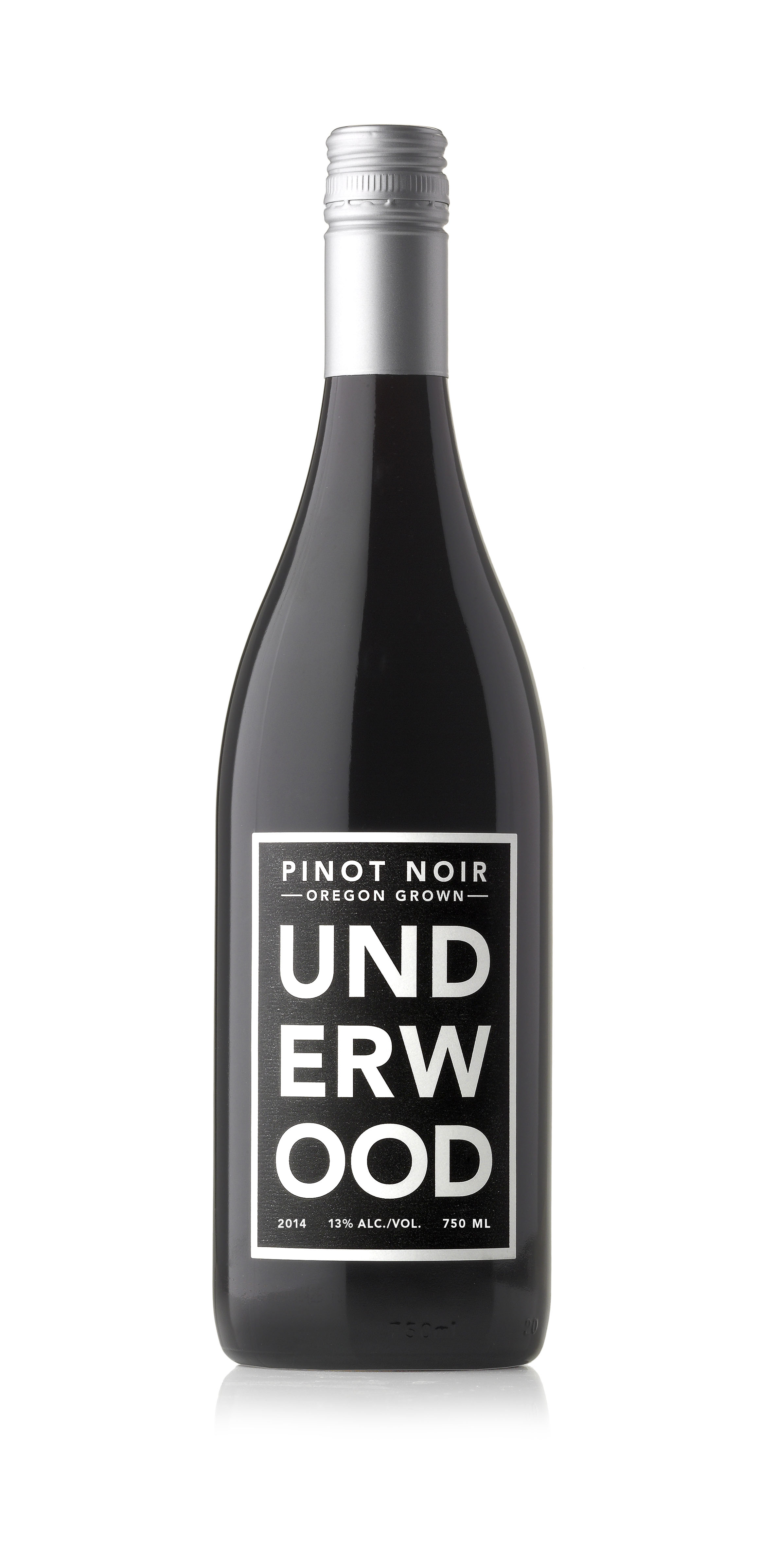
Undeterred, I popped down to Big Wine Store and made a couple of selections. I picked up two cans of Underwood Pinot Noir for ~$6 apiece. Each can is 375ml, slightly larger than a typical beer can. A standard wine bottle is 750ml, so each Underwood can is equivalent to a half-bottle or “split.” (Part of Jeff’s work, which includes occasional international espionage, consists of enforcing standards on alcohol labels.)

For science, I also snagged a bottle of Underwood 2013 Pinot Noir ($13), and a bottle of King’s Ridge 2013 Oregon Pinot Noir ($19), which is a higher end bottling from Union. (They also do an even more expensive one called “Alchemist” at $28, which wasn’t available.)

The Sweet Partner in Crime and I invited Jeff and Christine to Vine HQ for a “scientific comparison” of the various Union Wine offerings. To establish a “cross-inexpensive-vino” comparison, we also poured some Bota Box Pinot Noir because, well, it was cheap and we had it around. We took up our places around the living room and began to carefully pour, swirl, and…oh, who am I kidding? We commenced to pounding pinot whilst taking notes.
We started with the cans, of course. The unmistakeable “pffft” of opening aluminum proceeded pours all around. (We did our best to emulate the various characters from the videos as we tried the stuff.) Our first impression – this wine ain’t bad! It’s not the rich, earthy Oregon pinot that I can get all William Burroughs about (as in “If God made anything better, he kept it for himself…”), but the basic flavors certainly are along the lines of a solid, inexpensive Oregon wine. 

The can label helpfully suggests: “Notes: Raspberry, Cherry, Chocolate.” The actual flavors are pretty much along those lines. For wine that you can schlep in a cooler or backpack and slap a koozy on, it’s quite decent. For a picnic or other outdoor activity where glass isn’t practical, I’d consider it certainly workable. It’s also miles better wine when compared to the Bota Box, which tasted heavier, thicker, and sweeter than the Underwood.

We also had a tableful of snacks to go alongside our wine: Christine’s Caprese Skewers with homemade squeaky cheese; Jeff’s Smoky Baba Ganoush; and some dry sausage, gouda, and crackers. The wine went well enough with the entire spectrum of flavors, so it should be workable with nearly everything.

As I mentioned, we poured the wine into glasses to sample it, but I was the first of the group to step up and take a big ol’ chug straight from the can. In all honesty, I can’t recommend that particular technique. Since so much of wine’s flavor is scent, you get nothing aroma-wise when you drink it like a Coors Light, so make sure you pour it into some kind of available container – glass, mug, Solo cup, what have you – for best results.

Jeff also pointed out that its alcohol content (13%) is basically the same as Four Loko, so if you wanted to either mimic These Kids Today or pretend you’re back at a college kegger, you could #ShotgunAnUnderwood – but I wouldn’t recommend it. (However, if you’re going to try, I want video.)

Interestingly, we discovered that the canned and bottled Underwood pinots are completely different wines. The bottle’s label reads, “Notes: Cherry, Blackberry, Cola.” As I mentioned already, the Underwood in a bottle has a vintage, which means that all of the grapes were harvested the same year. The canned wine is non-vintage, meaning that it’s a blend of grapes or wines from different years. My guess is that the can wine is the “leftovers” at the end of a bottling run from a couple of subsequent vintages, but I’m not for certain. 

In any case, the bottled version of Underwood pinot is, by unanimous consent of our little foursome, a superior wine to the canned version, even though the price is basically the same. The fruit is brighter, there’s a nice smoky flavor that I liked, and there’s better balance overall. It’s very good for a $12 pinot.

We then poured some of the King’s Ridge for price point comparison purposes. The King’s Ridge, while somewhat more expensive than the Underwood, proved to be a bit of a disappointment. The flavors were darker and heavier, but that didn’t make them more interesting. In fact, when we compared the Underwoods to the King’s Ridge, which also has “Notes: Cherry, Blackberry, Cola,” we ranked them: Underwood bottle, King’s Ridge, Underwood can. In short, I wouldn’t bother with the King’s Ridge. There are better pinots out there for around $20.

Bottom line – if you’re considering taking wine to your next softball game, tailgate, or backyard hootenanny, you can safely snag some of these Underwood cans if you want to reduce the risk of ending up with shards of glass in your feet from an accidentally misthrown football. Or, if you’re hiking, it’s an excellent alternative to the traditional dinner flask of bourbon. Or maybe that’s just the Pie Queen’s tradition...

As an addendum, a few days later, the Sweet Partner in Crime and I tried a can of the Underwood Pinot Gris. Again, a decent enough white (notes: peach, grapefruit, and pear). It’s much more interesting than most inexpensive pinot grigio. I thought it had an odd yeasty scent that faded as it got some air. It’s certainly dangerously drinkable on a hot day. Underwood also is releasing a rosé, which I have not tried yet.

Bottom line – Underwood is a quality wine for any occasion where a can is your best beverage delivery option. It’s worth a try.


Monday, September 08, 2014

The Bodega Bay Bookend and another Sonoma Snowball

You might remember the Naked Vine’s May trip to California, where the Sweet Partner in Crime and I plopped ourselves down in the town of Sonoma, tooled around a bunch, and tried some delicious wine thanks to the Naked Vine Snowball Technique, which I described thusly:

How does this work? Start at the place where you’re staying. These people live there. They know things. Say something like, “We’re looking for a good place to start. We want somewhere fun, laid back, and not overly pricey.” Replace those descriptors with whatever you want…expensive wines, pinot noir specialists, great gift shop -- whatever floats your cork. You’ll end up with at least a couple of recommendations. Pop in to one of them and do a tasting. Chat. Enjoy. If you feel like you make a connection, then repeat your question to the good folks behind the bar. These people live there. They know things. They’ll mention a couple of other places. Those places will mention other places. Patterns form in the recommendations. You now have your guide. Go forth and enjoy.

We decided to head back out west again just before school started – this time using the Sonoma Coast as our base of operations, since we’d not done much exploration of that area of this wonderful wine region. The evening drive through the fog from SFO to the town of Bodega Bay was a bit harrowing, but all's well that ends well! We got checked in to the Bodega Bay Lodge (which I recommend once you get used to the foghorn in the bay going off every 30 seconds) and got ready for our new tour of the county.
 
(c) the San Francisco Chronicle

The Sonoma Coast AVA (AVA = “American Viticultural Area” – the designation for a subregion within a growing areas), as you can see, is a fairly large portion of Sonoma County. Most of the vineyards in this AVA are at much higher altitude than the rest of the county You might remember, during my writeup of the last Sonoma trip, that I discovered a preference for “mountain fruit” vs. “valley fruit” wines. Mountain fruit grapes from the generally cooler, breezier climates like the Sonoma coastal region create wines that are less fruit-forward and more subtle in flavor. 

These areas favor cool weather grapes such as pinot noir, rather than the Cabernet and Zin that you’d find just a few miles inland as the crow flies. The climate also gives an interesting twist to the Chardonnay and Syrah some growers are producing. The region also produces some absolutely fabulous rosé.   Many of these wines also tend to be somewhat more expensive, as the grapes are more difficult to grow and harvest. It’s easy to burn through a lot of coin ordering stuff if you’re not careful.


We started the snowball in Bodega Bay at a wine and gift shop called Gourmet Au Bay. Their trademark is their “wine surfing” samples, in which you get three pours on a surfboart. After a couple of tastes and a discussion about what we liked, we talked to the manager, Sissy, to see what she might recommend. Out came the highlighter and the map of Sonoma County, and we were off. 
Just getting under way. Two down, one to go.
(Snowball forming on map...)

With the narrow, twisty roads of this part of Sonoma County, we didn’t hit as many wineries as we could have – but I was pleased with our finds. Here were some of our favorites:

Iron Horse Vineyards – The gorgeousness that is the Iron Horse property is right on the border of the Sonoma Coast and Russian River AVA’s, so I’m including it. If you remember, Iron Horse was the tasting experience which started The Naked Vine down its path of oenological debauchery. Nine years had passed since we were last there, and they seem to have done pretty well for themselves in the interim. Unlike nine years ago, when they were crafting incredible cabernets (one of which, “Benchmark,” was the celebratory bottle when the Sweet Partner in Crime made full professor), they only make wine from estate fruit now. This means that they grow only Chardonnay and Pinot Noir – much of which goes into the sparkling wines for which they’re well known. We were fans of the Ocean Reserve Blanc de Blancs ($45), a sparkling wine that has an attachment to the National Geographic Ocean Initiative. Their pinot noirs were exceptional, but quite pricey. The $70 pricetag on the Russian River Pinot Noir was steep, but it’s a great wine. (http://www.ironhorsevineyards.com/)

Our return to the scene of the crime...Iron Horse.
Lynmar Estate – I’ve talked before about my notion of “wood theory” – in that there’s generally an inverse relationship between the amount of burnished wood in a tasting room and the quality of the wine. Lynmar is an exception to the theory, as their tasting room and surrounding gardens (which include a rosemary shrub taller than I am!) are lovely places to linger. The wine, as well, is lovely to linger over. Their focus is pinot noir and chardonnay, although they’ve begun cranking out some cool-climate Syrah. We really enjoyed their spread. I thought their Russian River pinot noir at $40 was exceptional, especially for the price. Lynmar also was where we discovered that a lot of these wineries are producing some pinot noir for the express purpose of creating rosé, like the good folks in Provence. Lynmar’s rosé was top notch. Their Quail Hill chardonnay, while hardly a bargain at $55, is simply luscious. (http://www.lynmarestate.com/)

Red Car Wine – Red Car won the “most interesting tasting room” prize from us on this trip, with its funky collection of memorabilia and a vibe that stops on the playful side of hipster. Red Car focuses almost exclusively on production from high-altitude, cold-climate vineyards, which produces very bright, clean, flavorful wine at relatively low alcohol levels. For instance, I don’t see a lot of Syrah under 13.5% alcohol, and Red Car’s Estate ($50) clocked in at 13.3% with gorgeous layers of plum, earth, and chocolate. Their Chardonnay ($35) could have fooled me into thinking it was a white Burgundy along the lines of the clean but oaky Meursault. Their pinots, which start around $40, also have a bit of that lean Burgundian earth and smokiness – and fruits that are very clean and striking. Highly recommended. (http://www.redcarwine.com/)
Red Car's tasting room. Good fun.


Taft Street Wines – “Garagistes since 1979” is their proud announcement. Garagistes were winemakers inBordeaux who operated outside the strict French guidelines for wine production, often making their wines in garages rather than on chateaux. The American iteration, which moved from a garage in Berkeley to an old apple processing plant in Sebastapol, was the best overall value of any of our stops. Their estate pinot is under $35, and I took a shine to their Alexander Valley Merlot, which at $20 was the best QPR I found on the trip. Fruity and lush with a really nice cocoa backbone, it’s worth stocking up on. They also produced some of the few sauvignon blancs we tried on the trip -- a steal at $18. (http://www.taftstreetwinery.com/)

Joseph Phelps Freestone Vineyards – Joseph Phelps is a very accomplished Napa winemaker. He’s produced three cabernets -- his “Insignia” label -- that earned 100 points from Robert Parker, including his 2002, which was named Wine of the Year by Wine Spectator. In 2007, Phelps opened a winery in the Sonoma Coast region for the grapes grown in his new Freestone Vineyards in the Sonoma Coast AVA. The $55 Freestone Vineyards pinot noir was a delicate, wonderfully balanced offering – full of fruit and smoke. We also discovered Phelps’ “second label” wine – Fog Dog – which were perfectly decent pinot noir and chardonnay, although at the price point, there were better wines in the county. We also had the opportunity to try the 2006 vintage of the “Insignia” which would retail for $240 – making it the second-most expensive wine I’ve ever tried. Needless to say, it was a pretty damned good wine. (http://www.josephphelps.com/)  I’ll be writing more about Phelps in the future, so stay tuned.

Fort Ross Vineyard – Fort Ross was the one Sonoma Coast tasting room we visited that was actually on the coast – about a 35 minute drive from Bodega Bay up the windy Pacific Coast Highway up through Jenner (where you absolutely must stop and get a sandwich and a beverage at Café Aquatica) and then up into the mountain fog to the beautiful tasting room, where you can watch the sun burn away the clouds as you sip on some excellent pinot noir and chardonnay. My favorite selection of theirs, however, was a grape I’d not seen anywhere else in the region: Pinotage, the national grape of South Africa – the native country of owners Lester and Linda Schwartz. I like South African pinotage just fine, but it’s usually a rough wine that calls for a big slab of meat from the braai. Planted in these coastal altitudes, the Fort Ross pinotage ($48) yields a rounder, smoother – yet still muscular – glass that features blackberry flavors and a really nice earthiness. Their pinot noir ($42-70) and rosé ($24) were also top notch. (http://www.fortrossvineyard.com/)


Fort Ross Vineyard -- Nice view, eh?

Fog Crest Vineyard – Our last stop was a lovely one, here at one of Sonoma’s newest tasting rooms. It’s so new (it just opened this year) that it’s not on the touring maps – and we only learned about it from our friends at Gourmet Au Bay. We were very glad that we made the turn up the driveway and planted ourselves on their lovely terrace overlooking the vineyard for our final tasting of the trip as we headed out of town. The view was a little reminiscent of Iron Horse – so yet another bookend. We really enjoyed the Estate Chardonnay ($39), chock full of crème brulee and spice and their full-flavored Estate pinot noir ($55) with its smoky layers that would be good to stash for a couple of years. The wine that made the biggest impression on me, however, was their Rosé ($21), Rich and fruity for a dry rosé, it’s clearly lovingly crafted. I pulled the trigger on a case for home, since one can never have too much good dry rosé around. (http://www.fogcrestvineyard.com/)

Saying farewells to Sonoma at Fog Crest.
If you’re over in that neck of the woods, I'd also recommend driving around Bayshore Drive in Bodega to get some oysters at Fisherman’s Cove (http://www.bodegabayoysters.com/), get dinner at Terrapin Creek Café (http://www.terrapincreekcafe.com/); and snag brunch at Willow Wood Café in Graton (http://www.willowwoodgraton.com/).

Cheers!


Wednesday, April 10, 2013

Libra Wines

 
The sun’s setting on the last day of our Oregon vacation. I’m sitting on the back deck of the home of Bill Hanson with a fat glass of Libra Wines’ 2008 Momtazi Reserve. Bill, the owner and winemaker of Libra, looks out over the vineyard as sunset approaches and cracks a little smile.

“Yep. Livin’ the dream.”

Our long, twisty road from the baggage claim at PDX to Bill Hanson’s back deck began at Oregon Wines on Broadway in downtown Portland. One of the wines in their pinot flight was the Libra 2009 Willamette Valley Reserve. We absolutely loved it. Rich, perfectly balanced, and flavorful without being too heavy. We asked the fun-loving folks at OWOB if Libra had a tasting room. They said no, but indicated that they thought he showed his wines at the Carlton Winemaker’s Studio.

When our travels led us to that end of Willamette Valley, we discovered the aforementioned studio was a dead end. No Libra. They told us that he’d been working as the winemaker at Panther Creek and they sometimes poured Libra in the tasting room. We thanked them and moved on. At Panther Creek, we discovered that Bill and the higher-ups had had a parting of the ways. Thankfully, the Panther Creek pourer gave us Bill’s phone number. Which was disconnected. However, the pourer let Bill’s wife, Linda, know that we were trying to get in touch with them – and gave them our number, which we’d left at the tasting room. After a couple of phone tag calls, we were able to set up a tasting for the end of the last day we’d be there.

We made our way out into the Yamhill countryside, following directions which included, “take a hard left onto the dirt road… I’ll try to remember to leave the gate open for you,” which, thankfully, he did. We exchanged a few pleasantries before discovering that Bill and the Sweet Partner in Crime were both born in Danville, Illinois.

The ice officially broken, we made our way to the deck to enjoy a gorgeous afternoon and sip Libra’s selections. Not long after we headed outside, Linda joined us the porch, followed by their precocious smile-and-mop-of-dark curls Lily, both back from an afternoon trip to the local pool. Lily, a country music aficionado, came bearing a bowl of peanut-butter filled pretzels for noshing. She said that the best thing about waking up each morning and looking at her own vineyard is “knowing that we all did this together.”

The Libra Wines Crew -- Linda, Lily, and Bill
Bill caught the wine bug in, of all places, a community college Geography class. “[My teacher] really got me, as an 18 year old kid, fascinated with wine. When I was waiting tables at 18, I started learning about wines from all over the world, and I was just fascinated. I wrote papers comparing the climate of Oregon to the world’s other great wine regions. I was hooked. I got into it when I was 20 and I’m 49 now.”

Bill’s first job in the wine world was at Eola Hills’ Hidden Springs Winery in 1985, followed by a stint at Mendocino County’s Parducci. He decided to try the sales end of things for awhile, but the vineyard kept calling him back. He became assistant winemaker back in Oregon at Matello in 2002, then moved on to (and now away from) Panther Creek. He and Linda started Libra in 2007 and made wine from their first estate grapes in 2009. “I always wanted to live on my own vineyard and make wine,” Bill said, “And I just love being around wine people – from consumers who love wine to growers and producers. It’s a great feeling to be able to do what I love.”

Libra’s tagline is “Balanced Wines,” a hat tip to Linda’s Zodiac sign. Libra’s origin story also references the Greek goddess Persephone, who spends six months of each year in Hades’ timeshare, causing the changes in the seasons. “Bill originally had the idea for the Persephone tie in, he did a lot of research and the story really resonated with him,” said Linda, “the whole cycle of the seasons thing… the symbol of balance, and of course we all know how finicky Pinot Noir is to grow and to make.”

Bill says that he tries to craft wines as each vintage demands. “We just try not to get too crazy as far as doing ultra-low yields or overcropping. We’re more interested in flavor development than sugar development, although we hope they come together,” Bill explained. “This year, Mother Nature did a lot of our thinning for us. We don’t want too much alcohol. We just try to run with what Mother Nature gives us. We’re L.I.V.E. (low-input viticulture) certified sustainable.” Linda echoed Bill’s view: “Each of those plants are like one of his children! We do both love the land and firmly believe in only putting into the earth things that will not harm it. Even in my vegetable and flower gardens…we love the end result, a beautiful, natural product which you helped produce--your touch each step of the way had a hand in how it turns out.”
Libra's Lineup

Run with it they have. Bill started us with his Willamette Valley Pinot Gris, full of sunlight, citrus, and tropical fruit. We went from there to back-to-back tastings of his 2009 and 2010 Willamette Valley Reserve. These wines, a mixture of estate and Valley fruit, were completely different. The 2009 tasted fruitier, higher in alcohol, and (in Bill’s words), “a little slutty.” The 2010, thanks to cooler temperatures, had much more complexity. I thought it was an absolutely beautiful wine, even young.

From there, we moved on to Libra’s Umpqua Valley Tempranillo, sourced from the , and finally to his Momtazi Vineyard Reserve. The tempranillo was good stuff, full of chocolate and tobacco flavors. The Momtazi was nothing short of a rock star – smoky, sultry, and special. The most expensive wine in the Libra catalog is the Momtazi. At $35, it absolutely blew away many of the wines we tried on the trip that retailed for twice as much. After that, we retasted a few things – but we weren’t paying a lot of attention by that point. We were soaking up the sun, good conversation, and good company.

I asked Bill what it was like using his deck as a tasting room. You could hear genuine appreciation in his voice: “It’s awesome. It really helps us appreciate what we have. I mean, we are really living the dream out here, but sometimes the dream can be a lot of work! Having folks over, sharing our wines and good conversation with them – it’s fun! And it helps us remember just how much of a blessing this is.”

Bill said that his goal is to “keep it simple.” His hope is to produce more and more of the estate wines, eventually getting the production to 600-800 cases per year – in addition to doing some more vineyard specific wines like the Momtazi and Ribbon Ridge since they’re “big fans of that fruit.” He said that he’ll also keep crushing pinot gris because “you’ve always got to have some white wine around, you know?”

Libra’s a limited distribution wine, so it will likely be difficult to track down in local stores. The best way to find it is to order it straight from the source: http://www.librawines.com -- trust me, you’ll be glad you did. And if you happen to be in the Willamette Valley, give Libra a call. Bill will leave the gate open for you.

(Originally posted on October 18, 2012)

Monday, March 25, 2013

Cracking Open the Good Stuff – New Kitchen Edition


While the thrust of The Naked Vine is largely inexpensive wines, I’ll admit that I don’t “live on bread alone.” I have a wine cellar, although it’s not some cavernous 3,000 bottle temperature-controlled, hermetically-sealed, heavily-fortified safe room. My closet down in “Le Bistro Below”does provide protection, though, for a few bottles that fall outside my typical price range. While every day wine is good for every day, once in a while, you’ve just got to dig into that special stash…

Nine weeks.

That’s how long the kitchen remodel took. Nine weeks made manageable by the seating area in the Bistro and a makeshift kitchen that we cobbled together using the washer/dryer as a countertop, the utility sink, a steamer, a microwave, a single-element burner, a slow cooker, and the grill. Honestly, we ate pretty well, but we were plenty ready to cook on an actual stove again.

For comparison's sake, a few "befores..."


And what a stove we now have. A big thumbs up to The Howland Group for doing such a wonderful job on the remodel. They were as professional, organized, and on task as we could have wanted. The final product was (at least so far!) everything we wanted.

So...without further ado...


(Pretty cool, no?)

Celebration time, then! We cooked a few meals in the new kitchen to get a feel. Like any new restaurant opening – chefs need to get used to their new equipment, right? It didn’t take long. The Sweet Partner in Crime had done a wonderful job designing placements for our utensils, pans, and prep stuff. Everything in easy reach, especially with the new island. We worked out the kinks and decided to have our “grand opening” meal.

The most important question, of course, was what wine to have. We figured we’d be able to put together a menu around it. We descended to the catacombs and came up with:

Roederer Estate 2002 L’Ermitage Brut

We’d picked up this bottle of bubbly on our 2010 trip to Mendocino County. It ran us around $50 and we intended to open it at New Year’s as a “10 year vintage bubbly” thing, but there was too much Mod Oz tastiness lying around. We decided we’d make it our “next special occasion” wine, and this event certainly qualified.

Late afternoon last Friday, while taking a break from our annual college hoops overdose, we put together a little appetizer plate of items that go well with quality Methode Champenoise sparkling wine. (“Methode Champenoise” is the method for making Champagne…real Champagne…and other high-quality sparklers. Read more about that here.) We had some very salty Parmesan-esque cheese, toasted almonds, some crackers, and some caviar. Yes, caviar. Like I said, it’s a special occasion.

We popped the cork and poured a little. The Roederer is one extremely delicate sparkler. The flavor was feathery and creamy, with a little toasted almond and apricot. Honestly, that’s as far as I’m going to go into the tasting note. It was good. Just really, really good. With our little small bites – I expected it to go well with everything, and it did. But honestly, we thought it was better appreciated on its own.

At least at first.

Emboldened by the new Bosch cooktop, I wanted to overcome one of my personal failings as a cook. I absolutely adore seared scallops, but I’ve never been able to do them particularly well. I can be a pretty impatient denizen of the kitchen, honestly – and I have an irrational fear of burning things. Seared scallops are so tricky. Undercooked scallop isn’t appealing and overcooked scallop tastes like Firestone. I was bound and determined to create a great entrée for the remainder of the bubbles. And with that magical blue flame crusting the little guys perfectly, I felt like Mario Batali’s scrawny second cousin.

Alongside the scallops, I’d put together a can’t miss side – my mushroom risotto. My ancestry may be German & Swedish, but I make as mean a pot of risotto as any non-paisan out there. A little truffle oil, a little of that grated salty cheese, a dash of this, a smidge of that, and a whole lot of stirring yielded one of my best batches ever.

To the table we went, bubbles in hand, lights low in the new kitchen. Gazing at the new architecture, we dug into the little feast, sipped a little bubbly and…


OK. Well, I’m supposed to describe this now? Best I can come up with, although I’m going to sound like a total square referencing a movie made wayyyyyy back in 1994:

We watched Pulp Fiction (yes, it came out in 1994…feelin’ old, buckaroos?) the other day. Recall the scene where Mia Wallace (Uma Thurman) goes to the bathroom in Jack Rabbit Slim’s to…er…”powder her nose?” Do you remember her quote when she raises her head?

"I said god DAMN!"

Yeah, it was something like that. I mean, minus the cocaine. It is a pretty bad ass kitchen. And it was a pretty kick ass meal.

We now return you to your regularly scheduled programming…

Tuesday, September 11, 2012

Oregon

“If God made anything better, He kept it for Himself.”
-William S. Burroughs, Junky
The Sweet Partner in Crime and I talked for years about a vacation to Oregon. We’d always wanted to see Portland and we hoped to visit my cousin in Eugene. I wanted to return to Crater Lake to take the (spectacular!) boat ride that I’d adolescently skipped twenty years prior. And we wanted wine, of course.

Oregon, specifically the Willamette (rhymes with “Dammit!”) Valley, is known best for pinot noir. The area is nestled between the low Oregon Coastal Range mountains on the west and the tall Cascades on the east and stretches from the Columbia River on the north to just south of Eugene. The entire valley comprises about 3.3 million acres. The Willamette Valley’s temperate climate is quite friendly to those cool-weather loving grapes. (France’s Burgundy region is at the same north latitude, not surprisingly.)

The most common appellation you’ll see on a bottle of Oregon pinot is “Willamette Valley AVA.” AVA is WineSpeak for “American Viticultural Area” – the wine growing region. That designation means the grapes were grown within the valley. There are six sub-AVA’s within the larger Willamette Valley: Chehalem Mountains, Ribbon Ridge, Yamhill-Carlton, Eola-Amity Hills, Dundee Hills, and McMinnville. Each has distinct terroir.

Oregon’s fascinating topography, carved by glaciers, volcanic eruptions, wind, and water, contains wildly different soil types. The soils do fall into two major categories: marine sedimentary (which generally imparts an earthy complexity) and volcanic (which yields a fruity smokiness). Some vineyards have both soil types, often within a few hundred feet of each other.

The first pinot noir from Oregon was produced in the mid-1960’s, and Oregon became a major player in the market in the 1980’s.When Sideways kickstarted the California pinot boom in the mid-2000’s, Oregon pinot producers came along for the ride. Oregon pinot is very different from California pinot. In general, the terroir of Oregon produces a more subtle, lower-alcohol juice, which created a nice contrast for wine connoisseurs. Oregon pinot made a name for itself, and prices rose.

Alas, the mass market, fueled by our old friend Miles, demanded pinot. Inexpensive pinot from places like Chile and Australia, as well as some…shall we say…less-well-crafted-but-cheaper California offerings flooded the market. $10-15 pinot made in a big, fruit-forward style became common. Also, thanks to California’s maddeningly consistent (but beautiful) climate, a casual wine drinker usually can be fairly confident of what’s in the bottle. A 2010 wine from a particular producer in California will taste a lot like a 2009, which in turn will taste a lot like the 2008, and so on. Oregon’s climate has much more variation, so specific vintage plays a huge role in a wine’s flavor.

For a while, it was difficult to locate much Oregon pinot at local wine stores. California pinot ruled the roost of mid- to high-end domestic pinots, and Oregon’s low-key marketing approach (not to mention many fewer wineries) caused a pricing problem. A few major producers (Domaine Serene, Domaine Drouhin, Erath) were able to keep up – but a good number of the mid-sized and smaller producers had to make some major readjustments. As a result, very high quality Oregon pinot became available for about half what you’ll pay for a premier cru Burgundy.

Many Oregon wines really hit my palate’s sweet spot, particularly those from Eola-Amity, Yamhill-Carlton, and Ribbon Ridge. I thought many of these wines had similar flavor profiles as good Burgundy, but with an addition of the “brightness” that American wines tend to exhibit. The following were our faves for quality & price. Some of these may be difficult to find in your local wine stores, but they’re all well worth a few website clicks:

Witness Tree Vineyard (Eola-Amity) – The “witness tree” is an ancient white oak that marked the corner of the historical boundary of the property. A lovely location for our first stop -- with a couple of very solid choices. While the Willamette Valley is known best for pinot noir, there are a few whites spread around as well. Witness Tree produces a wonderful estate Viognier, which was the best bottle of that varietal I’ve ever tasted at $15. Their estate cuvee pinot noir, called “ChainSaw,” was a steal as well at $20. http://www.witnesstreevineyard.com
Witness Tree Vineyard's namesake

Cristom (Eola-Amity) – One can almost see the Cristom winery from the Witness Tree parking lot.They specialize in slightly higher-end pinot noir which was well-worth the extra few shekels. In honor of our beagle, Jessie Louise, we took home two bottles one each from their “Jessie” and “Louise” vineyards. More like $40 for these. I had a nice conversation with their winemaker, Steve Doerner, who said, “I’m the winemaker, but I have plenty of help – a few thousands of helpers in the vineyard and 10-to-the-sixth in the lees…” http://www.cristomwines.com/
Cristom Winery

Spindrift Cellars (Willamette Valley) – A cool, unpretentious little place we pulled into on the edge of an industrial section of Corvallis as we were on our way from Eugene to Dundee. We learned that “spindrift” is the name for the foam that rises from the top of a breaking wave. The star of the place for us was their rosé of pinot at $16 -- a perfect picnic wine with much more complexity and depth than you’ll see in many pinks. http://www.spindriftcellars.com/


Twelve Wine (Yamhill-Carlton). We first tasted this at a fantastic wine store in Eugene called Authentica. Twelve is run by a husband/wife duo – he an electrical engineer from Silicon Valley (who still works in high tech as a day job), she a high school counselor. We ran through their entire gamut at their tasting room in downtown McMinnville. (The vineyard is in Yamhill.) The quirky story of the wine’s name, their wicked cool labels, and their downright friendliness added to the experience. The estate pinot ($25) had a wonderful richness that played along especially nicely with the offerings from the gourmet chocolate shop with which they share a tasting room. Their currently-sold out reserve, called “144” (12-squared, get it?) was exceptional. http://twelvewine.com/
 

Patricia Green Cellars (Ribbon Ridge) – Patricia Green’s tastings are appointment only -- so we headed there semi-private late-morning tasting with eight other folks. We sampled 12 different wines from across three vintages, and two “futures” barrel tastings. The winemaker, Jim Anderson, sources grapes from many Willamette sub-AVAs, so we had an exceptionally educational experience. We experienced side-by-side the real differences between sedimentary and volcanic soil, as well as the wide variation that exists between vintages. We especially liked their “sedimentary” series, particularly the Etzel Block ($60), Ana Vineyard ($45), and their straight Estate ($30). They're also one of the few producers of sauvignon blanc ($20) in the Valley. Highly recommended on all counts. And we needed carbs for lunch immediately afterwards. http://www.patriciagreencellars.com/
Damage done at the Patricia Green Cellars tasting

Libra Wines (Yamhill-Carlton) – I’m writing a separate column on our experiences at Libra – a true vacation highlight. I’ll just say for now that Libra’s 2010 Willamette Valley Pinot Noir at $25 knocked the pants off almost anything else we tasted on the trip. Just try. It’s kickass. http://librawines.com/


If you decide to take a wine tasting tour around the Willamette Valley and you want to really pamper yourself, consider staying at the Le Puy Inn in Newberg. (http://lepuy-inn.com) Lea and Andy will take good care of you. Though there a number of top-notch restaurants in the area, make sure you have a meal at Tina’s (http://www.tinasdundee.com/), a favorite of Valley locals in Dundee. You’ll be glad you did.

Thursday, August 16, 2012

Flights of Fancy


I love doing flights of almost anything. A “flight” usually refers to a set of small samples of wine, but can be beer, whiskey, cola, orange juice, coffee…you get the idea. In general, I differentiate “doing a flight” from a “tasting” since there’s almost always a fun, social aspect involved.  Comparing notes with your slightly-buzzed nearest and dearest across a table strewn with glassware is good times, yo. 

I returned recently from a vacation in Oregon (And there will be future column inches devoted to the delicious wines of the Willamette Valley. Oh yes…). As a day in Portland drew to a close, I realized I’d downed four wildly different sets of liquid tapas:

Flight #1 – The Morning Meditation
After shaking off the previous evening’s revelry, the Sweet Partner in Crime and I left our hotel (the Monaco…a cool place!) for a day-long meander around the city. While Portland has a world-class public transportation system (in the eyes of practically everyone except dillweeds like Ohio’s Governor John Kasich and U.S. Rep. Steve Chabot), the city is eminently walkable. Our plan was to have a look around Old Town and buzz through Chinatown for some lunch before heading over to the Pearl District.
Lan Su Chinese Garden, Portland

After an intentionally aimless stroll, we turned a corner on the edge of Chinatown and came upon the Lan Su Chinese Garden. Portland is best known for the Rose Garden and the adjacent Japanese Garden – but we’d read (correctly) that the Chinese Garden was also not to be missed. From the outside, one wouldn’t know just how peaceful and beautiful this place plopped in the middle of a major city was. On one corner of the garden stands the tea house. Since lunchtime was still a bit away, we stopped in to discover that they offer flights of loose leaf teas. Since I had little notion of good tea beyond Celestial Seasonings, I was intrigued.
Ready for takeoff.

Careful now...careful...
Our server, Martin, was very patient and helpful as he explained to us the differences between the various offerings. We opted for a flight of three “old growth” teas – two green teas from different mountain regions in China and a black tea from Vietnam. I drink a fair amount of “normal” tea. I’d never thought much beyond a basic “tea” flavor – and I’d never really associated terroir with tea. But there it was. The flavors of the Chinese teas were quite different – one was earthier, the other a bit more tannic. And the black tea was another beast altogether.

More important was the preparation ritual, which I clumsily attempted to emulate. Quiet, contemplative, peaceful – looking out across lovely intricate patterns of water and stone – we lost ourselves in tea and serenity for over an hour. Marvelous.

(We ended up checking three small ziplocs of the leftover loose tea. We were half-expecting those aromatic little packets to be confiscated by the TSA, but they made it home.)

Flight #2 – Magnificent Midday Mold
Our walk resumed, our delicious Chinatown lunch was at a pan-Asian bistro called Ping. I had a fabulous kuaytiaw pet pha lo (a Thai-Chinese combo of a duck leg stewed in mushroom broth over fat fresh noodles). The SPinC enjoyed her yam yai (“big salad” in Thai). The food was delicious, but I was mesmerized by the discovery that Ping offered flights of shochu, which I’d always wanted to try.

Shochu is a Japanese alcoholic beverage. Like sake, it’s clear and can be served hot or cold. That’s where the similarities end. Sake is generally made from rice, is brewed in a similar process to beer, and is usually around 13-15% alcohol.

"I've smelled moldier in my sock drawer!"
Shochu can be made from basically any substance that contains convertible starch – rice (including leftover grain from sake production), buckwheat, sweet potatoes, molasses, potatoes, and so on. The raw material is steeped in water, steamed, and cooled. The resulting glop is treated with a mold called koji. The koji breaks the starches down into fermentable sugars. After several days of fermentation, the product is distilled, producing clear, 50-ish proof liquor with a distinct flavor.

I did a flight of three shochu: one made from rice, another from buckwheat, and a third from molasses. (I think the idea of a moldy drink scared the SPinC.) How were they? None of them will replace wine in my beverage rotation anytime soon. I did like the one from molasses, which maintained a bit of that blackstrap sweetness. Next time I’ll try the sweet potato shochu. It was still a little early in the day with the Pearl’s breweries still in front of us.

Flight #3 – Beer! At last, Beer!

We hoped to hit the Pearl’s “Brewery Blocks” for afternoon flights of local beers. As my beer drinkers know, there’s some good beer from Oregon. Alas, we discovered that, like the Manhattan’s Meatpacking District, “Brewery Blocks” now apparently refers to the former tenants of those buildings. The former brewery spaces are now largely retail spaces and upscale condos. We went looking for ales. We found Anthropologie.This gentrification was nicely done, mind you – but fantasies of little beer tasting rooms were dampened.

Slightly disheartened, we headed back towards the Monaco. Rounding a corner on our circuitous route, we saw a bar-front for “Tugboat Brewing Company,” but our bubbles burst as we discovered the door locked. Frustrated, we turned around and – to our joy and relief – saw a sign for “Bailey’s Taproom” directly across the street. With a giant flatscreen menu of 20 Oregonian beers on tap, we’d struck gold. We shared a flight – a couple of IPAs, a cask bitter, a hefeweizen, and a framboise. Since we’d been doing a limited-carb diet leading up to the vacation, these were the first beers we’d had in a month. I might have given thumbs up to an Old Style at this point. They just tasted GOOD.
Beer. Glorious Beer.

Flight #4 – The Plan of Attack Comes Into Focus
Before we headed off to dinner at a highly-recommended-but-ultimately-disappointing meal at a Peruvian place, we stopped at Oregon Wines on Broadway, a wine store and tasting. Wine tasting was heavily on the agenda for the remainder of the trip. We had names of a few places from friends and travel guides, but we weren’t as familiar with the geography, which winery specialized in what style of pinot noir, etc. Eager to learn, we bellied up to the tasting bar and our tastress Emily (who sported some of the most stylish body art you’ll ever see) lined up six Oregon pinots for us from producers large and small.

This sloth loves Oregon pinot. Really.
Emily explained (while cracking us up repeatedly) how Oregon wines were more terroir-driven than other domestics. Unlike California’s more consistent weather, Oregon’s changes markedly from year to year. A very warm year like 2009 leads to noticeably fuller and rounder wines than more subtle flavors of a cooler year like 2010 from the same vineyard. (How Euro!) Also, Oregon’s soil varies greatly – from clay to sediment to volcanic ash, all of which can sometimes be found in the same field of grapes. We picked out a couple of samples we particularly liked for flavor and structure -- “Patricia Green” and “Libra.” Emily gave us a map of the Willamette Valley and said, “If you like those – try these!” Within a few minutes, our itinerary was fleshed out. The adventure began…


Monday, July 23, 2012

Get Right Back Where We Started From


I have the good fortune to do a fair number of sample reviews in this space. After I finished my recent review of the wines from Biltmore Estates, Lisa at Folsom & Associates and I got into a discussion about grilling. She offered me the opportunity to sample a couple of Zinfandels from Ravenswood and I accepted. (Shocking, I know. I also received some Big House wines from them, but that’s for another column.)

Cracking these wines brought us a little reminiscence. Zinfandel was the grape that started us down the road towards the household’s oenological addiction. About seven years ago, the Sweet Partner in Crime and I took our first vacation to wine country -- Sonoma, specifically. We’d become wine drinkers at this point, but our house wines were generally Meridian Chardonnay and whatever Rosemount Garden Shiraz blend was on sale at the time.

This way lies madness...and tastiness!
We made our way towards our B&B in Healdsburg – a pretty cushy place called the Grape Leaf Inn. We got there in time for their “evening wine tasting” in the building’s cellar. The cellar was designed as a “speakeasy.” Seriously – the stairs down were hidden by a bookcase. (An architectural feature that I’ve always wanted for The Cave, but it just isn’t practical.) Anyway, we headed downstairs, bellied up to the bar, and our tastress Amy poured us a couple of glasses of Dark Horse Zinfandel. I was skeptical. All I knew about Zin at the time was the cotton-candy-in-a-glass. A little swirl, a little sip…Boom.

This huge, fruity monster of deliciousness changed me forever. I hadn’t encountered anything like it. Our normal Shiraz was a big, fruity creation – but there wasn’t a lot of structure. This was alcoholic, muscular, and in-your-face with dark fruit flavors, tannins, chocolate, and all sorts of other yummies. It practically screamed, “THIS is why you have a palate.”

The descent into oenological addiction.
Over the next couple of years, Zinfandel became a mild obsession for the SPinC and I. We loved the stuff. It went so well with anything grilled and was just dynamite with our evening chocolate. When we got back from California, we cast about for some Zins we could keep around as everyday wines. The one we settled on? Ravenswood.

As Zinfandel’s popularity rose across the country, the flavor profile of everyday Zins began to change, much as California Chardonnays did with “oaky & buttery” at the turn of the millennium. Zinfandels were big wines as it was – but it seemed like there was a race on between many of the major producers to make the biggest, baddest, highest-alcohol juice possible. I remember seeing Zins that were upwards of 17% alcohol. This change, coupled with our exploration of wines with a little more subtlety, caused us to drift away from Zin for a while. I was looking forward to sampling our old friend Ravenswood to see if things might have mellowed out a bit. Besides, everyone needs a big-ass wine from time to time, especially if that wine brings back happy memories.

Ravenswood makes several levels of Zin. Their “Vintner’s Blend” series comes from grapes from across California. They make “County” wines from some of the major Zin-growing regions of the state, as well as some single vineyard and limited release wines. We received two bottles – the Ravenswood 2010 Vintner’s Blend Old Vine Zinfandel and the Ravenswood 2009 Lodi Zinfandel. The Vintner’s blend retails for around $10. The Lodi around $13.

(One quick note about the term “Old Vine.” There's no real guideline for what constitutes an actual "old" grapevine. The general rule of thumb is "older than 45 years." Winemakers usually turn to Potter Stewart for direction -- they know it when they taste it. Since there's nothing cast in stone, the term can be applied somewhat loosely for marketing reasons.)

On tasting, I was relieved to discover the fruit bomb-iness that I’d come to associate with most California Zins had been dialed back a little bit, apparently. Don’t get me wrong, these are both pretty beefy wines, but the alcohol content is a much more manageable 13-15%. There’s a nice flavor contrast between those two. The Vintner’s Blend seems designed more of a crowd-pleaser. There are big cherry and blueberry scents and flavors, but the tannins are relatively mild and the finish is lingering and somewhat soft initially.

The Lodi had a little more character.” It needed some vigorous swirling, because straight from the bottle, it was very tannic and tight. Once it opened, there’s distinct vanilla on the nose. The flavor has the same backbone of dark fruit, but it’s spicier and adds plums. The tannins gripped firmly and lingered much longer than the Vintner’s. We split on these. I preferred the Lodi. The SPinC, the Vintner’s. In short, if more tannin is your thing, go with the “County” wines.

With food, Zinfandel cries out for MEAT, and the classic pairing is a slab of messy barbecue ribs. Alas, the SPinC and I are on a bit of a diet, so ribs weren’t an option. We settled for a couple of nice spice-rubbed steaks, some foil-pack beets from our garden, and some garlic-sauteed red potatoes. Alongside the meal, the Vintner’s was better as general all-around table wine. However, the Lodi was simply exceptional next to the beets and the potatoes. It seemed like it played along in a more friendly fashion with the beets’ sweetness. With chicken or ribs slathered in barbecue sauce or a sweet rub, the Lodi would probably be a solid bet.

Tuesday, January 10, 2012

New Year’s, New Zealand


Welcome to 2012, everyone! May it be an excellent year for us all. This year’s started off with a bang here, thanks to the welcome return of the Naked Vine New Year’s Feast & Festival of Sloth.

For the last couple of years, the Sweet Partner in Crime and I haven’t been able to prepare our usual table. For the uninitiated, we usually pick a theme or region of the world, get a bunch of wine, hunker down, and cook a raft of recipes to pair with them. This year, we decided to do New Zealand. Why?

Well, aside from the whole notion of discovering new cuisine, I’d picked up a couple of relatively high-end New Zealand pinots in my wine-shopping “travels” a year or so ago, and I wanted a good excuse to do a side by side tasting. So, armed with this notion, we took to the reference sources to find foods and to the wine stores to collect other wines. Here they are:

We quickly discovered that New Zealand hasn’t historically been a big contributor to international cuisine. New Zealand is historically known for the “boil-up,” a Maori dish of boiled pork, squash, and whatever else is lying around. Since we both prefer low country style if we’re just going to boil meats and such, we needed to be a little more creative. Thankfully, the invasion of hobbits also brought along some very interesting Asian & Australian fusion cuisine, so we decided to approach it from that angle. (Maybe not completely authentic, but hey…it’ll be tasty…)

New Zealand, of course, is known for sauvignon blanc. They make unique versions. Many of the commonly found ones are from the Marlborough region, although there are more and more available domestically from Hawkes Bay and Wellington. (Together, these latter two are called “East Coast” wines – and they are the “first grapes to see the sun each day” because of their geographic location.)

Another difference this year…the advancing of years first gave us the idea to do our little culinary adventures in the first place and do an all-day feast. The still-advancing years (and our wildly successful “Channiversary” celebration) had us stretch New Year’s Eve into a full weekend’s better-paced gluttony. So, away we go…

Friday – New Year’s Eve Eve

Our first course was a “New Zealand Fish & Chips.” Baked sweet potato fries alongside some mussels, steamed in a red vermouth and garlic sauce. (No real recipes for these. The sweet potatoes were cut into strips, coated with olive oil and tossed with salt, pepper, and garam masala. The mussels were – well – steamed up with the aforementioned sauce.) Next to this little bit of yumminess, we put Cloudy Bay 2011 Marlborough Sauvignon Blanc. ($20) The Cloudy Bay was a very pleasant, mineral-laden sauvignon blanc with a strong lime-citrus flavor. Just before I served the mussels, I added some parsley to the sauce, and that worked nicely, playing off the traditional New Zealand-y herbal flavors in the wine. We kicked our little adventure off with a bang, to be honest.

Next up was a roasted red pepper soup with seared scallops, paired with Villa Maria 2009 Cellar Selection Marlborough Riesling. ($17) This is the first New Zealand Riesling that I can remember trying. Based on my experiences with the sauvignon blancs, I expected this to be a big, fruity Riesling. I couldn’t have been more off. This is a lean, aromatic wine that really reminded me more of an Alsatian Riesling than anything else – although it had a wee bit of sweetness there. Actually, this became a theme with the non-Sauvignon Blanc wines we tried. Most of them were lean and minerally, regardless of varietal. As for this one, I found lots of lime and lavender on the nose. “Crisp and cool” was my note.

The food pairing note I have was simply “OH MY GOD IS THIS GOOD.” This was easily the best pairing of the whole weekend and was honestly one of the best hand-in-hand food and wine pairings that I’ve had in the last year. I can’t begin to explain why. It just works. Trust me. It’s an easy recipe, too. Try it. Trust me!

Saturday – New Year’s Eve

A lazy New Year’s Eve in front of us, we spent the day relaxing on the couch, watching crappy bowl games, as is our tradition, and we started getting peckish. For Christmas, we’d been given a Hickory Farms-style sampler, and one of the cheeses was something called “Brick Cheese.” Turns out it’s a cross between cheddar and swiss, and one of the recommended pairings is Chardonnay.


I braved the crowds and brought back a bottle of Oyster Bay 2009 Marlborough Chardonnay ($11) from the store to go alongside. This was a really interesting wine. As we were discovering, this wine was full of crisp citrus and mineral flavors, but the oak gave it a little bit of butterscotch. with a little butterscotch from the oak. Again, lime was a major flavor in the mix. We decided that, had it been from anywhere else in the world, we would have thought it to be a sauvignon blanc. It reminded us of Sancerre (a French Sauvignon Blanc) a little. You know, it actually went really nicely with the Brick.

The dinner hour came near, and it was time for what I thought would be the main event, cracking open these two pinot noirs from Pyramid Valley Vineyards. These pinot noirs, called “Earth Smoke” and “Angel Flower” are from adjacent vineyards, one of which faces north – the other facing east. I was curious to see the differences. These were both from the 2008 vintage, so they may have been a little young. Still, I thought it would be tasty. We decided to pair them up with grilled beef medallions with a cauliflower-broccoli hash, but we wanted to try these wines first.

These may have been the two lightest pinot noirs I’ve ever tried. They looked almost watery, but they were fully-formed, although super-delicate wines. I think they were definitely young – probably a couple of years away from full maturity. They were…well, like nothing I’ve ever had. I started with the Angel Flower. My note says, “I have no frame of reference for his wine. Smells like wind blowing across a meadow and pond. Delicate and fascinating. A wine to be drunk rather than paired.” That said, there really wasn’t much else to this wine other than the interesting delicateness. There were some spice and some berry flavors, but nothing overly strong. The SPinC said that the smell reminded her of the “Divinity” dessert from Stuckey’s that she’d long ago sampled on the byways of  the Midwest on the drive to Grandma’s house.

The Earth Smoke had, as implied by the name, a little bit of a smoky, earthy undertone – as well as some strawberry but still, the delicacy of the flavors were hard to catch. The SPinC said that these wines “don’t taste like anything in the world, and I don’t  know if they’d pair with anything in the world.”

Still, we tried. We put together the meal – and, not surprisingly, even something as simple as the grilled beef overwhelmed it. We pulled a random Australian pinot noir from the rack, and it was a better match. I didn’t regret opening the wines at all to assuage my curiosity, but I’m glad I have a couple of other bottles in the cellar to stash for a couple of years.

After that, we had a fire in the backyard, then popped a bottle of bubbly as 2011 came to a close…

Sunday – New Year’s Day

We slowly recovered from our revelries and finally got the energy up to do some exercise. By this point, it was mid-afternoon, so we decided to split our last day’s meals up. We figured we’d be fine with one dish for the day. This time, we went with a Kim Crawford 2008 East Coast Pinot Grigio ($12) to go alongside a spicy ginger ground pork in lettuce wraps. Something a bit lighter, you know. Turned out to be a very nice pairing. The pinot grigio was quite tasty, full of apples and pairs, again with a backbone of that lime and mineral. Cooled down the heat of the pork nicely and just made for a nice little meal.

For that evening, we decided to just have some leftovers and relax. We figured that we’d do the last pairing the next night. Well, you know what they say, “life is what happens when you’re making other plans.”

Monday – Black Ice

I had to go to work on Monday. My office doesn’t have windows, so I didn’t realize that while I worked away that afternoon, the roads were slowly becoming covered with a bizarre black ice event. There was a 30 car pileup on the interstate, which I didn’t hear about until after I almost fell on my ass going to my car. On the way home in bumper to bumper traffic, my car overheated. (The mechanic told me later that my radiator had actually exploded -- a “baseball-sized hole” in the top of the radiator qualifies as an explosion in my book.) I was stuck for three hours in 20 degree weather on the side of I-275, waiting for a tow. Needless to say, I didn’t feel much like cooking when I got home. So, we strung things out for another day.

Tuesday – The Finish

I make a killer risotto. And one of the recipes we’d found during our research on New Zealand cuisine was a Mediterranean-inspired risotto with asparagus and mint. Now, this would have been a more appropriate meal for springtime, but hey…it’s summer in New Zealand, right? Since I had feeling in my extremities, I cooked this up for us to enjoy to close out the feast. We had this with the And Co 2009 Sauvignon Blanc – an SB from Hawkes Bay. It had a fascinating top – it was sealed with a beer cap. (Which, honestly, would be the best way to seal any wine for longevity.) We took one sip and just looked at each other for a second. 

It’s unlike any other EnnZedd sauvignon blanc we’ve ever tried. It bills itself as “old world wine in the new world” and it certainly tastes more like a white Bordeaux than a Marlborough sauvignon. The nose is full of almonds and apples. It’s medium bodied, braced with more apple and pear flavors and just a hint of herb. There’s barely a trace of bitterness. Seriously, I felt like the “bitter” taste buds on the back of my tongue were taking a rest. Then came the meal. The asparagus risotto couldn’t have found a better pairing. Since asparagus makes most wine go bitter, the complete lack of bitterness allowed everything to mesh – the creamy risotto flavors and the milder fruit went hand in hand. This was a strong runner up pairingwide to the soup.

Automotive strangeness aside, I’d chalk this up as a success – and I would definitely recommend trying New Zealand whites other than their famous Sauvignon Blancs – especially if you’re a fan of minerally offerings like you’d find in Oregon or France.

Happy New Year, everyone!