Friday, January 18, 2013

Remodeling Camelot


Returning to work after our break, I found a late holiday gift from the wine fairy in my office. Tiffany at Balzac kindly sent along four samples from Camelot Vineyards. Camelot is a readily available, inexpensive line of wines made from grapes sourced from several locations in California. All four wines – a cabernet sauvignon, merlot, pinot noir, and chardonnay – retail for around $7.


The arrival of these wines was fortuitous and a bit poetic. The Sweet Partner in Crime and I are in the process of a full castle…er…kitchen remodel. I retrieved the samples just before the demolition was scheduled to occur. Trust me, a foodie of any sort without accoutrements for a goodly length of time needs a stock of vino for mental health reasons. The sampling started over our final weekend with cabinets and an operational stove…

Camelot (NV) Cabernet Sauvignon
Camelot (NV) Merlot

One of our last meals prepared the old kitchen was a pot roast, recipe courtesy of Albert Burneko at Deadspin. One of the key steps is to “return the meat (and any juices it discharged during its exile) to the pot, turn the heat back up, and pour an entire goddamn bottle of cheap red wine on top of the whole fucking mess.” He also suggested eating the roast with another bottle of said wine. Thanks to the wine fairy’s fortuitous delivery, we had a couple of bottles to choose from. We decided to taste both the merlot and the cabernet. Winner gets drunk with dinner. Loser becomes dinner.

We poured small tastes of both. The merlot was actually pretty decent. For an inexpensive merlot, it had decent structure, some good flavors of cherry, coffee, and chocolate, and a pretty good balance. The cabernet, on the other hand, didn’t fare as well. In the SPinC’s words, “This is a really watery cab.” It was certainly on the lighter side and no interesting flavors popped out. Our decision was clear. We poured the cab atop the roast, hoping to send it forth to a higher calling.

Hours passed. We were watching the NFL playoffs during this time, and we ended up wanting a beverage. The merlot was convenient and, most importantly, open! As a quaffer on its own while focused on other things, it was decent enough.

Then came the roast – the glorious, perfectly browned and cooked hunk of deliciousness. The braising liquid, made from the cabernet, thickened into a delightful gravy with the help of a little bit of cornstarch, imparted an absolutely fabulous flavor to the pot roast. The meal itself was nothing short of incredible. We did keep a splash of the merlot to try with the roast, and it was fine – albeit a bit overshadowed by the utter awesomeness of the roast itself. (We did open a bottle of Libra pinot noir as well. That fared a bit better.)

Camelot (NV) Pinot Noir

The next day, we were packing up what was left of our kitchen. We came across some leftover garlicky, Italian-styled cabbage, sausage, and white bean soup in the fridge – a soup which calls out for a light red. I would have ordinarily looked a bit askance at a $7 pinot noir. The first sips of it, honestly, were quite tight and acidic – like cherries picked a couple of weeks early. (Actually, it wouldn’t surprise me if the wine’s grapes were harvested a bit short of peak.) The body was light and the finish was a bit smoky. As the Sweet Partner in Crime put it, “This is a California pinot?”

But once we got the soup reheated, the wine did just fine. The individual ingredients in the soup aren’t the easiest to pair with, but the Camelot made a nice accent. This turned out to be a perfectly decent table wine once everything was said and done – especially if it’s your second bottle of the evening.

Camelot (NV) Chardonnay

The Kitchenpocalypse Begins.
Home from work the following Monday, I walked into the first floor of a house resembling an episode of Breaking Bad. Floor-to-ceiling plastic tarps, exhaust fans running, and an absolutely demolished kitchen. No appliances, no cabinetry. Nothing. The “archaeological dig” aspect of the demolition was fascinating. For instance, we discovered the original wallpaper, buried beneath layers of plaster and tile, was patterned with cute little teapots. Most notably, our first floor was missing a wall. The Howland Group crew got an impressive amount of work done their first day here.

Still, we were a little shocked by the sight and decided wine was in order. The Camelot was in the fridge (which currently is resting comfortably in the living room), so we cracked it to have an “Egads, what have we done?” drink. You know what? It was perfectly serviceable. It’s certainly on the low end of the “buttery” spectrum, boasting a little more acidity. There was oak present, but not in an overwhelming sense. All in all, the Camelot chardonnay is a perfectly inoffensive, sluggable bottle of wine. I could see it as a crowdpleaser at a casual party or some such. My expectations were exceeded, honestly.

I hope we can say the same about the kitchen when all is said and done. Cross your fingers for us.
See? Cute little teapots!


Friday, January 04, 2013

Mod Ozzfest 2013 – A New Year's Taste of Australia


Another orbit of ol’ Sol is complete, bringing us back once again to the reasonably-annual Naked Vine New Year’s Feast & Festival of Sloth!

Ground Zero for the festivities
This year has been challenging around Vine HQ, personally and professionally. The Sweet Partner in Crime and I decided we needed to get away for a couple of days to unplug. For both logistical and financial reasons, we decided to stay close to home. We rented a cabin near Natural Bridge State Park and Red River Gorge for a couple of nights and decided to take our cooking show on the road.

Last year’s Feast ‘n Sloth (interrupted slightly by an exploding car radiator during an ice storm) focused on the cuisine of NewZealand. We cast about for ideas and decided to stay in that corner of the world. Australia hadn’t been on our list of “interesting cuisine destinations” until we discovered…Mod Oz!

The lineup.
For most of its history, Australian cuisine revolved around aboriginal cooking and the meat-pie-and-Vegemite imports from Great Britain. These comfort food-ish recipes lacked something in the “zing” department. Over the last 20-25 years, the increasingly multicultural population has begun harnessing Australia’s riches of fresh fruits and vegetables as well as its panoply of proteins. Modern Australian cuisine, better known as “Mod Oz” cooking, is a mashup of these traditional recipes with a crazy train of Thai, Chinese, Japanese, Indian, French, German, Lebanese, Vietnamese and Mediterranean cuisines. Intriguing? You bet.

One of the hallmarks of Mod Oz, aside from the lovely sounding combinations of flavors, is the relatively quick cooking time. Australians, it seems, love to eat but don’t want to spend a lot of time pent up in the kitchen. Right in our sweet spot! We found some recipes, hit the store, stocked up on a number of Australian vino selections, packed up Jessie Louise (Queen Diva of all Beagles) and headed for the Cliff Eagle Chalet.

Just getting warmed up.
We arrived mid-afternoon. We didn’t want to just show up at the cabin and start cooking, so we bopped into a nearby Subway for a salad to split as a snack. We got our keys, unloaded our groceries, split the salad, and opened our first bottle of wine – the D’Arenberg 2012 “The Broken Fishplate” Sauvignon Blanc ($16). A “fishplate” is part of a grape harvesting mechanism on a tractor, apparently. The salad – sweet onion chicken teriyaki, if you’re wondering – hit the spot, raised our blood sugar, and actually went well with the wine. (As an added environmental bonus, we ended up repurposing the salad container for all subsequent courses.) The Fishplate was grapefruity and crisp. We found this sauvignon blanc much less grassy than many its New Zealand counterparts. Very clean drinking and tasty. We saved most of the bottle for later.

Chicken & Kumara Curry
Our hunger slaked for the moment, we settled in for a bit, tested out the hot tub, watched a little TV, and eventually got around to starting work our first “official” recipe for the trip: Chicken & Kumara Curry. (Recipe links will take you over to The Man Who Cooks for further instructions.) “Kumara” is the Down Under term for “sweet potato.” We paired this with the Frisk 2012 “Prickly Riesling” ($10). The “prickly” refers to a slight effervescence in the wine – very similar to a Moscato d’Asti. The flavor is also reminiscent of an Italian Moscato, although not quite as sweet. Plenty of peach, tropical fruit, and melon flavors packed therein. The little bubbliness cleaned up the sweetness, creating a friendly quaff that was also a very nice pairing with our fabulous curry.

[Subway container repurposing: prep bowl for sweet potato. We also provided a beagle treat with each course. This time: sautéed chicken scraps.]

Pleasantly full, we slipped quickly into full flop mode for the rest of the evening. Come the morn, we took it easy for our breakfast course. We started our day about as simply as we could: Nutella on toast with a banana on the side. We wanted to ease into the goodies to come…because, boy howdy, was there some good stuff coming down the pike.
What's not better with Nutella?

The good stuff started with brunch, my favorite meal of the day. However, brunch usually doesn’t come in the form of King Prawn Salad with Peas, Asparagus, and Sweet Almond Dressing. One simply cannot do a set of Australian meals without throwing some shrimp on the barbie and these critters were grilled to perfection. We paired this loveliness with Wishing Tree 2009 Unoaked Chardonnay ($11), a creamy concoction packed with green apples and a little vanilla. On its own, pleasant enough, but when the creaminess of the wine met the richness of the prawn meat, what emerged was a little slice of heaven. We picked and slurped and made yummy noises for a good long while.

[Subway container repurposing: transport tray to and from the grill. Beagle treat: a few steamed prawn shells.]

Mmm...prawns!
After watching some basketball, the out of doors came calling. The weather was chilly but pleasant. We started the marination of a future course, bundled up, and headed to the Rock Bridge Trail in Red River Gorge – one of the loveliest short hikes in the United States. The beagle was in fine fettle – setting a blazing pace, attempting to clear the woods of rabbits, and working on clearing brush with her frantically wagging tail.

Beagle in gear!


After a record-breaking turn of the circuit, we returned to the Cliff Eagle for a float in the hot tub and the preparation of our next creation, Mussels in White Wine & Garlic Sauce with Pepperoni and Yellow Pepper.

Swimming in the broth is permitted.

What started off as a pretty standard steamed mussel preparation turned quickly into a headfirst dive into the pile of shells. Greedily, we pulled the mussels from the shells and let them float in this rich, delicious broth so that we could simply spoon it all up, bouillabaisse style. We had this with the rest of the bottle of Broken Fishplate. While the spice from the pepperoni made a bit of a funky pairing initially, the meshing improved as the course went on. Delicious.


[Subway container repurposing: shell graveyard. Beagle treat: a few pepperoni slices.]

More relaxation time ensued. Time passed. The sun dropped below the horizon. As night came on, we removed the final course from the fridge to allow our marinating meat to come to room temperature. As it warmed, we did a side-by-side tasting of two bottles of Aussie Shiraz: Mitolo 2010 “Jester” McLaren Vale Shiraz ($14) and Elderton 2008 Barossa Shiraz ($20). I can’t recall ever doing an Australian Shiraz regional comparison. We tried them with a couple of cheeses – an aged Gouda and a Parmesan-esque hard Italian cheese.

As a rule, Barossa Shiraz tends to be bigger, fruitier, and higher in alcohol, whereas McLaren Vale Shiraz tends to be somewhat more subtle in its brawny nature. These two bottles illustrated that very rule quite nicely. The Jester’s main flavors were cherry, bittersweet chocolate, and slate. It was full flavored without being overly heavy. It brought out some nice flavors in a rindy, Parmesan type cheese. The Elderton was darker. There was more of a rich plum flavor with thicker, heavier body and tannin. It was a better match for the aged Gouda we brought along.

Meat! Meat! Meat!
I was very curious how the wines would go with our “main” course, Lamb Kabobs with Mike’s Garligorge Sauce.  Our meal contained almost two full heads of garlic between the marinade, the garligorge, and the side salad we made from the leftover rocket, caramelized onions, shredded Italian cheese and sweet almond dressing. We discovered that the Jester may be one of the best wines to accompany garlic The Jester cut through the garlic and went well with everything, but…deer lawrd…the Elderton and the lamb were nothing short of utterly awesome, and I nearly wet myself after smearing the garligorge on the lamb. MOAR SHIRAZ!

[Subway container repurposing: Grill transport. Beagle treat: trimmed lamb fat.]

With full bellies, we settled in to watch what remained of a couple of bowl games and eventually New Year’s Eve festivities (but no bone movies). As the clock neared midnight, we broke out our last bottle, the Paringa 2008 Sparkling Shiraz ($13), to toast in 2013. The countdown began and I worked on the bottle. The ball dropped just as I worked the cork out.

Pfft.

The cork was flawed. There was no carbonation whatsoever, rendering the wine a sweet, vinegary mess. Oh, well – we’d more or less had our fill by that point anyway. We improved, filling our flutes with what was left of the Elderton, toasting in the new year with big ass red wine and a Lindt truffle. A rainstorm started outside and we crashed not long after, listening to the drum solo on the roof.

Bacon and beans. How can you go wrong?
New Year’s Day dawned. We were a bit bleary both from wine and from the random staccato the rain devolved into as the night went on. We had one more meal at the cabin before departing. An Australian “Fry-Up” – which is very much along the lines of your usual bacon and eggs – except instead of a side of potatoes or grits, the Aussies start their day with a side of baked beans. (“Our beans come from a can, as God intended” one Australian cooking website helpfully instructed.)

[Subway container repurposing: Bowl for dog food. Beagle treat: BACON.]

Replenished, relaxed, and ready, we bid adieu to the Cliff Eagle and said hello to 2013, with a newfound curiosity for Australian wines in our hearts and palates. We already have something interesting planned for next year’s jaunt, so watch this space around this time in 2014. It’s gonna be a doozy.

Happy New Year, everyone! 


Thursday, December 27, 2012

The Alphabet Soup Project -- "M" is for "Meatless" (Wine pairings for vegetarians)


Pumbaa: “Hey, kid, what's eatin' ya?”
Timon: “Nothin'. He's on top of the food chain!”
-The Lion King

Astute observers of the Vine know that I love me some meat. Well, I love most food in general, but I'm not sure that I could ever be a vegetarian. I tried removing animals from the ol' diet during a brief, dark once-upon-a-time down Florida way, but it didn't take. I've got too much of the "how do you know you don't like it if you've never even tried it" hardwired into my palate, I guess.

I try my best to include potential food pairings with my reviews – pairings which often involve some suggestion of a meat dish. I do realize not everyone shares my particular omnivorous eating pattern. There are lots of folks, like my friends opening Kitchen 452 in Cincinnati, who choose to be more kind to our web-footed friends (and their hoofed, finned, & clawed compatriots), sparing these critters a quick trip to Dinnersville.

One of the better dinner parties we've thrown here at Vine HQ involved an entirely meatless menu, so I've seen firsthand not only how much wine my vegetarian friends can throw down, but also how well vegetarian dishes go with well-paired wine.

In the interests of egalitarian dining, or if you’re considering doing some more meatless meals for health purposes or new year’s resolutions, here are some general wine recommendations to go with whatever meat substitute you’re planning to plate up for the evening.

All these recommendations should be viewed through the prism of one of the Vine’s universal truths: "People make wine to go with what they're eating.” For example, if you’re making an Italian-based recipe, Italian wine is your best bet. Tapas will work with Spanish wine. Also, if you’re making spicy curries or other Asian flavors, the classic pairings of Riesling and Gewurztraminer will likely be winners.

Tofu: The Swiss Army knife of vegetarian cooking, tofu is made by taking soy milk and adding a coagulant of some sort to curdle the milk. The resulting curds are then pressed into the blocks you see in the grocery store. The type of coagulant used determines the texture of the tofu, so combinations are often used. Acid-coagulated tofu creates softer, “silken” tofu while salts and/or  enzymes create a firmer texture.

As for what wine to pair with your tofu dish? There’s not an answer to that question. Tofu in and of itself barely has any flavor, as you probably know. It does, however, absorb the flavor of whatever else is in the pot, wok, skillet, or other cooking implement. Your wine pairing reflect the dominant flavor of the sauce. For Asian preparations, a dry Riesling or a very light red like a Beaujolais would be fine. For grilled tofu, especially if marinated, a fruity wine like a merlot would go well. For flavored tofu preparations like “soyrizo” or “tofurkey” use the corresponding pairing for the meat. I’d go with Rioja and either a pinot noir or a chardonnay, respectively, in those cases.

The same sort of pairing suggestions guide also works with tofu’s first cousin Tempeh, which is made from soybeans fermented and pressed into blocks. This has a much firmer texture and can be used for kabobs, broken up for a ground meat substitute in something like vegetarian chili, etc. It has a slightly nutty flavor, but is generally pretty neutral. 

Roasted Vegetables: When you roast almost anything, the heat causes the sugars in whatever you have in the oven to caramelize, bringing out the sweetness and deepening the flavors as the cooking process proceeds. Sweet potatoes, zucchini, squash, cauliflower, broccoli, tomatoes – you name it. Toss them in olive oil and sliding them into a 425˚ oven for an appropriate amount of time yields a scrumptious base for any number of dishes. Smoky, bright, and slightly sweet works well next to a chardonnay that’s got body and a little oakiness. California chardonnays make an excellent choice with almost any roasted vegetarian preparation, as do most white Burgundies other than Chablis. Chablis’ delicacy gets run over a bit by roasted flavors. In my kitchen, there are two major exceptions to the chardonnay rule, which are…

Eggplant and Mushrooms: Two of my favorite foods of all time. I use eggplant in any number of dishes – my favorites being eggplant parmesan where I grill the eggplant slices and a roasted eggplant and tomato dish served over couscous. Eggplant gets a very smoky, savory flavor when roasted or grilled. The chemical composition that can give eggplant a bitter flavor is actually countered nicely by tannic wine, so think big. For the Parmesan, I’ll break out a Barbera, or Super Tuscan Italian wine. For the roasted dish, I look to the Rhone region. If you’re feeling like splurging, roasted eggplant and Chateauneuf-de-Pape is a gorgeous side-by-side, but Cotes du Rhone works well, too. Young California cabernet is also a good match with almost any eggplant dish.

As for the tasty, tasty fungus – mushrooms add, unsurprisingly, an earthy flavor to any dish. On their own, whether grilled or sautéed, they’ll have a flavor that you want to keep far from almost any white wine. You want something with an earthy backbone, yet not too heavy. Either of the French “B’s” – Bordeaux or Burgundy – work well. I personally think grilled Portabella mushroom caps and an Oregon pinot is a little slice of heaven.

Quinoa – America is finally catching on to this wonderful, nutty-flavored South American grain, which is one of the best meat substitutes our there as far as nutritional content goes. Quinoa (pronounced KEE-nwah) has a complete spread of amino acids, lots of iron, and cooks faster than rice in most preparations. Often used as a side, much like brown rice would be, I find it’s also an excellent base for a Latin-flavored salad, tossed with bell peppers, black beans, lime juice, cilantro and such. The “regional” pairing works nicely here, so look for a red from South America. You can’t go wrong with either Malbec or Carmenere. And speaking of beans:

Beans, Chickpeas, and other Legumes – Ah, the musical fruit. Beans and their various cousins are also very high in protein, fiber, B-vitamins, and all sorts of other goodnesses. The basic pairing rule is “the darker the berry, the darker the juice.” White beans like cannellini and cranberry beans, as well as chickpeas, like to go next to lighter whites. Sauvignon blanc and Chablis are good choices. For lentils, peas and the like – go with dry rosé or lighter reds like Chianti and Beaujolais. With kidney beans, black beans, and other dark ones, go bold! Zinfandel and earthy French reds like Cotes du Rhone and Bandol will pair nicely.

Friday, December 21, 2012

Hardly Monastic: Franciscan Estate Winery

A double barrel of holiday cheer showed up the other day – a couple of bottles from Napa’s Franciscan Estate Winery. Franciscan was founded in 1972 by Justin Meyer and Raymond Duncan – a couple of the old-heads in Napa winemaking. Meyer purchased the winery outright in 1974 and produced the first vintage in 1975. He sold the winery in 1979 to pursue his other venture, Silver Oak, now one of the best-known names in Napa Cabernet.

In the 1980's, Franciscan bottled "Magnificat" -- one of the first "Meritage" blends in California, along with a chardonnay called "Cuvee Sauvage," the first barrel-fermented California chardonnay made with wild yeasts.

Franciscan's popularity expanded throughout the 90's and oughts. They still make the aforementioned wines, as well as estate cabernet sauvignon, sauvignon blanc, merlot, and chardonnay. The samples I received were of the Cabernet Sauvignon and Chardonnay -- which are "two of our most widely available wines," according to Janet Myers, Franciscan's director of winemaking. Myers believes that these wines "represent classic expressions of each variety." Here are my thoughts:

Franciscan Estate 2011 Napa Valley Chardonnay – A cool growing season in Napa like 2011 usually means an extra boost of richness for the white wines. This richness is definitely reflected in this 100% Chardonnay, which I thought was nicely structured and full. I got a whiff of caramel-covered apples on the nose. The mouthfeel is creamy with enough mineral to keep it from being overly thick. There's a nice array of melon, honey, cream, and minerals with some oak as an undertone rather than a feature. The finish is crisp and a little flinty with just a touch of oak at the end. The note I wrote sums up with "Nicely done." For $18, you're getting a quality bottle of Chardonnay -- one of the better ones I'd tasted from Napa this year.


Franciscan Estate 2010 Napa Valley Cabernet Sauvignon -- We were in the mood for a special meal one evening around Vine HQ and roast leg of lamb sounded like it would fit the bill nicely. Since the promotional material from Franciscan specifically mentioned lamb as a potential food pairing, we got the roast ready to go (cloves of garlic plugged in, rosemary paste smeared all over), and let this cabernet get some air. Once we took the roast out of the oven -- and it turned out marvelously, by the way -- we poured a glass of the wine (85% cabernet sauvignon, with merlot, syrah, and malbec thrown in for good measure) for a first taste. Even after an hour or so decanting, the flavors were still quite tight. Very strong coffee notes -- so strong initially that it overwhelmed the fruit in a large fashion. We set the glasses aside, finished preparing the side dishes (buttered carrots, some herbed couscous, and small salads), plated everything up and moved to the table.

After some time sitting in glasses followed by a good swirl, the wine improved dramatically. Plum and fennel flavors started to emerge in a much more harmonious fashion. The tannin was considerable, but hardly off-putting. My first reaction was that it was a very solid, complex wine. I don't have detailed notes after that, and I think that's a good thing. We had a lovely meal, laughing and talking and savoring. We'd cobbled together one of the better tasting meals in quite some time, and the wine complemented it as I hoped it would. Flavors were married, lips were smacked, glasses were poured. Blissfully yummy all around. It retails at $28, but for such a meal, it's worth it.

Wednesday, December 05, 2012

A Little Uneven, But Not Rusted -- Tin Roof


Thanks to Tiffany and the good folks at Balzac, I had the chance to do a rundown of the Tin Roof Cellars portfolio. Tin Roof, a widely-available series of wines from California, produces a slate of reds and whites all available for around $8-9. All the wines are in Stelvin screwtop bottles, a delivery system of which I heartily approve, especially as an evening wears on.

Balzac sent me six of their recent releases. My thoughts on this set of yummies:

Tin Roof Cellars 2011 Chardonnay – Simply put, this is a solid, basic California chardonnay. Fermented in stainless steel and aged for five months in oak, the fragrance and flavors are largely apple and peach, with a strong shot of vanilla on the palate. There’s some woodiness and buttery, creamy flavors but thankfully not too much of either.  It’s a little bit heavier palate-wise than chardonnays I usually prefer, but if you’re into a fuller style for whites, you’ll probably enjoy it.

Tin Roof Cellars 2011 Sauvignon Blanc – The grapes for this sauvignon blanc are from Lake County and the Sacramento delta, both cooler climate regions. Cooler climate whites tend to have a little more complexity in my experience, and that was the case here. At first sample, some slightly herbal overtones led to a green apple scented nose. This wine’s mouthfeel has pretty reasonable weight with tart apple and lime as the major flavors. The finish has a bit of an acidic bite, but that’s what you’d expect in a sauvignon blanc. I found it flavorful and drinkable, although this isn’t the season where I drink a ton of sauvignon blanc. I’ll keep it in mind after winter.

Tin Roof Cellars 2011 Cabernet Sauvignon & Tin Roof Cellars 2009 Merlot – The evening menu came up “steak and sweet potatoes,” so these two got a side-by-side tasting. The merlot is sourced from North Coast and Central Coast and includes small amounts of petit sirah. The Cabernet is sourced from grapes across California and includes a splash of syrah in the blend. In all honesty, the Cabernet was one of the better sub-$10 bottles I’ve had in quite some time. Good tannic structure, nice flavor, and actual complexity within its dark cherry and berry notes. With both the steak and the chocolate, also a winner. An excellent effort.

As for the merlot – on its own, I wasn’t impressed. I thought it was rather flabby and unremarkable. I thought it leaned over to the fruit juice side of the ledger, and the tannins were so soft that they were almost unnoticeable. I did notice that this wine improved greatly with food. One thing I don’t see U.S. winemakers doing very much is making (or at least marketing) inexpensive, all-purpose table wine – wines that can be poured with almost any sort of food and be decent, as with inexpensive Italian Chianti. This merlot showed a little more backbone as a complement to the strong, meaty flavors in the food – largely by staying out of the way. That would be this wine’s niche, in my opinion.

Tin Roof Cellars 2011 Lodi Zinfandel – When Zinfandel began its recent meteoric rise in popularity, California winemakers engaged in an arms race to see who could create the highest alcohol fruit bomb possible. I cut my wine-tasting teeth on Sonoma County zin, but as the years went by, the profiles of most California Zinfandels became so in-your-face that I stopped buying – turning instead to its Italian cousin, Primitivo. This relatively inexpensive California Zin gives me hope that the pendulum has begun to reverse its swing. Clocking in at a modest 13.5% alcohol, this wine actually has a lighter touch than some California pinot noirs I’ve tasted recently. It’s not especially fancy or complex, featuring raspberry and blueberry flavors in a reasonable balance with alcohol and tannin. With roasted meats, barbecue sauces, and (of course) chocolate, it’s a nice quaffable entry that reminds me more of an import from Puglia than a California monster with some “zin-based” pun for a name.

Tin Roof Cellars 2011 Red Blend – The vast majority of domestic wines you’ll see in a wine store as “Cabernet Sauvignon,” “Merlot” and so on are actually blends. If a US wine contains at least 75% of a single varietal, it can be labeled as that varietal. (See above, for instance.) If a wine is called a “blend” (or “meritage” or “claret”), it’s a blend where no one varietal is above 75% of the composition. In this case, this wine is a blend of Zinfandel, Merlot, and Petit Sirah. Honestly, I found it a little too fruity for my tastes. It reminded me a great deal of the Merlot I mentioned before, although it’s got a little more structure. I got berries and cherries here with a tannic finish. All in all, I think it’s decent but unremarkable on its own. Like the merlot, however, it would work as a table wine if you’ve got some heartier fare on the table. I had it with roasted red pepper and eggplant soup and it worked just fine. 


Tuesday, November 27, 2012

Cooper’s Hawk Winery and Restaurant – A Model of (and based on) Consistency


I was invited to attend the recent grand opening of a Cooper’s Hawk Restaurant, an “upscale-casual” restaurant boasting a tasting room at each location – all the better to serve their house wines. The tasting room is just the start. The wines apparently have enough of a following that Cooper’s Hawk has a wine club – according to them, the largest of its kind.

Illinois-based Cooper’s Hawk currently has 10 locations – seven in the greater Chicago area, one in Indianapolis, one in Milwaukee, and their newest location in Columbus, Ohio. Locations in Cincinnati, Kansas City, and Tampa are scheduled to open during the next year.

Unfortunately, I wasn’t able to attend the opening – so I can’t attest to the quality of the food (although the menu looks fairly wide-ranging and interesting). But thanks to Jennifer at Wordsworth Communications, I was able to obtain a couple of Coopers Hawk samples and score an interview with Rob Warren, the winemaker.

Rob, a native of Port Hope, Ontario, got his start working in wineries both north of the border and in northern Virginia. In 2007, he met the CEO of Cooper’s Hawk, Tim McEnerny, at a trade show. “We just got to talking and really hit it off. He said he was looking for a winemaker and I interviewed for the position. Next thing you know, here we are!”

These...and 36 more!
Cooper’s Hawk has a very large catalog of wines. Their basic list of wines, including vinifera, fruit wines, and sweet wines, numbers about 40. Then there are the wines for the wine club. “We make 12 wines just for the club each year.” These wines tend to be lesser known varietals and blends, crafted especially for members who are usually looking for something a little different.

The blends seem to be where Cooper’s Hawk hangs its proverbial hat. “We try not to limit ourselves on the blends. Most wineries are limited to their own vineyards, or even their own region. I like finding combinations across terroir – like blending Washington and California grapes, for instance. We just do whatever we can come up with that we think will be awesome.”

According to Rob, the blends are the most popular wines in the catalog. “Among the reds, we do a blend of pinot noir, malbec, and barbera that people seem to like, as well as our cabernet sauvignon, cabernet franc, and zinfandel blend. Among the whites, our pinot grigio/riesling blend is a big hit.”

I asked Rob about the challenge of making wines for such a broad audience – a big wine club and a growing restaurant chain featuring his wines. “Our wines are made to be enjoyed right away, so I try to make something you can open, pour, and enjoy. I try to find a basic profile for a wine that I hope people will like. Once we know the profile we’re looking for, we can almost always match them up from year to year. Since we’re not limited by vintage dates or appellations, we have the flexibility to create consistent wines.”

Rob said that his real goal is to make wines that people enjoy enough that they’ll join the club. “Once they know they can get quality wine from us, we want them to join. They get discounts at the restaurant, and they can buy any of the 40 wines on the main list at a discount. We’ve got some other neat promotions for club members, too.”

Cooper’s Hawk sent along a couple of bottles, one white & one red, for me to try. Neither of them were the popular blends Rob mentioned earlier, so I may have to visit one of the restaurants to check them out in the future. My thoughts on the two bottles:

Cooper’s Hawk (NV) Gewurztraminer – Very aromatic. Lots of tropical fruit scents on the nose – especially pineapple and papaya. This wine is definitely modeled after a “new world” Gewurztraminer. Tthe full, thick body has a fruit-cocktailish flavor of pineapple, apple, and that specific flavor of lychee. Quite full bodied, the finish turns slightly bitter at the end after some sweeter papaya flavors. On its own, it was OK. With a spicy Thai-flavored chicken soup, it worked well. The thickness of the body kept the tropical flavors from being overrun by the spices. The wine would be a nice pairing with most foods that register on the Scoville scale.

Cooper’s Hawk (NV) Pinot Noir – I wouldn’t necessarily agree with the “pop and pour” sentiment of Rob’s here. I thought this wine needed some time to open – otherwise, it came across as almost watery. After about 45 minutes of air, the fruit started to open up a bit. Even so, it’s an extremely light pinot. There are cherries and some soft wood on the nose, followed up with a light cherry flavor on the body. That’s most of what I got. The finish was light, a little smoky, and soft. There are some tannins that emerge eventually. It has the basic flavor profile of a pinot, but it’s not complex by any stretch of the imagination.

Pricewise, the wines retail at the restaurant from $15 to 40. The pinot noir I tried retailed for $22 and the Gewurztraminer was $18. I think both are a bit high for what you get, although if I’d bought either of those in a restaurant at those prices, I’d think I was getting a real deal – considering what the markup usually is. The wine club prices are $18.99 for one bottle monthly or $35.99 for two. There’s also a shipping option, where members would receive either 3 or 6 bottles quarterly for $80 or $140 respectively.

For more information, restaurant menus, wine lists, and the like you can check out the Cooper’s Hawk website at http://www.coopershawkwinery.com 


Wednesday, November 14, 2012

Naked Vine One Hitter – Back to the Big House: Grü-V


Back in August, I wrote about a sample pack I’d received from Big House Wines. Big House, as many of you know, is a widely available, relatively inexpensive wine – often seen in octagonal boxes. As such wine goes, it’s not bad at all.

While perusing the website for additional information, I saw a wine I’d never heard of – a white wine adorned with a caricature of a hippy handing a flower to one of the prison guards. The wine was Big House “Grü-V” Grüner Veltliner.

I make no bones about loving Grüner Veltliner. This Austrian white is a summertime staple of mine. Good Grüner is like drinking happy rocks. Austrian ones are super-minerally with lots of citrus. They’re light bodied and have a particular pepper flavor on the finish. Needless to say, I shot a message to the good folks at Folsom to see what was going on there. Apparently, Grü-V is launching in a limited capacity, so it’s not arrived in many stores yet. Expect to see it during the next year.

What would California’s climate do to Grüner grapes, I wondered. The answer? Create a light, flavorful wine. The nose reminds me of fresh pears and the body is soft and citrusy, rather than lean and almost metallic. There’s some mineral there, but it’s not nearly as strong as the minerality I was used to with the Austrians. The mineral picks up a little bit at the finish with just a hint of that peppery calling card and some peachy flavors.

It is quite drinkable. I would imagine that it would be a very nice everyday wine, especially if you got it in in a large format container. However, it didn’t have the strength of varietal character and complexity that I’d probably go for if I were specifically going after a Grüner. That said, don’t knock this – it’s very decent and, at $10, it’s considerably less expensive than its Austrian counterparts. It’s not a bad wine to pull if you’ve never tried a Grüner Veltliner and you want to get a basic idea of what they’re about – or if you want something simple and a little different.

It also makes a very flexible food wine. Grüner is one of the few wines that can handle odd-flavored curries, asparagus, and the like – and the hint of sweetness in the body of this wine makes it a skeleton key for challenging food pairings. I could see this as a crowd pleaser at a laughter-filled casual meal.


Monday, November 12, 2012

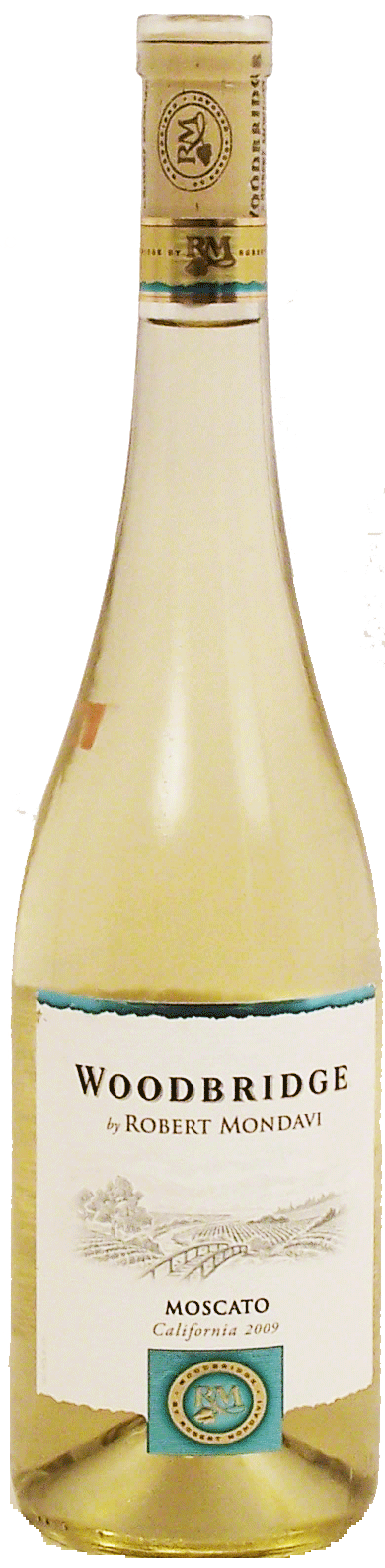
Naked Vine One-Hitter: Woodbridge by Robert Mondavi Moscato


Another offering from Robert Mondavi thanks to the folks at Folsom & Associates – this time their "Woodbridge by Robert Mondavi" series.

I’ve written a few times about Moscato d’Asti, for many years the most common version of the wine available. From the Piedmont region in Italy, this sweet, aromatic wine was a niche product for quite a while. Over the last couple of years, fans of sweeter wines have latched onto Moscato, making it the second most popular white varietal behind chardonnay. California production of Moscato has almost tripled, fueled by this demand and hip-hop shout-outs. (“I'm a’sip Moscato/And you 'gon lose them pants,” raps Wale.)  

While I can’t speak to its aphrodisiac qualities, Moscato is a marvelous brunch wine. Brunch is largely filled with mishmashes of strong flavors. Sausage next to salsa next to asparagus? Very possible. In my estimation, a sweet, relatively uncomplicated wine like Moscato works well. The food is the star of brunch. Wine just needs to taste good while staying out of the way. When I drink Moscato, what I’m looking for is the quality of the sweetness – is it more of a “honey” sweet or a “sugar” sweet. I prefer the former.

Woodbridge’s version does have the honey sweetness. Lots of peach and pear flavors ride on a full, slightly glycerine-thick body. The nose is peach-blossom floral. The finish is very peachy, with just a little bit of bitter right at the end. If you’re having this with food at all, you won’t notice that. Like all Moscato, it is an extremely flexible food wine. Everything from charcuterie to hash with egg on top go just fine alongside.

I always enjoy when wineries send along suggested pairings, recipes, and the like to go alongside the vino. On this occasion, The folks at Folsom & Associates sent a recipe using this wine as an ingredient for making peach preserves. The recipe sounded fabulous, but I don’t use a lot of jam and such. (I’ll still include the recipe below…)

However, one of the other included suggestions was to use it for pickling. I sliced some cucumbers into spears and pickled them with equal parts Moscato and champagne vinegar, with a hot pepper, salt, and dill thrown in. You know what? It turned out to be downright delicious. If you have some leftover Moscato, consider it!

For the price, $8, it’s a decent-enough wine. It’s not going to blow you away, but it doesn’t have to. I think I still prefer  the Italian version with its slight effervescence, but I wouldn’t turn down the Woodbridge if you poured it for me.


Sweet Peach and Moscato Preserves
Styling + Recipes by Candice Kumai
Photo by Emma Chao

Ingredients
8 Ripe peaches, sliced ½" thick
3 Cups sugar
2 Tablespoons fresh lemon juice
Rind of 1 lemon, peeled into large pieces using vegetable peeler
1 cup Woodbridge by Robert Mondavi Moscato
1 ½ (3 oz.) packages liquid sure gel pectin
1 Tablespoon mint, sliced into thin ribbons
6-7 Sterile ½ pint mason jars with lids

Instructions
1. In a medium stockpot, combine peaches, sugar, lemon juice, lemon rind and Moscato, bringing to a boil. 
2. Stirring gently, reduce to a slow simmer over medium heat. Cook 45 minutes, stirring occasionally.
3. Some foam may appear at the top of the pot, using a spider or a slotted spoon skim off the foam and discard. Remove lemon rind with a fork.
4. Add mint and cook for an additional 2-3 minutes.
5. Remove from the heat and add the liquid pectin stirring constantly. Return to a full rolling boil and cook for 1 minute. Quickly and very carefully ladle the preserves into sterilized jars, leaving 1/2 in head space at the top.
6. Place the lids on top of the jam jars. Carefully twist on the tops.
7. To Seal: Gently, place the jars in a large stockpot full of boiling water. Make sure that the jars are fully submerged in the boiling water. Let it sit in the simmering water for 10-15 minutes to set. Jars should seal by then. If not, they will seal while cooling.
8. Remove jars after 10-15 minutes, set aside to cool and set. You will hear a “pop” noise when jars are sealed.
9. Allow jars to set for 24 hours before opening.

Monday, October 22, 2012

Österreichischer Rotwein (Red Wines of Austria)

Quick…”Austria” – what just popped to mind? The Hapsburg Dynasty? Any one of a list of composers longer than my arm? A certain ex-governor of Gully-fornee-uh? Probably. How about wine?

“Aha!” a couple of you might say, “I thought about wine! That groovy sounding grape Grüner Veltliner.” Well, bonus noogies for you. You’re absolutely right. Austria wasn’t exactly a major player in the world of wine until the last decade or so as more and more folks discovered that umlaut-speckled, mineral-slathered bottle of deliciousness. About half of the wine made in  Austria is white, with Grüner making up two-thirds of that. Austria is on a similar latitude as Alsace, and the mountainous terroir yields lean, minerally, acidic wine.

Austria actually has a long history of winemaking. There’s archeological evidence of wine production as far back as 700 BC in Austria. Through the Middle Ages, wine production waxed and waned, depending on various invasions, religious incursions, and various pestilence. In the 19th century, Austrian wine really hit its stride – only to be laid low by that little louse phylloxera. Austria bounced back quickly, though – and after World War I, Austria was the third-largest wine producer in the world, selling largely to other Central European countries.

In the 1980’s, though, everything came crashing down because of a scandal in the Austrian wine industry. Austrian wines are generally acidic, light-bodied, and minerally. Some enterprising winemakers discovered that the taste could be “fattened up” a bit by adding small amounts of diethylene glycol to the wine. The more common term for diethylene glycol is...well…antifreeze.

Needless to say, this did the Austrians no favors. Even though there were only a small number of producers following this creative production method, many countries out-and-out banned Austrian wine. In the 1990’s, Austria set up a control board for their winemakers to ensure quality. As a result, more care was taken in general in production of wine, and a higher-quality product resulted. Quality versions of Grüner reopened the gates for Austrian whites, and over the last five or six years, there has been an increased demand for Austrian red wine.

Austrian reds are largely autochthonal varietals (you may remember this term, meaning “native grapes,” from our profile of 20 Mondi). These grapes, alas, don’t roll trippingly off the American tongue. Asking for “Blaufränkisch,” “Zweigelt,” or “Sankt Laurent” is likely to cause an accidental spray of saliva in the face of your unfortunate local wine salesperson.

I’d encourage you to practice your Germanic pronunciation, however, as there are some tasty offerings out there. So you know, the pronunciation of Blaufränkisch is “Blau-FRONK-isch,” the pronunciation of Zweigelt is “ZVEI-gelt,” and the pronunciation of Sankt Laurent (St. Laurent, as it’s sometimes written) is “Zankt LAUER-ent.” All of these wines are in the weight class of pinot noir and Beaujolais, so if you’re looking for a red that’s a little different (perhaps for Thanksgiving dinner), these would be distinct possibilities.

Neckenmarkt 2009 Blaufränkisch and Neckenmarkt 2010 Zweigelt – I include these together because I found them to be very helpful wines, vocabulary-wise. Both have helpful phonetic spellings of the varietals on their labels. The Blaufränkisch a very light, pleasant red. I thought it had a surprising depth of flavor for a wine this light in body. Lots of cherry and blackberry flavors without a full mouth feeling, although thankfully not fading into watery. As the wine opens, I got a little more mineral and a little more spice. An excellent summer red alternative, had I found it a couple of months ago. We poured this wine with some roasted grouper and vegetables and it went splendidly. About $10.

As for the Zweigelt – I was hit initially with a whiff of cranberries and graphite. Its taste is light – almost a bitter cranberry flavor. The flavor feels like it should be a lighter bodied, but there’s almost a glycerine-y thickness. (Um…what was that about antifreeze again?) The finish is graphite and light tannin. Not my favorite. Around $13.

Sattler 2010 Burgenland Sankt Laurent  -- A very light, fruit forward, flexible red that I found exceptionally easy to drink. I found it full of smooth berry flavors with a firm, pleasantly smoky backbone. I found it quite pinot noir-ish in character, although not quite as complex. I recently rigged up my little kettle grill to double as a smoker. I sugar-and-salt cured some trout filets and put them over the applewood. We had a little smoked trout with the Sattler. My tasting note reads “Holy crap!” An unexpectedly wonderful pairing. You could conceivably have this for a brunchtime red, as it’s clearly a wine that’s not scared of a little oil and a little salt. Solid for around $15-16.


Heinrich 2008 “Red” – So, what happens when you start blending these autochthonal grapes? Oftentimes, these grapes take on entirely different characteristics when blended as when poured alone. (Case in point – just about any non-Burgundian French wine will be a blend.) This Austrian table wine is a blend of 60% Zweigelt, 30% Blaufränkisch, and 10% Sankt Laurent. The result? A much darker, deeper wine than any of those varietals singly. This one has a very fragrant nose of cherries and herbs. The mouthfeel is considerably heavier, and the flavors are fuller. Those flavors resemble pinot noir: cherry and smoke – with some pepper thrown in for good measure. The finish is long, firmly tannic, and peppery. For a fairly unique experience, give it a run for about $18.

Wednesday, October 10, 2012

Wine Fairies and the Unexpected Picnic – Robert Mondavi Wines


Vine HQ was a happy place last week. Not one, but two unexpected deliveries appeared from the wine fairy –samples from Robert Mondavi winery. I learned later that they were from our friends at Folsom & Associates, so thanks very much!

Robert Mondavi is a ubiquitous label. I’m trying to remember the last time I walked into a wine store and didn’t see at least a few selections from Mondavi. One reason we should all appreciate Mr. Mondavi -- back in the 1960’s, Mondavi was one of the first vintners in California to label wine by varietal instead of by vineyard – which is now, of course, the standard in the nomenclature wine bottled outside France, Italy, and a few other places.

Mondavi was known in the 60’s and 70’s for making high-end wines (and they still do – their 1997 reserve Chardonnay was rated #1 in the world). Over the years, the wild success of their more inexpensive labels like Mondavi Coastal and Woodbridge overshadowed their more premium bottlings (aside from some of the super high-end stuff like Opus One, done in partnership with Chateau Mouton Rothschild of Bordeaux). Mondavi has been trying to improve the marketing of its “inexpensive premium” wines, as well as giving a facelift to some of the less expensive lines. I had the opportunity to try a couple from each of these categories.

The first lot we received was from the “Napa Valley” series. This wines run $20-50 and are from selected sites within that appellation. This series includes a fumé blanc (aka sauvignon blanc, the wine that put Mondavi on the map), chardonnay, cabernet sauvignon, pinot noir, and merlot. We had one bottle each of the pinot noir and the chardonnay:

Robert Mondavi 2010 Carneros Pinot Noir – Carneros is a region that bridges Napa and Sonoma Counties. It includes some of the cooler climates found in either region – which makes Carneros a very good candidate to grow pinot noir. This bottle definitely needs a chance to breathe before you get down to it. Short of giving it a good solid spin or decanting it for a bit, I expect you’ll be a bit taken aback by the initial tannin level. Once it calms down, there’s lots of vanilla on the nose, followed by big flavors of plums, cherries, and smoke. The finish is firm, lasting, and smoky. We thought that it went well with a challenging pairing of stuffed green peppers. Quite nice with dark chocolate, too. If you like your pinot on the bolder side, it’s a pretty solid choice. Retails for $27.

Robert Mondavi 2010 Napa Valley Chardonnay – I imagine makers of California Chardonnay as engineers hovering over three dials labeled “Oak,” “Butter,” and “Fruit” -- manipulating dials to generate an algorithm of time in barrel, type of barrel, percentage of malolactic fermentation, residual sugar, etc. to create a consistent profile. This Chardonnay, sourced from all over Napa with a little Sonoma fruit thrown in, had a winemaker crank up the “Oak” and “Fruit” knobs. On the nose and palate, you’ll experience ample but reasonably well balanced oak. Flavorwise, I found pears, cantaloupe, and oak in a relatively friendly, stable environment, which follows through to the finish. Poured on its own, the Sweet Partner in Crime and I split on this wine. I liked it, but she didn’t. With a slow-cooked fall vegetable soup, the roasted veggies played off the oak nicely, making it a tasty meal wine. It retails for around $20.

The second lot was two bottles of the “Robert Mondavi Private Selection” series. Near as I can tell, this is the rebranding of the less-pricey Mondavi “Coastal” line. Most of these wines fit squarely into the Naked Vine wheelhouse, retailing in the $10-15 range.

This pair of wines, however, came with some bonus swag. The wines came in a very attractive soft-side picnic basket with a roll-up picnic blanket, a travel guide to California’s Central Coast, and some very spicy salami. The implication seems to be that these are good picnic wines. We received one bottle of Cabernet Sauvignon and one bottle of Chardonnay. The Private Selection catalog also contains all the other major varietals: Merlot, Pinot Noir, Zinfandel, Syrah, a Meritage red blend, Sauvignon Blanc, Riesling, and Pinot Grigio. How did this pair fare?
Look! Stuff!

Robert Mondavi 2010 Private Selection Central Coast Cabernet Sauvignon – We’d had a very long week at work and decided to grill some filets. What goes better with steak than California cabernet, right? Whew! On opening, this wine was tight. Tight enough to yield entendres galore on Match Game. My first impressions were tart flavors over graphite – not a particularly pleasant combination. Thankfully, after some air, the flavors mellowed. Some blackberry flavors started to emerge, and the tannin calmed down a bit. The finish was tart and a bit clipped. We sipped on it some more while waiting for the steaks to rest, and we each went through half a glass without thinking. When we had it with the steak, it was a decent accompaniment, but we didn’t notice that it did anything special. My note says, “Well, it’s there.” Simple, straightforward, and not unpleasant after decanting, it wasn’t exactly memorable. Retails for $11.

Robert Mondavi 2011 Private Selection Central Coast Chardonnay – Returning to our “Chardonnay engineering” friends and their hypothetical three dials, this time they’ve got the oak dialed way back. There’s a hint of it at the very end of the finish, and a few notes floating through the bouquet and flavor, but it’s largely background, which is a nice surprise for an $11 California bottle. The butter’s turned up a little, as it has a creamier vanilla flavor, but it doesn’t go all the way to full-on buttery. Fruitwise, it’s actually got quite a nice balance of mango, pear, and apple. I thought this was quite a pleasantly drinkable wine. We did another “breakfast for dinner” evening with this wine – and with an open faced omelet with sausage, a bunch of roasted veggies and mushrooms, it worked right well. With California Chardonnay, it’s a matter of finding a combination of the three dials that you like. I honestly enjoyed this one more than I did its doubly-priced cousin.